
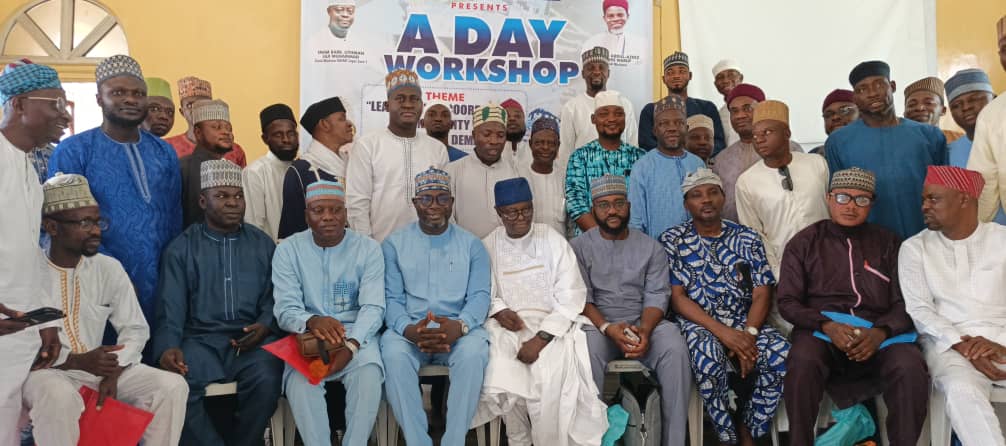
The Nasrul-Lahi-l-Fatih Society (NASFAT) Lagos Zone 1 Missionary on Saturday, November 30, 2025, played host to a transformative one-day workshop designed to strengthen the capacity of Imams across Lagos Zone One.
The programme, themed “Leadership and Coordination in Conformity with Modern Age Demands,” was held at the Zonal Secretariat at 56, Fashoro Street, Surulere, Lagos.
The workshop brought together key religious leaders, scholars and missioners committed to upgrading the standard of Islamic preaching and service delivery in line with contemporary realities.
Declaring the workshop open, NASFAT Lagos Zone 1 Missioner, Imam Barr. Uthman Jaji, urged the Imams to approach the training with seriousness and a desire to broaden their intellectual and spiritual horizon.
He stated, “Seeking knowledge is key to spiritual development. NASFAT members who attend weekly Assalatu are there to benefit one or two things from our sermons. It is therefore necessary for us as Imams to deliver our sermons in compliance with modern age demands.”
The Missioner stressed that religious leaders must never become complacent but must continuously sharpen their knowledge base.
Imam Jaji explained that the workshop was conceived out of the necessity to align Islamic preaching with the evolving world.
He said, “The workshop was organized to train our Imams in modern ways of preaching because things have changed. We have to update our knowledge to remain relevant.” He added that today’s congregation is highly informed and technologically empowered.
In his words, “Technology has advanced. The congregation have access to the internet. They google your topic in advance. They are ready to challenge you.”
The Missioner urged participants to be fully attentive, emphasizing that every Imam must remain open to learning.
He noted, “Pay attention and leverage this opportunity. The world is evolving. Something you know now can change in the next few hours. So as we deliver our sermons, we must add a modern-age tone because the audience is key.”
In his goodwill remarks, the Chairman, NASFAT Zone 1, Alhaji Adewole Kadri, thanked the Surulere branch for convening the workshop and praised the intellectual richness behind the theme.
According to him, “As Imams and Missioners, we are leaders, and even coordinators are leaders. So as leaders, we have to leverage this kind of opportunity.”
He described the gathering as a timely response to the demands of contemporary religious leadership.
Alhaji Kadri continued by describing workshops as essential platforms for continuous self-improvement.
“A workshop is an avenue to learn, unlearn and relearn,” he said.
“The knowledge we gain here today will be shared with others. Considering the calibre of our facilitators, this workshop will be beneficial to everyone.” He stressed that leadership within NASFAT must be exemplary, ethical and transparent.
The keynote lecture was delivered by the NASFAT National Dawah Officer, Imam Abdul-Ganiyy Raji, who spoke on “Programme Planning and Execution: Expectations from NASFAT Imams.”
He opened with a detailed outline covering aspects such as why the seminar was necessary, who a NASFAT Imam is, the importance of advance planning, the Prophet Muhammad (SAW) as a master planner, and the effects of proper planning on programmes and the organisation.
He described the NASFAT Imam as “not only a spiritual guide, but also an image-maker for NASFAT.”
The National Dawah officer stressed that the way an Imam speaks, dresses, conducts ceremonies, manages time, and handles programmes directly influences how the public perceives the Society.
Imam Raji emphasized the importance of excellence in planning, quoting the hadith, “Indeed, Allah loves that when any one of you performs a deed, he does it with excellence.”
He explained how the Prophet Muhammad (PBUH) meticulously planned major Islamic activities, including the historic Hijrah, which involved strategic roles assigned to trusted individuals such as Abdullahi bn Urayqit as navigator, Abu Bakr as companion, and Amir bn Fuhayrah as flock-tenderer to erase tracks.
According to him, such examples underscore why religious programmes must never be handled casually.
Also addressing the gathering, the immediate past Chairman of NASFAT Lagos Zone 1, Alhaji Mustapha Alabi, spoke on the “Necessities of NASFAT Operations.”
He explained that NASFAT Order of Service covers all major social functions, including Aqiqah, Nikkah, Mawlid Nabiyy, Fidau, Fatih-I-Bayt and Walimat-I-Qur’an (complete with Qur’anic readings), prayers and instructions on appropriate thanksgiving practices.
He emphasized that these structured processes are necessary for orderliness and consistency across the organisation.
Alhaji Alabi further highlighted the society’s key operational areas, including socio-economic empowerment, skill acquisition, interest-free loans, business grants, job-connection channels, and efficient service delivery.
He noted that operations must be run with efficiency, discipline and strategic improvement to achieve NASFAT’s mission of nurturing an enlightened Muslim society. He explained that “Operations are not just about day-to-day running. They are the strategic engine of NASFAT’s success.”
He stressed that NASFAT shared values—including the pursuit of knowledge, adherence to the Qur’an and Sunnah, simplicity, time consciousness, and avoidance of ostentation—remain the guiding principles of the organisation.
According to him, the society’s distinguishing competencies such as strong prayer groups, exemplary leadership and diverse membership must continually reflect in all its programmes and interactions.
The event was well attended by notable personalities including Yusuf Olayinka, Zonal Secretary; Raheem Adebayo, former Zonal Secretary; Kasunmu S. O.; and Raheem Babatunde, among others.
The programme was coordinated by Imam Saheed Oladele, Missioner of NASFAT Olowora Branch, who ensured the smooth execution of all segments of the workshop.
Highpoint of the gathering was the recognition of distinguished members of the Society for their contributions, followed by the presentation of certificates of participation to all attendees. Many described the workshop as enlightening, timely and impactful, especially in a period when the expectations from Imams continue to evolve rapidly.
The workshop concluded with a renewed commitment from all participating Imams to intensify their roles as spiritual guides, organisational ambassadors, and models of excellence within the Muslim community.
With the training aligning NASFAT leadership with modern demands, participants expressed optimism that the knowledge gained will strengthen the quality of dawah, enhance programme management, and uplift the public image of the Society in the years ahead.
AWARDEES AT THE EVENT 

Nigerian Muslim Personalities of the Year 2024/2025

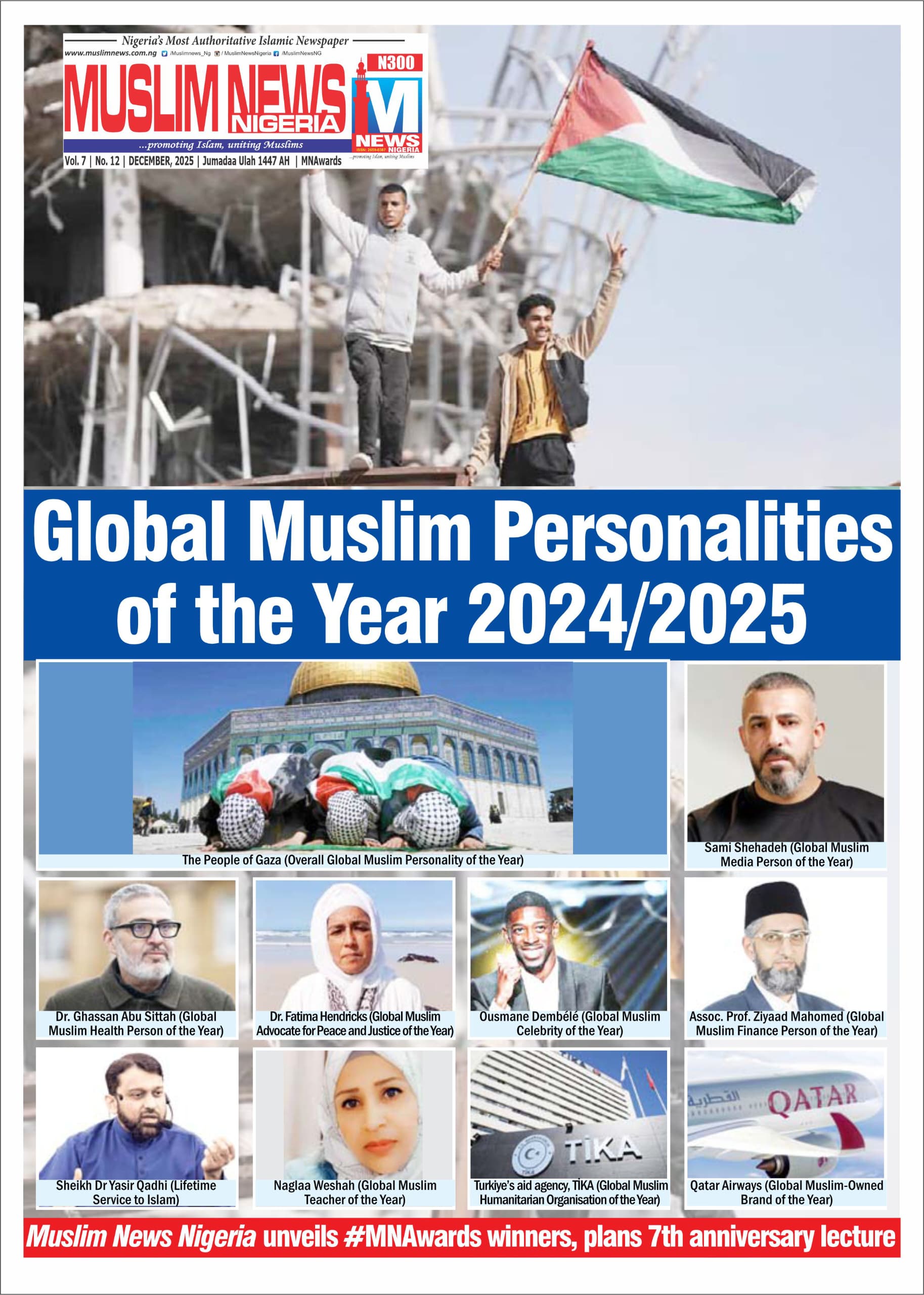
Global Muslim Personalities of the Year 2024/2025



Sponsored