

Prof Babagana Zulum, the governor of Borno State has reiterated its readiness to focused on strengthening collaborative efforts between the state government and religious bodies to combat the lingering threat of insecurity and foster lasting peace in Borno State.
Zulum made this known when he convened a high-level consultative meeting on Monday with the leadership of Jama’atu Nasril Islam (JNI) and Christian Association of Nigeria (CAN) held at the Government House in Maiduguri.
The governor, while addressing the leaders, underscored the critical role of religious leaders in promoting tolerance, unity and peace in society.
“Borno is not only strategically positioned geographically but also has unique and beautiful family composition dynamics. It is common to find under one roof, brothers and sisters, uncles and aunts, who profess different faiths.
“We share meals, we celebrate festivities and milestones, we grieve losses together, as one family, bound by blood and love that transcends religious labels. This is our reality. This is our strength. We must protect this sacred bond within our homes and allow it to define our individual, as well as intra- and cross-community engagements.
“It is absolutely crucial that we collectively dispel all false narratives that seek to portray our security crisis in religious colouration. Religious conflict is alien to us. Boko Haram conflict is not a religious crisis. It is an assault on our civilisation, humanity, and all that we hold dear, irrespective of creed. The perpetrators of violence have killed, maimed, and displaced Muslims and Christians alike. They have destroyed mosques and churches with equal impunity.
“To that end, I wish to inform you that, as part of our massive reconstruction programme across the affected local government areas, Borno State Government has reconstructed 45 Christian worship centres that were destroyed during the Boko Haram insurgency.
My assurances are unequivocal today: Borno State Government is committed to the welfare, security, and protection of every citizen. Your safety is of great concern to our administration. Your right to worship, according to your faith, without fear or hindrance, is sacrosanct. We will continue to work with security agencies and with you, our community leaders, to ensure this protection.
Therefore, I call upon you, our revered faith leaders, to preach peace: from your Minbars during Juma’at prayers and pulpits on church service days. Let your messages be those of unity, tolerance, and our shared values of love, compassion, and justice.
I urge all of us to actively speak against any voice, within or without, that seeks to divide us along religious lines. Let us encourage dialogue among our congregations and build bridges at every opportunity.
To the international community, I want to call on you to partner with us in addressing the underlying causes of insurgency, which are not limited to endemic poverty, illiteracy, and hunger, among others.
Your support will also be appreciated in areas of enhancing the capability of our military in the fight against insurgency.”
In his response, the State Director of Administration of JNI, represented by Mal. Sa’adu Ngamdu commended Governor Zulum’s proactive leadership in facilitating the dialogue. He affirmed the Islamic body’s unwavering commitment to peace and its readiness to partner with the government and other faiths.
On his part, John Bogna Bakeni, the CAN chairman of Borno State & auxiliary Bishop of Maiduguri Catholic Diocese, echoed that the problem facing Nigeria is internal and can only be solved locally.
“Nobody can solve our problem from outside; we are the ones that can solve our problem, America, UK, nobody. If we take what the governor said and implement it justifiably, we are going to have a peaceful society,” he said.
He added, “Nigeria is on the global map now, and there are a lot of information that are going out. I would enjoin us, as the religious leaders, to talk to our people.
He also urged government leaders and other political office holders to always do justice to humanity and the society devoid of any religious, ethnic or political affiliations, as according to him, doing so, would always cultivate trust and peaceful coexistence.
Sponsored Event

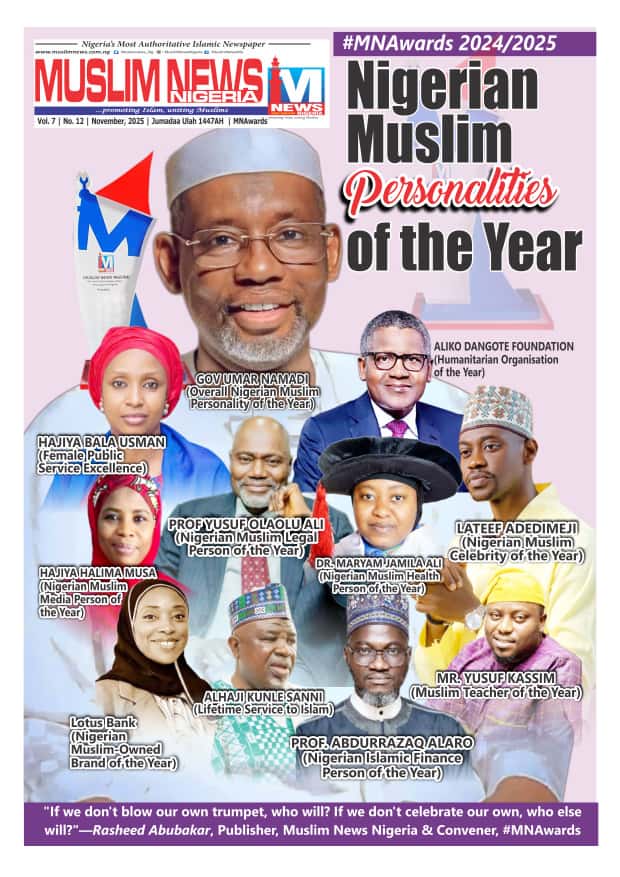
Nigerian Muslim Personalities of the Year 2024/2025
Global Muslim Personalities of the Year 2024/2025