
* Holds seminar on ethical business practices, interest-free funding
* Businesses must be rooted in truth: Al-Egbawi urges Muslim entrepreneurs
In a time when many talk about empowerment but few take action, Hajia Majeedah Ashimi Idris, a registered nurse and philanthropist, has touched the lives of young Nigerian entrepreneurs, mostly women, by equipping them with the financial support and business tools they need to thrive.
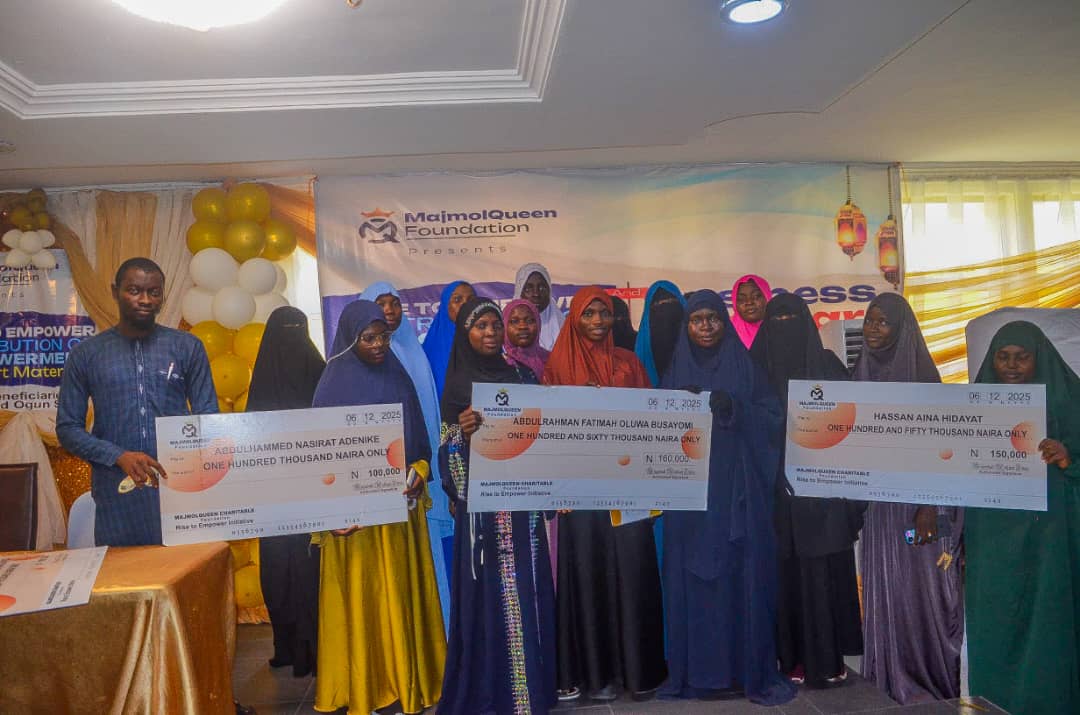
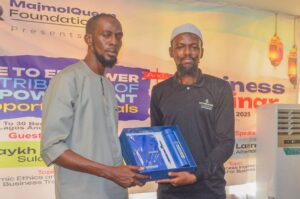
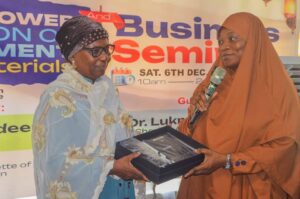
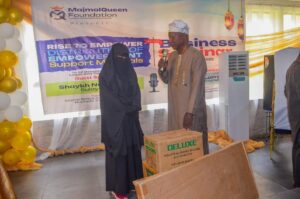
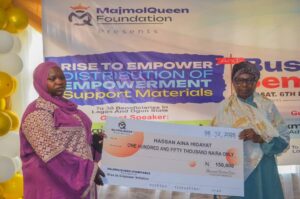
Through her humanitarian platform, the MajmolQueen Foundation, Hajia Ashimi disbursed cash grants and equipment worth millions of naira to over 14 small business owners.
Muslim News gathered that the impactful gesture took place on Saturday, December 6, at Crescent Schools, 1004, Victoria Island, Lagos, alongside a business seminar aimed to equip young entrepreneurs with the knowledge of ethical business practices and how to access interest-free funding.
Though based in the United States, the bestselling author of “Towards A Successful Marriage” continues to give back to the society with unshakable commitment.

She was represented at the event by the Ashimi family, led by Alhaji Tajudeen Olubunmi Ashimi, who ensured her message of hope and empowerment reached those who needed it most.
Encomiums showered on MajmolQueen founder
Alhaji Ashimi praised the initiator for her kindness and passion to uplift underprivileged people and young entrepreneurs, describing the Foundation’s empowerment programme as a rare act of compassion that should be emulated by both government and private organisations across Nigeria.
The representative of the family shared his personal experience and deep admiration for the Founder. According to him, “Majeedah is my daughter. She informed me a few days ago that the programme would be holding today (Saturday) and asked me to please attend.
“She is someone I cannot refuse because she has always been good and supportive. I agreed to come, even though I live as far as Ipaja Ayobo.”
Reflecting on Majeedah’s character, he said, “Since she came of age, she has been kind to every member of the family. She supports everyone both morally and financially. When she heard I was ill, she kept calling to check on my health. She is always there for us.”
Alhaji Ashimi expressed his wish that the government and religious institutions would support similar initiatives to reduce tension and hardship in society.
He advised the beneficiaries to use the support wisely by investing it meaningfully into their businesses. “Someone who can organise such a programme wants to make lives better. The best way to appreciate it is to ensure your actions reflect the vision behind the support you have received,” he said.
The business segment of the empowerment programme was led by Ustadh Aleem Farouk, popularly known as Al-Egbawi, who spoke on Islamic ethics and etiquette in business transactions. He was joined by Dr Lukman Lanre Seriki, an auditor from Alternative Bank, who focused on accessing interest-free loans for business development.
Character and trust are key in business: Dr Seriki
Dr Seriki’s presentation emphasised the importance of understanding various business categories and how entrepreneurs can build credibility to access informal financial support from friends, family, and suppliers.

He explained that while formal bank loans may be difficult for small entrepreneurs, trust-based arrangements can serve as viable alternatives.
According to him, “Some suppliers are willing to give goods on credit, but only when there is character and trust. Discipline is key. When you misuse funds meant for business, such as spending it on a party, you create what we call diversion risk, and that’s a big red flag in business.”
He also explained that the capital required to start a business varies widely. “A provision store, for example, can be started with the value of a car, even something like a Toyota Corolla worth eight million naira. For other ventures like car sales, the required capital is significantly higher. In some cases, all you need is your skill and a little money to purchase tools and get started from home.”
Businesses must be rooted in truth: Al-Egbawi urges Muslim entrepreneurs
Ustadh Al-Egbawi, who represented Sheikh Nojeemdeen Sulaimon, emphasised the Islamic ethics and etiquette in business transactions. He reminded participants that Islam encourages business, but only within the boundaries of what is lawful (halal).
He said, “As Muslims, we must understand that Allah has made trade halal (lawful) and forbidden riba (interest). This means every business transactions must be based on honesty and free from deceit. You must not sell what you don’t own or misrepresent your products. If you deal in tyres, don’t falsely claim you sell all car parts just to attract buyers. You can act as a middleman, but you must be truthful.”
Al-Egbawi, who is the Chief Imam, Darul Salaam Central Mosque, Abeokuta, also warned against promoting faulty goods or hiding defects.
“If you sell a car with engine issues and fail to disclose it, you’re engaging in deception,” he said, adding that Islam does not support the concept of “no testing” before purchase. Buyers have the right to verify the quality of a product before completing a transaction.
The Consultant and a Medical Physicist, Federal Medical Centre, Abeokuta, continued his insightful lecture by stressing the importance of honesty and transparency in business, warning that engaging in deceit or haram practices strips a business of Allah’s blessings.
He said, “You see some people trading for years but have nothing to show for it. That’s often because they sell haram or hide the truth in their dealings. For example, when someone removes a car’s original iron rim and replaces it, then lies that it came like that from the UK, there’s no blessing in that transaction. Allah does not bless dishonesty.”
Al-Egbawi also advised Muslims not to abandon their religious duties for trade. “During prayer times, some traders remain at their shops and ignore the call to prayer. This is a serious matter. No business should come between a Muslim and Allah,” he said.
He warned against envy and cheating. “Don’t envy others whose businesses flourish. Allah is the One who brings sales – trust Him. Do not short-change people. If you’re meant to supply 5mm metal and you supply 2.5mm, that’s injustice. On the Day of Judgement, those you cheated will take their rights from you.”
He concluded with the story of the Prophet Muhammad (peace be upon him), who rebuked a trader for hiding wet wheat under dry ones. “The Prophet told him to expose both the wet and dry wheat, so buyers can make informed choices. That’s the standard every Muslim should uphold. Truthfulness must be our trademark.”
The beneficiaries of the empowerment programme expressed deep gratitude to the founder for putting smiles on their faces and giving their businesses a new lease of life. Many of them, visibly emotional, offered heartfelt prayers, asking Allah to continue to bless, protect, and elevate her for her kindness and generosity.
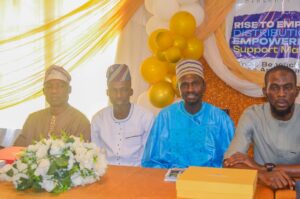
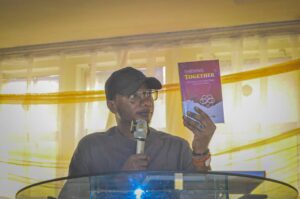
FACES AT THE EMPOWERMENT PROGRAMME
Nigerian Muslim Personalities of the Year 2024/2025
Global Muslim Personalities of the Year 2024/2025




Sponsored