
By Rasheed Abubakar
President Bola Ahmed Tinubu arrived in Ankara, Türkiye, on Monday, January 26, 2026, for a two-day state visit on the invitation of President Recep Tayyip Erdoğan. The visit marks another key milestone in the long-standing diplomatic relationship between Nigeria and Türkiye and comes at a time when Nigeria seeks stronger international partnerships to tackle security challenges and promote economic growth.
Both nations have enjoyed robust diplomatic relations since 1962, when Türkiye opened its Embassy in Lagos shortly after formal ties were established. The Embassy was later relocated to Abuja in 2001 following the Nigeria’s relocation of its capital.
Over the years, high-level engagements have reinforced bilateral relations, with Nigerian Presidents as Olusegun Obasanjo in 2000, Goodluck Jonathan in 2011 and 2015, and the late Muhammadu Buhari in 2017 visiting Türkiye.
President Erdoğan has also paid official visits to Nigeria, notably in 2016 and 2021, underlining Türkiye’s long-term interest in Nigeria’s stability and development.
Erdoğan’s 2021 visit to Abuja was particularly notable, resulting in multiple cooperation agreements in defense, energy, and economic sectors. He also reaffirmed Türkiye’s support for Nigeria’s fight against terrorism. The warm personal rapport between Erdoğan and Nigerian leaders, including former President Buhari and now, President Tinubu, both of whom he has publicly referred to as “Brothers”, a gesture that reflects both diplomatic courtesy and deeper solidarity.
Ülkemize ilk resmî ziyaretini gerçekleştiren Nijerya Cumhurbaşkanı Sayın Tinubu ve kıymetli heyetini Ankara’da ağırlamaktan büyük memnuniyet duydum. 🇹🇷🇳🇬
Nijerya bizim için dost bir ülke olmasının ötesinde 230 milyonluk nüfusuyla Sahraaltı Afrika’daki en yakın ticaret… pic.twitter.com/HyF3kov9Kh
— Recep Tayyip Erdoğan (@RTErdogan) January 27, 2026
Nigeria’s security challenges have continued to attract international attention, particularly from the United States and other Western countries. While insecurity affects citizens across religious and regional lines, international debates have often focused on allegations of genocide on Christian communities, giving comparatively little attention to the sufferings of Nigeria’s large Muslim population of over 120 million. This imbalance underscores the complexity of Nigeria’s security situation and the need for nuanced, context-sensitive perspectives.
President Erdoğan has been widely recognized for his advocacy on behalf of vulnerable Muslim communities, resulting in his being named Global Muslim Personality of the Year for three consecutive times by Muslim News Nigeria. He consistently emphasizes that terrorism has neither religion nor ethnicity, a principle shaped by Türkiye’s own experience and one that resonates deeply with Nigeria’s reality.
Within the country, Muslim communities face challenges including insurgency in the North, harassment of hijab-wearing students in Southwest schools, and violent masquerades, Oro and other animist disrupting Mosques or restricting movement during festivals. These developments highlight the urgent need for dialogue, protection of religious freedom, and inclusive governance, an approach aligned with Erdoğan’s long-standing policies of safeguarding civil liberties, social cohesion, and inclusive citizenship.
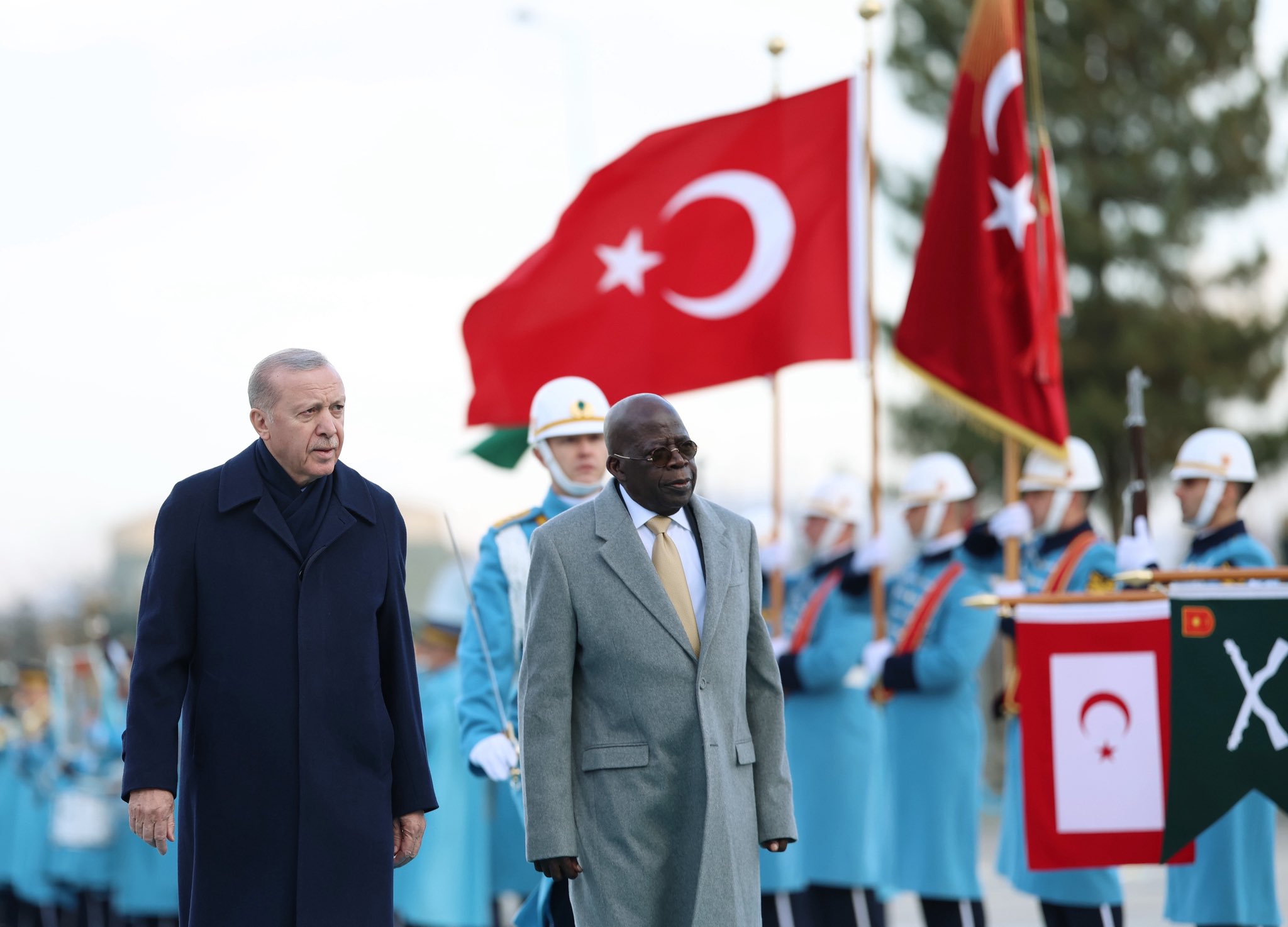
President Bola Ahmed Tinubu along with Turkiye President, H.E Recep Tayyip Erdoğan Inspect the Guard of Honour at the Presidential Palace in Turkiye also known as Cumhurbaşkanlığı Sarayı. pic.twitter.com/kNhqzND2Au
— Daddy D.O🇳🇬 (@DOlusegun) January 27, 2026
As Nigeria faces evolving threats from Boko Haram and ISWAP, including reports of drone attacks on military units, President Tinubu’s visit provides an opportunity to explore Turkish defense technologies. Anti-drone systems and platforms like Bayraktar KIZILELMA could enhance Nigeria’s surveillance, intelligence, and operational capacity while minimizing risks to personnel. Cooperation in training, maintenance, and technical support could also strengthen Nigeria’s long-term defense capabilities.
Beyond technology, Türkiye’s experience in dismantling terrorist networks, having confronted groups such as Daesh, PKK, YPG, PYD, and FETO, offers valuable lessons for Nigeria. Coordinated military, intelligence, and institutional strategies from Türkiye can provide practical models for tackling insurgency and restoring stability in affected regions.
Looking ahead, the visit is expected to deepen collaboration on security, defense technology, trade, and investment.
President Bola Ahmed Tinubu held bilateral talks with President Recep Tayyip Erdoğan at the Presidential Palace in Turkey.@asovilladigital | @officialABAT | @trpresidency |@RTErdogan pic.twitter.com/xtM5hX5VQ6
— Presidency Nigeria (@NGRPresident) January 27, 2026
For Nigeria, the opportunity provides access to Türkiye’s expertise in counterterrorism and strategic planning to help address insurgency and bolster national security. For Türkiye, it reinforces its role as a key partner in Africa’s largest economy, expanding economic, political, and cultural ties. The visit will serve as an opportunity for both nations to strengthen a partnership rooted in mutual benefit, shared security interests, and long-term regional stability.
– Rasheed Abubakar is the Publisher of Muslim News Nigeria: Email muslimnewsng@gmail.com
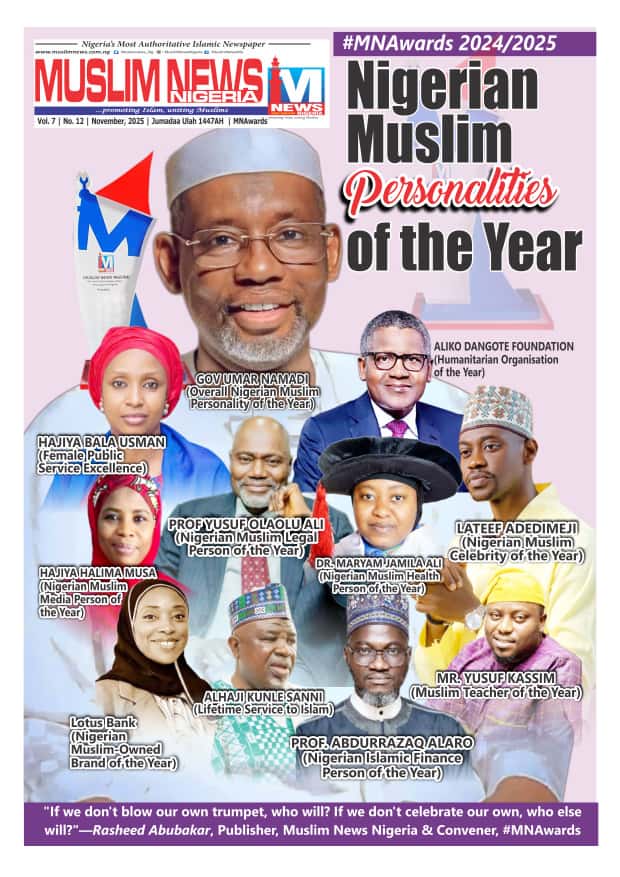
Nigerian Muslim Personalities of the Year 2024/2025
Global Muslim Personalities of the Year 2024/2025




Sponsored