
* As Companion launches CEOs Philanthropy
* Oba (Prof.) Saka Matemilola commends Companion Zakat Foundation, urges transparency
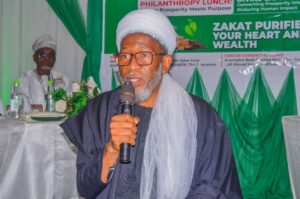
The Chief Imam of Lagos State University (LASU), Professor Kudus Amuni, has identified Zakat, Sadaqah and Waqf as powerful Islamic social finance instruments capable of eradicating poverty, reducing inequality and delivering sustainable human development if properly institutionalised and transparently managed.
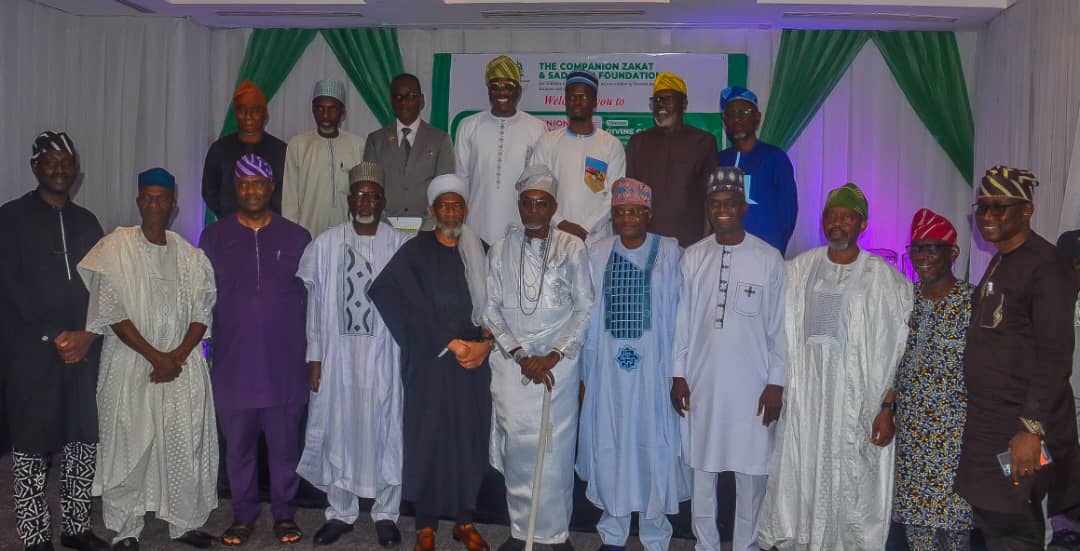
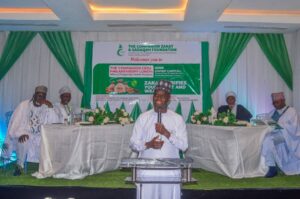
Prof. Amuni made the assertion on Sunday while delivering the keynote address at the Companion CEOs Philanthropy Launch: Where Prosperity Meets Purpose, held at the Radisson Blu Hotel, Ikeja, Lagos.
Muslim News gathered that the event focused on the launch of the Companion Zakat and Sadaqah Foundation for CEOs, sensitising them on the importance of fulfilling their Zakat obligations and strengthening the role of Zakat, Sadaqah and Waqf in driving sustainable social and economic development.
Speaking on the theme “Zakat, Sadaqah and Waqf: Strategic Pathways to Enduring Human Impact,” the Islamic scholar described Zakat as a divinely ordained system of wealth redistribution, adding that it is not voluntary charity but a compulsory pillar of Islam designed to bridge the gap between the rich and the poor.
“Zakat is Allah’s instrument for social balance. It purifies wealth, curbs greed and promotes peace, security and harmony in society,” he said.
Prof. Amuni noted that Zakat has historically proven effective in eradicating poverty when implemented with integrity, accountability and strong leadership.
He cited the era of Caliph Umar ibn Abdul-Aziz, when Zakat collections reportedly exceeded the number of eligible beneficiaries.
According to him, Zakat caters for widows, orphans, the poor, debtors, travellers and other vulnerable groups, while instilling social responsibility among the wealthy.

Addressing the guests, most of whom were chief executives, managing directors, and business leaders from various sectors, the Chief Imam explained that Zakat becomes obligatory once wealth reaches the Nisab threshold and is calculated at 2.5 percent of qualifying assets, including cash, savings, investments, gold, agricultural produce, and business inventory, after deducting liabilities.
Sadaqah and voluntary giving
The professor described Sadaqah as voluntary charity that complements Zakat, noting that it can be given at any time and in various forms. He also highlighted in his paper that Zakatul-Fitr, paid at the end of Ramadan, is a means of purifying fasting and enabling the less privileged to celebrate Eid.
“Withholding Zakat is denying the poor their right, but Sadaqah opens continuous doors of compassion and mercy,” he added.

Waqf and perpetual charity
A significant portion of the lecture focused on Waqf (Islamic endowment), which Prof. Amuni described as a permanent, non-transferable charitable investment whose benefits continue long after the donor’s death.
He explained that Waqf assets, whether land, buildings, cash or shares, are preserved, while their proceeds are channelled into education, healthcare, social welfare and religious causes.
“The reward of Waqf is continuous. It is what the Prophet (SAW) referred to as Sadaqah Jariyah,” he said.
He cited the historic Waqf of Uthman ibn Affan, whose endowment of the Well of Rumah in Madinah has continued to generate charitable benefits for over 1,400 years, including support for social welfare and infrastructure around the Prophet’s Mosque. 
Call for strong institutions
Prof. Amuni urged Islamic organisations and foundations to adopt transparent and well-structured systems for managing Zakat, Sadaqah and Waqf, warning that mismanagement undermines their divine purpose.
He expressed optimism that the newly institutionalised Companion Zakat and Sadaqah Foundation would play a critical role in poverty alleviation and social development in Nigeria.
“If these three instruments are properly harnessed, society will experience reduced poverty, moral upliftment and sustainable development,” he said.
Oba Saka Matemilola commends Companion Zakat Foundation, urges transparent giving
Chairman of the occasion, Oba Professor Saka Matemilola, congratulated the National President of The Companion, Imam Nojeem Jimoh and the Board of Trustees headed by Alhaji Thabit Wale Sonaike for successfully institutionalising the initiative.
He commended the Foundation’s impact, noting that the number of beneficiaries had tripled compared to the previous year.
“This is highly commendable and reflects the seriousness and commitment behind the Zakat Foundation,” he said, urging Muslims to channel their Zakah through transparent and accountable organisations
National Amir highlights growth of Companion Zakat Initiative
Earlier, in his welcome address, the National Amir of The Companion, described the Foundation’s evolution from a sub-committee into a fully registered entity as a milestone in faith-based philanthropy.
He traced his journey within the association, noting that under his leadership, the former Zakat and Sadaqah sub-committee raised ₦119 million during Ramadan 2025, thanks to donor confidence in the auditing process.
Imam Jimoh emphasised that what began as a sub-committee has now evolved into a fully registered, stand-alone foundation under Alhaji Thabit Wale Sonaike, aimed at institutionalising Zakat collection and distribution while ensuring accountability and measurable impact.
“Allow me to assure you that this practice will not change. We shall always account for what you entrust to us,” he said.
Alhaji Sonaike pledges integrity, Shari’ah compliance for the initiative
In his remarks, the Chairman of the Board of Trustees, Alhaji Thabit Wale Sonaike, said the Foundation was built on three non-negotiable pillars: integrity, Shari’ah compliance and measurable impact.
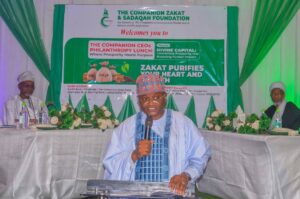
“Zakat is not merely a social contribution; it is an act of worship and a divine trust (Amanah) that demands the highest standard of stewardship,” he said.
He explained that the Foundation was established to move Zakat and Sadaqah from ad-hoc giving to structured social justice, with a focus on long-term empowerment rather than short-term relief.
“We collect with sincerity, verify with diligence, distribute with justice and report with clarity,” he stated. 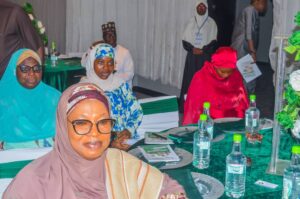
Don calls for Zakah as tool for empowerment
One of the Zakat payers and a member of the Criterion, Prof Jamilah Yacub, of Department of Economics, Lagos State University, shared a personal testimony, urging Muslims not to see Zakah solely through the lens of Nisab (threshold of wealth).
According to her, “Even if you think you have not reached the Nisab, give for Allah’s sake. You cannot pay Zakat and make a loss. Allah will surely increase your provision.”
She added that Zakat should be seen not only as charity but also as a tool for empowerment, including job creation through investment in industries that benefit the wider community.
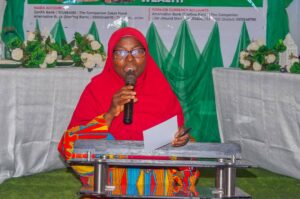
The event also attracted Islamic scholars, professionals, business leaders and stakeholders committed to strengthening Islamic social finance as a credible tool for long-term human development in Nigeria.
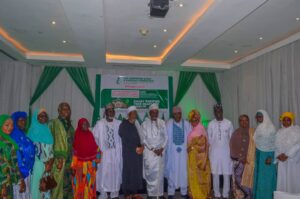
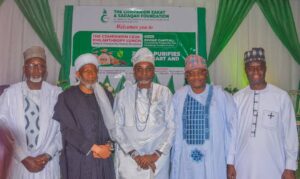
FACES AT THE EVENT



Nigerian Muslim Personalities of the Year 2024/2025

Global Muslim Personalities of the Year 2024/2025




Sponsored