
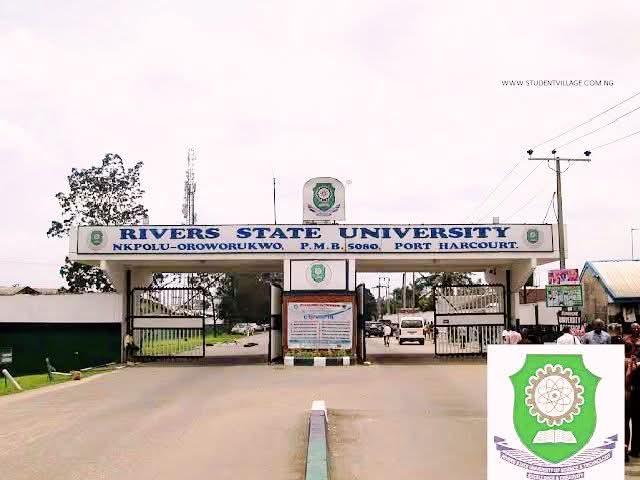
The Muslim Public Affairs Centre (MPAC) and the Hijab Rights Advocacy Initiative (HRAI) have applauded the Supreme Court of Nigeria for affirming the constitutional right of Muslim students at Rivers State University (RSU) to worship freely on campus.
In separate statements, both groups described the judgment as a landmark victory for religious freedom and constitutional rights.
Disu Kamor, Executive Chairman of MPAC, welcomed the ruling with “profound relief, deep gratitude, and unwavering conviction.” He described it as “a victory for the Constitution, a victory for conscience, a victory for justice over prejudice, and a victory for faith over fear.”
“For over a decade, Muslim students at Rivers State University were denied a right that should never have been contested—the right to pray,” Kamor said. “Yet, rather than retreat into despair or be provoked into disorder, these students chose the noblest path available in a democracy: the path of law, patience, and principled resistance.”
Mal Disu called on RSU authorities to comply fully with the court ruling, urging an immediate end to discrimination and exclusion directed at Muslim students.
“A university must be a sanctuary of knowledge, not a theatre of discrimination; a centre of enlightenment, not an engine of exclusion,” Kamor emphasized.
Director of HRAI, Hajia Mutiat Orolu-Balogun, expressed similar sentiments, lamenting that the matter had to reach the Supreme Court.
“It is sad that at this stage of our country these kinds of cases still come up,” she said, adding, “As far back as 2012, Muslim students at RSU had to take the institution to court because they were not allowed to pray or establish a place of worship at the Nkpolu Oroworukwo campus.”
Hajia Orolu-Balogun highlighted the inconsistency between the treatment of Muslim students and those of other faiths.
“In a university that brings together students from different parts of the federation, their rights must be guaranteed. The fact that students of other faiths have a place to worship on campus, while Muslim students were denied, is very disheartening,” she said.
The Supreme Court ruling, coming fourteen years after the case began, reinforces that religious freedom is an inviolable constitutional right.
Advocacy groups say it sends a strong message to institutions across the South-East and South-South regions: discrimination against Muslim minorities cannot be tolerated.
For the students who pursued justice patiently through the courts, the decision is a vindication of their faith and resilience, and a powerful reminder that Nigeria’s Constitution protects the rights of all citizens, regardless of religion.
By Muslim News Nigeria
Nigerian Muslim Personalities of the Year 2024/2025
Global Muslim Personalities of the Year 2024/2025



Sponsored