
* Insists unity in diversity is non-negotiable in Islam
▪︎ Calls for summit to resolve moonsighting disputes in Nigeria
▪︎ Commends Sultan of Sokoto’s unity efforts
The League of Imams and Alfas in Yorubaland, Edo and Delta, known as Rabi’tah, has defended its adoption of astronomical calculations for determining the start and end of Ramadan, stressing that the approach is aimed not only at accuracy but also at strengthening unity within the Muslim Ummah.
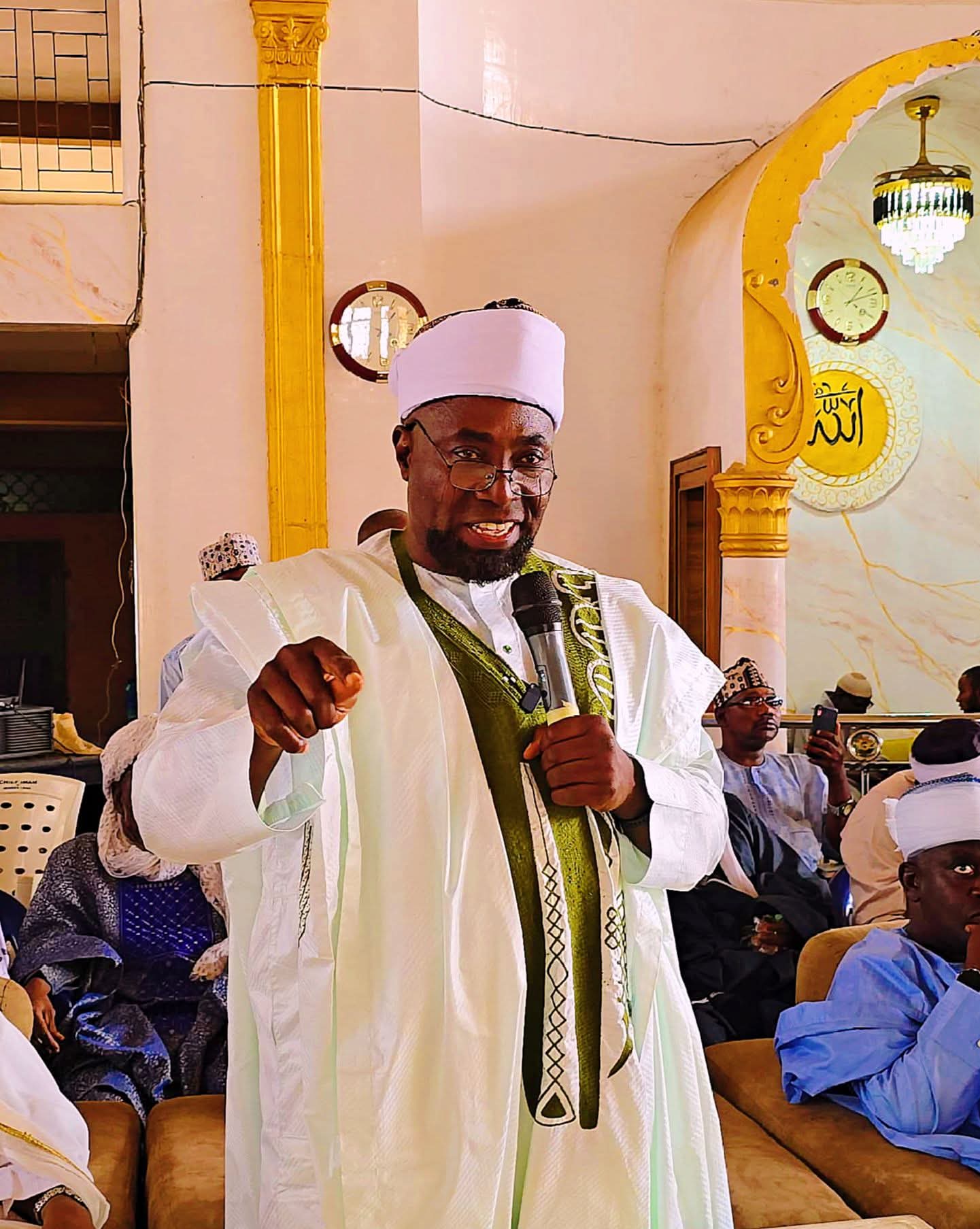
Speaking on behalf of Rabi’tah in an exclusive interview with Muslim News on Friday, February 13, the Grand Mufti of Yorubaland, Sheikh AbdulRasaq AbdulAzeez Ishola, described unity as a fundamental Islamic obligation that must not be undermined by disagreements over moon-sighting methods.
He noted that the Qur’an repeatedly commands Muslims to remain united and to avoid division, explaining that Islam recognises unity in diversity. “Differences on secondary matters are permissible, but unity on the fundamentals of the religion is non-negotiable,” he said, adding that disputes over the means of determining Ramadan should never threaten the cohesion of the Ummah.
Sheikh Ishola explained that Rabi’tah’s decision to rely on astronomical calculations was informed by advances in scientific knowledge, which allow precise determination of lunar conjunction and moonset.
According to him, conflicting and sometimes inaccurate moon-sighting claims have over the years fueled unnecessary tension among Muslims in Nigeria and beyond.
On the leadership of the Alhaji Abubakar Sa’ad III, who chairs the National Moon Sighting Committee under the Nigerian Supreme Council for Islamic Affairs (NSCIA), the Grand Mufti acknowledged the Sultan’s efforts at fostering unity across regions, describing him as a respected figure who has worked to coordinate Ramadan observance nationwide.
However, he maintained that Rabi’tah reserves the right to adopt what it considers a safer and more precise method, stressing that methodological differences should be managed through dialogue rather than confrontation.
To bridge existing gaps, Sheikh Ishola called on the NSCIA to convene a broad-based national summit involving Muslim leaders from across Nigeria, particularly the Southwest, to promote mutual understanding and reinforce unity.
He warned that politicising religious differences, especially on social media, only deepens divisions within the Ummah.
The Grand Mufti also urged Muslim youths to conduct themselves with restraint and respect online, describing bullying and hostile exchanges as un-Islamic and contrary to the teachings of Prophet Muhammad (peace be upon him).
According to him, the broader challenge facing Muslims goes beyond the commencement of Ramadan and requires renewed commitment to unity, knowledge and responsible leadership.
Full interview: Sheikh AbdulRasaq AbdulAzeez Ishola, Grand Mufti of Yorubaland
MN: What is your understanding of unity in Islam and its relevance to Nigeria?
Sheikh Ishola: Unity in Islam is non-negotiable. Allah clearly states in the Qur’an that this Ummah is one and commands us to hold firmly to the rope of Allah and not be divided. He reminds us that it is by His favour that our hearts were united and we became brethren.
The Qur’anic message on unity is comprehensive, but it is left to us to live it. Unity does not mean uniformity. Islam accommodates diversity. After the Prophet’s demise, his companions disagreed on certain matters, yet they remained united on fundamentals.
We can differ on secondary issues while standing together on the essentials of the religion e.g prayer, fasting, zakat and pilgrimage. Even the existence of four schools of jurisprudence shows that Islam recognises unity in diversity. Trivial differences must never be allowed to threaten the foundations of our faith.
MN: If unity is non-negotiable, why does Rabi’tah often make independent announcements ahead of Ramadan?
Sheikh Ishola: This position did not come overnight. Those before us deliberated extensively on how to ensure accuracy and unity in commencing and ending Ramadan. They observed, over decades, inconsistencies that raised serious concerns.
Islam recognises three methods for determining the beginning of a lunar month. While physical sighting was dominant in the Prophet’s time, other methods have since become available due to advancements in knowledge. Our elders examined these options carefully before resolving to adopt calculations. We must put this whole discussion within a context of Islamic history and the situation during the time of the Prophet. The easiest thing for the people during the time of the prophet was physical sighting. Calculation was difficult because, as the prophet said, they were mostly unlettered. They couldn’t calculate. Things habe changed today. Muslims are now very lierate. We have more experts in different areas of human endeavours.
MN: Is this why Rabi’tah announced February 18 despite the existence of a National Moon Sighting Committee led by the Sultan of Sokoto?
Sheikh Ishola: Let me first commend the current Sultan of Sokoto for his efforts in coordinating moon sighting and uniting Muslims in Nigeria. We have visited Sokoto several times on moon sighting matters. However, Rabi’tah must act based on what it considers safe and acceptable.
I am a member of the Moon Sighting Committee alongside Sheikh Habeebullahi Adam Al-Iloriy and Imam Abdulbaari Abdulkareem. We submit our findings to the committee, but Rabi’tah has been involved in moon sighting even before the committee was established. The committee exists to promote unity and coordination, but unity does not mean abandoning accuracy.
The decision to declare February 18 was based strictly on astronomical calculations, which is a recognised method for determining a new lunar month. Three criteria were considered: 1) Conjunction occurred before sunset on the 17th. 2) The moon set after sunset, within approximately 9 to 10 minutes. 3) The lunar position confirmed the start of a new month, even if physical sighting was difficult.
Globally, moon visibility differs by location. For instance, Australia fixed a later date due to conjunction occurring after sunset in its region, while Oman combined calculations with visibility criteria to reach its decision.
Our own declaration was purely calculation-based. Anyone who commenced fasting on February 18 would complete 29 days by March 18, making further moon sighting exercises unnecessary.
MN: But there are arguments that astronomical calculations can be inaccurate. What is your response?
Sheikh Ishola: Astronomical calculations have never failed. At most, differences may occur in seconds, not hours or days. They are far more reliable than claims of sighting made before conjunction, which are sometimes accepted after testimonies. I cannot announce a Ramadan date to my people when I know scientifically that sighting was impossible.
MN: Why didn’t Rabi’tah insist on resolving this within the committee in the spirit of unity?
Sheikh Ishola: The commencement or ending of Ramadan should not be a source of division. Unfortunately, some people within the committee insist on physical sighting alone and reject calculations entirely, despite their accuracy. Even respected scholars in the past used different criteria while remaining members of the committee. The committee was established for deliberation, not compulsion.
MN: How can unity between Muslims in the North and South be strengthened during Ramadan?
Sheikh Ishola: Our challenge goes beyond Ramadan. We politicise too many issues. Unity requires sincere dialogue and mutual respect.
MN: Why do moon sighting debates appear more heated in the South-West, especially online?
Sheikh Ishola: In the North, there is stronger mutual understanding and respect for leadership. In the South, everyone wants to lead. Social media has worsened the situation. Bullying and abusive exchanges are un-Islamic and against the Shari‘ah. If one cannot speak positively, the Prophet (PBUH) taught that silence is better.
MN: What is your recommendation to the NSCIA?
Sheikh Ishola: The NSCIA should convene a national summit that genuinely engages Muslim leaders in the South. The League of Imams and Alfas has deep grassroots reach and should be part of such engagements, alongside other established Islamic organisations. Unity will not come through imposition, but through dialogue, inclusion and mutual respect.
Sponsored Event
Nigerian Muslim Personalities of the Year 2024/2025
Global Muslim Personalities of the Year 2024/2025