
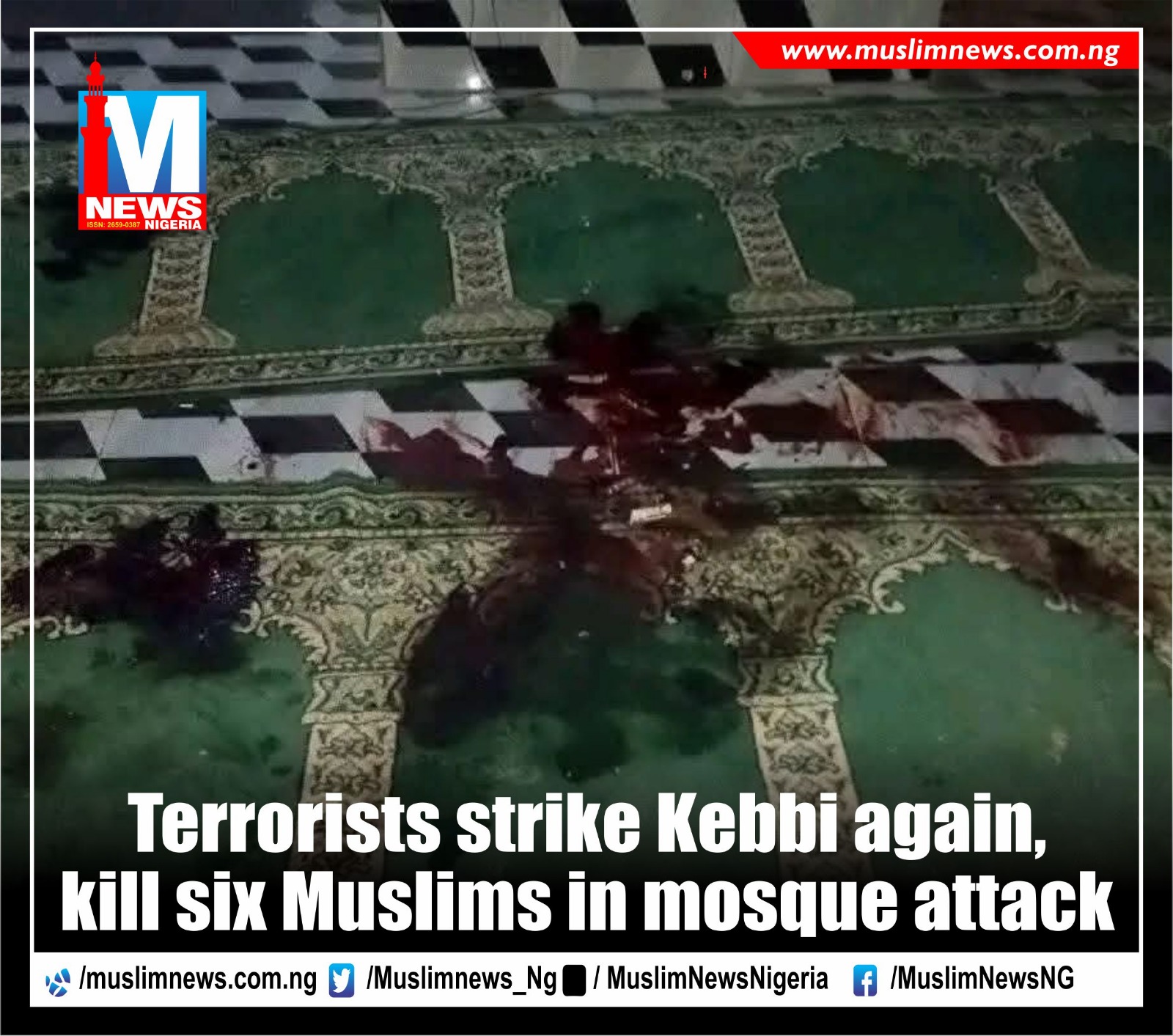
Suspected Lakurawa terrorist elements have attacked a mosque in Dadinkowa community, Maiyama Local Government Area of Kebbi State, killing six worshippers and injuring three others in what security authorities described as a reprisal assault following a failed ambush on a military convoy.
The gunmen reportedly stormed the mosque on Wednesday evening while worshippers were observing prayers and opened fire indiscriminately, triggering panic within the community.
Residents said the attackers fled shortly after the assault, leaving casualties behind.
The latest incident comes days after the same group allegedly carried out coordinated attacks across rural communities in Kebbi State, where 34 fasting Muslims were killed.
Debate over the attacks intensified after the group stormed Bui and neighbouring settlements in Arewa Local Government Area, opening fire on civilians observing Ramadan in what survivors described as organised and indiscriminate violence.
Security sources said the coordinated assaults left 16 residents dead in Mamunu, five in Awashaka, three in Masama and two each in five other villages.
Confirming the Dadinkowa incident, Kebbi State Police Public Relations Officer Bashir Usman said the mosque attack was carried out in retaliation for an earlier confrontation between the group and troops of the Nigerian Army.
“The attack was a reprisal by suspected Lakurawa terrorist elements following a failed ambush on troops attached to the 8 Division,” he said.
According to the police spokesperson, the sequence of events began on February 24 when the General Officer Commanding 8 Division and Commander Sector 2 of Operation FANSAN YAMMA, Major General Bemgha Koughna, came under attack while travelling to visit frontline troops deployed in the state.
Usman explained that the GOC’s convoy encountered heavy gunfire while navigating forested terrain near Mayama Hill. Troops reportedly responded with superior firepower, engaged the attackers in a gun duel and neutralised five suspected terrorists, thereby foiling the ambush.
He added that five worshippers initially died from gunshot wounds sustained during the mosque attack, while three others suffered varying degrees of injuries and were evacuated to nearby medical facilities for treatment. However, local sources said six victims were ultimately confirmed dead and were buried after funeral prayers conducted in line with Islamic rites.
Residents have expressed fear over the recurring attacks, calling for intensified security presence and sustained operations to protect vulnerable rural communities across the state.
The latest violence adds to growing concerns about persistent armed group activities in parts of north western Nigeria, particularly during the Ramadan period when many communities gather for prayers and nightly religious activities.
Nigerian Muslim Personalities of the Year 2024/2025

Global Muslim Personalities of the Year 2024/2025




Sponsored