

As Former NAHCON boss shares his odyssey, spiritual significance of Islam’s three sacred mosques
By Rasheed Abubakar
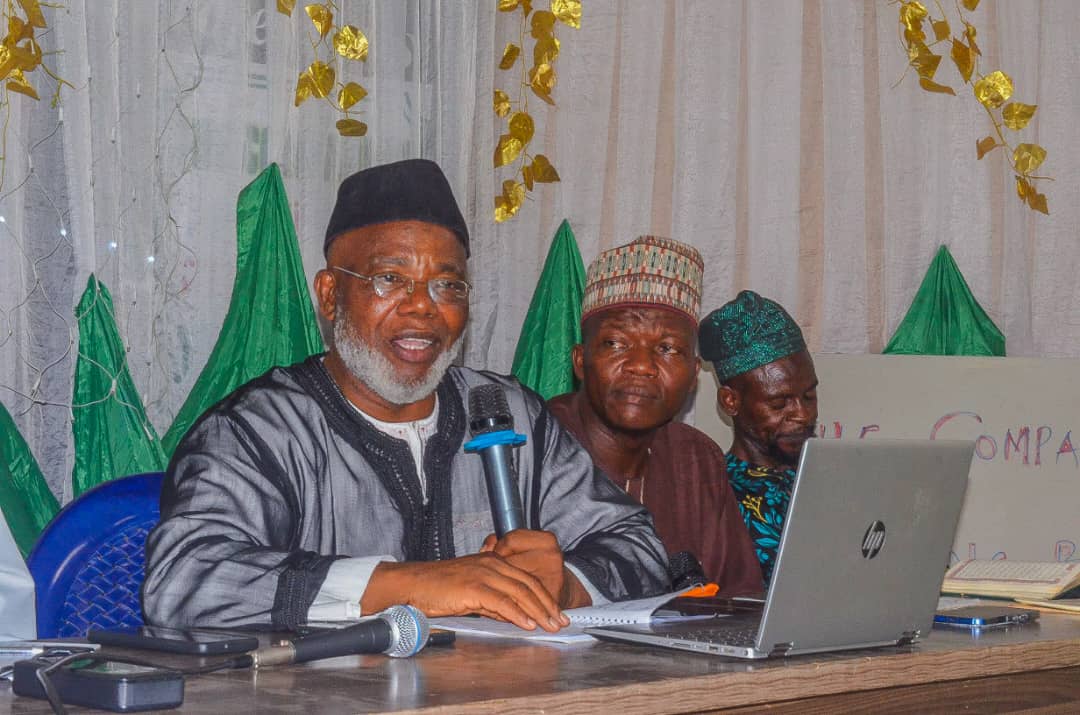
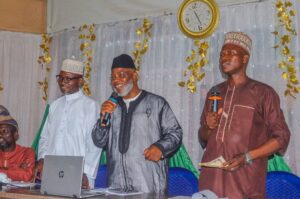
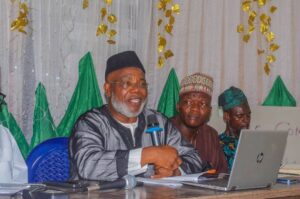
At the Ramadan lecture organised by The Companion, an association of Muslim men in business and the professions, former Chairman and Chief Executive Officer CEO of the National Hajj Commission of Nigeria (NAHCON), Ustadh Zikrullah Kunle Hassan, delivered more than a religious talk.
Held on Sunday, March 1, at the group’s Central Mosque in Ikorodu, Lagos, Ustadh Hassan offered a sweeping reflection on faith, history, civilisation, and the transformative power of tourism.
Drawing inspiration from the legendary 14th-century Moroccan explorer Ibn Battuta, the former NAHCON Chairman traced his journeys across Africa, Asia, and Europe, linking them to the prophetic tradition of visiting the three sacred mosques of Islam.
The three sacred mosques
Ustadh Hassan, a lawyer by training, opened his presentation with Surah Imran, Qur’an 3: 96-97, where Almighty Allah describes the Ka‘bah in Makkah as the first house established for the worship of mankind.
“The first House of Allah is the Kaaba in Makkah,” he said, explaining that it is situated within Masjid al Haram, the largest mosque in the world, which Islamic tradition holds was first established by Prophet Adam and later rebuilt and completed by Prophet Ibrahim and his son, Prophet Ismail.
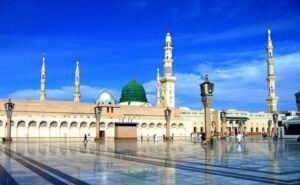
Aside from Masjid al-Haram, Ustadh Hasaan noted that Al-Masjid an-Nabawi in Madinah and Al-Aqsa Mosque in Jerusalem, are the three sanctuaries the Prophet specifically encouraged Muslims to visit for worship.
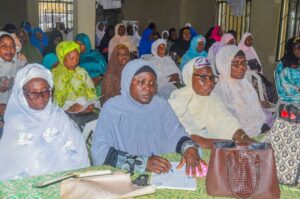
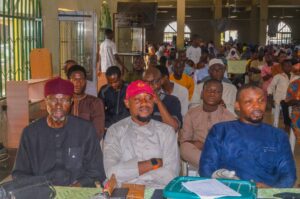
Quoting from Sahih al-Bukhari, widely regarded as the most authentic collection of Hadith, the former NAHCON Chairman reminded the mosque filled to capacity with Muslim men and women: “Do not set out on a journey except for three mosques: Al Masjid al Haram, my mosque, and Al Masjid al Aqsa.”
Emphasises three sacred Mosques
Ustadh Hassan emphasised that these three mosques carry unique spiritual merits not found elsewhere. He explained that prayer in Masjid al-Haram is rewarded one hundred thousand times over, while prayer in Al-Masjid an-Nabawi carries a reward multiplied one thousand times. Prayer at Al-Aqsa Mosque, he added, is also granted multiplied rewards according to Islamic tradition.
“These are divine distinctions,” he said, adding, “That is why visiting them, especially at least once in a lifetime, is worth every sacrifice.”
Yet, Ustadh Hassan candidly acknowledged the material realities of embarking on this journey. “If you want to perform Hajj today from Nigeria, you may need about N9.3 million,” he said, stressing that the spiritual gains make the effort worthwhile, especially for a once-in-a-lifetime journey.
Inspired by Ibn Battuta
His enduring fascination with travel began during his student years, when he studied history at the Ordinary and Advanced Level stages. It was then that he encountered the remarkable story of Ibn Battuta, the fourteenth century Muslim scholar and explorer born in Tangier, Morocco, in 1304.
The accounts of Ibn Battuta’s journeys across Africa, the Middle East, Asia and parts of Europe ignited in him a desire not merely to see the world, but to understand it through the lens of faith, scholarship and civilisation.
At 21, Ibn Battuta left home intending to perform Hajj. The journey to Makkah took him nearly two years. What began as pilgrimage became a 29-year odyssey across what historians today equate to nearly 40 modern countries. He returned home long after many had presumed him dead.
According to him, Ibn Battuta’s travelogue, known as Rihla (often translated as “My Journey”), remains one of the most detailed records of the medieval world.
Among other contributions, Ustadh Hassan noted that Ibn Battuta was one of the early chroniclers whose accounts helped preserve the legacy of Mansa Musa, the famed Malian emperor whose wealth and influence reverberated across continents.
“That story changed me,” Ustadh Hassan said. “It expanded my thinking.”
Tears in Córdoba
Ustadh Hassan’s quest for history and faith also took him to Spain, drawn by the legacy of Córdoba, once the heart of the Islamic civilisation of al Andalus. For nearly six centuries, Islam flourished in parts of what is now Spain, shaping architecture, scholarship and governance.
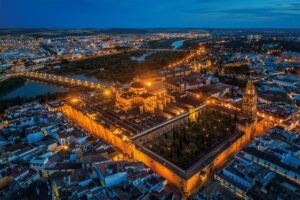
In Córdoba, he visited the iconic Mosque–Cathedral of Córdoba, originally constructed in 748 AD as a grand mosque. Following the fall of Muslim rule in 1236, the structure was converted into a cathedral and remains so today.
Standing inside the vast complex, he encountered a striking blend of Islamic and Christian architecture. The towering arches and intricate designs of the original mosque still stand, yet cathedrals have been built within its walls.
“The day I visited, I wept after stepping out,” he recalled, adding, “The gigantic structure of the mosque is still there, but seeing what it has become left me deeply emotional.”
He said he left Spain in a sombre mood, reflecting on the rise and fall of civilisations and the fragile nature of power and history.
Türkiye: From sadness to joy
From Spain, his journey led him to Türkiye, where the weight of Córdoba’s experience gradually gave way to renewed joy.
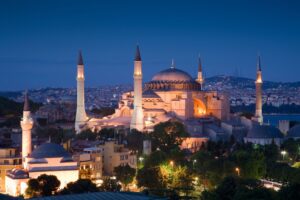
In Istanbul, he prayed at the majestic Sultan Ahmed Mosque, widely known as the Blue Mosque, built in the early seventeenth century and now over three hundred years old.
He also visited the historic Hagia Sophia, a structure that has witnessed dramatic shifts in identity. Originally built as a church during the Byzantine era, it later became a mosque after the Ottoman conquest of Constantinople, when the city was transformed into Istanbul.
It was subsequently converted into a museum in the twentieth century before being reconverted into a mosque in 2020 by the current Turkiye President, Recep Tayyip Erdogan.
“I have visited Türkiye two or three times,” he said. “The first time I came, Hagia Sophia was a museum. On my next visit, it had been reconverted into a mosque. I am always happy to see it because it brings me joy and balances the sorrow I felt in Spain. Türkiye truly made me happy.”
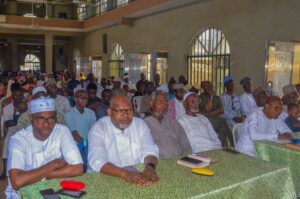
During one of his visits, he observed the Zuhr prayer at the Blue Mosque and proceeded to observe Asr at Hagia Sophia. The two historic mosques stand only about five minutes apart, allowing him to move easily between them.
Ustadh Hassan’s reflections from Egypt
“I have also visited Cairo in Egypt,” Ustadh Hassan recalled to the audience that had filled the mosque to capacity, saying, “Apart from attending madrasa classes there, I visited several historic mosques.”
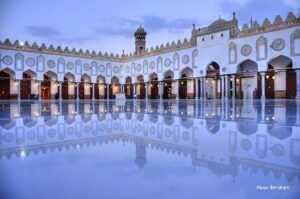
In Cairo, he prayed at the revered Al-Azhar Mosque, one of the oldest centres of Islamic scholarship in the Muslim world. Established in 970 CE during the Fatimid era, the mosque is over one thousand years old and has, for centuries, served as a global hub of learning, producing generations of scholars who have influenced Islamic thought across continents.
He also visited the Husayniyyah Mosque, known formally as Al-Hussein Mosque. The mosque holds deep symbolic significance for many Muslims because it is traditionally believed to house the head of Imam Hussein, the grandson of Prophet Muhammad. For worshippers, it represents sacrifice, resilience and devotion, values associated with the legacy of the Prophet’s family.
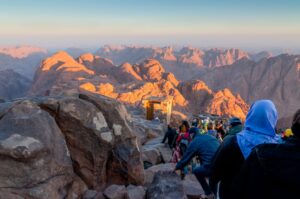
Beyond Cairo, Ustadh Hassan travelled to Mount Sinai, located about ten hours away by road. The mountain occupies a unique place in Islamic history as the site where Allah spoke to Prophet Musa and where he stayed for forty nights, as referenced in Surah Al-A’raf, Verse 143.
Although many visitors chose to climb the mountain, he declined. He explained that his understanding of Islamic teachings guides his choices during travel. “People were climbing the mountain, but I did not,” he said. “The Prophet taught that a journey undertaken specifically for worship should only be to three mosques, and Mount Sinai is not among them. I visited out of inspiration from Ibn Battuta, but I did not climb.”
His exploration also led him to the historic River Nile. Curious about its source and course, he discovered that the river does not originate in Egypt. Before entering Egyptian territory, it flows through six African countries: Eritrea, Ethiopia, Uganda, Kenya, Rwanda and Sudan. He noted that tracing the river’s journey across these nations deepened his understanding of Africa’s shared geography and historical interconnectedness.
A Journey across continents, anchored in faith
Ustadh Hassan’s odyssey did not end in Egypt, Spain, or Türkiye. His travels have carried him far beyond the familiar landscapes of the Muslim world, yet his focus has always remained on faith and the pursuit of knowledge.
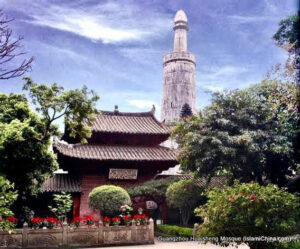
While many Nigerians travel to China for business, Ustadh Hassan’s visit had a different purpose. In Guangzhou, he explored the Huaisheng Mosque, traditionally regarded as one of the earliest mosques in China, dating back to the seventh century and linked in Muslim tradition to Sa‘d ibn Abi Waqqas.
“When I applied for a visa, they asked me what business I was going for in China. I said business is not my line,” he recalled with a smile, describing the journey as a spiritual quest beyond commerce.
In India, he visited the iconic Taj Mahal, one of the Seven Wonders of the World, an architectural masterpiece that stands as a symbol of history and devotion. He also stopped at the headquarters of the Tablighi Jamaat at Banglewali Masjid in Nizamuddin, Delhi. He described the centre as striking in its simplicity, reflecting the modest lifestyle for which the movement is known.
Across Africa, he has travelled extensively through northern and western regions, including Cameroon and Senegal. Although he did not visit Kaolack, the spiritual sanctuary of Ibrahim Niasse, founder of a major Tijaniyyah Sufi order, he acknowledged the town’s significance within West African Islamic history.
His journeys have also taken him to several Western countries, including Belgium, France and Germany. Yet he insists that such trips never held the same meaning for him as those connected to Islam and the pursuit of religious knowledge.
“I love travelling,” he said. “Whenever I arrive in a place, I make sure I find a mosque to pray and explore, learn more about its history. The Prophet said the whole earth has been made a place of prayer except the graveyard and the toilet.”
For him, travel offers perspective. He encourages young people who have the means to explore the world. “When you travel widely, many things people consider important lose their weight,” he reflected.
“You see how influential figures once shaped history but are no longer relevant.” He cited the example of the grave of Imam al Shafi’i in Cairo, once associated with one of Islam’s greatest jurists, yet today far removed from the power and prominence that defined his era.
“All these countries, historic sites, and mosques I visited,” he noted, “were not among the three sacred mosques mentioned in the hadith.” He added that his journeys were inspired by his admiration for Ibn Battuta and a deep desire to seek knowledge.
The Hajj that raised eyebrows
Perhaps the most defining chapter of Ustadh Hassan’s spiritual journey began in 1987, when he resolved to perform Hajj, the pilgrimage that would allow him to pray in two of Islam’s holiest mosques, the Kaaba in Makkah and Masjid An-Nabawi in Madinah.
At the time, he was young, unmarried, and without a house of his own. In an era when many saved for years before undertaking the pilgrimage, his decision surprised many, including his father, who doubted he was ready.
In southwestern Nigeria, where he hails from, performing Hajj was a major milestone marked by celebration and ceremony. Departures were festive, and returning was even more so. It was uncommon for someone of his age and circumstances to embark on the journey. Yet he persisted and eventually fulfilled this religious obligation.
He often quotes the Prophet’s saying: “Do not set out on a journey except for three mosques: Al-Masjid al-Haram, my mosque, and Al-Masjid al-Aqsa.” For him, Hajj represents a once-in-a-lifetime duty for those with the means. At its heart is the Kaaba in Makkah, regarded in Islamic tradition as the first House of worship established for mankind.
Over the years, the young Hassan, whose ambition once drew scepticism, rose to serve as Chairman of the Osun State Pilgrims Board and later as Chairman and Chief Executive Officer of the National Hajj Commission of Nigeria (NAHCON), a position he held for nearly four years.
The Honour of entering the Kaaba
Yet one deeply cherished aspiration remains unfulfilled. He has not entered the Kaaba, an honour occasionally granted to select dignitaries and global leaders by the Custodian of the Two Holy Mosques, including the rare privilege of sweeping inside the sacred sanctuary.
When asked by an audience member whether the Kaaba contains idols, Hassan calmly explained, “Nothing like that. It is simply an honour to enter as an influential person and sweep the inside of Allah’s house.”
He recounted how a friend once chartered a private plane for the two of them to travel to Makkah with the hope of gaining entry. The aircraft waited for their return the next day, but access was not granted. His friend later entered on another occasion. Hassan remains hopeful that one day he too will step inside and perform this sacred duty.
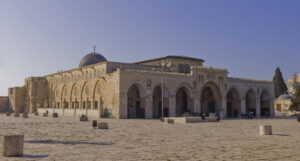
There are other places Ustadh Hassan still hopes to visit. Iraq, where towering scholars such as Imam Abu Hanifah and Imam Ahmad ibn Hanbal are buried, remains on his list. He also looks forward to praying at Al-Aqsa Mosque in Jerusalem, the third holiest mosque in Islam and the final one of the three sacred mosques mentioned in the hadith, once peace is fully restored to the region.
A Call to young Nigerians
Ustadh Hassan concluded with a heartfelt message to young Nigerians: “If you have the means, travel. It will reduce your worries and expand your mind. You will realise that the world is far bigger than your immediate environment,” he said.
Like Ibn Battuta, Ustadh Hassan views travel not merely as tourism but as a path to reflection, a journey across lands and cultures that ultimately deepens faith. For him, every journey, whether to Makkah, Istanbul, Córdoba, or the banks of the Nile, begins and ends with worship.
Sponsored Event

Nigerian Muslim Personalities of the Year 2024/2025

Global Muslim Personalities of the Year 2024/2025