

Being the full text of a commemorative paper presented at the 20th Founder’s Day of Crescent University, Abeokuta, Ogun State, held on Sunday, March 22, 2026, at the IMA Research Centre, Abeokuta, Ogun State, and delivered by Zikrullah Kunle Hassan, Chairman, Fajr Centre, Lagos.
In the Name of Allah, the Most Gracious, the Most Merciful
All praise is due to Allah, Lord of the worlds. May peace and blessings be upon our noble Prophet Muhammad (SAW), his family, his companions, and those who follow his path until the Day of Judgment.
The Proprietor and Chairman of the Board of Trustees (BoT) of this esteemed citadel of learning, Prince Mahruf Adesegun Ajibola; the Vice Chancellor, Prof. Ibraheem Gbajabiamila; the Registrar, Barrister Zakariyya Ajibola; distinguished scholars, respected elders, eminent personalities, members of the academia, students, and the entire Crescent University community.
As-salāmu ‘alaykum wa rahmatullāhi wa barakātuh.
I begin by expressing my profound gratitude to the organisers of this special occasion for deeming me fit to stand before this distinguished gathering and share reflections on the life, legacy, and enduring contributions of Prince Abdul-Jabbar Bola Ajibola, SAN, as we commemorate the 20th Founder’s Day of Crescent University.
I received a phone call from the Secretary General of the Islamic Mission for Africa, Alhaji Sa’eed Aweda, while I was in I‘tikāf at the central mosque in my community, surrounded by my local folks in the serene environment of Ipetu Ijesha, Osun State.
Over the years, I have resolved that instead of performing Umrah during Ramadan, I will undertake it at any auspicious time and dedicate the last ten days of Ramadan to a spiritual retreat within my community as a modest contribution to the growth and development of Islam.
I had also planned that upon returning to Lagos, after the Eid-el-Fitr prayers, I would use the weekend to rest, having undergone a period of spiritual rejuvenation and intense ibadah during the blessed month of Ramadan, just as millions of Muslims across the globe have done.
However, when the invitation came to speak in honour of the founder of this great institution, a colossus, a giant in the legal profession, an astute administrator, and a commander in the field of Islamic propagation, I had no option but to accept. It was not merely an invitation; it was a call to honor excellence, legacy, and service.

It is therefore a great honour to stand before you today at the twentieth Founder’s Day of Crescent University, founded by our revered father, Prince Bola Ajibola, SAN.
I recall vividly that when the late sage returned to his Lord on April 8, 2023 at the age of 89, I was serving as Chairman of the National Hajj Commission of Nigeria (NAHCON), and I said in my tribute:
“His death is not only a loss to his family but to the people of Ogun State, the entire Muslim Ummah, and Nigeria as a whole. As an elder statesman, jurist, and trailblazer, his indelible mark will be very difficult to fill.
“The former Judge of the International Court of Justice is not only a teacher but also a mentor and a source of inspiration to many. His passing leaves a heartache no one can heal.
“However, I take solace in the fact that those we love do not go away; they walk beside us every day.
“His contributions to the propagation of Islam and knowledge will forever be remembered. I pray that Allah grants him Al-Jannah.”
Distinguished audience, permit me to recall the words of the great jurist Al-Shafi‘i:
قد مات قوم وما ماتت فضائلهم ..
وعاش قوم وهم في الناس أموات.“Some people have died, yet their virtues have not died. And some people live among others, yet they are as if dead.”
Indeed, our father may have departed this world, but his virtues remain alive, guiding, inspiring, and teaching.
Bola Ajibola: An Epitome of Islamic Evangelisation in Yorubaland
Prince Bola Ajibola’s life was a testimony of unwavering commitment to Islam and humanity. He was born into a Muslim family and attended missionary schools, yet he retained and strengthened his Islamic identity.
He made tireless efforts in da‘wah, bringing together scholars to address contemporary issues affecting Muslims. His efforts contributed to the growth of Islamic movements such as the Islamic Movement for Africa (IMA), creating platforms for learning and spiritual development.

His Role in the Formation of Muslim Ummah in Western Nigeria (MUSWEN)
Another notable contribution of Bola Ajibola was his role in the establishment and advancement of Muslim Ummah in South Western Nigeria (MUSWEN), where he worked closely with respected scholars and leaders such as Hafeez Abu, Aliyu Babatunde Fafunwa and the late Abola, alongside other committed stakeholders like Justice Baba-lakin.
The formation of MUSWEN (Muslim Ummah of South-West Nigeria) can be traced to a growing realization among Muslim professionals and stakeholders in the region of the need for unity, coordination, and a stronger collective voice. Notably, the initial idea was championed within The Companion, a respected association of Muslim professionals and businesspeople dedicated to integrating faith with professional excellence.
During the presidency of Alhaji Y.K.O. Abdulkarim in The Companion, the concern was raised that Muslims in South-West Nigeria needed a unified platform that could bring together diverse Islamic organizations, scholars, and professionals under one umbrella.
This vision was driven by the understanding that fragmentation limited effective representation, collaboration, and impact on issues affecting the Ummah.
From this thoughtful initiative emerged the concept of a regional body that would serve as a coordinating and representative voice for Muslims across the South-West. Through continued dialogue, consultations, and the support of key stakeholders and leaders, this idea gradually matured into what is now MUSWEN a platform established to promote unity, foster cooperation among Muslim Ummah in South West Nigeria and strengthen the socio-religious and developmental interests of the Muslim community in the region.
He also led a delegation to a Hijrah dinner with the late President Muhammadu Buhari in the year 2019, an engagement that helped strengthen recognition, collaboration, and institutional support for Muslim in South Western Nigeria (MUSWEN), further advancing its visibility and impact within the Muslim community.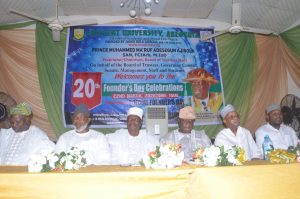
He also sponsored numerous Islamic radio programmes for public enlightenment. Above all, he demonstrated uncommon courage in establishing an Islamic university in Yorubaland to cater for Muslim students.
These tireless efforts reflect the essence of striving in the path of Allah, uniting the community, and seeking means to benefit the Ummah. As Almighty Allah reminds us in Surah Al-Ma’idah (5:35):
يَا أَيُّهَا الَّذِينَ آمَنُوا اتَّقُوا اللَّهَ وَابْتَغُوا إِلَيْهِ الْوَسِيلَةَ وَجَاهِدُوا فِي سَبِيلِهِ لَعَلَّكُمْ تُفْلِحُونَ
“O you who have believed, fear Allah and seek the means [of nearness] to Him and strive in His cause that you may succeed.”
University Shaping Leaders and its Impact
At a stage in life when many would choose comfort and luxury, he chose sacrifice. Instead of retiring into affluence, he invested his wealth in establishing a faith-based institution, Crescent University, designed to serve generations.
When you talk about Crescent University, you’re not just talking about a school you’re talking about a legacy, a statement, and a bold response to a gap that existed in the South-West.
What makes it even more remarkable is the bold and uncommon step taken by its founder, Prince Bola Ajibola. He didn’t just envision change, he sacrificed personal wealth and comfort to build an institution that would secure a future for the Muslim Ummah.
That decision was not only courageous but historic laying a foundation that continues to open doors for generations, ensuring that faith and knowledge grow hand in hand
A rare identity in the South-West
In a region where many private universities are owned by Christian missions, Crescent University stands out as the first Muslim faith based university in South-West Nigeria, followed by Fountain University in Osogbo.
The other two are Al-Hikmah University, Ilorin, and Summit University, Offa, both located in Kwara State, North Central Nigeria.
This makes Crescent not just another institution but a symbol of representation for Muslim education in the South-West, a place where students can pursue modern education without compromising their Islamic identity and values.
What makes Crescent University unique?
What makes Crescent University unique is that it is not only about religion but about balance, combining academic excellence and moral discipline, with a philosophy aimed at producing global citizens, not just brilliant minds.
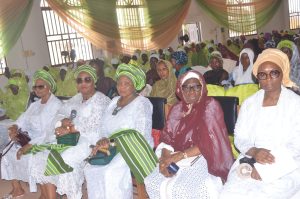
Crescent University stands as a faith-based institution that remains remarkably inclusive. Interestingly, over 30 per cent of its students are non-Muslims, a clear indication that the university is not restrictive but deeply value-driven. It has cultivated a structured and disciplined environment where students are nurtured with strong ethical grounding alongside sound academic training.
The founder also placed special emphasis on the education of the Muslim girl-child, deliberately addressing long-standing inequalities and expanding access to quality learning.
Furthermore, the university represents a thoughtful integration of Islamic and Western education, offering a system in which deen and dunya grow side by side, not in conflict but in harmony. This balanced approach reflects a broader vision of education that is both spiritually conscious and globally relevant.
The story becomes even more profound when one considers the man behind this vision. This was not a casual investment, but a life-defining sacrifice. After retiring as an international judge, he became deeply concerned about the discrimination faced by Muslim students and the limited access to quality education.
In response, he took an extraordinary step—selling his personal properties both in Nigeria and abroad to fund the establishment of the university. This was far beyond business; it was a powerful fusion of vision and sacrifice, driven by a clear mission to restore dignity, access, and identity to Muslim education.
Today, Crescent University represents far more than physical structures and academic programmes. It stands as a response to educational inequality, a platform for moral and intellectual development, and a lasting legacy of selfless service. Even after the passing of its founder, his message continues to resonate: education should not merely inform the mind, but shape character, preserve faith, and build the future.
Since its inception in 2005, the university has graduated thousands of students who are now applying their knowledge and skills to national development and societal progress. Remarkably, a significant proportion of these graduates are women. As of 2026, the female-to-male student ratio stands at 70:30, reflecting Crescent University’s enduring commitment to empowering women through education.
As these alumni continue to make meaningful contributions to humanity, the rewards of their achievements stand as a lasting testament to the legacy of the late founder, Prince Abdul-Jabbar Bola Ajibola, SAN.
The Role of Crescent University in Shaping the Future of Nigeria
As Prince Bola Ajibola is remembered at the 20th anniversary of Crescent University today, it is important to reflect on the vision he laid down and the strong foundation he built before his passing. His commitment to quality education, moral uprightness, and national development remains a guiding light for the institution. Honouring his legacy goes beyond remembrance
it requires a conscious effort to sustain and expand the values he laid down ensuring that the university continues to produce graduates who are not only knowledgeable but also principled and socially responsible.
Crescent University Abeokuta can shape the future of Nigeria more effectively by building on what it already stands for academic excellence, moral discipline, and practical skill development while responding directly to the realities graduates face after school.
The university already promotes entrepreneurship, leadership, and value-based education, but it can go further by intentionally aligning its programmes with today’s job market. By strengthening its entrepreneurship centres, ICT training, and industry partnerships, it can guide students into clear career paths such as tech, business innovation, healthcare, and media. This will help reduce the common problem of graduates leaving school without direction or employable skills.
At the same time, Crescent University has a strong foundation in character building and ethical values, which is a major advantage in shaping society. Its focus on discipline, integrity, and community service already helps produce responsible graduates.
To shape the future even more, the university can expand community engagement, encourage students to solve real societal problems through research, and promote innovation that addresses issues like unemployment and social instability.
When students are trained not just to succeed personally but to contribute positively to society, they are less likely to engage in crime and more likely to become job creators, ethical leaders, and law-abiding citizens. In this way, Crescent University can move beyond being just a place of learning to becoming a strong force for national development and social stability.
Contributions to the Legal Field
Pioneer of Arbitration and Alternative Dispute Resolution (ADR): He is widely credited with establishing and popularising arbitration and ADR in Nigeria. In 1979, he founded the Nigerian Institute of Chartered Arbitrators (NICArb), which remains the premier body for arbitration in the country.
Leadership of the Nigerian Bar: As President of the Nigerian Bar Association (NBA) from 1984 to 1985, he advocated for the rule of law and judicial independence during a critical period of military rule.
Service as Attorney-General and Minister of Justice: During his six-year tenure as Nigeria’s Attorney-General and Minister of Justice (1985–1991), he famously refused to draw a salary, donating it instead to the NBA and various charitable causes. He worked gratuitously without earning income, and it was therefore not surprising that he was later called to higher duty as a judge at the International Court of Justice (ICJ).
International Jurisprudence: Ajibola served as a judge at the International Court of Justice (ICJ) in The Hague from 1991 to 1994. He was also a member of the Permanent Court of Arbitration and the World Bank Administrative Tribunal, serving as both Vice-President and President.
Legal Education and Mentorship: He founded Crescent University, Abeokuta, selling personal assets to fund an institution dedicated to “scholarship, service, and character.” He mentored numerous legal figures, including former Vice President Yemi Osinbajo, who served as his Special Adviser.
Constitutional and International Boundary Resolutions: He played a lead role in the Cameroon-Nigeria Mixed Commission concerning the Bakassi Peninsula dispute and served on the Ethiopia-Eritrea Boundary Dispute Commission.
Documenting Nigerian Law: He edited the All-Nigeria Law Reports (1961–1990) and Nigeria’s Treaties in Force (1970–1990), providing essential reference works for practitioners and scholars.
His contributions to the legal profession, both in Nigeria and globally, are so numerous that they warrant a separate presentation, reflecting a life dedicated to justice, scholarship, and service.
Islamic Legacy in Education
It is important to remind ourselves that Muslims have historically been at the forefront of education. The University of al-Qarawiyyin, founded in 859 in Fez, Morocco, is widely recognised as the world’s oldest university, as attested by United Nations Educational, Scientific and Cultural Organisation (UNESCO) and the Guinness World Records.
This was followed by Al-Azhar University, established in 970 in Cairo, Egypt.
Whereas, the first European university, the University of Bologna, was founded over two centuries later.
Significantly, the oldest university in the world (University of al-Qarawiyyin) was founded by a woman, Fatima al-Fihri, demonstrating Islam’s long-standing support for female education.
It is also important to note that Al-Azhar University was named in remembrance of Fatima al-Zahra, the beloved daughter of the Prophet Muhammad, peace be upon him.
The name Al-Zahra symbolises purity, knowledge, and devotion, and it serves as a reminder of the central role that women have historically played in advancing education and learning in the Islamic world.
This connection emphasises that Islam has always valued the contributions of women to knowledge and human development, a principle that Crescent University continues to uphold today.
A Call to Reflect
It is deeply concerning that in today’s world, some misguided voices claim that education, especially for women, is unlawful. This is sheer ignorance. Islam remains one of the strongest advocates of knowledge for all, regardless of gender.
Historically, when Islam reached Córdoba in Spain in 711, it transformed the region into a global center of learning, attracting scholars from across Europe. Yet today, the Muslim world faces challenges, including conflicts, disunity, and underdevelopment.
This is not the legacy we inherited. It is a wake-up call: we must pursue knowledge that translates into economic strength, political relevance, and societal development within the framework of justice.
Legacy That Lives On
Our father exemplified the hadith of the Prophet Muhammad (SAW) recorded in Sahih Muslim:
إذا مات ابنُ آدمَ انقطع عملُه إلا من ثلاثٍ: صدقةٍ جاريةٍ، وعلمٍ ينتفعُ به، وولدٍ صالحٍ يدعو له
“When the son of Adam dies, his deeds come to an end except for three: ongoing charity (sadaqah jariyah), knowledge from which others benefit, and a righteous child who prays for him.”
Let us reflect on this hadith:
Sadaqah Jariyah: What better ongoing charity than a university shaping future leaders?
Beneficial Knowledge: His contributions to beneficial knowledge include founding the Chartered Institute of Arbitrators UK Nigeria Branch in 1979 and supporting the Law Reports of Nigeria.
Righteous Children: He left behind children who continue his legacy, including those managing this great institution. Importantly, Prince Mahruf Adesegun Ajibola, one of his sons, currently serves as the Proprietor and Chairman of the Board of Trustees (BoT) of this great Institution. In this role, he upholds and advances the vision and values of his late father, His Excellency Prince Bola Ajibola, the founder of the institution.
Indeed, he fulfilled all three conditions mentioned by the Prophet (SAW).
On the Crescent Symbol
Permit me to take a moment to discuss the significance of the crescent as depicted in the logo of Crescent University. It is a common assumption that the crescent symbol is inherently Islamic. However, its origins are primarily cultural and historical rather than strictly religious.
Historically, the crescent moon was employed in the pre-Islamic era. Notably, the ancient Byzantine Empire, with its capital in Constantinople, employed the crescent as a symbol under Christian rule. It held important civic and religious significance in the life of the city centuries before the advent of Islam.
The crescent later became closely associated with Islam through its adoption by the Ottoman Empire. The Ottomans incorporated the symbol into their standards, flags, and architectural designs, including minarets. Following the conquest of Constantinople in 1453, the city was renamed Istanbul, and the crescent came to be widely recognised as a representation of Muslim political and cultural identity.
Subsequently, many successor states and Muslim nations adopted the crescent in their national flags, reflecting this historical legacy. It is important to note, however, that this adoption is largely cultural and historical, rather than a religious requirement.
Several Arab countries where Islam originated, including Saudi Arabia, Kuwait, and Bahrain, do not feature the crescent on their national flags.
Nevertheless, the red crescent has been widely adopted in Muslim countries as the humanitarian equivalent of the Red Cross, demonstrating its symbolic value beyond religious or political contexts.
This historical and cultural evolution of the crescent illustrates that, while it is not originally Islamic, it has become a globally recognised emblem of Muslim identity, scholarship, and culture. In the same vein, Crescent University employs the crescent in its logo to convey a vision of growth, enlightenment, and knowledge, transcending its historical roots to inspire education, intellectual development, and service to society.
Conclusion & Prayer
Let me round off this reflection with a special poem for Crescent University:
يزيد يزيد كل يوم الي العلا
يزيد الهلال كل يوم الي البدر
I pray that all who have contributed to Crescent University will journey and grow, just like the crescent moon, increasing in light day by day until it becomes full.
May the moon of Crescent never diminish, but continue to shine across generations. May Allah bless this institution, reward its founder abundantly, and grant him Al-Jannatul Firdaus. Āmīn.
Wassalāmu ‘alaykum wa rahmatullāhi wa barakātuh
Nigerian Muslim Personalities of the Year 2024/2025

Global Muslim Personalities of the Year 2024/2025




Sponsored