

By Rasheed Abubakar
* Praises NAHCON’s digital solutions in pilgrimage management
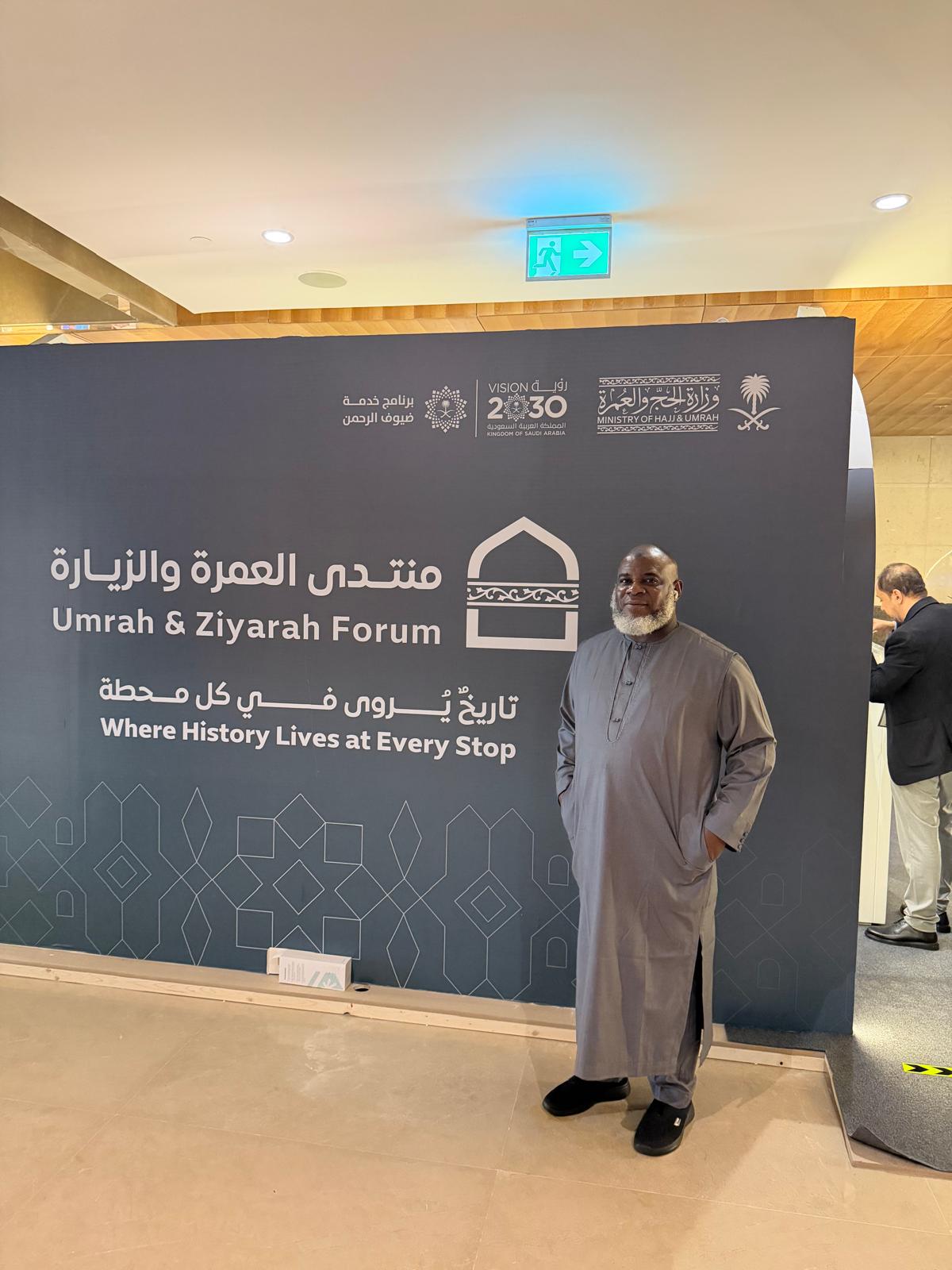
As the 2026 Umrah and Ziyarah Forum draws to a close in the holy city of Madinah, a Nigerian tour operator and Chief Executive Officer of Hamdalillahi Travels Limited, Alhaji Bemekun Rasheed Adekunle, has underscored the importance of global collaboration, innovation, and capacity building in improving pilgrimage services.
Alhaji Adekunle, whose company organises Hajj and Umrah trips for Nigerian pilgrims, said his attendance at the international forum, held between Monday and Wednesday, was driven by a commitment to enhancing the spiritual and logistical experiences of pilgrims.
Muslim News reports that the forum, themed “A History Told at Every Stop,” was organised by the Ministry of Hajj and Umrah in partnership with the Pilgrim Experience Program, bringing together more than 150 exhibitors, including government agencies, private sector service providers, and nonprofit organizations from across the world.
Speaking with our correspondent, the Nigerian private tour operator said participating in such a forum provides valuable insights into best practices, innovative solutions, and emerging trends in managing pilgrimages.
He added that the forum also offers a platform to network and collaborate with other operators globally.
Alhaji Adekunle described the Umrah and Ziyarah Forum as a vital platform for tour operators, enabling them to coordinate services, share experiences, and stay updated on evolving guidelines.
“Ultimately, the forum strengthens partnerships between stakeholders and contributes to safer, more organized, and spiritually rewarding pilgrimage experiences,” he said.
Enhancing pilgrim experience through knowledge
Drawing from years of experience in the Hajj and Umrah industry, Alhaji Adekunle, who also serves as the National Secretary of the Hajj and Umrah Tour Operators Association of Nigeria, noted that firsthand exposure to the realities of pilgrimage operations has shaped his approach to service delivery.
He emphasized empathy, detailed planning, and clear communication as critical elements in ensuring a smooth and spiritually fulfilling journey for pilgrims.
According to him, challenges such as crowd control, safety management, and catering to diverse cultural needs require operators to be both proactive and adaptable.
Key challenges facing Nigerian operators
Alhaji Adekunle identified several obstacles confronting Nigerian operators in the pilgrimage sector. These include regulatory bottlenecks, financial constraints due to currency fluctuations, and logistical issues related to transportation and accommodation during peak seasons.
He also highlighted gaps in training and capacity building, noting that many operators need better exposure to global best practices, health protocols, and customer service standards.
“Technological adoption is still developing, but it is crucial for improving efficiency and transparency,” he added.
Leveraging technology for efficiency
The CEO commended efforts by the National Hajj Commission of Nigeria (NAHCON) in integrating digital solutions into pilgrimage management. These include online registration systems, visa processing platforms, and the use of messaging applications for real-time communication with pilgrims.
He explained that tools such as virtual orientation programs, live tracking systems, and digital health monitoring have significantly enhanced safety and coordination.
Logistics and coordination
On logistics, Alhaji Adekunle described the process as complex and requiring meticulous coordination. From securing reliable transportation and accommodation to managing documentation and health protocols, he said successful pilgrimage operations depend on thorough planning and contingency measures.
He also stressed the importance of group coordination through designated leaders and communication platforms like WhatsApp to ensure seamless interaction throughout the journey.
Global partnerships and future outlook
The Chief Executive Officer of Hamdalillahi Travels Limited noted that attending international forums like the one in Madinah has strengthened his ability to build partnerships and exchange ideas with global stakeholders.
“These platforms foster collaboration and help us adopt innovative strategies that can be adapted to the Nigerian context,” he said.
Looking ahead, he projected significant transformation in Nigeria’s Hajj and Umrah industry over the next five years, driven by increased digitalization, improved safety standards, and enhanced training for operators.
He added that the industry is poised to align more closely with international standards while maintaining its cultural and spiritual essence.
Sponsored Event

Nigerian Muslim Personalities of the Year 2024/2025

Global Muslim Personalities of the Year 2024/2025