

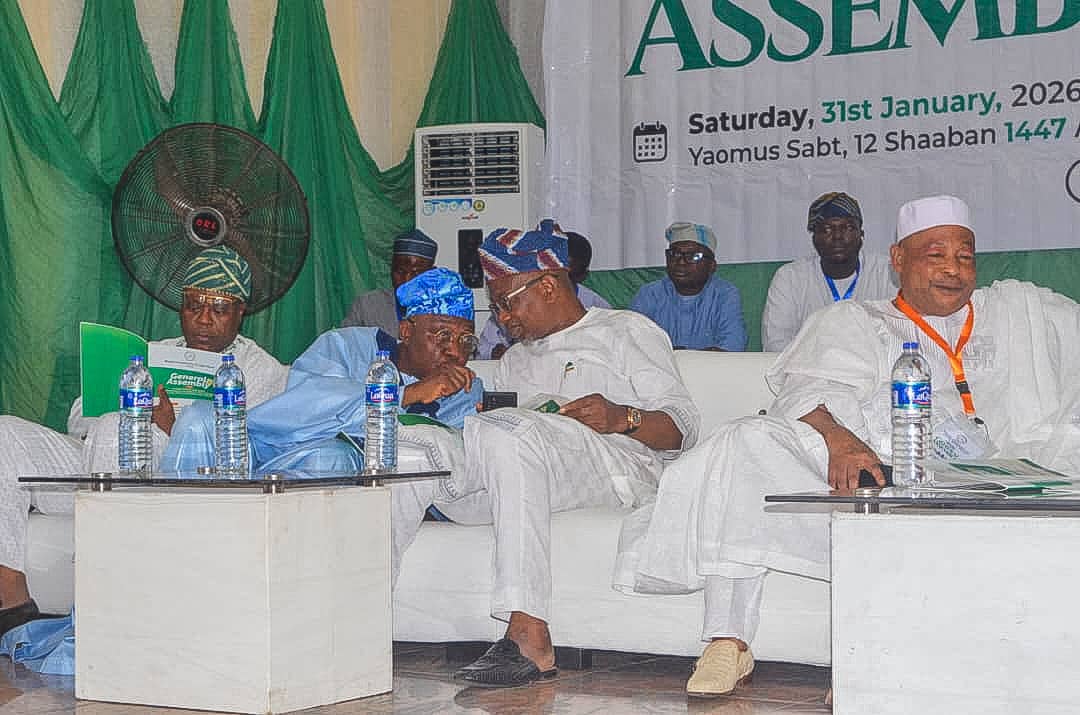
• Religious leaders, key stakeholders converge for 2026 MCLS General Assembly
• Decry marginalisation of Muslims in political appointments and leadership positions
The Muslim Community of Lagos State (MCLS) has issued a strong warning to political parties, including the ruling All Progressives Congress (APC), that it will not support any party that fields a non-Muslim candidate for the 2027 Lagos State governorship.
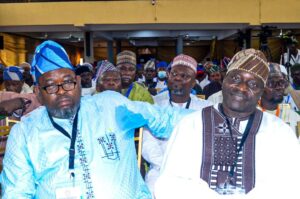
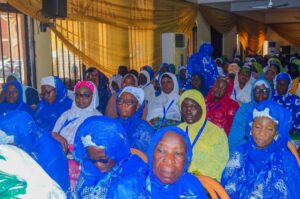
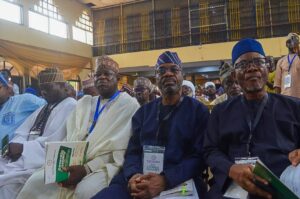
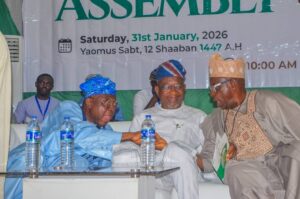
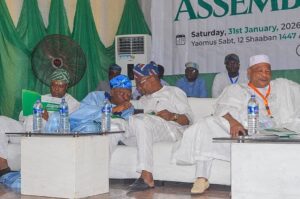
The declaration followed deliberations at the 2026 General Assembly of the Community, held on Saturday, January 31, at the Lagos State Secretariat Central Mosque Hall, Alausa, Ikeja.
Speaking through a communique jointly issued by the President, Alhaji Barr. Mohammed Oyinlomo Danmole, and the General Secretary, Alhaji Quadri Agbaje, the Community emphasized that Muslims, who constitute the outright majority in Lagos State, must be adequately represented in political leadership.
The communique stressed that support from the Muslim electorate will only be extended to parties that nominate Muslim candidates for the governorship.
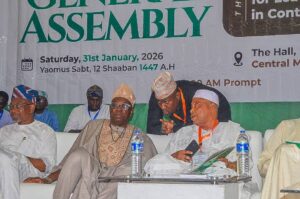
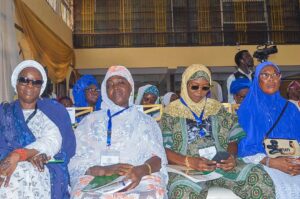
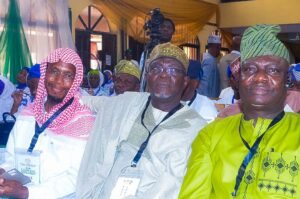
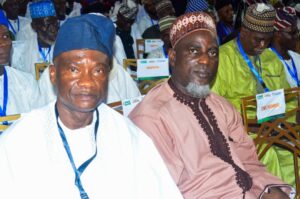
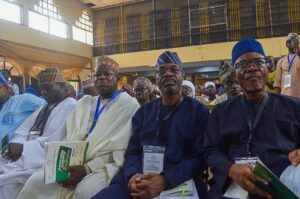
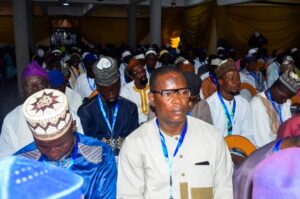
The Assembly, themed “Islamic Ethics and Good Governance: A Blueprint for Leaders and the Led in Contemporary Lagos”, was attended by no fewer than 45 Muslim organisations and drew distinguished stakeholders and top government officials.
Notable attendees included Mr. Shuaheeb Agoro, the Head of Service, Lagos State, represented by Dr. AbdulAfeez Toriola, Permanent Secretary, Lagos State Ministry of Housing; Mr. Lawal Pedro, SAN, the Honourable Attorney-General and Commissioner for Justice; Chief Bode Oyedele, Alhaji Jelil Animashaun, Mrs. Wonu Folami, Mrs. Ramlat Okunola, and Alhaja Shareefah Andu, first female chairman of the Lekki Phase 1 Residents Association (LERA), alongside captains of industry, presidents, and leaders of numerous organizations across the state.
The Assembly recalled the active role of Lagos Muslims during the 2023 general election, which contributed not only to President Bola Ahmed Tinubu’s victory but also to the APC retaining governance in Lagos State under Governor Babajide Sanwo-Olu.
Expressing concern over the marginalization of qualified Muslims in political appointments and management positions, the communique stated that only Muslim candidates would be accepted for the 2027 gubernatorial election.
The stakeholders further stressed the need for full Muslim participation in politics, including voter registration and active support for Muslim candidates.
Deputy Governor seeks ethical leadership, justice and accountability in Lagos
The keynote address was delivered by the Deputy Governor, Dr. Kadri Obafemi Hamzat, represented at the Assembly by Alhaji Tajudeen Afolabi, who highlighted the critical role of Islamic ethics in promoting good governance, urging leaders and citizens to embrace responsibility, justice, and accountability.
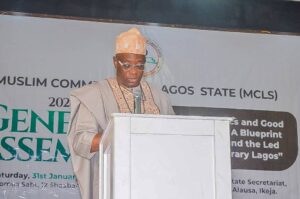
“Good governance is not merely a slogan; it is demonstrated through the consistency of work enforcement, the predictability of institutions, and the dignity with which citizens are treated,” he said.
Dr. Hamzat emphasized that in a diverse city like Lagos, justice cannot be influenced by personal connections or social standing. “When justice is compromised, trust collapses, but when it is consistent, citizens adapt and society thrives.”
He warned against favoritism disguised as loyalty, noting that leadership appointments are assignments of trust, not rewards for friendship, ethnicity, or political sacrifice. Citing the Prophet Muhammad, he added: “When responsibility is given to the unqualified, destruction follows.”
He also called for transparency, stressing that habitual secrecy breeds suspicion and that Islamic ethics require accountability not only to institutions but also to Allah. “Leadership is fundamentally service, not status,” he said.
“The Prophet did not live above his people; he listened, he served, and he carried responsibilities personally.”
Dr. Hamzat also emphasised the social roots of corruption, emphasizing that it survives because it is socially tolerated. “Good governance is not sustained by systems alone; it is sustained by collective character. Without ethics, leadership becomes coercive, and development becomes superficial.”
Prof Timehin urges value reorientation, Islamic ethics for Nigeria’s growth
One of the lead speakers, Prof. Saheed Timehin of the Department of Foreign Languages, Lagos State University (LASU), called for a fundamental change in Nigeria’s value system, saying the country’s long-standing challenges stem from moral decay.
He noted that Nigerians have complained about the same problems from the First Republic to the present, a sign that something is “fundamentally wrong” with national values.
Prof. Timehin urged citizens to embrace Islamic ethics, including trustworthiness, truthfulness, kindness and welfarism, describing them as essential tools for addressing Nigeria’s challenges.
Quoting the Qur’an, he said Allah would not change people’s condition until they changed themselves.
On politics, he criticised armchair condemnation of leaders and called for active engagement, urging Nigerians to either participate in politics or form pressure groups to hold leaders accountable.
Prof. Paramole stresses shared responsibility of leaders and citizens in Lagos
Also speaking, Prof. Abdulkabir Olawale Paramole of Lagos State University and Chief Missioner of the Jejewiyya Association of Nigeria addressed the role of both leadership and followership.
He noted that societal challenges are not limited to leaders alone but also involve followers, citing examples such as indiscriminate littering and cyberbullying, which undermine communal progress.
Prof. Paramole urged principled action at all levels, stressing that ethical responsibility is essential for sustainable development and good governance.
LASU HOD says Nigeria’s challenge lies with leaders, followers, not geography
Also speaking, the Head of the Department of English, Faculty of Foreign Languages, Lagos State University (LASU), Prof Nasiru Onibon said Nigeria’s problems are not rooted in its geography but in the failure of both leaders and followers.
He argued that poor leadership reflects societal values, stressing that “because we are not good, our leaders are also not good.”
The LASU HOD urged Nigerians to return to the true purpose of leadership and followership, calling on leaders to govern with sincerity and a genuine commitment to improving the welfare of the people.
He reminded political office holders that leadership is temporary, noting that how leaders treat the people while in office is how they will eventually meet them when they return to society.
The communique highlighted other challenges facing Muslims in Lagos
The communique also addressed other key issues affecting Muslims in Lagos. It appealed to the Lagos State Government to fully implement the Supreme Court ruling allowing female Muslim students to wear the hijab, and it unanimously adopted reports on bills to establish an Islamic Personal Court and a Shariah Court of Appeal, reflecting the community’s desire for institutional support for Islamic legal matters.
The Assembly further urged Muslims to refrain from discordant opinions on social media to maintain unity and responsible discourse. It called on the government to ensure religious balance in the appointment of tutors, permanent secretaries, and other educational officials across the six educational districts.
The community also appealed for the recruitment of Arabic and Islamic studies teachers in public schools and encouraged Muslim parents to instill Islamic values in children from an early age.
Major Muslim organisations rally for leadership representation
Among the organizations represented were the Anwarul Islam Society, the National Council of Muslim Youth Organizations (NACOMYO), the Muslim Students’ Society of Nigeria (MSSN), Nadwatul Ulama Society, Federation of Muslim Women’s Associations in Nigeria (FOMWAN), Dawah Front, NASFAT, Ansar-Ud-Deen Society of Nigeria, Islamic Academy, Jamatu Islamiyya, and The Criterion Centre, among others.
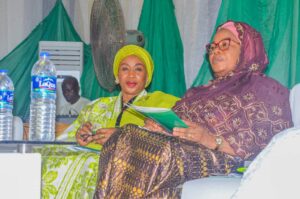
The 2026 General Assembly of MCLS reinforced the message that Muslim representation in leadership is non-negotiable, while also emphasizing the importance of ethical governance, civic responsibility, and religious rights in Lagos State.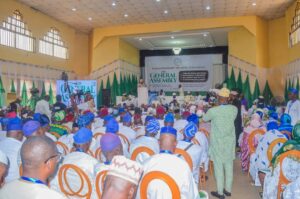
Sponsored

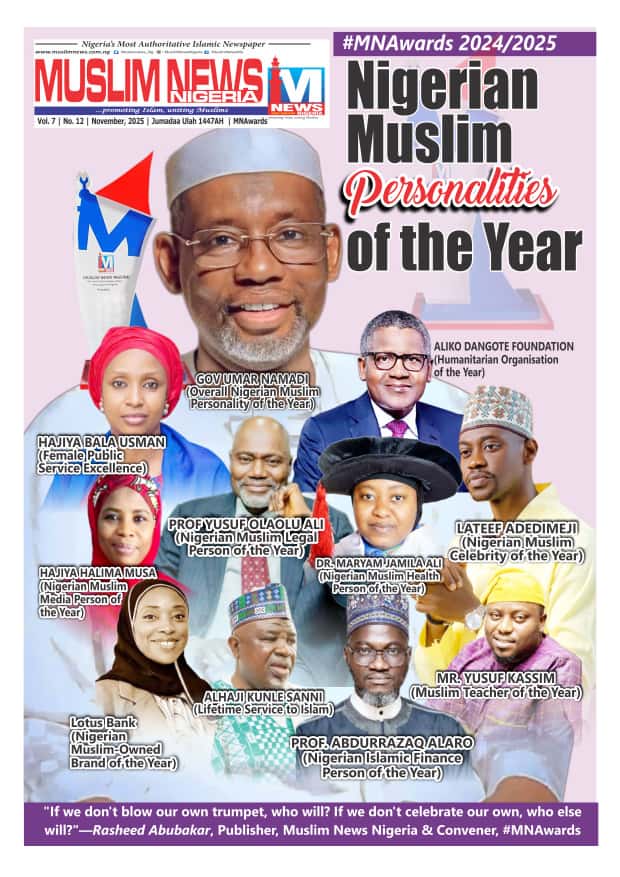
Nigerian Muslim Personalities of the Year 2024/2025
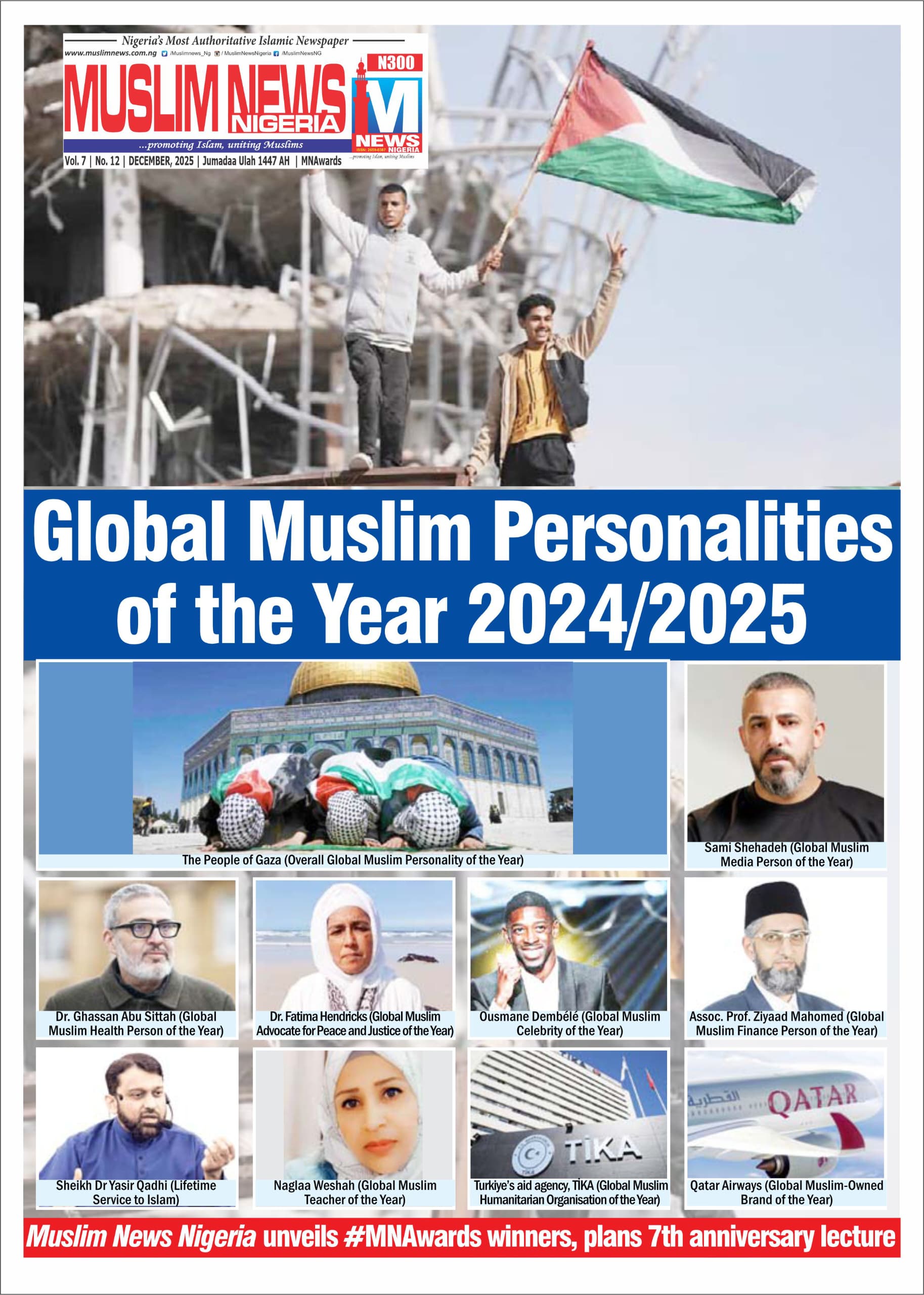
Global Muslim Personalities of the Year 2024/2025



Discover more from Muslim News Nigeria
Subscribe to get the latest posts sent to your email.