

* Lawyers say publication infringed clients’ rights to dignity, privacy and freedom of religion
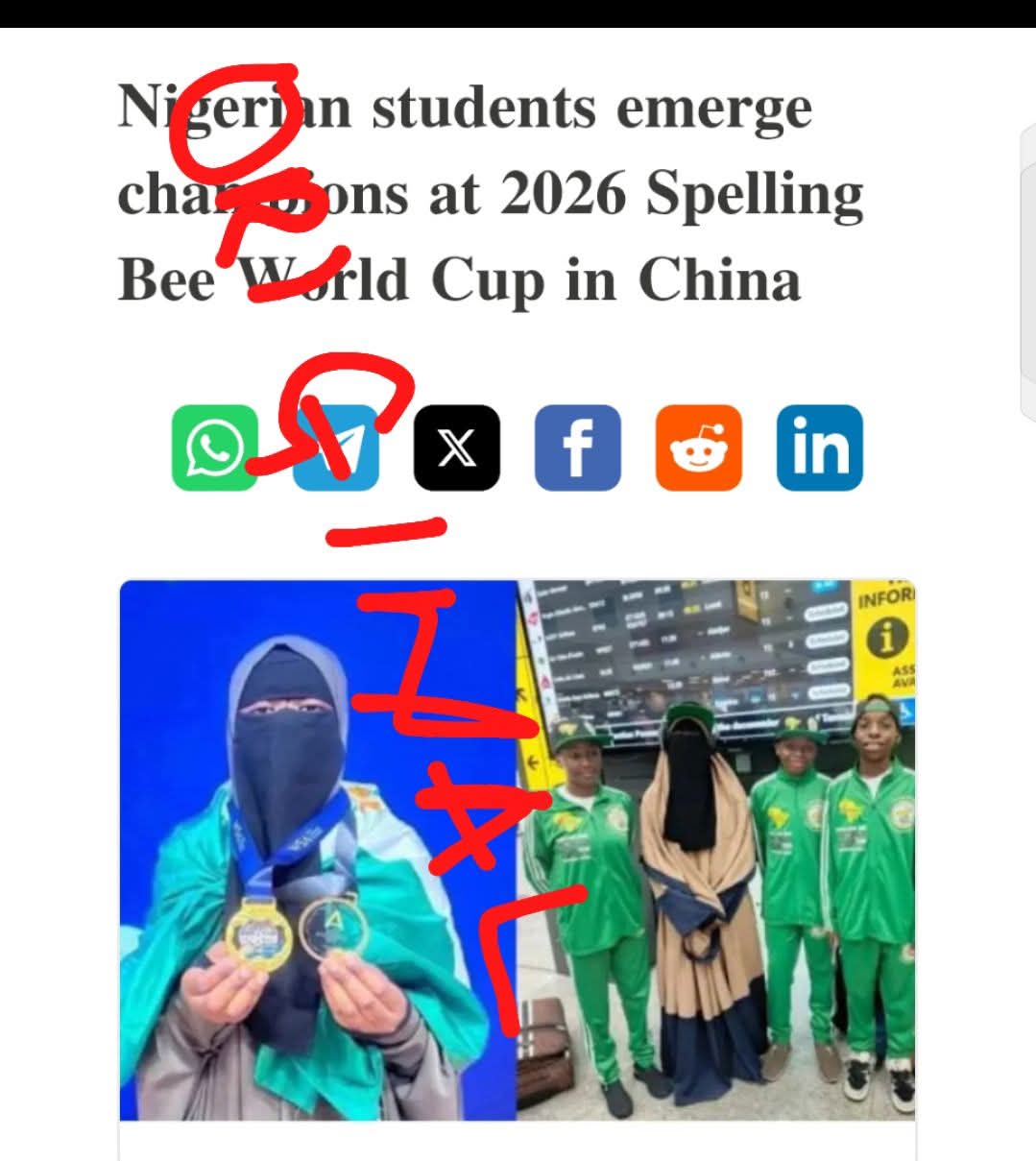
Vanguard Newspaper has replaced the Artificial Intelligence altered image of 14-year-old World Spelling Bee champion, Maryam Yusuf, with the original photograph showing her in the niqab, following public criticism and the service of a legal demand by her solicitors.
The newspaper quietly updated the featured image in its online report on Nigeria’s historic victory at the 2026 Spelling Bee World Cup in Shanghai, China, after Muslim News questioned the authenticity of the photograph and drew attention to the apparent digital removal of Maryam’s niqab.
A check by our Correspondent on Wednesday confirmed that the original photograph had been restored on Vanguard’s website. However, as of the time of filing this report, the newspaper had not issued any public explanation or apology over the publication of the AI altered image.
Meanwhile, Muslim News also obtained an acknowledged copy of the legal demand served on Vanguard Newspapers. The letter was delivered to the newspaper’s headquarters at 2 Vanguard Avenue, Kirikiri Canal, Apapa, Lagos, on the morning of Wednesday, July 22.
The development followed a formal demand by solicitors acting for Maryam Yusuf and her mother, Mrs Waliyah Adenike Akeju Ahmed, seeking the immediate removal of the AI generated image and an unreserved public apology.
In the letter dated July 21, 2026 and addressed to the Editor-in-Chief of Vanguard Newspapers Online, the law firm of Ibrahim Atanda and Co. said the image was created and published without the knowledge, consent or authorisation of its clients.
The solicitors acknowledged Vanguard’s decision to report Team Nigeria’s remarkable achievement at the 2026 Spelling Bee World Cup in Shanghai but expressed concern that the newspaper chose to publish an AI altered image instead of the authentic photograph released by the organisers.
According to the lawyers, both clients are Muslims who observe the Islamic injunction of wearing the niqab and their religious convictions do not permit the publication of facial representations of themselves.
“Our clients are Muslims who observe the Islamic injunction of wearing the Niqab. Their religious convictions preclude them from permitting the publication of their facial representations. The publication of an AI generated image purporting to represent them is therefore not only misleading and deceptive, it constitutes a grave intrusion into their rights to privacy, dignity and freedom of religion,” the letter stated.
The solicitors further argued that the publication was particularly serious because it involved a minor.
“The wrongful publication is further aggravated by the fact that the article concerns a minor who deserves protection from digital manipulation and unauthorised public representation,” the letter added.
They maintained that the publication infringed rights guaranteed under Sections 34, 37 and 38 of the Constitution of the Federal Republic of Nigeria, including the rights to dignity of the human person, privacy and freedom of thought, conscience and religion.
The lawyers also accused the newspaper of falsely representing their clients to millions of readers through the use of an artificial likeness.
“By creating and publishing an artificial likeness of our clients, your media outfit has falsely represented them to millions of readers worldwide and attributed to them appearances that are entirely false. Such conduct is ethically reprehensible at a time where Artificial Intelligence technologies are capable of manipulating identities,” the solicitors wrote.
They further stated that their clients were neither consulted nor informed that such an image would be generated and published.
“At no time did they grant Vanguard Newspaper the permission to create, manipulate, generate or publish any image purporting to depict them,” the letter added.
The lawyers demanded the immediate removal of the image from the publication and every other platform under Vanguard’s control within 24 hours of receiving the letter. They also called for an unreserved public apology acknowledging that the image was AI generated and was neither supplied nor authorised by their clients.
Although the legal team said its clients were not seeking monetary compensation at this stage because they understood that Vanguard intended to celebrate Team Nigeria’s achievement, it warned that failure to comply with the demands would leave them with no option but to pursue all available legal remedies, including claims for substantial damages for the alleged infringement of their constitutional and other legally protected rights.
The controversy began after Muslim News published a report questioning the authenticity of the image used by Vanguard in its July 21 story titled, “Nigerian Students Emerge Champions at 2026 Spelling Bee World Cup in China.”
The report observed that Maryam’s niqab had apparently been digitally removed, leaving only her hijab, unlike the original photograph released by the championship organisers and carried by several other media organisations.
The issue also attracted the attention of the Muslim Public Affairs Centre, which called on Vanguard to explain the circumstances surrounding the publication.
The organisation urged media houses to exercise greater caution in the use of Artificial Intelligence and digital editing technologies and stressed the need to preserve the authenticity of visual content.
Maryam Yusuf was one of four Nigerian spellers who represented the country at the World Spelling Bee in Shanghai. She returned home with a gold medal after Team Nigeria won the Gold Award in the Middle School Group category during Nigeria’s maiden appearance at the global championship.
Days before the competition, the 14-year-old came under intense online attacks after photographs of Team Nigeria were shared on social media. Rather than celebrate her academic excellence, many users mocked her because she wore the niqab.
Her victory in Shanghai has since been widely celebrated as a powerful response to prejudice and a reminder that faith, religious identity and academic excellence can coexist.
Sponsored

Nigerian Muslim Personalities of the Year 2024/2025
Global Muslim Personalities of the Year 2024/2025



Discover more from Muslim News Nigeria
Subscribe to get the latest posts sent to your email.