

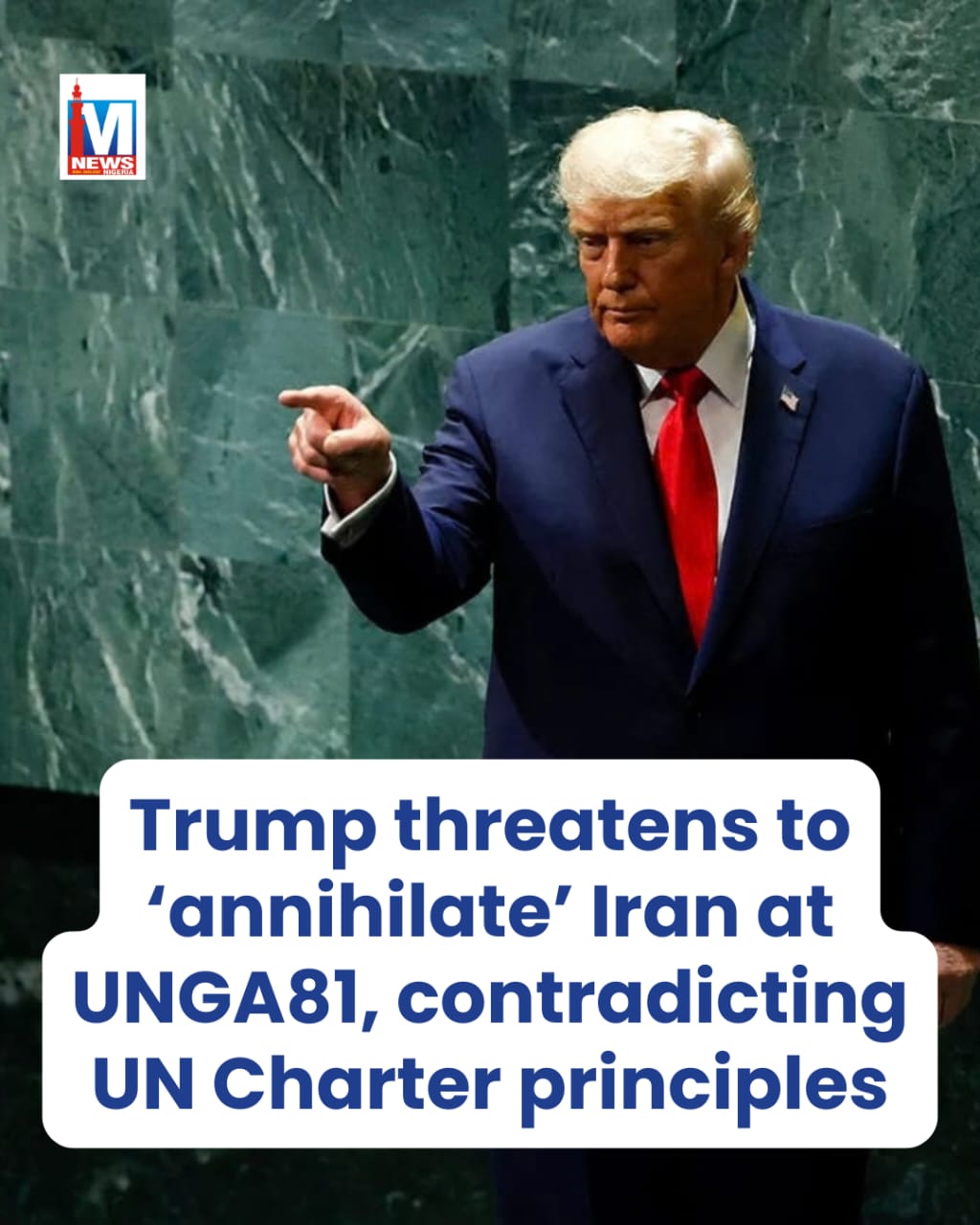
US President Donald Trump has threatened to “annihilate” the Islamic Republic of Iran if Tehran fails to reach a deal with Washington, making the declaration during his address to the 81st United Nations General Assembly in New York on Tuesday, September 22, 2026.
Trump presented the choice as one between reaching an agreement that would allow Iran to rebuild and taking further military action against the country.
“I have a big decision to make,” Trump said, according to reports of his speech.
He then asked whether he should “annihilate the Islamic Republic” or drive Iran “into hell with no chance of survival”.
Threat delivered at UN General Assembly
The remarks came as representatives of the 193 UN member states gathered for the annual high level debate and as Washington and Tehran remained engaged in a prolonged military confrontation.
The Iranian delegation walked out of the chamber as Trump began discussing the conflict, with only one Iranian representative reportedly remaining seated.
Trump also defended the US military campaign against Iran, saying Washington had acted to prevent Tehran from acquiring nuclear weapons. He predicted that Iran would eventually agree to a deal, suggesting this could happen after the US midterm elections in November.
Contradicting United Nations Charter principles
Trump’s declaration has drawn attention to the principles contained in the United Nations Charter, particularly Article 2(4).
The Charter states that UN members shall refrain in their international relations from the “threat or use of force” against the territorial integrity or political independence of any state, or in any other manner inconsistent with the purposes of the United Nations. It also calls on states to settle international disputes by peaceful means.
Against that framework, Trump’s public reference to the possible destruction of another UN member state from the General Assembly podium places his remarks in tension with the Charter’s principles on peaceful dispute resolution and the prohibition of threats or use of force.
Iran rejects Trump’s threat
Iran’s Armed Forces General Staff responded by accusing Trump of using the UN platform to justify what it described as US aggression.
In a statement carried by Iran’s Mehr news agency, the military leadership described the threats as evidence of what it called America’s “strategic desperation” and warned that Iran was prepared to respond with attacks it said would be more severe than previous strikes.
Iranian President Masoud Pezeshkian also rejected the idea of surrender, maintaining that Tehran was not seeking nuclear weapons while defending Iran’s position on peaceful nuclear technology and its right to defend itself.
Threats followed by diplomatic contacts
Despite the confrontational language, US and Iranian officials also held talks on the sidelines of the General Assembly.
Trump said US special envoy Steve Witkoff and Jared Kushner had held a three hour meeting with Iranian representatives and described it as “very good” and “very productive”. Al Jazeera reported that Iranian Foreign Minister Abbas Araghchi participated, with mediators moving between the two delegations.
The talks focused on possible ways to end the conflict, with the nuclear dispute, sanctions and the Strait of Hormuz among the issues separating Washington and Tehran.
Strait of Hormuz remains key issue
The strategic Strait of Hormuz has become a major element of the negotiations because of its importance to global energy and maritime trade.
Iran has linked the reopening of the waterway to demands including an end to the blockade of its ports, easing of military pressure and the release of frozen Iranian assets. Washington, meanwhile, has pressed for freedom of navigation through the strait alongside progress on the nuclear issue.
Diplomacy amid escalating rhetoric
Trump’s UN speech and the subsequent talks have highlighted two parallel tracks in the US-Iran confrontation: increasingly severe public rhetoric and continuing diplomatic contacts.
While Trump threatened to “annihilate” Iran from the General Assembly podium, officials from the two countries were engaging through mediators in New York in efforts to explore a possible way out of the conflict.
The development has placed the UN General Assembly at the centre of a sharp diplomatic contradiction: a forum founded on international cooperation, peaceful dispute resolution and the principles of the United Nations Charter became the setting for a public threat against another member state, even as diplomacy continued behind the scenes.
I would use “contradicting UN Charter principles” in the headline if you want the stronger editorial framing, while “at odds with UN Charter principles” is the more legally cautious formulation.
Sponsored

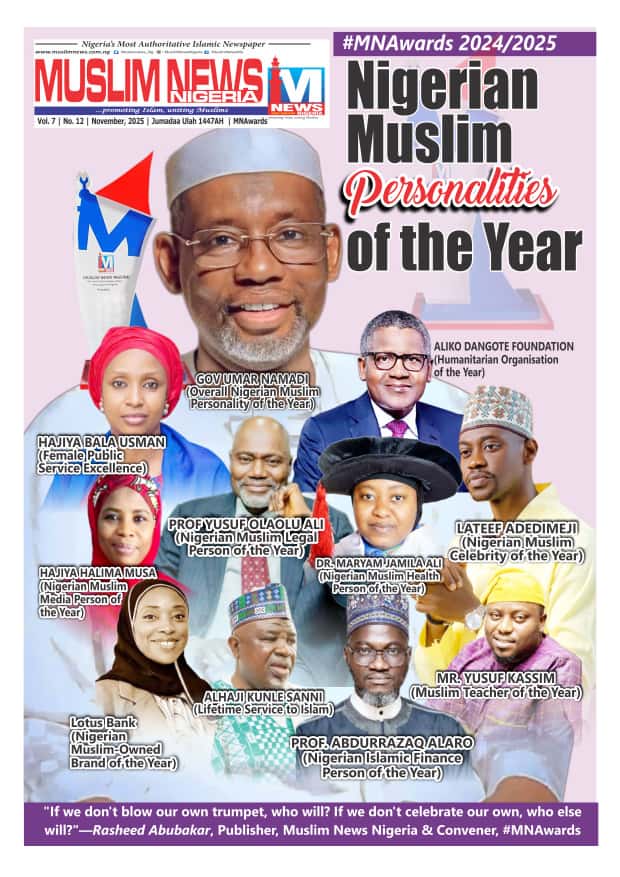
Nigerian Muslim Personalities of the Year 2024/2025
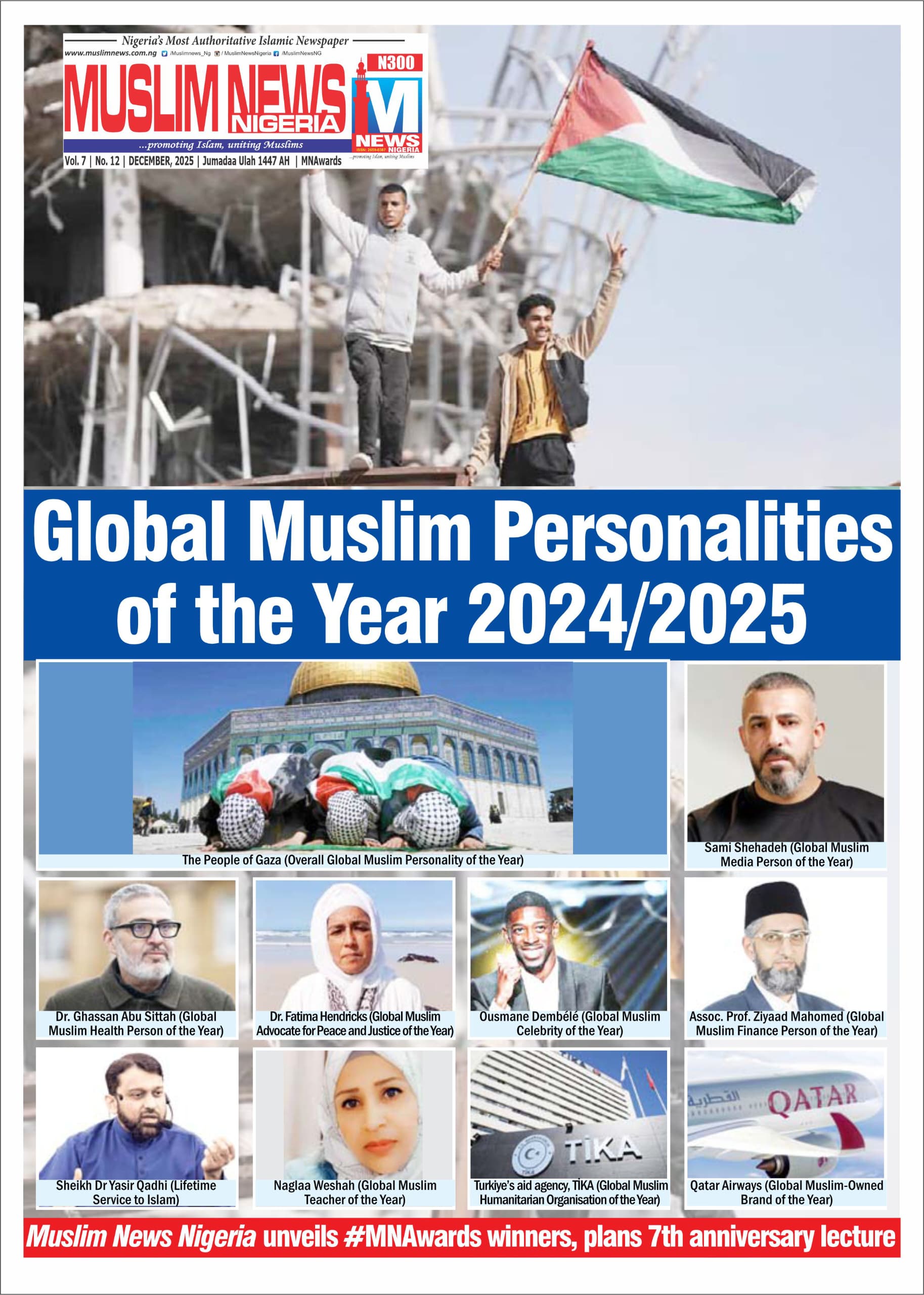
Global Muslim Personalities of the Year 2024/2025



Discover more from Muslim News Nigeria
Subscribe to get the latest posts sent to your email.