

By Rasheed Abubakar
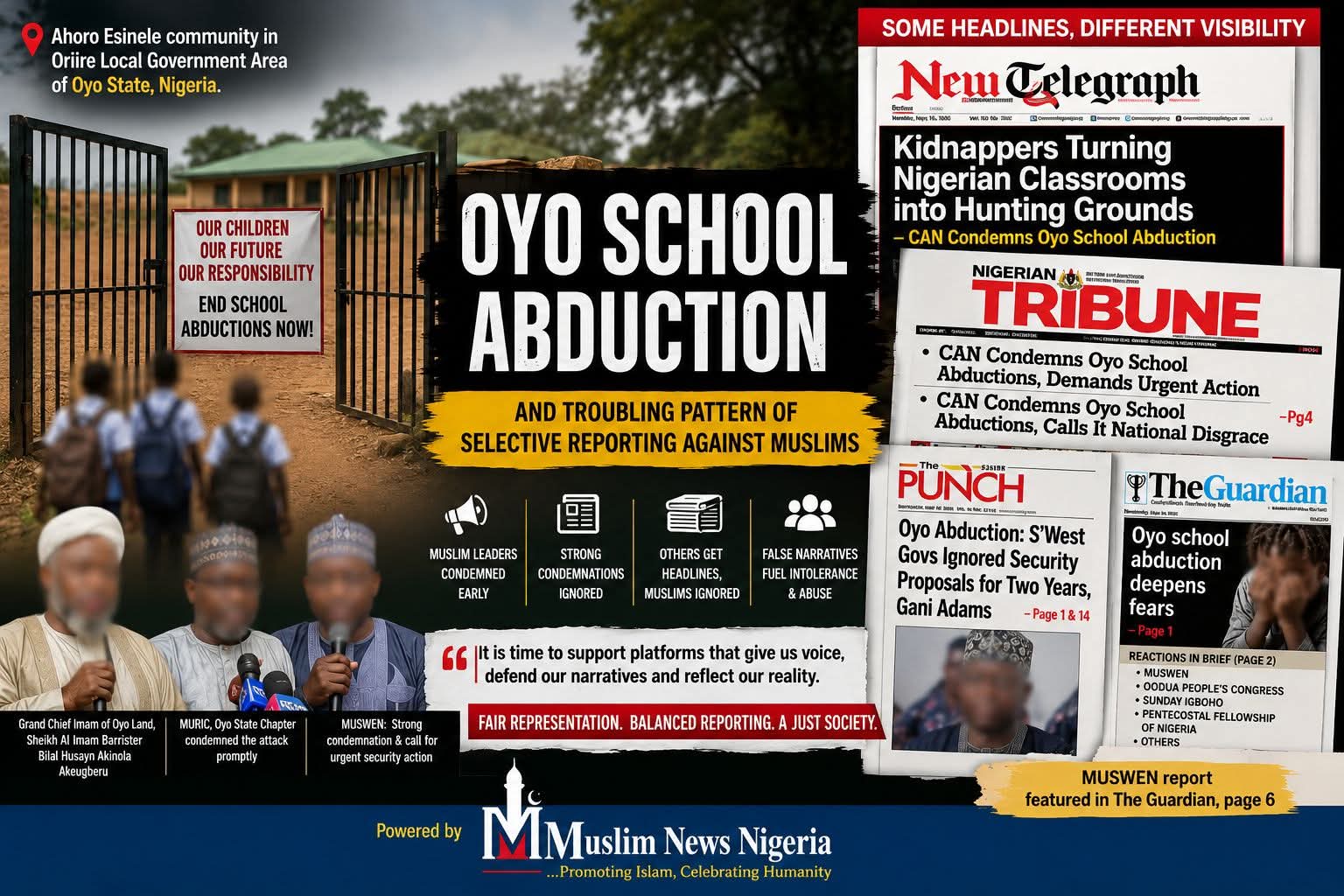
In moments of national tragedy, the media does more than report events. It also shapes public perception by determining which voices are amplified, which reactions become headlines, and which statements receive less visibility. The recent abduction of schoolchildren and teachers in Ahoro Esinele community, Oriire Local Government Area of Oyo State, has once again brought this issue into focus, raising questions about how responses from different religious and civic groups are treated in news coverage, particularly in relation to the visibility given to Muslim community in mainstream media reporting.
The Grand Chief Imam of Oyo Land, Sheikh Al Imam Barrister Bilal Husayn Akinola Akeugberu, promptly condemned the kidnapping and urged security agencies to rescue the victims. The Oyo State chapter of the Muslim Rights Concern, MURIC, also reacted swiftly with a statement denouncing the attack. MUSWEN, the umbrella body of Muslims in the Southwest, followed with a strong condemnation and a call for urgent security action. Yet, none of these Muslim reactions dominated newspaper cover headlines in the way similar statements from other groups did.

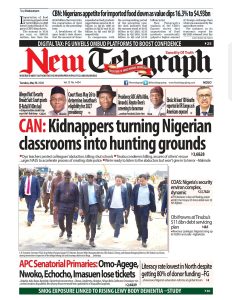
When the Christian Association of Nigeria, CAN, issued its own statement, it received prominent media attention. New Telegraph, in its Tuesday edition, carried the banner headline, “Kidnappers Turning Nigerian Classrooms into Hunting Grounds,” directly amplifying CAN’s reaction. Other outlets, including the Nigerian Tribune in its Tuesday edition, also gave CAN’s statement headline treatment with reports such as “CAN Condemns Oyo School Abductions, Demands Urgent Action” and “CAN Condemns Oyo School Abductions, Calls It National Disgrace.”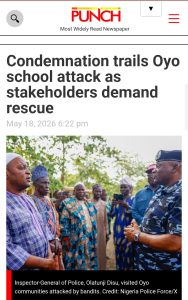
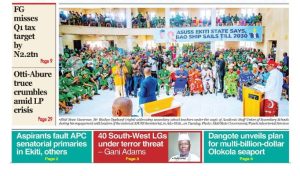
Other personalities and institutions also received strong media visibility for their condemnations. The Punch, for instance, ran a report highlighting the reaction of Gani Adams with the headline, “Oyo Abduction: S’West Govs Ignored Security Proposals for Two Years, Gani Adams,” on its cover of Wednesday, May 20. In fact, the newspaper and several other media platforms prominently reported the actions of priests who invoked deities to hunt kidnappers, with different banner headlines, while many newspapers amplified reactions from civic leaders, politicians, and pressure groups. Unfortunately, Muslim condemnations, despite coming early and forcefully, did not receive similar headline prominence.
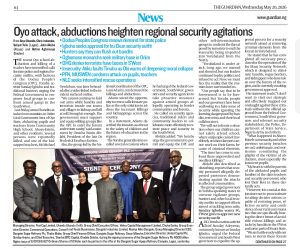
However, the school abduction was the cover story of The Guardian on Wednesday, and on page 2, the newspaper featured MUSWEN’s reaction in the riders alongside responses from other stakeholders, including the Oodua People’s Congress, Sunday Igboho, the Pentecostal Fellowship of Nigeria, among others.
This selective visibility creates a dangerous public perception. When Muslim leaders condemn violence and their statements are buried, underreported, or denied headline attention, some members of the public begin to falsely assume that Muslims remain silent whenever criminal elements who claim Islamic identity commit atrocities. That false narrative fuels online abuse, insults, suspicion, and religious intolerance against Muslim leadership.
This is not new.
Muslim scholars, Imams, and organisations have repeatedly condemned Boko Haram, terrorism, kidnapping, and violent extremism for years. Friday sermons in mosques across Nigeria have consistently spoken against the killing of innocent people and the misuse of religion by extremists. Muslims themselves have been among the biggest victims of Boko Haram and insurgent violence. Yet, these condemnations rarely dominate national headlines in the same way reactions from other religious leaders often do.
Time and again, remarks made by some Christian clerics during Sunday church services have found their way to newspaper front pages, broadcast headlines, and national conversations. Statements by pastors such as Tunde Bakare and former Christian Association of Nigeria President Ayo Oritsejafor, among others, have repeatedly received prominent media attention and have shaped public debate on national issues. Their sermons, opinions, and commentaries have often been elevated into major news stories, sometimes dominating headlines for days.
Yet, amid this reality, a troubling contradiction remains within the Muslim community itself.
Despite concerns about unfair treatment and selective reporting, many Muslim organisations, institutions, businesses, and individuals still prefer to patronise mainstream media platforms they consider hostile to Muslim interests. They spend advertising funds, sponsorship budgets, and publicity resources on these outlets, even when there are Muslim owned media organisations that have consistently provided fair representation, defended Muslim narratives, and celebrated Muslim contributions to society.
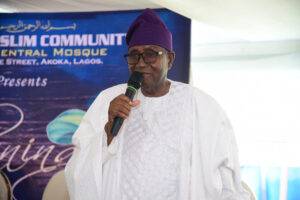
This contradiction is even more striking because the Muslim community is not lacking in capacity or resources. They have among them successful entrepreneurs, industrialists, professionals, and some of the wealthiest individuals on the African continent, including the richest man in Africa. Yet, despite this economic strength, Muslim owned media platforms that report Muslim affairs, celebrate Muslim achievements, and defend Muslim narratives often struggle to survive.
This raises an important question: why neglect platforms that give you voice while strengthening those that often ignore or misrepresent you?
Media support is not merely a commercial transaction. It is also an investment in representation, influence, and narrative ownership. Communities that understand this principle build and sustain media institutions that reflect their realities and protect their interests.
For many Muslims in Nigeria, this is a lesson that can no longer be ignored.
Muslim owned media platforms have played an important role in reporting Islam responsibly, documenting Muslim affairs, amplifying Muslim voices, and celebrating achievements within the community. They have often done this with limited resources, despite operating in a challenging media environment.
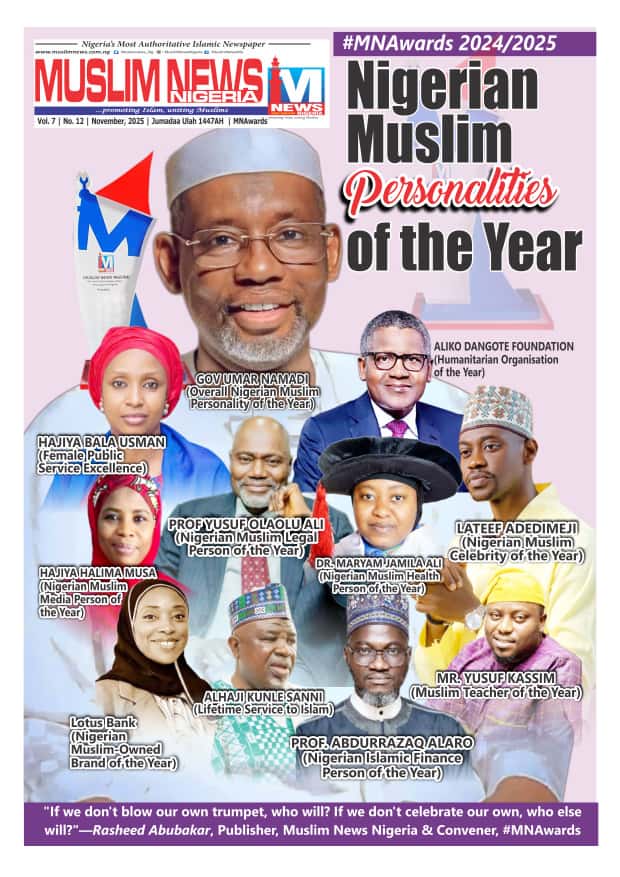
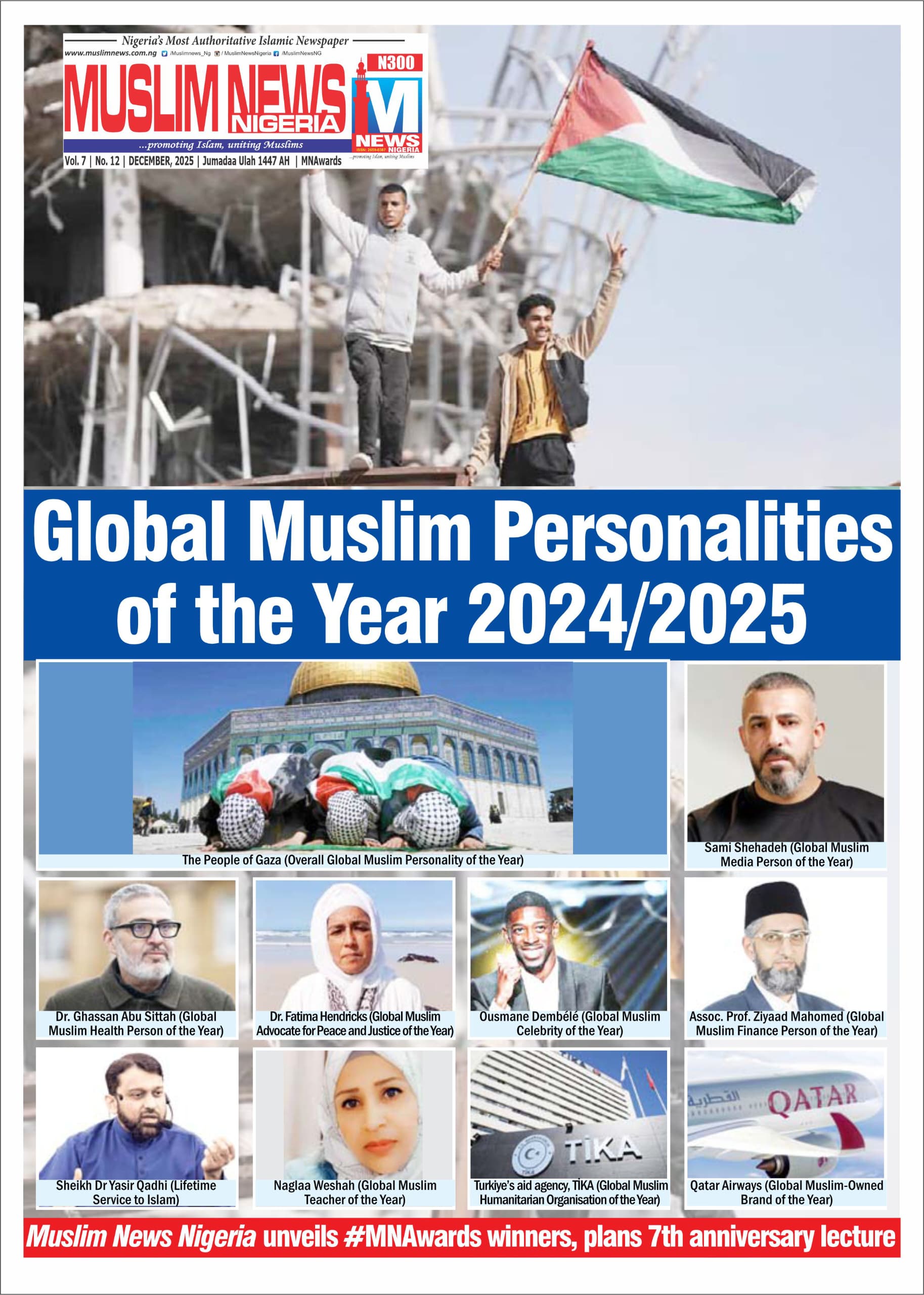
One example is Muslim News Nigeria, which for seven consecutive years has remained committed to reporting Islam, celebrating Muslim achievers, documenting Muslim stories, and providing a platform for voices that are often overlooked in mainstream coverage. In a media climate where Muslim representation matters, such consistency deserves not just applause, but tangible support.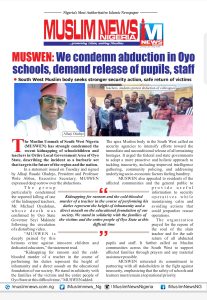
If Muslims desire fairer representation in the media space, support for Muslim owned platforms must move beyond words and become a practical commitment.
This does not mean Muslims should isolate themselves from the broader media landscape. It means they must recognise the importance of strengthening platforms that understand their values, reporting their perspectives fairly, and challenging narratives that contribute to bias and misinformation.
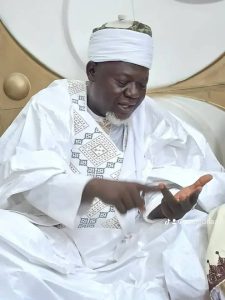
There is no justification for terrorism or extremism. Islam condemns both in the strongest possible terms and rejects the killing of innocent people as a grave violation of faith and morality. Muslim scholars and organisations have repeatedly made this position clear. However, media institutions also carry responsibility in ensuring balanced representation of responses to national issues.
Beyond questions of media visibility, headline treatment, or representation, the most urgent priority remains the safe rescue of the innocent schoolchildren, their teachers, and school authorities who were abducted in Oyo State. Public reactions, condemnations, and media debates must not overshadow the human tragedy at the centre of this crisis. What matters most is that the victims return safely to their families and that security agencies take decisive action to end the growing menace of kidnapping, school attacks, and insecurity in every part of Nigeria. No community, school, or family should have to live under the fear of violence and abduction.
Rasheed Abubakar is the Publisher of Muslim News Nigeria. Email: muslimnewsng@gmail.com
Sponsored

Nigerian Muslim Personalities of the Year 2024/2025
Global Muslim Personalities of the Year 2024/2025



Discover more from Muslim News Nigeria
Subscribe to get the latest posts sent to your email.