

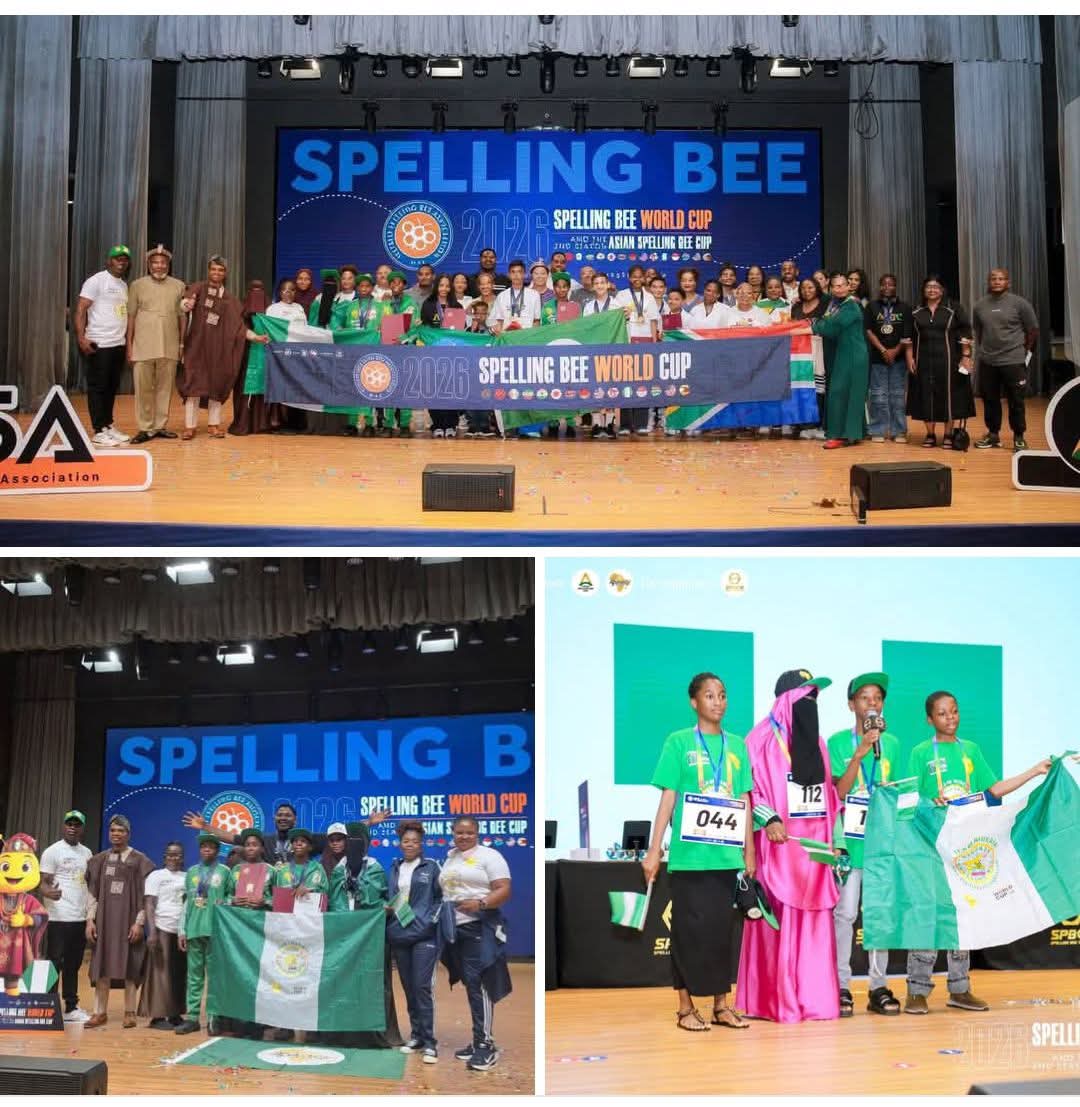
On July 13, 2026, The Punch Online published photographs of four Nigerian students representing the country at the Spelling Bee World Cup in Shanghai, China. The accompanying Facebook headline read, “Meet four students representing Nigeria at World Spelling Bee debut in China.” It should have been a proud national moment. Four brilliant young Nigerians had earned the right to represent their country on the global stage through discipline, hard work and academic excellence.
Instead, one of them became the target of widespread abuse.
Her name is Maryam Yusuf, a 14-year-old student of Ar Raheem International College, Ilorin, Kwara State. Rather than congratulate her, hundreds of Facebook users focused almost entirely on one thing; She wore the niqab. The comment section quickly became a platform for ridicule. Many described her as a “masquerade,” while others mockingly suggested the headline should have read, “Three children and one masquerade.” Her intelligence, discipline and achievement were ignored simply because she chose to practise her faith through her mode of dressing.
The reaction exposed an uncomfortable truth. For some Nigerians, religious identity still overshadows excellence.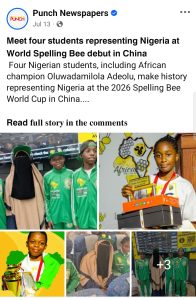
The Achievement Behind the Veil
Maryam was not in China because of her appearance. She was there because she earned her place through merit.
Earlier in March 2026, she represented Nigeria at the African Spelling Bee Championship in Harare, Zimbabwe. Team Nigeria emerged the second best performing country, securing qualification for the Spelling Bee World Cup in China. Maryam was one of the students whose outstanding performance made that qualification possible. Yet, when the continental competition ended, her contribution received little public attention.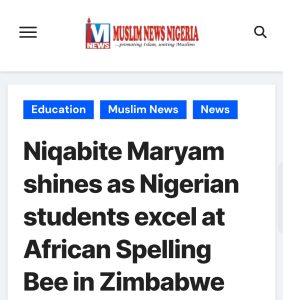
Selective Recognition
Instead, national attention centred almost entirely on Oluwadamilola Adeolu after she emerged champion in the Junior category. Headlines across major media platforms celebrated her achievement, while her photograph dominated newspapers, television reports and social media.
There was nothing wrong with celebrating Oluwadamilola. She deserved every commendation she received. The problem was the selective recognition that followed.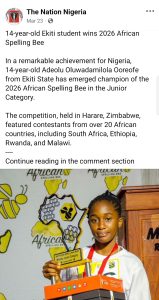
Although reports mentioned that Abdurrahman Yusuf finished third, almost none highlighted Maryam’s contribution to Nigeria’s overall success. Government congratulatory messages, corporate recognition and public celebrations largely revolved around one student, leaving many Nigerians with the impression that only one person was responsible for Nigeria’s qualification.
Recognition matters. It shapes public memory, influences opportunities and determines who becomes a role model for future generations.
When Media Framing Shapes Public Opinion
This is where media bias becomes evident. Bias is not always about publishing falsehoods. It can also be seen in editorial choices. Whose name appears in the headline? Whose photograph is used? Whose achievement becomes a national conversation and whose contribution quietly disappears? Those decisions influence public perception.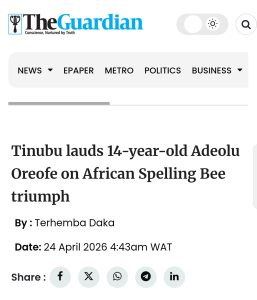
Had Maryam received the same level of visibility after the Harare championship, many Nigerians would already have known her before she travelled to China. Instead, because her academic achievements remained largely invisible, the first thing many people noticed about her was her niqab. The result was predictable. Appearance became more important than achievement.
From Online Abuse to Global Glory
The irony could not have been greater.
The Spelling Bee World Cup concluded on Monday, July 20, 2026, with Nigeria making history in its maiden appearance at the global championship. Team Nigeria won the Gold Award in the Middle School Group category.
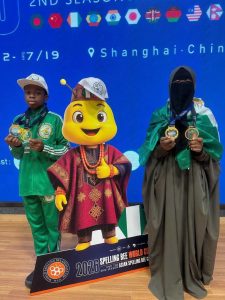
Even more impressive, all four Nigerian representatives returned home with honours. Maryam Yusuf, Oluwadamilola Adeolu and Chinedu Okediachi won gold medals, while Abdurrahman Yusuf secured a silver medal.
The same young girl some people mocked because of her niqab became one of Nigeria’s gold medal winners on the world stage. Those who insulted her before the competition suddenly fell silent. There were no apologies. No acknowledgement that they had judged a girl by her appearance instead of her ability. Her success became the strongest response to prejudice.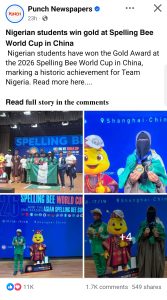
More Than a Medal
Maryam’s victory represents far more than success in a spelling competition.
She demonstrated that wearing the niqab is not a barrier to academic excellence, confidence or international achievement. Her accomplishment offers hope to countless Muslim girls who may sometimes feel pressured to choose between their religious identity and their educational aspirations. They do not have to choose. Maryam has shown that faith and excellence can co-exist.
The incident also raises constitutional questions. Maryam was exercising rights guaranteed under the Constitution of the Federal Republic of Nigeria, including the right to freedom of thought, conscience and religion. For many Muslim women, wearing the niqab is an expression of sincerely held religious belief. Whether others agree with that practice is beside the point. A girl child should never become the subject of public ridicule simply because she is exercising a constitutionally protected freedom while representing her country with distinction.
Beyond the issue of religion, the episode exposes the deep divisions that continue to affect the Nigerian society. Academic excellence should unite Nigerians. Success achieved by any Nigerian child should be celebrated as a national achievement. Instead, religion and ethnic identity too often become the lenses through which excellence is judged.
Rather than applauding a brilliant student, some people reduced her to stereotypes because she looked different from what they considered acceptable.
A Question for the Media
The media also has a responsibility to examine its own practices. Headlines are not mere labels. They determine who becomes the face of a story. They influence public perception and often decide who receives recognition from government, corporate organisations and the wider society. During the African competition, one student, Oluwadamilola’s identity was prominently highlighted. During the World competition, reports simply announced that “Nigerian students” had won medals without giving similar prominence to the names of the medal winners. Such inconsistency naturally raises questions about editorial priorities and fairness.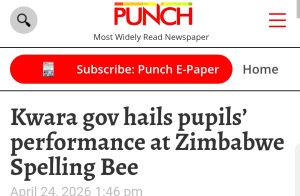
It is important to acknowledge that one media organisation attempted to correct this imbalance, that’s Muslim News Nigeria, which consistently highlighted Maryam’s contribution after the Harare competition when many mainstream platforms failed to do so. Through sustained reporting, the publication brought attention to her role in helping Nigeria qualify for China. Those reports eventually contributed to wider recognition, including acknowledgement from the Kwara State Government. Without that intervention, her contribution might have remained largely unknown.
This demonstrates why communities must invest in telling their own stories. When people fail to document their own achievements, others will decide which stories deserve attention and which can be ignored. Community based journalism is not about creating division or competing with mainstream media. It is about ensuring that every deserving individual receives fair recognition regardless of religion, ethnicity or appearance. It is about preserving historical accuracy and preventing important contributions from being erased through selective reporting.
Media961: Questions trail apparent alteration of Niqabi student’s image in Vanguard’s World Spelling Bee report
Concerns have emerged over the apparent alteration of a photograph used by Vanguard Newspaper in its report on Nigeria’s historic outing at the 2026 Spelling Bee World… pic.twitter.com/ilvE6o5fK2
— Muslim News Nigeria (@muslimnews_NG) July 21, 2026
The Maryam Yusuf story therefore extends far beyond one spelling competition. It is about the responsibility of the media to report fairly. It is about the dangers of allowing religious prejudice to shape public conversation. It is about recognising that headlines can influence national memory as much as the events themselves. It is about ensuring that no child representing Nigeria is reduced to her appearance while her achievements are ignored.
The lessons are clear. Media organisations must embrace fair and balanced editorial practices that recognise every deserving individual. Schools should continue promoting respect for religious diversity and tolerance among young Nigerians. Public institutions should ensure that recognition is based on merit rather than geography, religion or popularity. Social media users must reject hate speech and remember that behind every profile picture is a human being, often a child, deserving of dignity and respect. Muslim organisations should also invest more deliberately in journalism, public relations and digital storytelling so that their stories are told accurately and completely.
Time to Celebrate Our Academic Champions
The championship may have ended, but it is not too late to celebrate these remarkable students. If the Super Eagles had participated and won the FIFA World Cup, Nigerians would have organised celebrations across the country. Government officials would issue congratulatory messages. Streets would be filled with jubilant supporters and the players would almost certainly receive national honours and generous rewards.
Niqabi student Maryam Yusuf, three others make history as Nigeria wins big in China
Nigeria has recorded a landmark achievement in international academic competition after Team Nigeria emerged winner of the Gold Award in the Middle School Group category at the 2026 Spelling Bee… pic.twitter.com/xb09FzrbJD
— Muslim News Nigeria (@muslimnews_NG) July 21, 2026
These four young Nigerians represented their country with distinction during its first appearance at the Spelling Bee Tournament and returned home with laurels. They have demonstrated that Nigeria can compete successfully not only on football pitches but also in classrooms against some of the brightest young minds in the world.
Their achievement deserves public recognition, institutional support and a befitting national welcome.
Rasheeed Abubakar is the publisher of Muslim News Nigeria
Sponsored

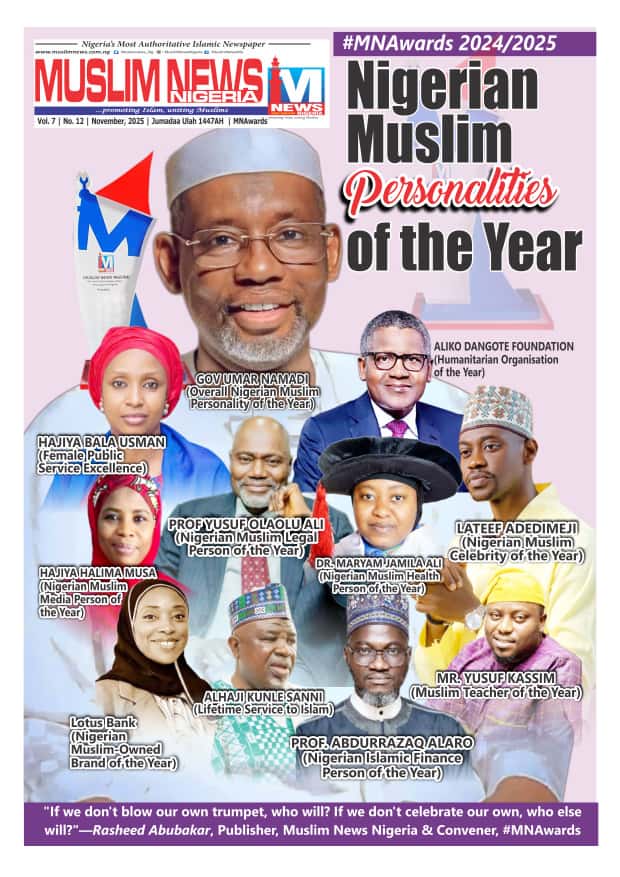
Nigerian Muslim Personalities of the Year 2024/2025
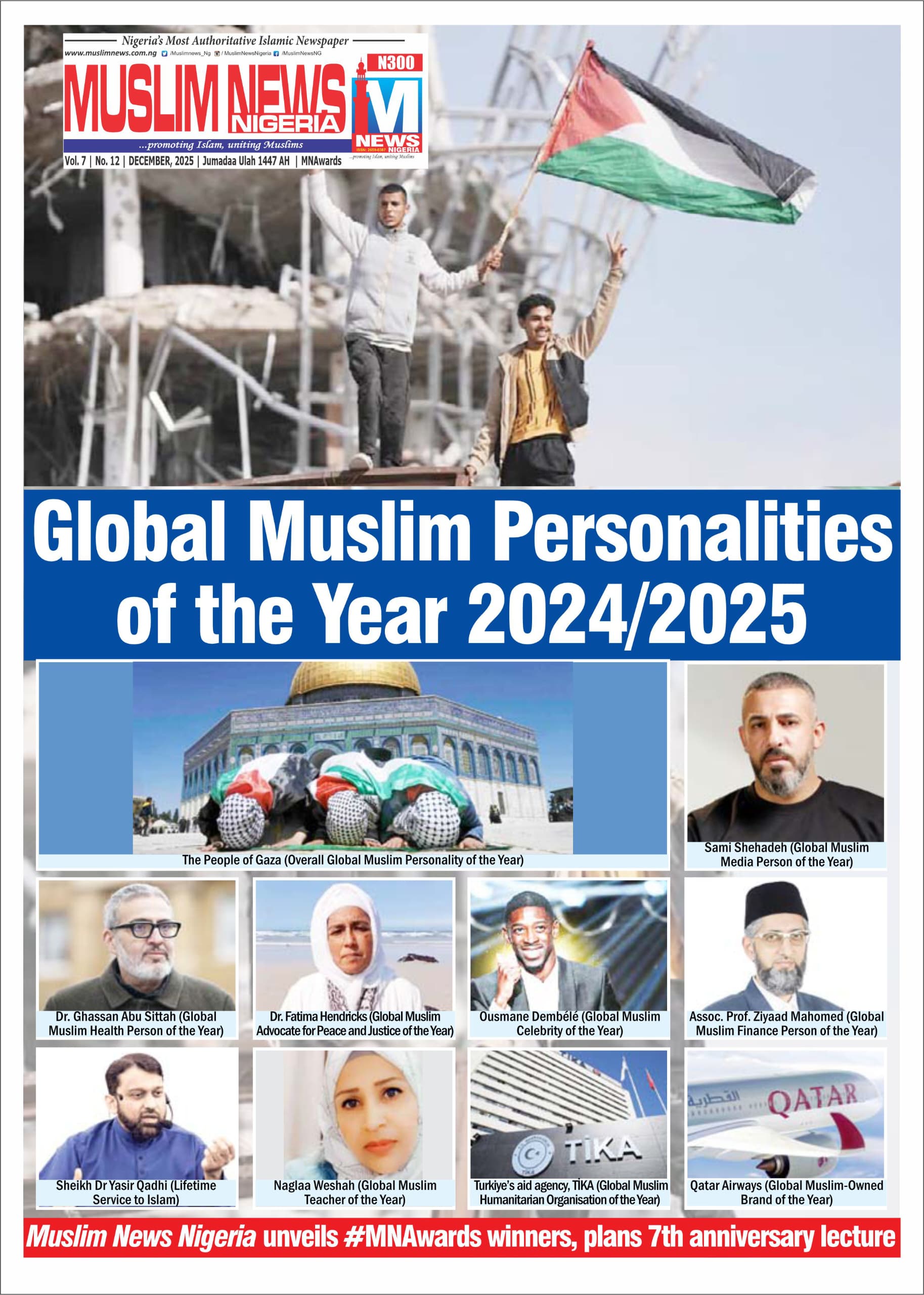
Global Muslim Personalities of the Year 2024/2025



Discover more from Muslim News Nigeria
Subscribe to get the latest posts sent to your email.