

By Abdul-Mumin AbdulQuadir
* Counsellors stress communication, respect, emotional intelligence
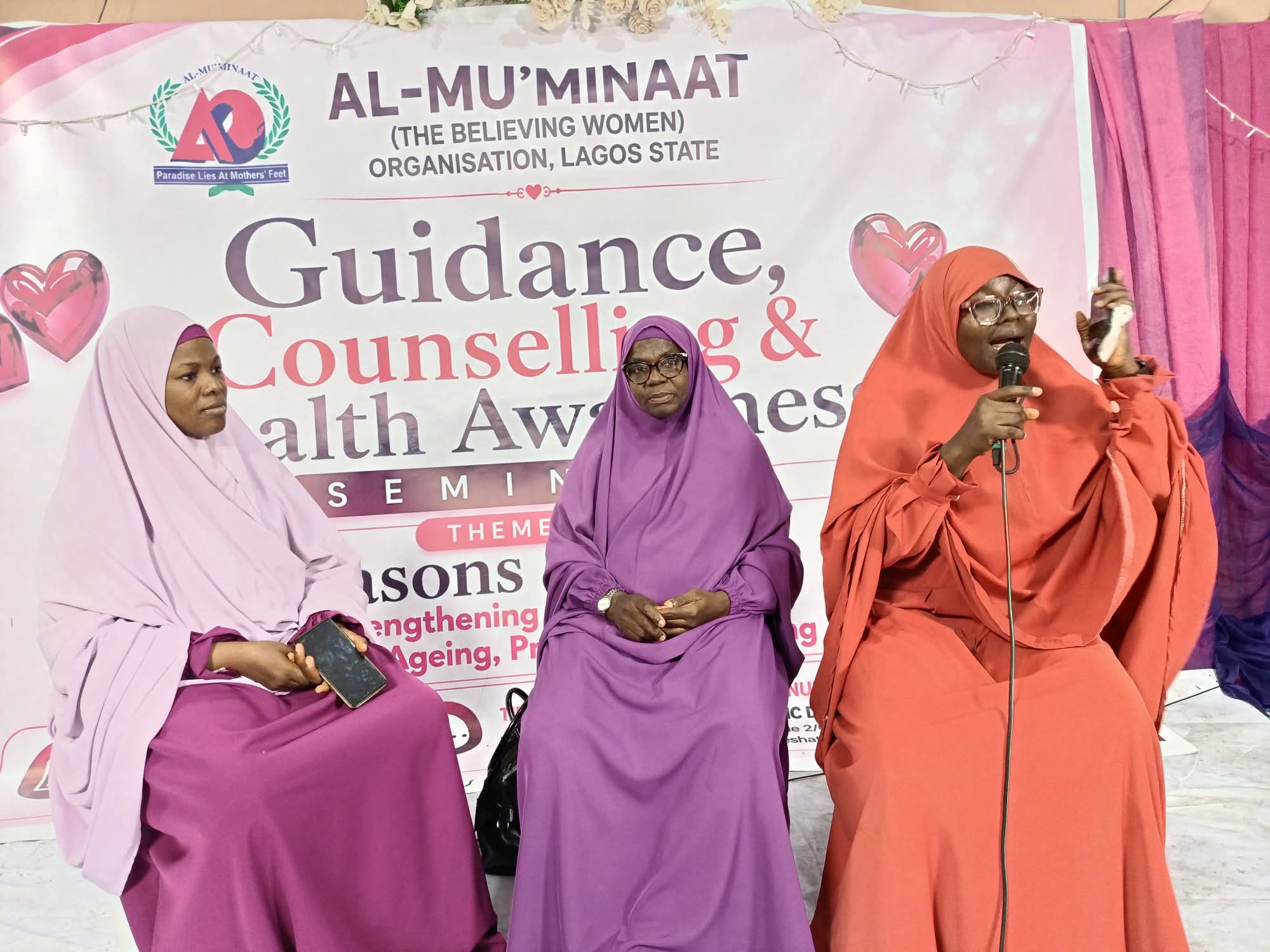
Muslim women have been urged to strengthen their marriages through effective communication, mutual respect and emotional intelligence while preparing adequately for the realities of ageing and protecting their overall wellbeing.
The advice was given at the annual Guidance, Counselling and Health Awareness Seminar organised by Al-Mu’minaat, The Believing Women Organisation, Lagos State, on Saturday, August 8, 2026, at the TMC Dawah Centre, Ijesha, Lagos.
The seminar, themed “Seasons of Life: Strengthening Marriages, Embracing Ageing, Preserving Wellbeing,” attracted about 800 Muslim women from Lagos State and beyond.
The programme brought together marriage counsellors, therapists, health professionals and other speakers who addressed issues affecting women at different stages of life, with emphasis on healthy relationships, emotional wellbeing, ageing and health awareness.
Counsellors stress communication, respect in marriage
Speaking during a panel session on strengthening marriages, renowned marriage counsellor, Hajia Sherifah Yusuf-Ajibade, urged Muslim wives to accord their husbands due respect, describing it as essential to marital stability.
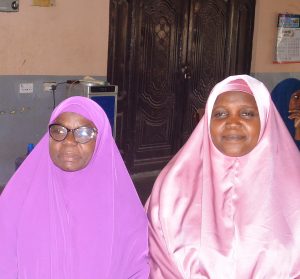
“As a Muslim woman, you must respect your husband. Respect is non-negotiable. Once you choose not to respect him, your marriage is at the brink of dissolution, but if you have respect for him, you will know how to talk to him without dishonour.
“The love and respect that you have for your spouse will always guide your actions,” she said.
Hajia Yusuf-Ajibade also advised women to communicate their expectations clearly to their husbands to prevent avoidable conflicts.
“If you have expectations, communicate them ahead to prevent avoidable chaos. Also, learn to always communicate with Allah before having any conversation with your spouse. That makes everything easy and seamless,” she said.
Another panellist, therapist and author of Parenting with Love and Awareness, Hajia Nafisah Ogunbona-Fadipe, stressed the importance of self-awareness and emotional intelligence in building healthy marriages.
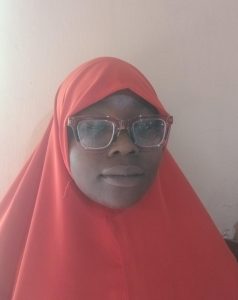
“You need to know yourself and the things that trigger you. You have to be self-aware, so that your spouse can feel loved and connect with you emotionally. Learn to listen with rapt attention, and don’t respond immediately if you don’t have a suitable answer,” she said.
Hajia Ogunbona-Fadipe urged women to approach marital disagreements with a solution-oriented mindset and address unresolved trauma that could affect their relationships.
“Whenever you want to communicate with your husband, think of solutions, not problems. No husband would want to stay in a chaotic home. Men begin to withdraw gradually and, before you realise it, they are gone already.
“It is also necessary for you to treat your trauma if you realise you have any. Traumas are baggage; don’t take them into your marriage,” she said.
The panellists also emphasised the need for couples to seek understanding rather than turn disagreements into arguments, noting that genuine intentions, compassion, attentive listening and emotional intelligence are essential to healthy communication.
‘Ageing is a blessing, not a death sentence’ — Odunaye-Badmus
Speaking on “Graceful Ageing,” guest lecturer, Dr Sekinat Odunaye-Badmus, urged women to appreciate longevity as a blessing from Allah and prepare themselves physically, emotionally and financially for old age.
Dr. Odunaye-Badmus said ageing should be approached with gratitude, noting that many people who were born before the participants were no longer alive.
“Let us all be appreciative towards Allah. We should thank Him for the uncommon grace which He has granted us. Many of our peers are no more. People born before us have died, and as such, we must all come to terms with the fact that Allah, in His infinite mercy, is the One who grants longevity.
“That is why we must always express and show gratitude to Him for sparing our lives,” she said.
She cautioned against allowing old age to become a barrier to living a meaningful life.
“You are who you think you are. Don’t let anyone tell you otherwise as a result of ageing. You can still do great things despite it. Although your bones may not be as strong as they used to be, you can still do things at your own pace.
“Old age is a blessing, not a death sentence. Live the best possible life you can,” she said.
The lecturer also warned families against unnecessarily restricting elderly relatives or excluding them from decisions concerning their lives.
“For those who have elderly family members to look after, don’t restrict them from doing things that make them happy. The restrictions and stigma alone cause depression for them, and that is injurious to their health.
“More so, involve them in decisions that affect them. Don’t just decide and tell them what to do. They are aged, not stupid,” she said.
She charged middle-aged women to cultivate healthy habits and make adequate financial preparations for old age, stressing that preparation for ageing should begin before the later stages of life.
We want women to live their best lives – Amirah
The Amirah of Al-Muminaat, Lagos State, Hajia Bilqis Abdullah, said the seminar was organised to equip Muslim women with practical knowledge to navigate different stages of life.
Hajia Abdullah said the organisation wanted women to thrive in their personal, family and communal lives, noting that healthy marriages remained important to strong communities.
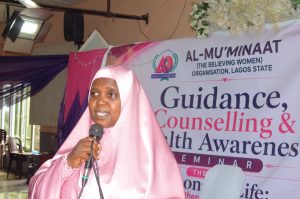
“As an organisation, Al-Muminaat tends to see that every woman stands out and lives her best life, especially in respect to communal life, which can only be sustained through marriages. That is why we made it mandatory upon ourselves to organise a marriage counselling seminar annually,” she said.
She said the previous edition focused on child upbringing and generated significant feedback from participants, leading the organisation to organise follow-up counselling sessions for some attendees.
“Last year, the theme was on child upbringing and we got great feedback. People poured out their minds and expressed themselves. It was really needed at that time. They laid out great concerns. We had to organise follow-up sessions for some people. It was indeed a great one,” she said.
Hajia Abdullah said the decision to include ageing in this year’s programme was informed by the health challenges confronting many people.
“Lately, we hear of so many medical ailments, and it is getting the better of many people. Many are sinking into depression, running helter-skelter and even renouncing Islam because of curable or manageable medical conditions such as menopausal symptoms.
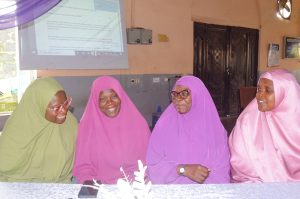
“Hence, it is important to enlighten ourselves on the challenges facing us. That is why we brought an expert. Counselling experts are also here to counsel us on marriage,” she said.
She urged participants to take the lessons from the seminar seriously and apply them to their marriages, health and personal lives.
LSACA raises HIV/AIDS awareness
As part of the health-awareness component of the programme, officials of the Lagos State AIDS Control Agency (LSACA) sensitised participants on HIV/AIDS, its prevention and the importance of maintaining awareness about sexual and reproductive health.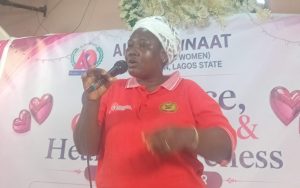
The session formed part of the organisation’s broader effort to promote health consciousness among the women and encourage them to take appropriate steps to protect themselves and their families.
The health-awareness component also complemented the seminar’s focus on preserving wellbeing by drawing attention to the importance of prevention, timely health information and responsible health decisions.
Programme widened my understanding – Participant
One of the participants, Hajia Aminah Gazali-Adefowope, described the seminar as enlightening, saying it broadened her understanding of marriage and ageing.
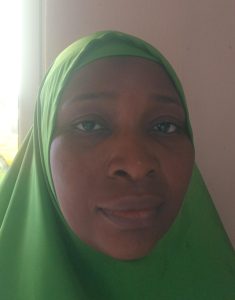
“The programme has been very enlightening. It has widened our horizon in respect to marriage and ageing. It has been a wonderful experience. Jazakumullahu khairan jaza to the organisers,” she said.
The seminar provided participants with an opportunity to reflect on marriage, ageing and health as interconnected aspects of women’s wellbeing, while equipping them with practical guidance for navigating different seasons of life.
Sponsored

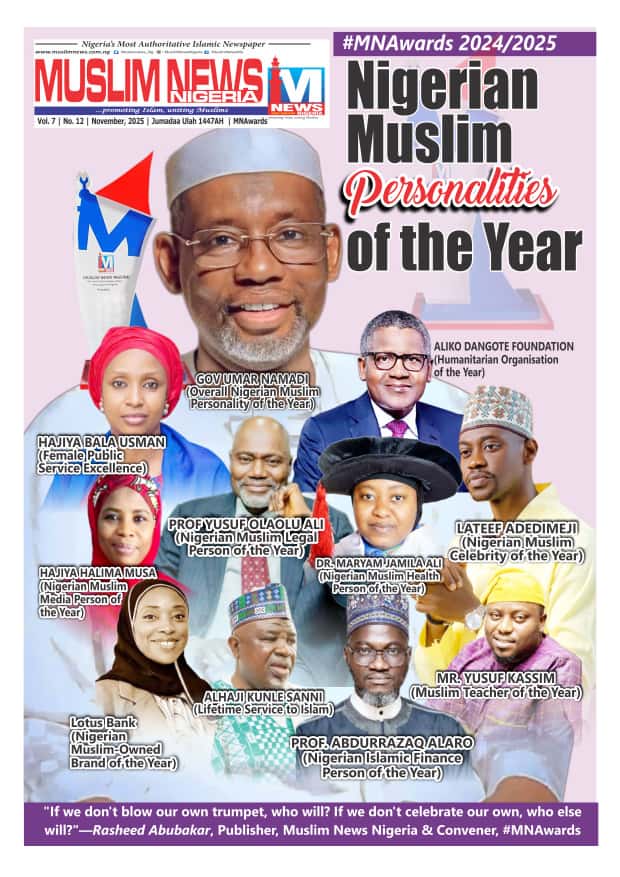
Nigerian Muslim Personalities of the Year 2024/2025
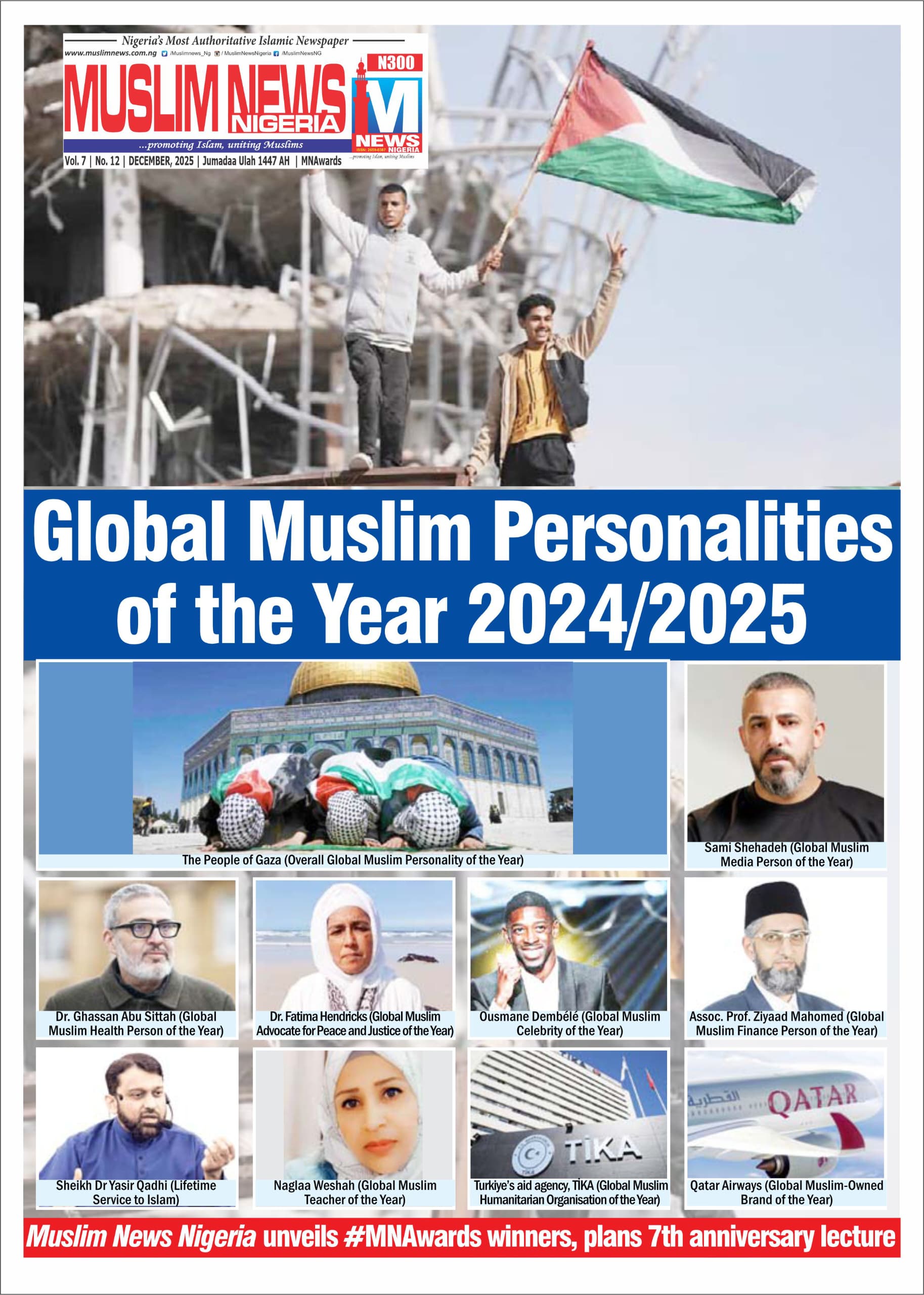
Global Muslim Personalities of the Year 2024/2025



Discover more from Muslim News Nigeria
Subscribe to get the latest posts sent to your email.
The annual forum highlights the importance of supporting women, strengthening family values, and embracing every stage of life with confidence. Knowledge sharing and community engagement play a key role in building a more resilient society, aligned with the values of learning at Telkom University Jakarta.