

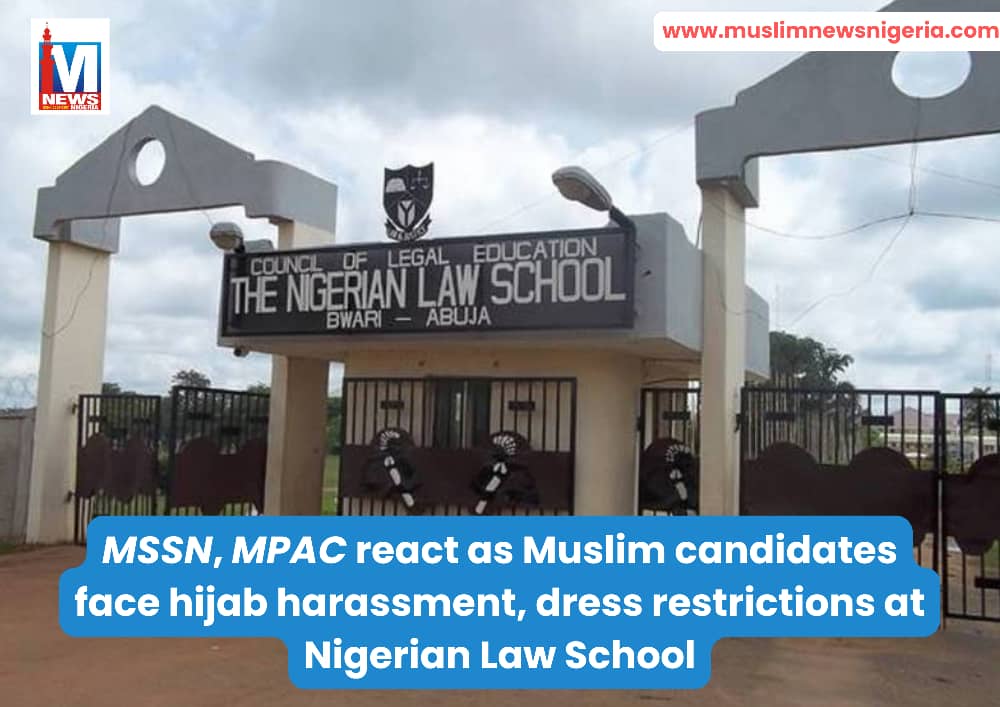
Muslim rights organisations, including the Muslim Public Affairs Centre (MPAC) Nigeria and the Muslim Students’ Society of Nigeria (MSSN), B-Zone, have condemned reports of harassment of female Muslim candidates during the 2026 Nigerian Law School Bar examinations, calling for urgent intervention to protect their religious and constitutional rights.
The controversy emerged on Saturday, October 31, as the examinations commenced across Nigerian Law School campuses, with candidates reportedly facing restrictions over their hijabs and long, modest dresses despite an earlier circular said to have permitted the Islamic head covering.
Muslim News gathered that several female candidates experienced delays and distress, with some reportedly uncertain about whether they would be allowed to participate in subsequent examination papers because of their religious attire.
Accounts from candidates indicated that the restrictions were not limited to hijab, as some Muslim women were allegedly instructed to change their long gowns or wear shorter, fitted skirts to gain access to examination halls.
The development has renewed concerns about religious freedom and discrimination at an institution responsible for training prospective lawyers, particularly in view of the widely publicised experience of Barrister Firdausa Amasa, who was prevented from participating in the 2017 Call to Bar ceremony because she wore hijab.
Amasa reports inconsistent hijab implementation at Bwari
Amasa, who was eventually called to the Nigerian Bar in 2018 following the controversy, has also reported what she described as inconsistent implementation of the Law School’s circular permitting candidates to wear hijab during the Bar Part II examinations.
In an incident report following her visit to the Bwari Campus on Saturday, October 31, 2026, she said hijab-wearing candidates were admitted without hindrance in four of the five examination halls she visited. However, candidates assigned to the Main Multipurpose Hall were reportedly compelled to remove their hijab and rewrap it like a turban before being allowed entry.
“I personally witnessed two female candidates crying at the entrance as a result of this harassment,” Amasa stated, describing the incident as inconsistent with the Law School’s circular and constitutional protections for religious freedom.
While commending the institution for permitting hijab, she urged the management to ensure uniform compliance across all examination halls and prevent candidates from being victimised for exercising their constitutional rights.
Further details of her observations will be published in a separate report.
MPAC condemns hijab and modest-dress restrictions
The Muslim Public Affairs Centre (MPAC) Nigeria, through its Executive Chairman, Disu Kamor, condemned the reported treatment of female Muslim candidates, saying it had received complaints from Bwari and Lagos about restrictions on hijab and modest clothing.
In a press release issued on Saturday, October 31, Kamor said candidates wearing ankle-length dresses were allegedly stopped and told their outfits were too long. Some were reportedly instructed to wear shorter skirts, while others were seen pleading with officials at examination hall entrances.
He also alleged that the scrutiny was selective, claiming that candidates wearing dresses above the knee or displaying long coloured nails were allowed to proceed without similar questioning.
Kamor further reported an incident in an auditorium where a non-Muslim candidate allegedly intervened in protest against the conduct of officials. He said reports from candidates indicated that the situation was even more severe at the Lagos Campus.
Citing the Supreme Court judgment in Lagos State Government & Ors v. Asiyat Abdulkareem & Ors (SC/910/2016), delivered on June 17, 2022, Kamor maintained that the right to wear hijab was protected by Section 38 of the 1999 Constitution, while Section 42 prohibits religious discrimination.
“The ‘hijab issue’ is no longer open to discretion,” he stated, arguing that compelling women to unwrap their hijab or preventing them from wearing long, modest dresses goes beyond enforcing a dress code and could violate their constitutional rights.
MPAC recalled that the judgment followed years of litigation over the right of Muslim schoolgirls to wear hijab in public schools. It also referenced the 2017 exclusion of Amasa from the Call to Bar ceremony and the subsequent reversal of that position by the Body of Benchers in June 2018.
Kamor called on the Director-General and management of the Nigerian Law School to ensure uniform implementation of the hijab circular across all examination halls and campuses for the remaining papers.
He demanded clear instructions to invigilators to admit hijab-wearing candidates and ensure that no student was harassed for wearing a long, modest dress. He also called for investigations into the reported incidents in Bwari and Lagos, appropriate action against those responsible and guarantees that no candidate would be academically disadvantaged.
“We call on the Council of Legal Education, the Honourable Attorney-General of the Federation and Minister of Justice, and the Nigerian Bar Association to intervene urgently,” the MPAC chairman said.
He added that candidates who experienced or witnessed alleged discrimination could submit confidential reports through the organisation’s dedicated channel: https://mpac-ng.org/report-discrimination/.
MSSN decries restrictions, outlines demands
The Muslim Students’ Society of Nigeria (MSSN), B-Zone, also condemned the reported restrictions in an open letter dated Saturday, October 31, 2026, describing the treatment of Muslim female candidates as discriminatory and calling for an immediate review of the screening arrangements.
The letter, signed by the Amir of MSSN B-Zone, Dr Moshood Kolawole; General Secretary, Mallam Akanni O. Omotayo; and Public Relations Officer, Mallam Moshood Tahiru, stressed that Muslim candidates should be allowed to participate in the examinations without being compelled to compromise their religious convictions.
The society maintained that wearing hijab is an expression of religious identity and should not be treated as an examination offence or an indication of academic misconduct.
It argued that the need to maintain examination integrity does not conflict with the obligation to respect candidates’ fundamental rights, insisting that appropriate security procedures can be applied without imposing discriminatory restrictions on Muslim women.
MSSN also addressed reports that a candidate was allegedly found with an earpod during the examination. While acknowledging the need to investigate any suspected examination malpractice, the society said an alleged offence by an individual should not be used to justify blanket restrictions against other Muslim candidates.
It maintained that any disciplinary action should be based on individual conduct and established examination rules rather than religious appearance.
Citing Sections 38 and 42 of the 1999 Constitution, which guarantee freedom of thought, conscience and religion as well as protection against discrimination, MSSN argued that candidates should not be subjected to unequal treatment because of their faith.
It also referenced the Supreme Court judgment in Lagos State Government & Ors v. Asiyat Abdulkareem & Ors (SC/910/2016), delivered on June 17, 2022, as an important legal precedent on the right of Muslim students to wear hijab in public educational institutions.
The society called on the Nigerian Law School authorities to ensure unhindered access for candidates wearing hijab, adopt non-discriminatory screening procedures and reverse any blanket restriction affecting Muslim women. It further demanded that no candidate should suffer examination-related disadvantage, intimidation or victimisation because of her religious dress.
MSSN B-Zone urged the Council of Legal Education, the Body of Benchers, the Nigerian Bar Association, the Attorney-General of the Federation, the Federal Ministry of Education and the National Human Rights Commission, among other relevant bodies, to intervene and ensure that the reported incidents are addressed.
The society also copied relevant Muslim organisations and professional bodies, including the Nigerian Supreme Council for Islamic Affairs, the Muslim Lawyers’ Association of Nigeria, MSSN National Headquarters and the Federation of Muslim Women’s Associations in Nigeria.
The society warned that the Nigerian Law School must not become an institution where Muslim women are made to pay for their religious convictions, stressing that compliance with examination regulations should not require candidates to abandon constitutionally protected religious practices.
Sponsored
Sponsored

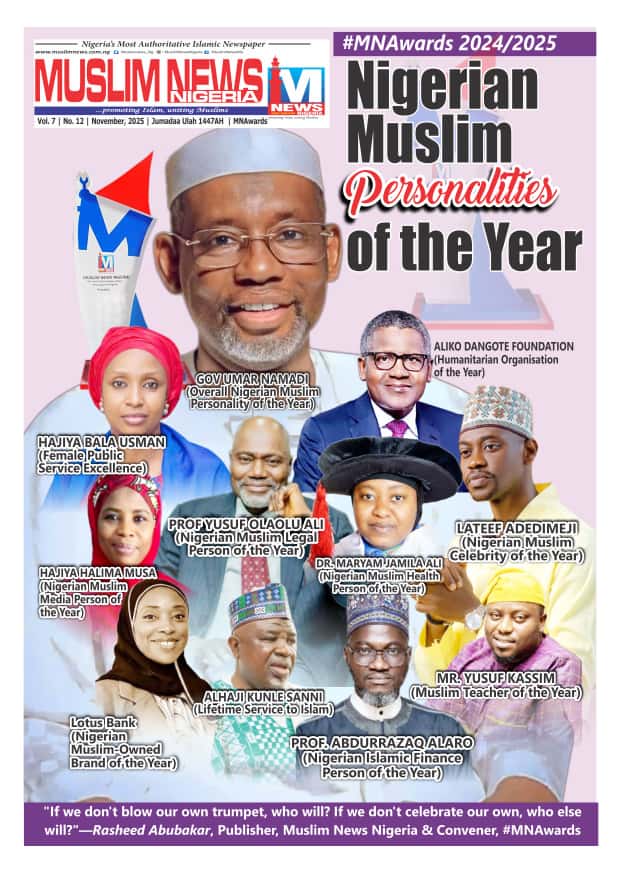
Nigerian Muslim Personalities of the Year 2024/2025
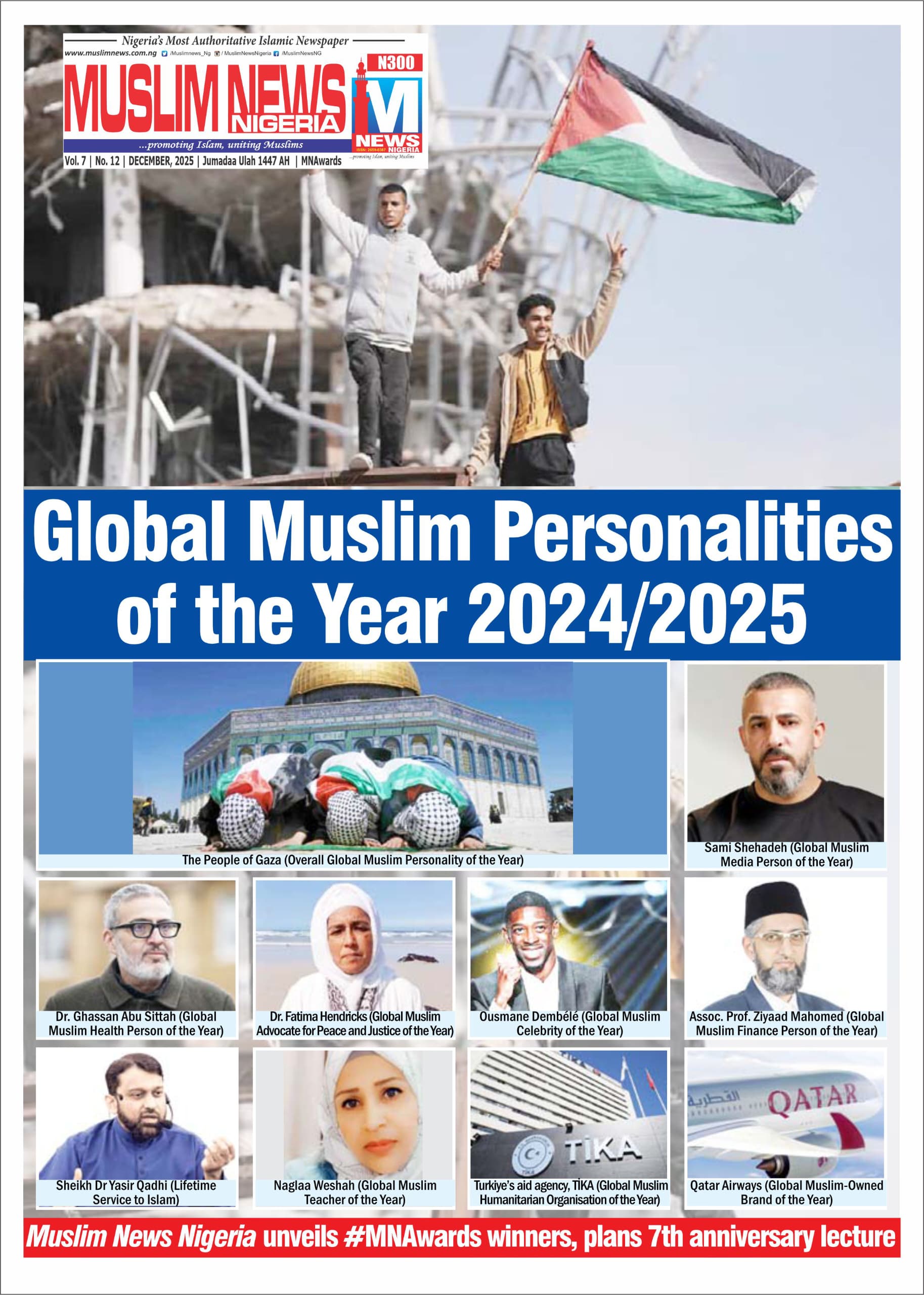
Global Muslim Personalities of the Year 2024/2025



Discover more from Muslim News Nigeria
Subscribe to get the latest posts sent to your email.