

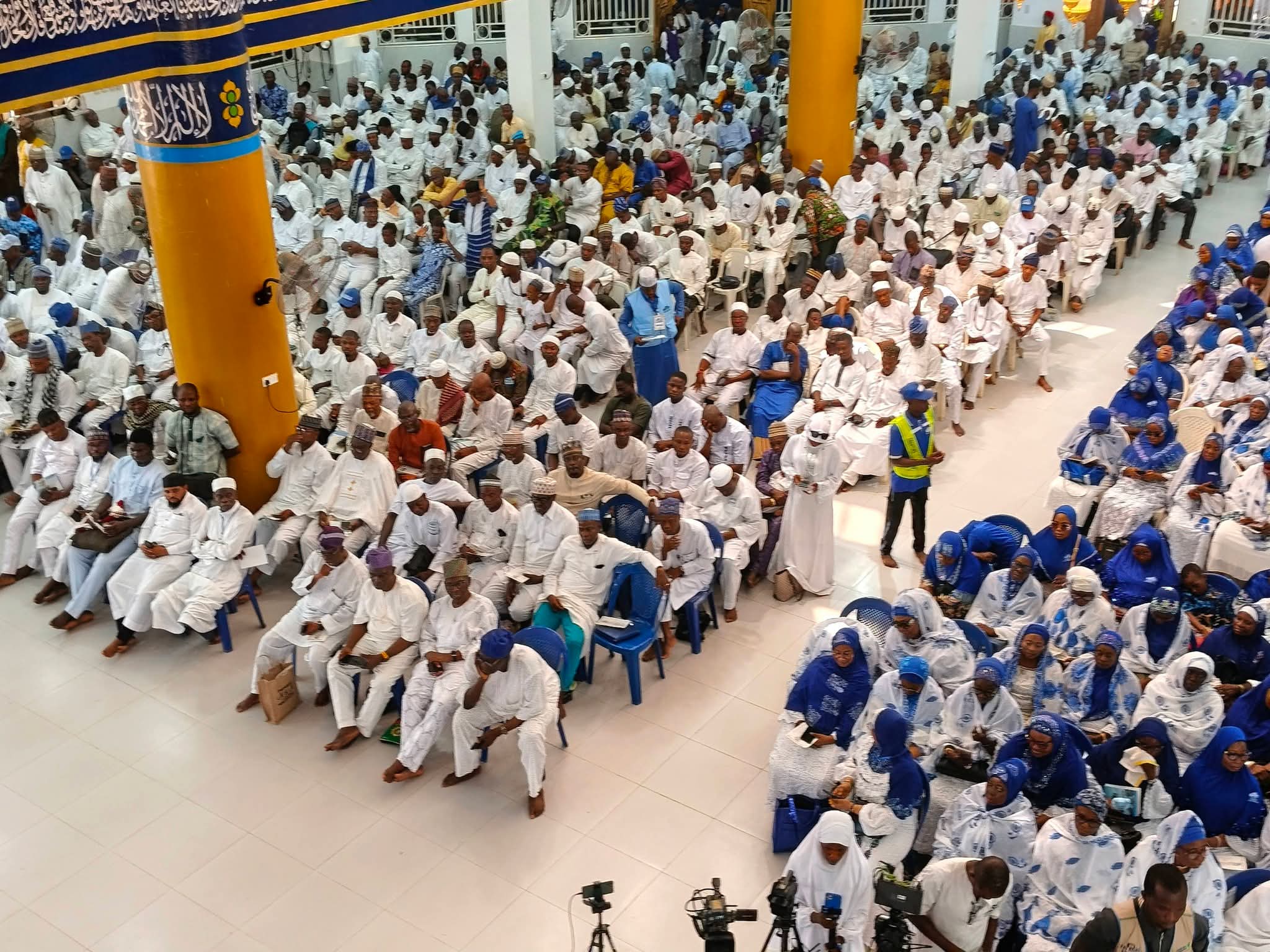
Muslim groups intensify prayers, charity, outreach as faithful embrace renewal
Muslims across Nigeria officially commenced the 2026 fasting season of Ramadan on Wednesday, February 18, 2026, following the national declaration made on Tuesday, February 17 by the Nigerian Supreme Council for Islamic Affairs (NSCIA), the umbrella body of Nigerian Muslims.
The President-General of the NSCIA and Sultan of Sokoto, Alhaji Sa’ad Abubakar III, who was abroad at the time, was represented in the historic national broadcast by the Shehu of Borno, Alhaji Abubakar Ibn Umar Garbai El-Kanemi. This marked the first time in recent years that another senior traditional ruler delivered the Ramadan declaration on behalf of the Sultan.
Muslim News gathered that Nigeria began fasting alongside Saudi Arabia, Palestine, Qatar, United Arab Emirates, and Egypt on Wednesday, February 18, while Türkiye, Malaysia, Indonesia, and Pakistan commenced fasting on Thursday, February 19, based on moon sighting and astronomical calculations.
Tinubu urges sacrifice and unity at first tafsir
On Wednesday, February 18, Nigerian President Bola Ahmed Tinubu attended the first Ramadan Tafsir at the Presidential Villa, Abuja, where he congratulated the Muslim world and called on adherents of Islam to embrace discipline and compassion.
According to a statement from the Presidency, Tinubu urged Nigerians to “embrace the true essence of Islam, deepen our devotion to Almighty Allah, and allow the values of sacrifice, patience, and generosity to guide our national conduct.”
He added: “Ramadan teaches us restraint and responsibility. Let us use this sacred period to pray for Nigeria, support one another, and strengthen the bonds that unite us as one people.”
Borno State: Palliatives for 300,000 households
On Thursday, February 19, Borno State Governor Professor Babagana Umara Zulum described Ramadan as a period of spiritual rejuvenation, self-discipline, sacrifice, compassion, and devotion to Almighty Allah.
He noted that fasting is not only about abstaining from food and drink, but also about purifying the heart, strengthening faith, promoting patience, and extending kindness to the less fortunate.
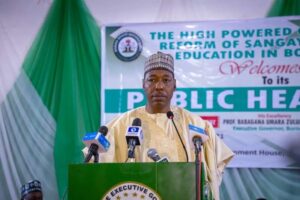
Gov Zulum flagged off the distribution of Ramadan palliatives to 300,000 households across all 27 local government areas of the state, aiming to cushion the economic burden on vulnerable residents during the holy month.
Jigawa State: Free meal centres for millions
On Friday, February 20, Governor Umar Namadi announced a reduction in official working hours for civil servants and the establishment of 640 free meal centres to provide Iftar meals to 7.9 million beneficiaries during Ramadan.
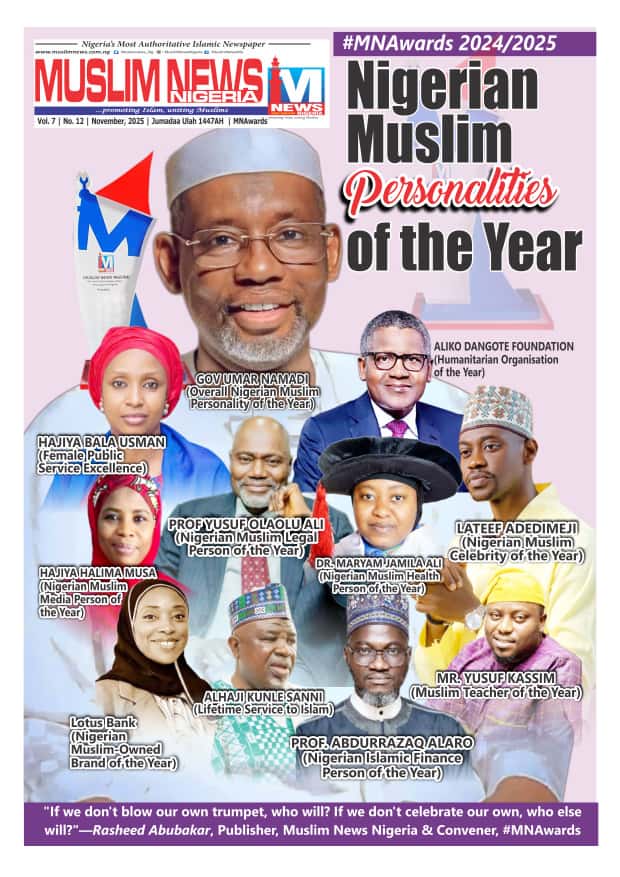
Governor Namadi, who was named Nigerian Muslim Personality of the Year 2024/25, said civil servants will now work from 9:00 am to 3:00 pm from Monday to Thursday.
Over 264,600 meal packages are expected to be distributed daily, providing more than 23.8 million meals for vulnerable citizens throughout Ramadan.
He also highlighted the importance of ethical and strategic use of digital technologies in advancing youth empowerment and national development during his remarks at the 20th Annual Ramadan Lecture on the same day in Kaduna.
Kwara State: Joint observance promotes harmony
On Saturday, February 21, Kwara State Governor AbdulRahman AbdulRazaq extended greetings to both Muslims and Christians, emphasizing that the coinciding start of the fasting seasons underscores the need for harmony, peace, and unity across faiths.
“Fasting opens a unique window for humans to draw closer to the Creator through abstention from sins, intentional giving of alms, and all acts of goodness. It allows one to reflect and redefine their essence before the Almighty,” he said.
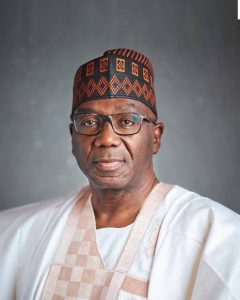
He prayed that God would accept the devotion of the faithful and urged communities to collaborate with the government to promote the welfare of the people.
Lagos State: Ramadan as a reminder of compassion
On Sunday, February 22, Lagos State Deputy Governor Dr. Kadri Obafemi Hamzat called on Muslims to live out the core teachings of Ramadan, emphasizing fairness, kindness, and respect for all people regardless of gender, ethnicity, or religion.
Speaking at the 7th Annual Ramadan Lecture and Special Prayers in memory of Late Oba Mufutau Olatunji Hamzat in Mushin, he described Ramadan as a reminder that humanity is one body and God empowers everyone to act with compassion.
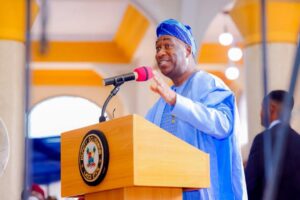
He stressed that differences in ethnicity or social background should unite rather than divide communities, and highlighted that society can only thrive when individuals reject discrimination and treat one another with fairness and humanity.
Pantami Foundation spreads relief in Gombe
On Friday, February 27, the Professor Isa Pantami Foundation (PIP Foundation) began distributing approximately 12,000 food packages across all 11 local government areas of Gombe State as part of its annual Ramadan intervention.
Valued at over ₦33.75 million, the packages include rice (50kg, 25kg, and 10kg), millet and maize (over 1,000 bags each), couscous (900 bags), semovita (2,500 bags), macaroni (500 cartons), sugar (over 150 bags), and other essential staples.
The distribution is coordinated by Alhaji Abubakar Ahmad Walama (Sarkin Malaman Gombe), Dr. Abubakar Saidu, and Arch. Dahiru Saidu, alongside Pantami’s wife and supported by youth and women groups. A special segment targets Islamic scholars, coordinated by Dr. Umar Garba Dokaji, recognising their role in spiritual guidance and community development.
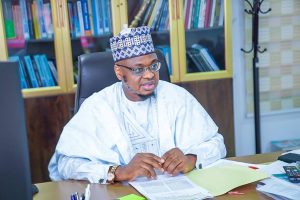
Professor Isa Pantami, former Minister of Communications and Digital Economy, has sustained this Ramadan philanthropy in Gombe over the years.
Beneficiaries described the intervention as significant relief amid rising living costs, while offering prayers for Pantami and the Foundation’s continued commitment to the welfare of the people.
Devotion, compassion and unity across mosques in Nigeria
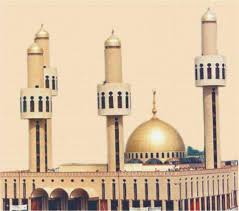
Mosques across Nigeria have witnessed increased attendance during Ramadan, with worshippers participating in Taraweeh prayers, Tafsir Qur’an sessions, and nightly supplications. From the National Mosque in Abuja to Oyo Central Mosque and Lagos Central Mosque, Muslim worshippers are gathering in large numbers, reflecting the deep devotion, compassion, and unity that define the holy month.
At the National Mosque, Abuja, daily Tafsir sessions are held for worshippers. At 10 a.m., Imam Professor Muhammad Kabir leads a Tafsir session in Hausa exclusively for women. Between Zuhr and Asr. There is a thematic Tafsir in English by Prof. Luqman Zakariya on alternating days, and another Tafsir in English by Imam Háránì Eze.
From 5 p.m. to 6 p.m., Imam Professor Ibrahim Maqari conducts daily Tafsir in Hausa. Three imams lead the nightly Taraweeh prayers, and daily Iftar is provided by a philanthropist from Saudi Arabia.

At Oyo Central Mosque, the Chief Imam of the township, Barrister Alhaji Bilaal Oseni Akinola conducts Tafsir after Solahtul Fajr, starting at 11 a.m. and ending at 12 p.m. Taraweeh prayers are observed at 8:10 p.m. and conclude at 8:40 p.m., with the Chief Imam leading an audience of approximately one thousand worshippers.
Lagos Central Mosque under the leadership of Engr. Sulaimon Oluwatoyin Abou-Nolla holds daily Tafsir from 11 a.m. to 1:30 p.m. Feeding for fasting Muslims during Iftar is organized in collaboration with different companies providing food. Taraweeh prayers are observed every night, and during the last ten days of Ramadan, Qiyam al-Layl is observed instead of Itikaf.
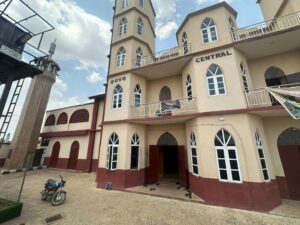
Lekki Central Mosque offers Tafsir from 5 p.m. to 6 p.m. every Saturday and Sunday, both in the mosque hall and via Zoom. It’s being led by the Chief Imam, Dr Ridwan Jamiu. During the last ten days of Ramadan, Itikaf sessions are held from 11:30 a.m. to 1:00 p.m., with Fiqh sessions and Tafsir from 5:00 p.m. to 6:00 p.m.
Additional Ramadan programs include daily reminders, weekly online Tadabbur sessions, weekly Iftar potlucks on Saturdays, hospital visits, quarterly Da’wah programs organized by Lekki Muslim Ummah, Barakah and Bonds initiatives, and an Eid FunFair the day after Eid.
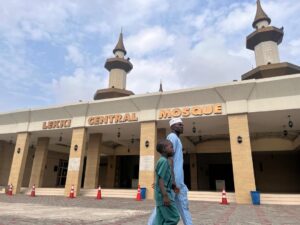
Facilities for Itikaf participants include twenty-four-hour electricity and security, standby medical personnel, a clean environment with professional cleaners, a serene atmosphere, daily lectures, and Tahajjud prayers.
Meanwhile, An-Nur Mosque in Wuse 2, Abuja, has been hosting daily Ramadan Tafsir sessions with former Minister of Communications and Digital Economy, Prof. Isa Pantami, serving as guest Imam.
On Sunday, March 1, he delivered the twelfth day of Tafsir, covering Surah An-Nisaa, Chapter 4, Verses 4 and 5. He emphasized the obligations of bridal payment, moderation in marriage expenses, the duties of guardians over orphans’ wealth, and the importance of treating others with kindness and justice.
Prof. Pantami concluded by praying that attendees may be among the beneficiaries of the Qur’an’s guidance, underscoring the relevance of Qur’anic teachings in contemporary life.
In Kwara State, Muslim scholars convened for the Annual Pre-Ramadan Seminar organized by seven Islamic groups, including The Muslim Congress and Al-Mu’minaat Organisation. The seminar, themed “Ramadan, Self-Purification and Detachment from Vices,” aimed to prepare believers spiritually and socially for the fasting period.
Associate Professor Hamza AbdulRaheem of Al-Hikmah University described Ramadan as a sacred season for discipline, patience, and devotion. He cautioned that misuse of social media could undermine the spiritual benefits of fasting, urging Muslims to engage with faith-building content while avoiding immoral platforms.
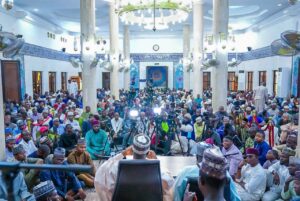
Engr. Ariyo Bashir Olalekan, State Coordinator of the Zakat and Sadaqah Foundation, highlighted the importance of Zakat and Waqf, particularly during Ramadan.
He reminded Muslims that the 2026 Nisab is estimated at twelve point five million naira based on gold and one point seven million naira based on silver, with eligible Muslims required to pay 2.5% of their wealth.
Engr. Olalekan stressed that acts of charity during Ramadan carry multiplied rewards and urged believers to use Zakat and Waqf as instruments of social justice and compassion.
At the NASFAT Islamic Centre in Asese, Ogun State, prominent Islamic scholar and former Lagos State Commissioner, Dr. Abdulhakeem Abdullateef, addressed scholars, clerics, and public officials on the theme “Whoever Saves a Life, Saves Humanity.”
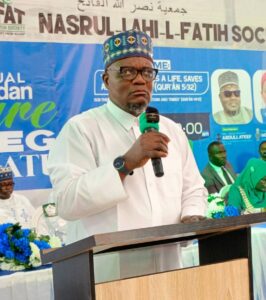
Dr AbdulLateef fondly called Hon Iyepe emphasized that forced marriages, kidnappings, and religious coercion are direct violations of Qur’anic teachings and are fundamentally un-Islamic.
He urged religious leaders to intensify public enlightenment efforts, educating communities that terrorism, banditry, and other forms of violence have no place in Islam.
Quoting the Qur’an, the popular scholar reminded worshippers that “whoever kills a soul unjustly has killed all humanity,” emphasizing that preserving life is among the highest principles in Islam.
Ramadan thrives at Ogrute Central Mosque, Enugu
Muslims in southern Nigeria are not left out of Ramadan’s spiritual atmosphere. Across communities, they observe the fast and organise activities that strengthen faith and unity.
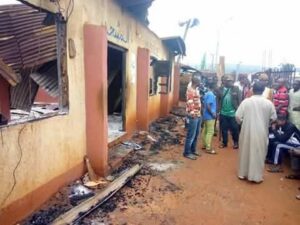
In Enugu State, the Ogrute Central Mosque in Enugu Ezike, Igbo Eze North LGA, stands as a symbol of resilience. Built before the Nigerian Civil War as an Islamic centre of learning, the mosque was burnt and destroyed on September 15, 2017, by suspected members of the outlawed terrorist group, IPOB, but was later rebuilt. Today, it remains one of the most prominent mosques in the state.
Jumaah prayers, led by Imam Said Ujah, attract over 300 worshippers, including local Igbo Muslims and Hausa traders.
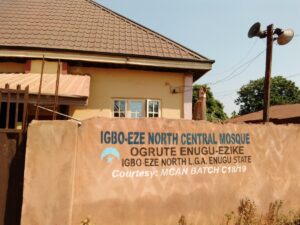
During Ramadan, tafseer holds at least twice weekly, sometimes three times, following the traditional Orie and Nkwor market days to ensure wider participation. In a unique show of unity, tafseer rotates among mosques in neighbouring villages due to the limited number of scholars, with communities moving together for each session.
Taraweeh begins daily at 8 p.m., while a simple feeding programme after Maghrib provides fruits, akara and pap through donations from philanthropists.
Though i‘tikaf is observed on a modest scale due to the small Muslim population and security concerns, the mosque remains a strong beacon of faith, proving that Ramadan flourishes even where Muslims are in the minority.
Sponsored

Nigerian Muslim Personalities of the Year 2024/2025
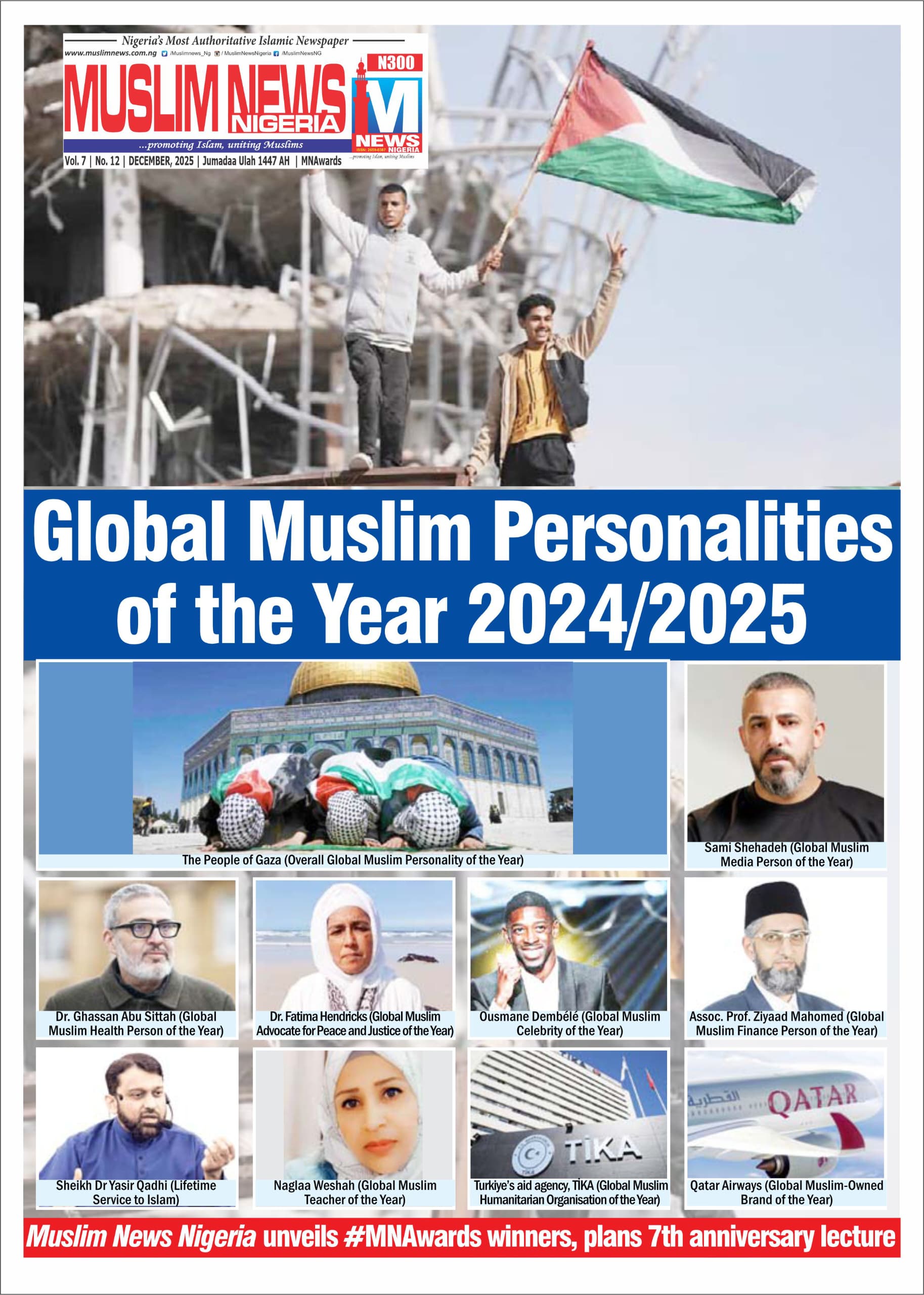
Global Muslim Personalities of the Year 2024/2025



Discover more from Muslim News Nigeria
Subscribe to get the latest posts sent to your email.