

* Projects target Islamic finance, accountability, road safety and citizen participation
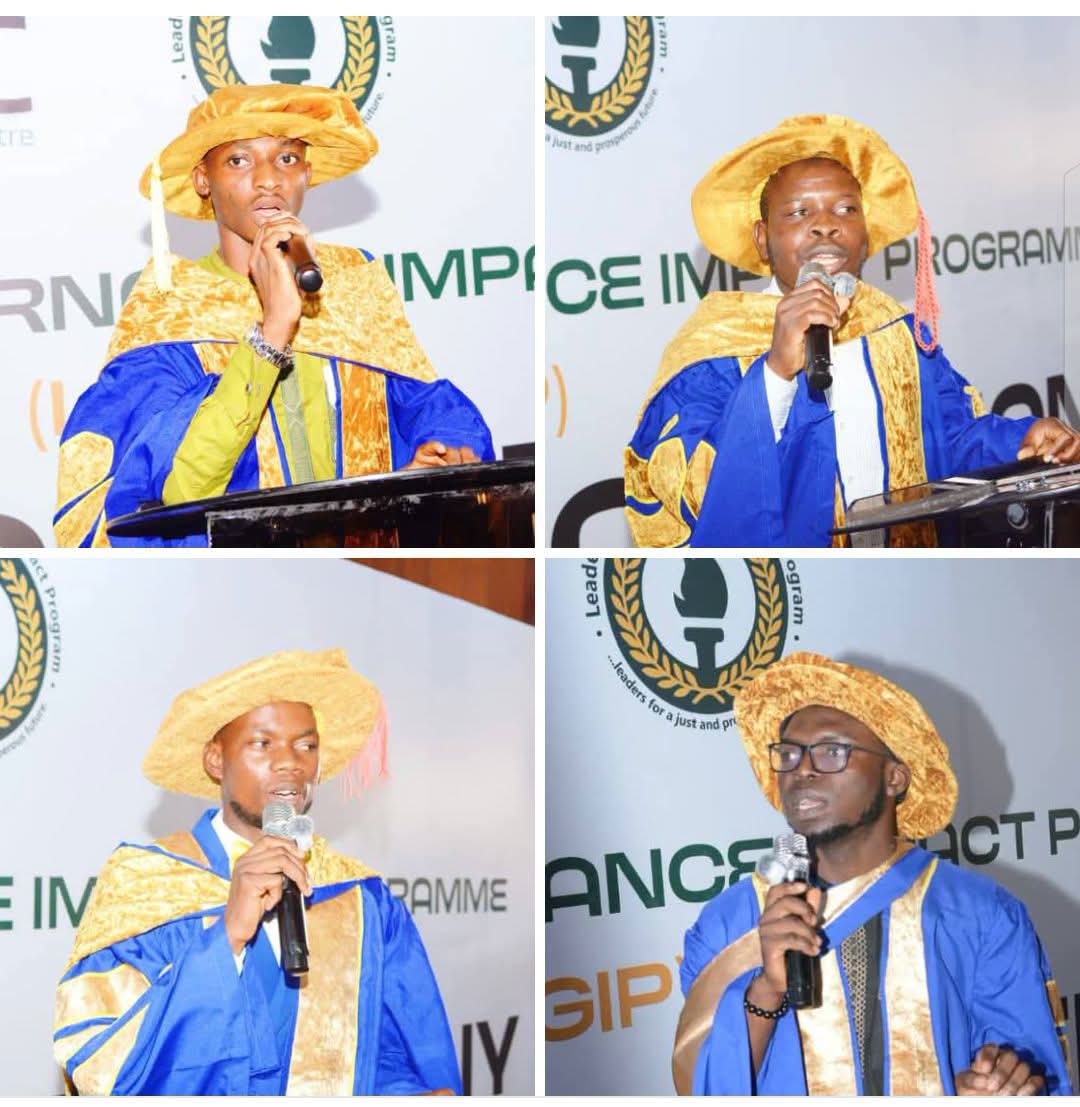
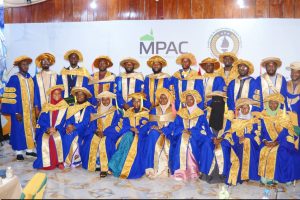
Twenty seven participants of the Muslim Public Affairs Centre (MPAC)’s Leadership and Governance Impact Programme have unveiled four practical projects aimed at tackling inflation, strengthening public accountability, reducing reckless driving and deepening citizen participation in local governance.
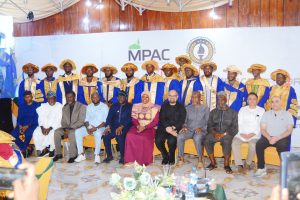
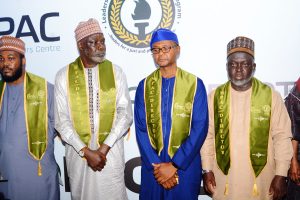
The projects were presented on Saturday, September 12, 2026, during the graduation ceremony of the 2026 cohort of the 13-week programme held at the Function Hall in Lagos.
Muslim News gathered that the graduands were divided into groups across four tracks and challenged to translate lessons from the programme into practical interventions addressing challenges confronting Nigerian society.
The projects were developed under the Corporate and Economic Leadership, Accountability, Ethics and Global Leadership, Civic Advocacy and Social Impact, and Public Service and Governance tracks.
Amanah group proposes Islamic finance driven response to inflation
The Amanah Economic Transformation Group, under the Corporate and Economic Leadership track, presented “Combating Inflation through Local Production: A Corporate and Policy Framework for Muslim Owned SMEs and Muslim Led Organisations in Nigeria.”
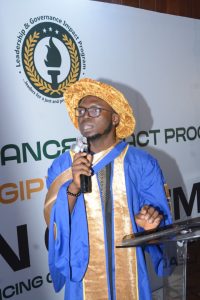
The project was presented by Abdul Ganiu Babatunde Adeola on behalf of the team, comprising Abdulquadir Muhammad Jamaldeen, Lateefat Funmilola Bello Ahmed, Salako Kabirat and Fatimah Sheikh.
The group identified exchange rate volatility, high energy costs, import dependence, weak domestic production and limited access to affordable financing as major drivers of Nigeria’s inflation crisis.
It cited headline inflation of 33.95 per cent, a N48 trillion financing gap for micro, small and medium enterprises and the finding that only 21 per cent of SMEs in Southwest Nigeria were aware of Islamic finance.
The group attributed the challenge to structural, institutional, behavioural and political factors, including poor infrastructure, high logistics costs, fragmented Zakat and Waqf systems, low awareness of Islamic banking and the underuse of Islamic finance in national anti inflation programmes.
To address the challenge, it proposed a Halal Production Syndicate to coordinate Islamic financial institutions, Muslim led organisations, policymakers, development partners and the private sector.
The proposed system would deploy Murabaha, Mudarabah, Zakat, Waqf and cooperative capital to finance productive businesses. It would also provide SME training, mentorship, financial literacy and enterprise readiness support through a digital platform for registration, financing coordination and real time monitoring.
The implementation would begin with the establishment of a governing council, partnerships and the digital platform during the first three months. Months four to six would focus on SME registration, readiness assessment, training and the creation of a financing pool, while months seven to 12 would involve Shari’ah compliant financing, procurement of productive assets and expansion of production.
The group proposed audits, impact reports and expansion after the first 12 months.
It identified low participation, funding gaps, misuse of funds, weak coordination and policy changes as key risks, with awareness campaigns, diversified funding, audits, digital tracking, Shariah oversight and regulatory engagement proposed as mitigation measures.
The group said its success would be measured through the number of SMEs financed, increased productive capacity, employment creation, recovery rates, output and business growth.
NCPLAF seeks to connect citizens’ priorities with government action
The second project, presented under the Accountability, Ethics and Global Leadership track, was the National Citizens’ Priority and Leadership Accountability Framework, known as NCPLAF.
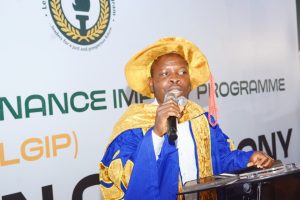
The project was presented by the team lead, Umar Misa, alongside Aisha Haruna, Abdulraheem Abdulraheem, Toheeb Adeogun, Adam Abdulrahman, Omobolaji Naeenah Fashina, Abdullah Muhammad, Abdulaziz Abdulrahman Ta’ariq, Lateef Akinmade and Nimatullah Masuud.
The group described NCPLAF as “a citizen centred governance system for sustainable development and public accountability in Nigeria.”
It argued that citizens, government and leadership accountability often operate through separate channels, creating weak visibility of citizens’ priorities, inconsistent feedback and difficulty tracking whether government commitments translate into measurable action.
The group cited Open Government Partnership evidence and the 2021 Open Budget Survey, which put Nigeria’s public participation score at 26 out of 100. It said participation stood at 40 out of 100 during budget formulation and 25 out of 100 during implementation.
“NCPLAF responds to the system gap rather than treating the problem as the failure of one institution,” the presentation stated.
The proposed framework would connect citizens’ development priorities with government planning, leadership commitments, implementation monitoring and public feedback through both offline and digital channels.
The group stressed that NCPLAF would not be a new government body, describing it instead as “a coordination and accountability framework.”
Its proposed system would collect, validate, rank, aggregate, document, measure, track and report community priorities, while a leadership accountability pathway would establish specific and measurable commitments and institutional responses.
The framework would operate from ward and community levels through local governments and states to the national level, with roles for government institutions, civil society and community based organisations and citizens.
The group said implementation would begin with institutional engagement and consultations, followed by a pilot involving priority collection, validation, leadership commitments and feedback. The final phase would evaluate and refine the framework before integrating it into existing processes.
Lagos Route Watch targets reckless driving through citizen reporting
Under the Civic Advocacy and Social Impact track, Lagos Route Watch presented “See Something, Say Something,” a proposal to reduce reckless driving by using existing structures in Lagos.
The project was presented by the team lead, Abdulkabir Muhammed, alongside Bilkisu Garba, Ibrahim Muhammad Nasir Sheu, Aisha Hussein and Hauwa Bala Geidam.

The group warned that “Reckless driving is killing Lagosians, and it is getting worse,” citing 2,650 crashes recorded nationally in the first quarter of 2025, resulting in 1,593 deaths. It said fatalities increased by 8.3 per cent compared with the previous year.
The group noted that between 15 million and 20 million Lagosians use commercial transport daily and identified speeding, wrongful overtaking and driving against traffic as major causes of crashes.
It attributed reckless driving to money pressure, fragmented enforcement responsibilities, bad roads and political caution. According to the group, commercial drivers face daily income targets, while responsibilities shared among the FRSC, LASTMA and police can weaken coordination.
At the centre of the proposal is a simple passenger reporting system.
“These are not bad people. Most are responding to real financial pressure. Our plan works by quietly changing what is rewarded, not by blaming anyone,” the presentation stated.
The group proposed placing stickers inside participating vehicles with reporting information. Passengers who witness dangerous driving could record a short video and send it, alongside the vehicle’s plate number, to an FRSC or LASTMA WhatsApp line.
“A passenger notices a driver being reckless. They record a short video and send it to a WhatsApp line. The union acts. The driver faces a real, fast consequence,” the group explained.
It also proposed appointing two trusted senior drivers as Route Safety Marshals in each pilot park. Their observations would be combined with passenger reports to produce monthly driver scorecards.
Drivers with clean records could receive better loading positions and public recognition, while repeated reports could result in warnings, loss of loading priority and referral to the FRSC.
The proposed pilot would cover five parks and cost between N150,000 and N300,000 over six months. The group identified union resistance, retaliation, driver anger and marshal favouritism as risks and proposed anonymous reporting, cross checking of reports and formal FRSC protection.
Its key indicators include five pilot parks, up to 1,000 vehicles with stickers, 10 trained Route Safety Marshals, school safety sessions and company visits.
Citizen’s Assembly proposes continuous dialogue beyond elections
The fourth project, under the Public Service and Governance track, was titled “A Sustainable Participatory Governance Model for Strengthening Civic Engagement and Accountability in Local Government Administration in Nigeria.”
The project proposed a Citizen’s Assembly Framework to provide citizens with a structured platform to participate in governance between elections.
The team comprised Abulazeez Liadi (Team Lead), Sumayyah Ajani, Sodeeq Suleiman (Research Lead), Yusirat Oyeleke (Communications Lead), Maryam Muhammad Kudu and Al-Amin Bobboi Muhammad (Documentation Leads), and Yusuf Isa (Member).

“Citizens have concerns. Government has institutions. The missing link is continuous dialogue,” the presentation stated.
The group identified limited dialogue, weak feedback, low participation, weak accountability, misinformation and declining trust as key governance gaps.
It attributed these challenges to limited formal feedback mechanisms, distrust in government responsiveness, election focused political engagement and unequal access to participation.
The proposed solution is a quarterly platform bringing citizens, community representatives, civil society organisations and local government officials together to identify priorities, deliberate on solutions and generate actionable recommendations.
The process would follow five stages: listen, deliberate, recommend, respond and follow up.
Participants would include local government officials, councillors, citizens, persons with disabilities, religious organisations, civil society organisations, youth, traditional leaders, women and community associations.
The group proposed a coordinating committee supported by a secretariat, councillors, civil society organisations, community development associations, traditional leaders and religious leaders.
It identified low participation, political interference, limited government commitment, unrealistic expectations and sustainability as major risks, proposing sensitisation, neutral facilitation, balanced representation, formal government endorsement and integration into existing local government structures.
“We are not creating another meeting. We are creating a feedback loop,” the presentation stated.

The group estimated N925,000 for a pilot and proposed implementation through setup and mobilisation, pilot implementation, review and institutionalisation.
It called for the Citizen’s Assembly Framework to be piloted in Alimosho Local Government Area of Lagos State, with success measured through citizen participation, inclusive participation, policy dialogue, government responsiveness, civic awareness and public trust.
The presentation ended with a concise message: “Listen. Deliberate. Act.”
Taken together, the four projects demonstrated the range of issues addressed by the 2026 LGIP cohort of the MPAC Fellowship programme, from economic empowerment and Islamic finance to public accountability, road safety and democratic participation.
Sponsored
Sponsored

Nigerian Muslim Personalities of the Year 2024/2025

Global Muslim Personalities of the Year 2024/2025




Discover more from Muslim News Nigeria
Subscribe to get the latest posts sent to your email.