

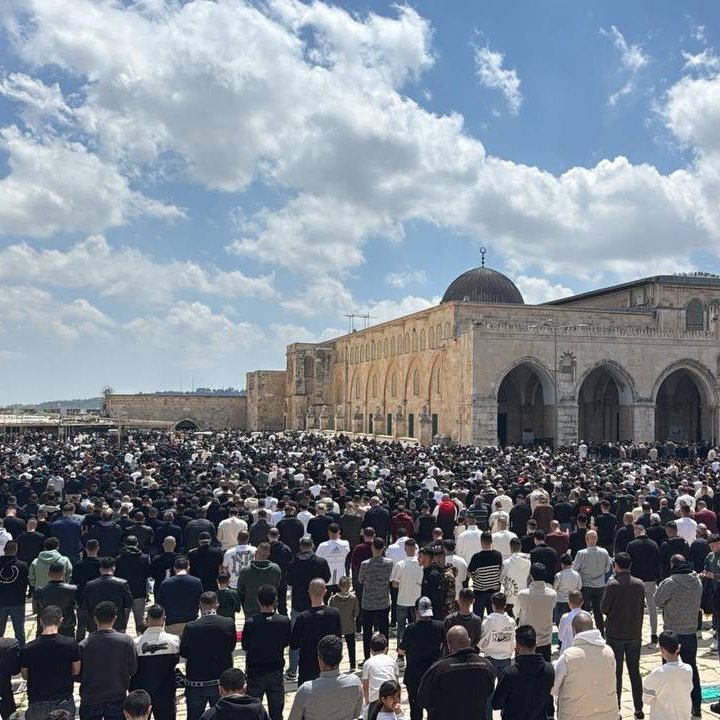
More than 100,000 Muslim worshippers gathered at Al-Aqsa Mosque in occupied East Jerusalem for Friday prayers following weeks of closure imposed by Israel on Islam’s third-holiest site.
The closure, widely condemned across the Muslim world, denied Palestinians access to daily and Friday prayers for over a month, including during the sacred period of Ramadan and Eid al-Fitr.
Many Muslims described the move as unjust and a violation of their fundamental right to worship.
Israeli authorities shut the mosque from late February, citing security concerns. However, critics, including Muslim groups and observers, viewed the action as part of broader restrictions on Islamic holy sites in Jerusalem.
The decision has been linked to policies under Israeli Prime Minister Benjamin Netanyahu, with many describing it as an injustice against Muslims.
Following the reopening on Friday, April 10, large crowds of worshippers arrived early, filling the mosque’s courtyards in a strong display of faith, resilience, and attachment to the sacred site.
The Islamic Waqf, which administers Al-Aqsa, confirmed that over 100,000 Muslims attended the Friday prayers.
The closure had prevented Muslims from observing at least five consecutive Friday prayers at the mosque, a situation that drew widespread criticism and concern over religious freedom.
Worshippers returning to the site expressed both relief and lingering fears of future restrictions.
Many emphasized the unique spiritual significance of praying at Al-Aqsa, noting that access to the mosque remains a deeply sensitive issue for Muslims worldwide.
“Hopefully they will not close Al-Aqsa again, and everyone will be able to come to this holy place, whether residents of Jerusalem or from the West Bank,” said 30-year-old Mohammad Saaedeh.
“Friday prayer is an obligation for us, but performing it at Al-Aqsa is something entirely different,” said Sharif Mohammad, 39.
“It’s an indescribable feeling,” added Ahmad Ammar, 55.
As Over 30,000 Muslims gather for first Fajr prayer
Hours before the historic Friday congregation, more than 30,000 Muslim worshippers gathered at Al-Aqsa for the first early morning (Fajr) prayer following a 40-day closure imposed by Israel on Islam’s third-holiest site.
From the early hours of Thursday, men, women, and youth began arriving in groups, some traveling long distances and passing through tight security checkpoints to reach the Masjid Al Aqsa.
Their presence reflected a strong spiritual determination to reconnect with a sacred space that holds immense religious value in Islam.
Observers described the atmosphere as both solemn and uplifting. Worshippers filled the courtyards in quiet devotion, many offering prayers of gratitude for the opportunity to return, while others wept, reflecting on the pain of being barred from the mosque for over a month.
Despite the reopening, tensions persist, with continued calls from Muslims for unrestricted access to Al-Aqsa and respect for its sanctity as a central place of worship in Islam.
Sponsored

Nigerian Muslim Personalities of the Year 2024/2025

Global Muslim Personalities of the Year 2024/2025




Discover more from Muslim News Nigeria
Subscribe to get the latest posts sent to your email.