

* Says internal divisions weaken Muslims’ response to Islamophobia
* As Muslim News Nigeria holds 7th anniversary lecture
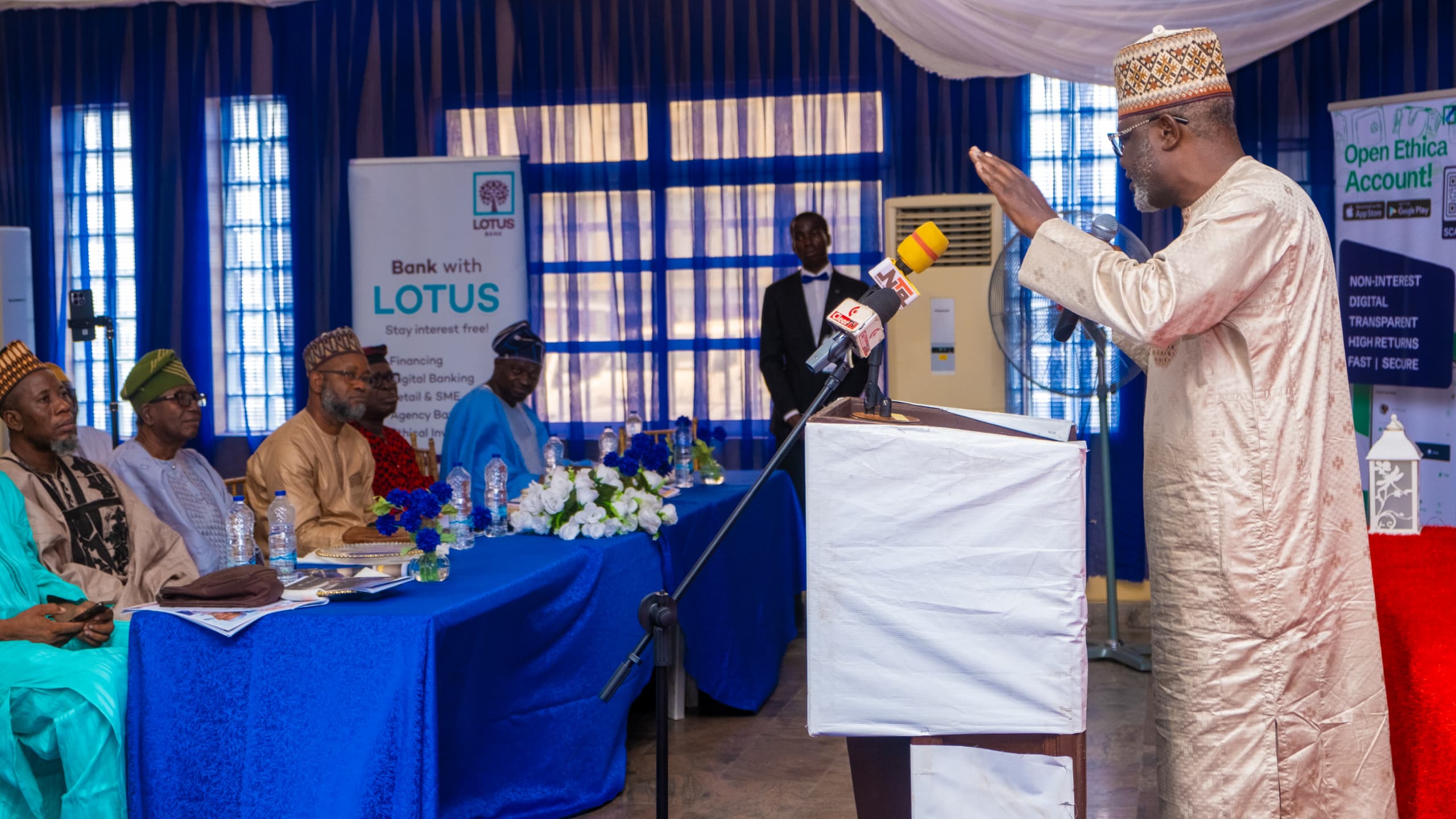
The Executive Chairman of the Muslim Public Affairs Centre (MPAC), Mallam Kamor Disu, has called on Nigerian Muslims to move beyond reacting to negative narratives to taking active control of public discourse through strategic media engagement, legal advocacy, scholarship, and responsible use of digital platforms.
Disu made the call during his keynote address at the Seventh Anniversary Lecture of Muslim News Nigeria and #MNAwards presentation held at the Olanike Hall of Shamsi Adisa Thomas Mosque in Ikeja, Lagos.
The event, chaired by the President of the Muslim Ummah of South West Nigeria, MUSWEN, Alhaji Rasaki Oladejo, brought together a wide range of dignitaries from Islamic institutions, academia, media, health, law, politics and civil society sector.
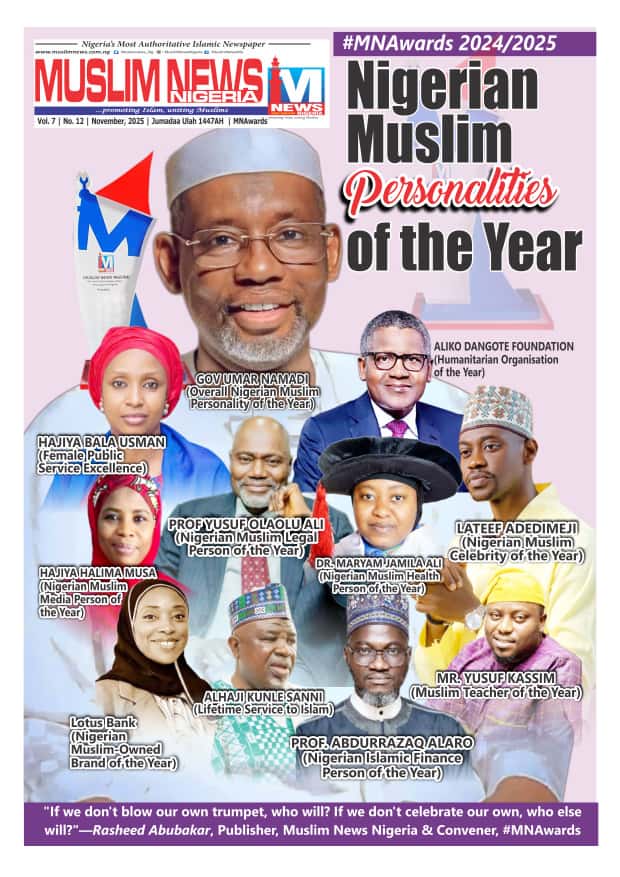
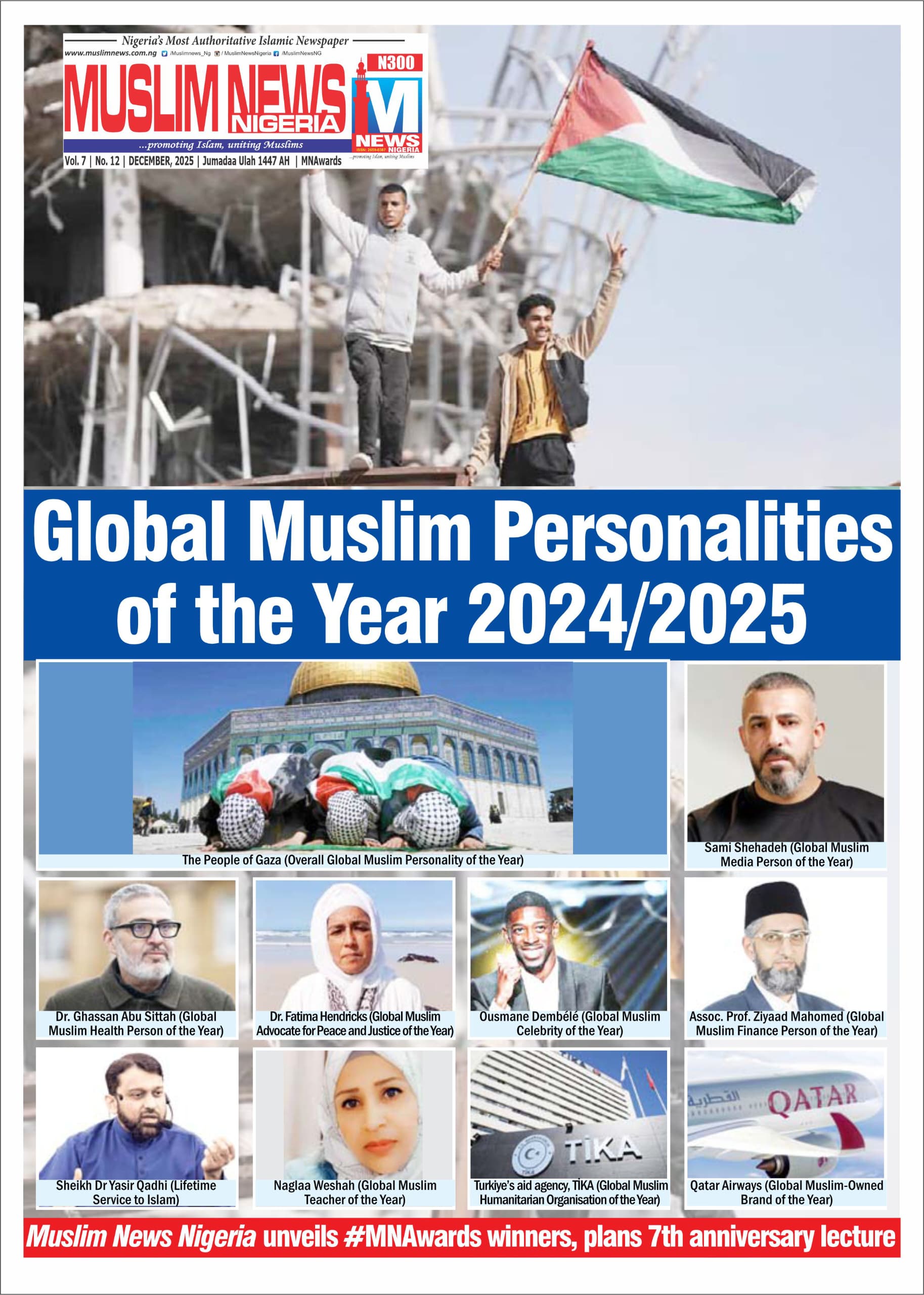
The event also featured the presentation of awards to winners of the Global and Nigerian Muslim Personalities of the Year 2025 (MNAwards), as well as the 30 Muslim Women of Substance Awards, in recognition of their outstanding contributions to the development of the Muslim community and society at large.
Speaking on the theme, “Framing the Faith in the Midst of Media Misrepresentation and Global Conflicts,” Mallam Disu said Muslims must become active authors of their own narratives rather than allow stereotypes, misinformation, and biased reporting to define Islam and its followers.
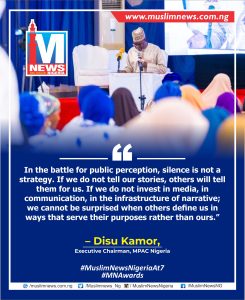
He warned that in current information environment, silence is no longer golden, stressing that “silence is not a strategy” and that communities which fail to tell their own stories inevitably allow others to define them.
According to him, “in a world where narratives shape perception and perception shapes policy, silence effectively hands over the authority of storytelling to others,” adding that the struggle over narrative control has become as important as political or policy struggles themselves.
Disu further noted that “every community that fails to tell its own story will eventually have its story told by others, often in ways that distort its identity and lived reality.”
Islam often framed through lens of violence and extremism
Mallam Disu emphasised the persistent misrepresentation of Islam in both local and international media, where the religion is frequently associated with violence and extremism, while its contributions to peacebuilding, education, charity, and social development remain underreported.
According to him, “Islam is too often viewed through a narrow lens of conflict and extremism, while its wider contributions remain underrepresented,” warning that repeated negative framing gradually becomes the accepted public perception unless challenged.
The MPAC CEO highlighted cases such as the hijab controversy in Nigeria and the Boko Haram insurgency, stressing that Muslims themselves remain among the worst victims of terrorism, yet are often unfairly associated with violence in public discourse.
He stressed that “criminals do not define a faith,” saying extremists cannot represent a religion followed by over two billion people globally.
Double standards in media reportage of Muslims
The MPAC chairman criticised what he described as double standards in media reporting involving Muslims, including selective verification, omission of key facts, and delayed corrections that fail to undo already-formed public perceptions.
“Stories involving Muslims are frequently filtered through uneven standards of verification and sensitivity, he said, noting that this inconsistency creates a lasting perception gap that is difficult to correct.
He noted that “errors in reporting about Muslims are often corrected late, when the damage had already been done,” stressing that fairness in journalism requires consistency in how all communities are treated.
“Fair reporting requires not only accuracy in facts, but consistency in the standards applied across all communities. Muslims are not demanding favourable treatment, but equal treatment.
“We are not asking the media to become pro-Muslim. We are asking the media to remain pro-truth,” he said.
Internal crises weaken narrative response
Beyond wrong narrative from the external, Mallam Disu challenged Muslims to address internal weaknesses, particularly, excessive but needless sectarian debates on social media that distract from serious engagement with attendant misinformation and Islamophobia.

He noted that many Muslims are “consumed by internal disputes while external narratives about Islam circulate unchallenged,” warning that this imbalance weakens collective response.
“Energy spent on endless sectarian debates is energy diverted from the urgent task of correcting misinformation and engaging wider society”, he said.
Calls for stronger Media engagement
Mallam Disu issued a broad call to strategic actions by all professionals, urging journalists to uphold accuracy and fairness; lawyers to challenge defamation and discrimination; scholars to focus on contemporary societal challenges; institutions to invest in media and advocacy; youths to embrace journalism and digital media, and social media users to engage responsibly.
He said, “the responsibility of correcting misinformation does not lie with institutions alone; it extends to every individual who participates in public discourse.”
MPAC Chairman maintained that Muslims must move from being passive subjects of narratives to active participants in shaping them.
“We must move from being subjects of narratives to becoming authors of narratives,” he said.
High profile gathering of islamic leaders
The well attended ceremony featured leading Islamic scholars and public figures, including National Missioner of Ansar Ud Deen Society of Nigeria, Imam AbdurRahman Ahmad; Chief Imam of the Lighthouse Mosque, Lekki, Imam Nojeem Jimoh; former Chairman of the National Hajj Commission of Nigeria, Alhaji Zikrullah Kunle Hassan; President of the Muslim Media Practitioners of Nigeria (MMPN), Alhaji AbdurRahman Balogun; and Executive Director of Muslim Rights Concern (MURIC), Prof. Lakin Akintola.
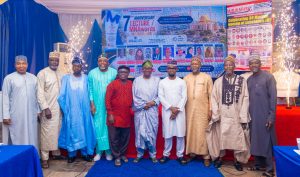
Also present were Chairman of Abdullahi Shuaib Foundation, Dr Abdullahi Shuaib; Chairman of Lekki Phase 1 Residents Association (LERA), Alhaja Shareefah Abiola Andu; and National President (Amir) of the Islamic Medical Association of Nigeria (IMAN), Prof. Ibrahim Oreagba; Chief Executive Officer of Easy and Quiet, Alhaji Mutiu Anthony; Engineer Iskil Asifat; and legal practitioner, Barrister AbdulKareem Fajimite, alongside other distinguished guests who contributed to the success of the event aa well as the broader discourse on media representation, advocacy, and community development.
Publisher pledges continued positive storytelling
The publisher and Convener, Alhaji Rasheed Abubakar appreciated all those who have honoured and supported Muslim News 7th Anniversary Lecture and Awards ceremony.
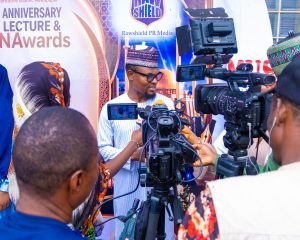
He pledged that the platform will continue to highlight positive Muslim contributions that are often overlooked by mainstream media, stressing the importance of balanced representation in public discourse.
Alhaji Abubakar explained that the initiative was designed to recognise excellence among Muslims across various fields and to inspire greater societal impact, noting that “recognition strengthens motivation for positive contribution.”
* Watch out for more report from MUSLIM NEWS NIGERIA 7TH ANNIVERSARY LECTURE/MNAWARDS
Sponsored
Sponsored

Nigerian Muslim Personalities of the Year 2024/2025
Global Muslim Personalities of the Year 2024/2025



Discover more from Muslim News Nigeria
Subscribe to get the latest posts sent to your email.