

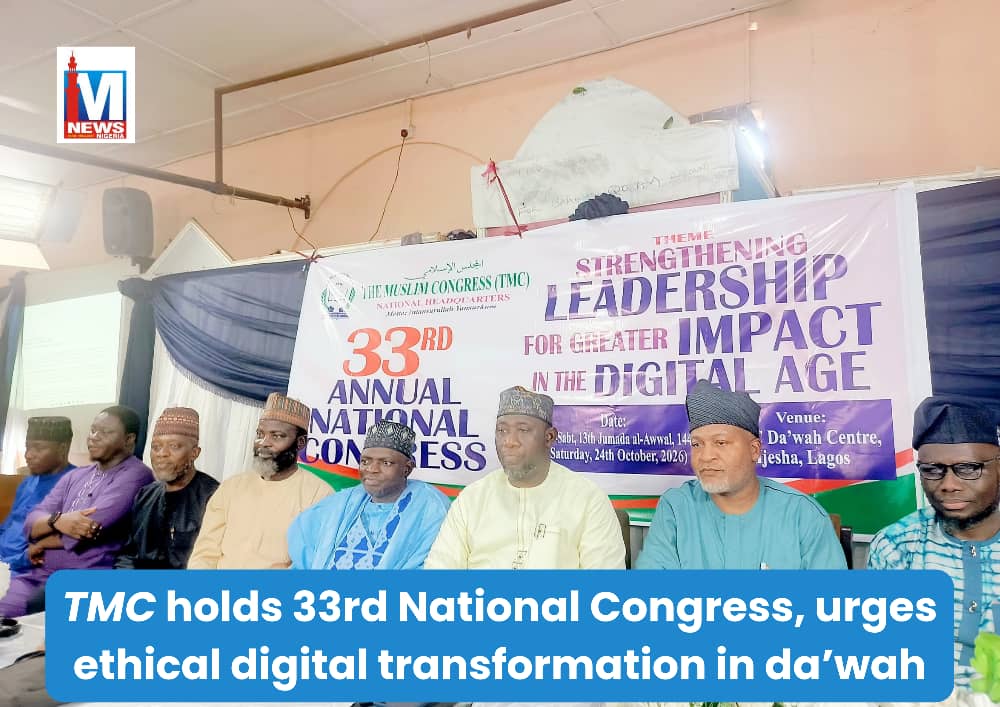
* Prof. Osunleke identifies leadership failure as major obstacle to digital transformation
* Congress promotes accountability and knowledge-sharing among nine state chapters
Digital transformation requires effective leadership, not merely investment in technology, Professor Ajiboye Shuaib Osunleke has said, urging Islamic organisations to embrace digital platforms to expand da’wah, improve administration and engage younger generations.
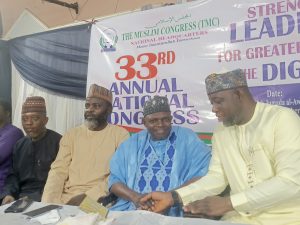
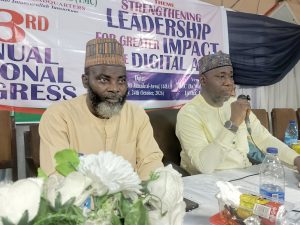
The guest lecturer, who teaches in the Department of Chemical Engineering at Obafemi Awolowo University, Ile-Ife, made the remarks at the 33rd Annual National Congress of The Muslim Congress (TMC), held on Saturday, October 24, 2026, at the organisation’s Da’wah Centre, Ijeshatedo, Lagos.
Speaking on the theme, “Strengthening Leadership for Greater Impact in the Digital Age,” Prof. Osunleke argued that organisations could struggle to achieve their digital transformation goals even when they had access to the necessary technology, if their leaders lacked the capacity to implement change.
“Seventy per cent of digital transformations fail to meet their goals, not because the technology failed to keep pace, but because leadership did not,” he said, citing a statistic featured in his presentation.
He further challenged leaders to make better use of available resources, warning that investment alone could not guarantee success without the knowledge and direction required to deploy it effectively.
“It doesn’t matter how many resources you have. If you don’t know how to use them, it will never be enough,” he said.
Islamic organisations urged to take da’wah online
Prof. Osunleke identified digital engagement as a major opportunity for Islamic organisations to reach wider audiences, particularly young Muslims who increasingly use online platforms to access information and seek spiritual guidance.
His presentation cited a figure indicating that more than 60 per cent of Muslim youth seek spiritual guidance online rather than in traditional settings. The underlying source of the statistic was not specified in the supplied presentation materials.
He urged TMC to complement its physical da’wah activities with digital content, virtual learning platforms, social media campaigns and online leadership training.
The lecturer noted that TMC had spent 32 years promoting Islamic values through da’wah, education, community engagement and social development, saying that sustaining its impact required the organisation to adapt to changing communication habits and technological developments.
He also highlighted the challenges facing contemporary da’wah organisations, including coordinating activities across decentralised chapters, operating with limited resources and maintaining relevance in a rapidly changing digital society.
Five competencies for effective leadership
The professor outlined five competencies he considered essential for leadership in the digital age: digital fluency, adaptability, emotional intelligence and empathy, data-informed decision-making, and inclusive collaboration.
He explained that digital fluency did not mean every leader needed to write computer code, but that leaders should understand technology sufficiently to identify useful applications, ask informed questions and determine where automation or artificial intelligence could improve their organisations.
On adaptability, he encouraged leaders to treat change as a normal part of organisational life, make decisions when necessary and refine their approaches as new information became available.
He also stressed the importance of understanding people’s concerns during periods of change.
“Technology moves fast; people still need to feel seen, heard and safe,” the presentation stated in its discussion of emotional intelligence and empathy.
Prof. Osunleke advocated an inclusive leadership approach that allows members from different generations, teams and professional backgrounds to contribute to decisions.
He also encouraged leaders to use data alongside grassroots experiences when assessing community needs and planning interventions.
Warns against unethical use of artificial intelligence
Prof. Osunleke cautioned that the benefits of digital technology must be balanced with ethical responsibility, particularly as organisations begin to use artificial intelligence in decision-making and information management.
“Greater capability demands greater responsibility,” he said in the presentation, calling for clear boundaries on data use and safeguards against bias in automated systems.
He emphasised that leadership in Islam must remain rooted in justice, wisdom, compassion and accountability, regardless of the technology available to an organisation.
The lecturer also urged TMC to establish measurable indicators for assessing its performance, including member engagement, retention, innovation and the speed with which ideas are translated into practical results.
Such measures, he explained, would help leaders determine whether their programmes were producing meaningful outcomes rather than judging performance solely by the number of activities organised.
Calls for succession planning and youth development
The guest lecturer identified mentorship, continuous learning and succession planning as essential to sustaining organisational impact beyond the tenure of individual leaders.
“Impact that depends only on you is not yet secure,” he said, stressing the need for experienced leaders to prepare younger members for positions of responsibility and give them opportunities to make meaningful decisions.
He proposed leadership academies, mentorship programmes, partnerships with educational institutions and youth empowerment initiatives as ways to strengthen leadership capacity.
Amir urges Nigerians to embrace digital transformation
Earlier, the Amir of TMC, Alhaji Abdulwasiu Bangbala, called for greater use of digital technology to improve leadership, public administration and national development, warning that Nigeria cannot afford to remain a passive participant in the rapidly changing digital world.
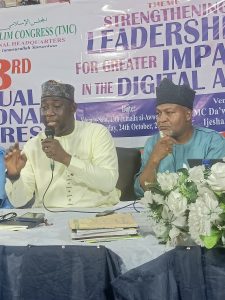
“The digital landscape is no longer a peripheral tool; it is the arena where ideas compete and where values are put to test,” he said in his welcome address.
Alhaji Bangbala said effective leadership in the digital age required a combination of sound values and modern administrative competence, with technology deployed to improve efficiency, accountability and service delivery.
He cited TMC’s ongoing automation drive, anchored by its digital portal, as an example of how technology could streamline administrative processes, improve information management and strengthen coordination across different levels of an organisation.
“Manual, fragmented administrative practices must give way to a seamless, unified digital system,” he said.
The Amir also stressed the importance of institutional integrity and accountability, noting that leadership should be treated as a responsibility to serve rather than a platform for personal prestige.
“Leadership in Islam is not a badge of honour or a platform for prestige; it is an Amanah and a covenant made before Allah (SWT) to serve His cause selflessly,” he said.
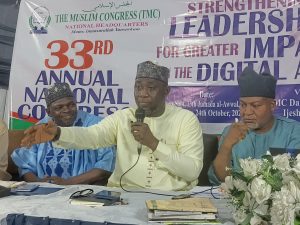
Addressing Nigeria’s prevailing economic difficulties, Alhaji Bangbala urged leaders not to allow rising living costs and financial pressures to undermine their responsibilities.
“Difficult times do not lessen our duties; rather, they demand greater resourcefulness, stronger reliance on Allah, and deeper commitment to our cause,” he said.
TMC ranks Oyo, Kwara, Osun in three categories
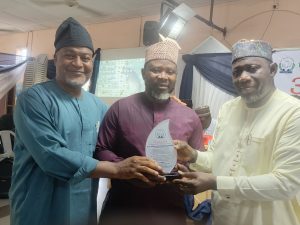
One of the highlights of the congress was the assessment of nine state chapters, with Oyo, Kwara and Osun emerging winners in the exemplary, commendable and developing categories, respectively.
The Assistant Secretary-General of TMC, Malam AbdulKareem Abdullahi, said the chapters were assessed using eight strategic parameters. Ogun, Oyo and Lagos competed in the exemplary category, with Oyo emerging winner.
Kwara won the commendable category, ahead of Niger and the Federal Capital Territory, while Osun topped the developing category, which also included Ondo and Edo.
“The intention of the national headquarters is to actually ensure that all those winning tactics, all the methods, all the competence and experience that they have used to emerge winners across these categories are spread to all other states,” he said.
He listed TMC’s eight strategic focus areas as networking, media coverage, collaboration and partnership, physical projects, wealth creation, corporate image, membership drive and grassroots fortification.
“In the world that we are in, you cannot say you know it all. You need to interact with people,” he said, urging chapters to strengthen networking and partnerships with organisations pursuing similar objectives.
On financial sustainability, Malam Abdullahi said state chapters should aim to generate at least 70 per cent of the resources needed to run their programmes, including through suitable and ethical investments.
Osun highlights da’wah activities, economic challenges
The Deputy Director of Internal Audit at the Office of the Auditor-General for State and Local Governments in Osun State, Mallam Mikail Iyiola Oyedeji, highlighted the chapter’s Islamic programmes, including Oruj Fisabilillah, public lectures, annual events, the Islamic Training Programme and daily admonition messages.
Although Osun won the developing category, Mal. Oyedeji, who is the Waali, Coordinator of the State, said the chapter had the potential to place in either the exemplary or commendable category.
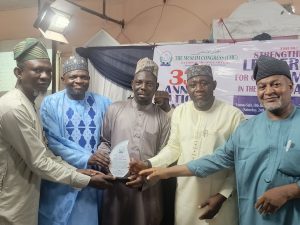
He identified limited economic and business opportunities as a challenge, explaining that some people who move to Osun for education or employment leave after completing their studies or acquiring professional qualifications because of limited opportunities.
TMC congress provides accountability platform, says Naib Amir
The Naibul Amir for Da’wah Affairs at TMC National Headquarters, Imam Sharfdeen Ibrahim, described the annual congress as an accountability platform where national executives present reports on their activities over the preceding year.
Speaking with Muslim News, Imam Ibrahim said the congress enabled members from state, local government and branch levels to review the national leadership’s performance and learn from the experiences of other chapters.
He said the exercise was intended to help the organisation identify areas for improvement, prepare for the coming year and sustain its commitment to excellence.
Former Lagos Wali commends TMC’s digital drive
The former Wali of TMC in Lagos State, Imam Monsur Adebayo, commended the national leadership for its efforts towards societal reform, describing its growing use of digital platforms as timely.
He said the organisation had used its programmes and media presence to contribute to discussions on issues affecting Nigeria and beyond, while presenting Islamic perspectives on matters of public concern.
Imam Adebayo urged Islamic organisations to collaborate more closely and demonstrate Islam’s relevance beyond the mosque, including in areas such as Islamic finance, social development and national affairs.
He also encouraged Muslim organisations to use social media more effectively to counter misleading narratives about Islam and help the public better understand its teachings.
Citing Islamic finance as an example of Islam’s contribution to wider society, he pointed to the growth of institutions such as Jaiz Bank and Lotus Bank, as well as Islamic banking windows offered by conventional financial institutions.
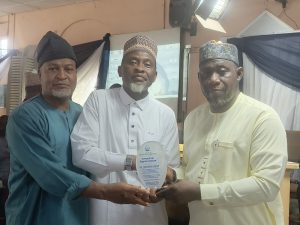
Imam Adebayo, who is the Head of Business Development and Marketing of Hajj Mabrur Ventures Limited, an organisation linked to TMC, said the initiative had made an impact in the Hajj industry, reflecting the organisation’s commitment to translating Islamic principles into practical services.
He expressed optimism that TMC would continue to expand its influence by addressing issues affecting Muslims and the wider society through the guidance of the Qur’an and Sunnah.
OTHER AWARDEES
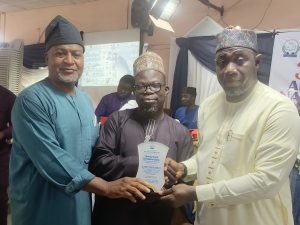
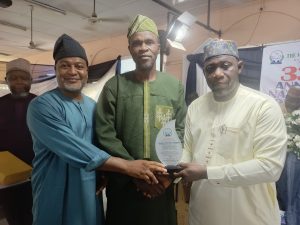
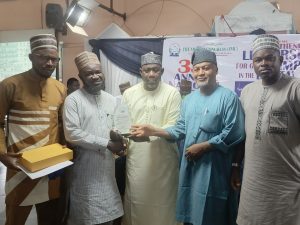
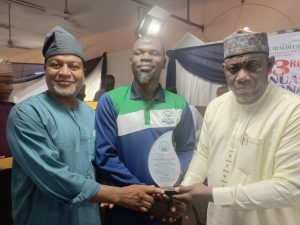
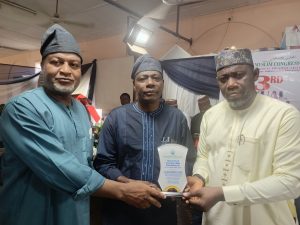
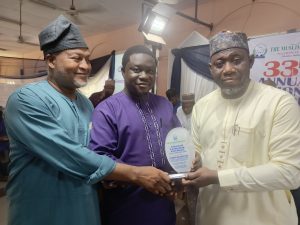
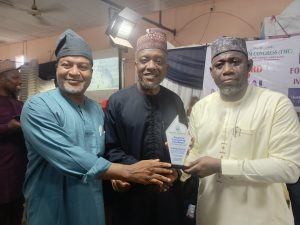
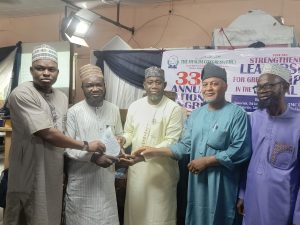
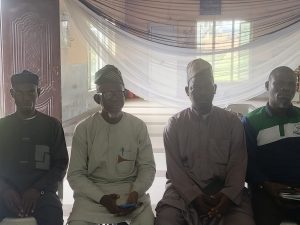
WAALI (COORDINATORS) OF TMC
Sponsored
Sponsored

Nigerian Muslim Personalities of the Year 2024/2025
Global Muslim Personalities of the Year 2024/2025



Discover more from Muslim News Nigeria
Subscribe to get the latest posts sent to your email.