

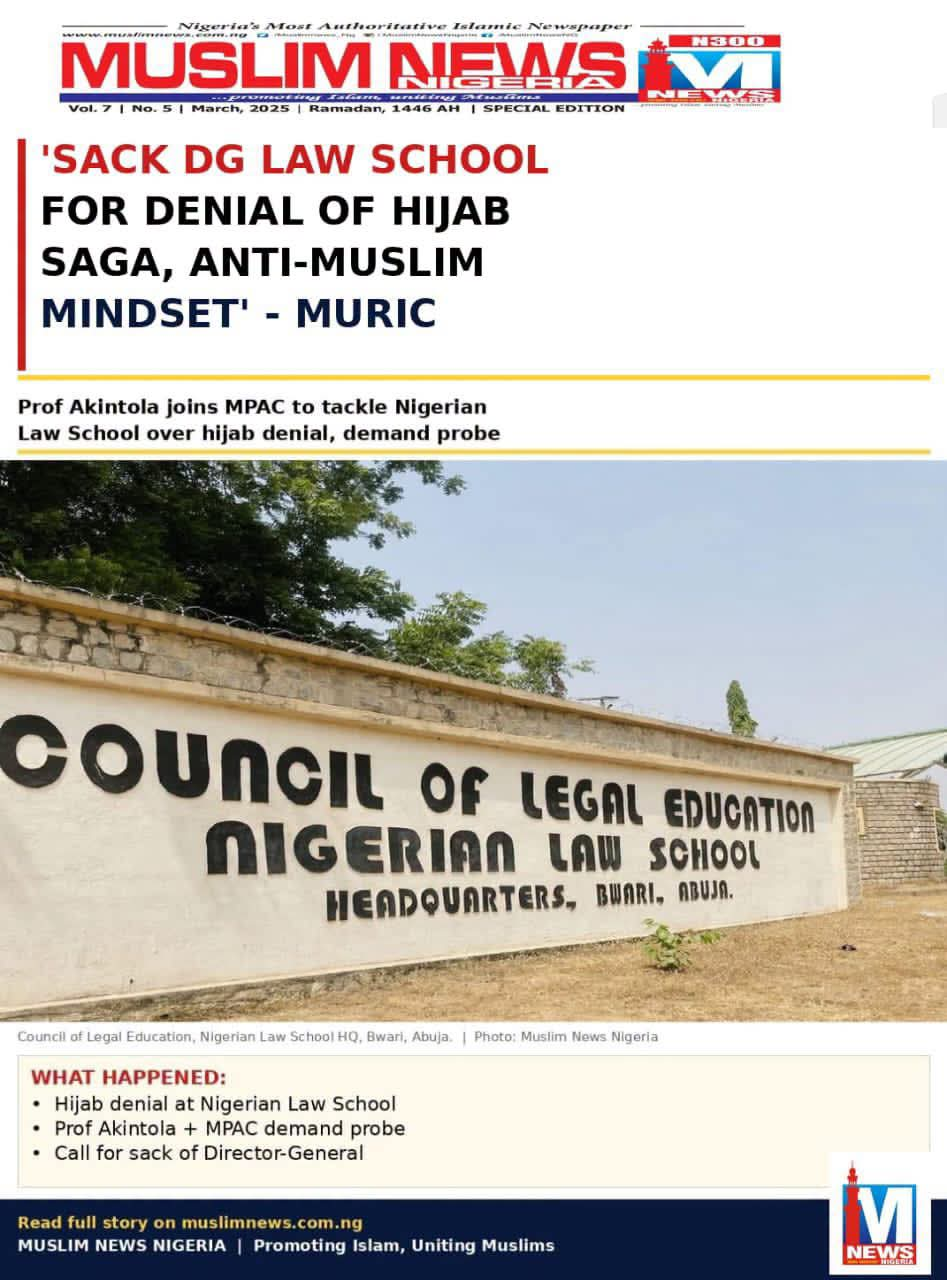
* ‘Sack DG over anti-Muslim mindset’ – Prof Akintola
The Muslim Public Affairs Centre (MPAC) and the Muslim Rights Concern (MURIC) have criticised the Council of Legal Education over its denial of discrimination against female Muslim candidates wearing hijab during the October 31, 2026 Bar Final Examinations.
MURIC has also demanded the sack of the Director-General of the Nigerian Law School over the controversy, accusing her of nursing an anti-Muslim mindset.
The two Muslim organisations, in separate statements issued on Thursday, November 5, faulted the Council’s November 4 official statement, which described reports of harassment, intimidation and exclusion of hijab-wearing candidates as false.
While MPAC accused the Council of failing to address the specific complaints raised by candidates and eyewitnesses, MURIC described its denial as unacceptable.
MPAC accuses Council of endorsing discrimination
In a statement titled ‘Council of Legal Education’s Statement on Hijab Harassment Is an Endorsement of Discrimination at the Gates of the Examination Hall’, MPAC Executive Chairman, Disu Kamor, said the Council had failed to respond to the actual complaints concerning the treatment of Muslim candidates.
Kamor explained that some female candidates were stopped at the entrance of the Main Multipurpose Hall, compelled to remove their hijabs and re-wrap them like turbans before being allowed into the examination venue.
He added that Barrister Firdausa Amasa personally witnessed two candidates crying at the entrance, while other complaints concerned the selective policing of long, modest dresses.
According to him, the Council’s statement did not address these incidents, reports from the Lagos and Port Harcourt campuses, or the Law School’s circular permitting hijab.
“The Council has not denied any of these specifics. Knocking down an allegation nobody made does not answer the one that was,” he said.
MPAC also questioned the Council’s reference to an October 29 incident involving a female student found with an earpiece and a mobile phone concealed under her clothing during the Bar Part I examinations.
The organisation said the incident was still under investigation and could not justify subjecting other Muslim candidates to suspicion because of their religious attire.
“One candidate’s alleged misconduct is not evidence against thousands of Muslim women, and it is no basis for presuming every hijab-wearing candidate to be a cheat,” Kamor stated.
He maintained that examination security measures could be enforced without humiliating candidates or violating their religious rights, recommending private screening by female officers and uniform application of security procedures.
MPAC cites Supreme Court judgment, demands investigation
Citing the Supreme Court judgment in Lagos State Government & Others v. Asiyat Abdulkareem & Others (SC/910/2016), delivered on June 17, 2022, MPAC said the wearing of hijab was a constitutionally protected manifestation of religion under Section 38 of the 1999 Constitution.
It also cited Section 42, which prohibits religious discrimination, and Section 287, which provides for the enforcement of decisions of superior courts.
The organisation consequently called for an independent investigation into the October 31 incidents at the Bwari and Lagos campuses, including a review of available CCTV footage and interviews with affected candidates and eyewitnesses.
It further demanded the publication of the circular permitting hijab, a clear directive against compelling candidates to remove or alter their religious garments in public, and assurances that no candidate would be victimised for exercising her constitutional rights.
MURIC demands sack of Law School DG
Meanwhile, MURIC Founder and Executive Director, Professor Ishaq Akintola, called on the Council of Legal Education to sack the Director-General of the Nigerian Law School over the controversy.
In a statement issued on Thursday, Akintola described the Council’s denial as false and questioned why the institution would dismiss reports of restrictions despite the existence of written instructions circulated at some of its campuses.
“How can Law School deny the undeniable? Although the DG allegedly gave verbal instructions to that effect, we have copies of written instructions from Law School campuses based on her alleged verbal directives,” he said.
The MURIC leader also questioned the authority under which the campuses issued the instructions and challenged the Director-General to explain whether she had queried them for circulating directives that contradicted the institution’s regulations.
He cited Part B, Rule 5 of the Nigerian Law School’s Code of Conduct for Students, which recognises hijab as acceptable attire for female Muslim students.
Akintola said the Director-General’s actions had subjected Muslim candidates to psychological pressure during the examinations, potentially affecting their performance, while Christian candidates sat without similar challenges.
He further called for an investigative panel to examine the incidents and demanded that the Director-General recuse herself to allow an impartial inquiry.
MURIC insisted that she should resign or be removed if she failed to do so, accusing her of damaging the reputation of the Nigerian Law School through her handling of the controversy.
Hijab controversy revives 2017 Call to Bar incident
The latest development comes amid renewed debate over the right of Muslim women to wear hijab in educational and professional institutions.
In December 2017, Firdaus Amasa was prevented from participating in the Call to Bar ceremony because she insisted on wearing her hijab with her legal attire.
The Body of Benchers subsequently approved its use in June 2018, paving the way for her eventual Call to Bar in July of the same year.
The Supreme Court also affirmed the constitutional protection of hijab in its landmark 2022 judgment involving the Lagos State Government and Muslim schoolgirls.
The Council of Legal Education, however, maintained in its November 4 statement that it had no policy or institutional practice of religious discrimination, insisting that examination security measures were necessary to protect candidates’ identities and academic integrity.
It urged the public to exercise restraint and allow the appropriate institutional processes to establish the facts.
Sponsored
Sponsored

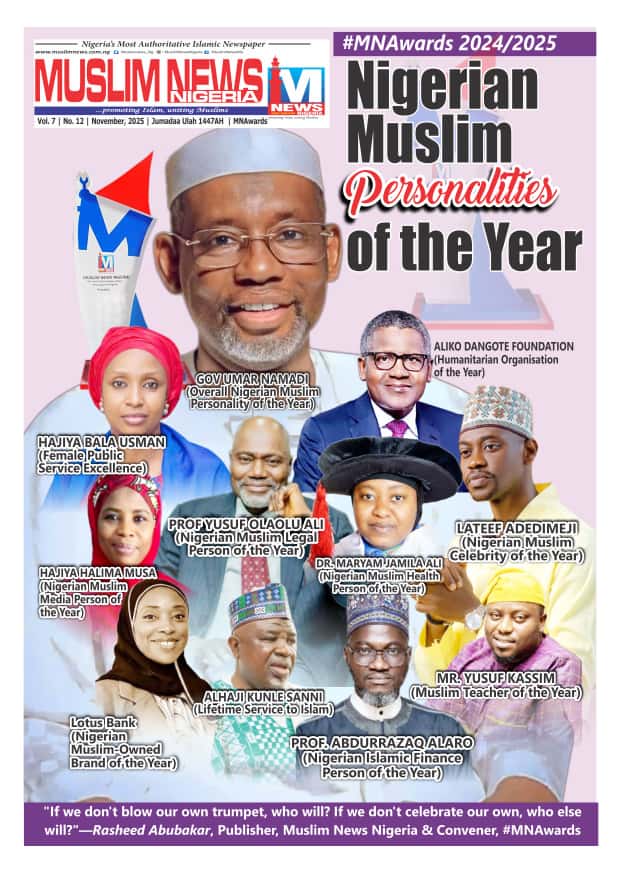
Nigerian Muslim Personalities of the Year 2024/2025
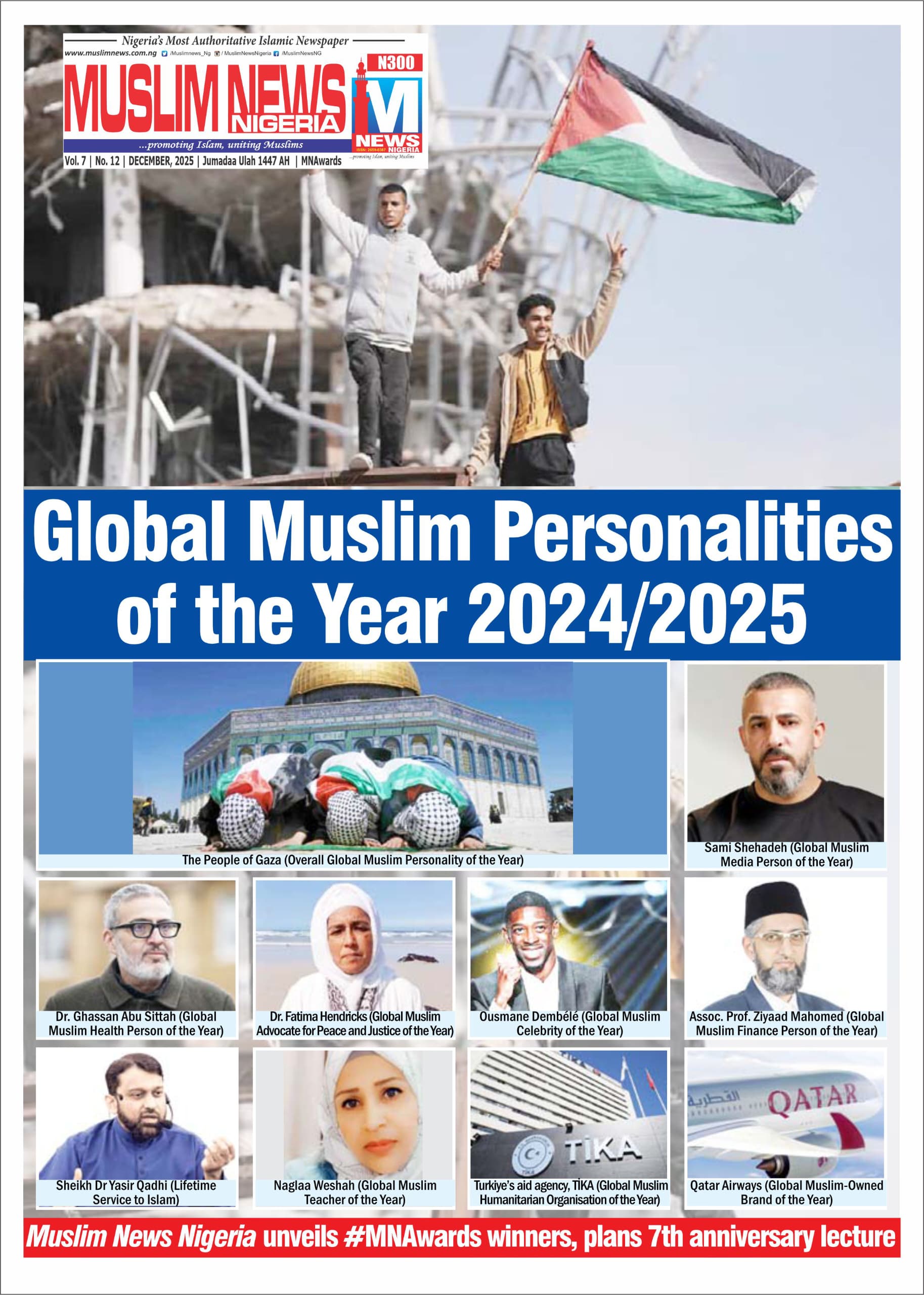
Global Muslim Personalities of the Year 2024/2025



Discover more from Muslim News Nigeria
Subscribe to get the latest posts sent to your email.