

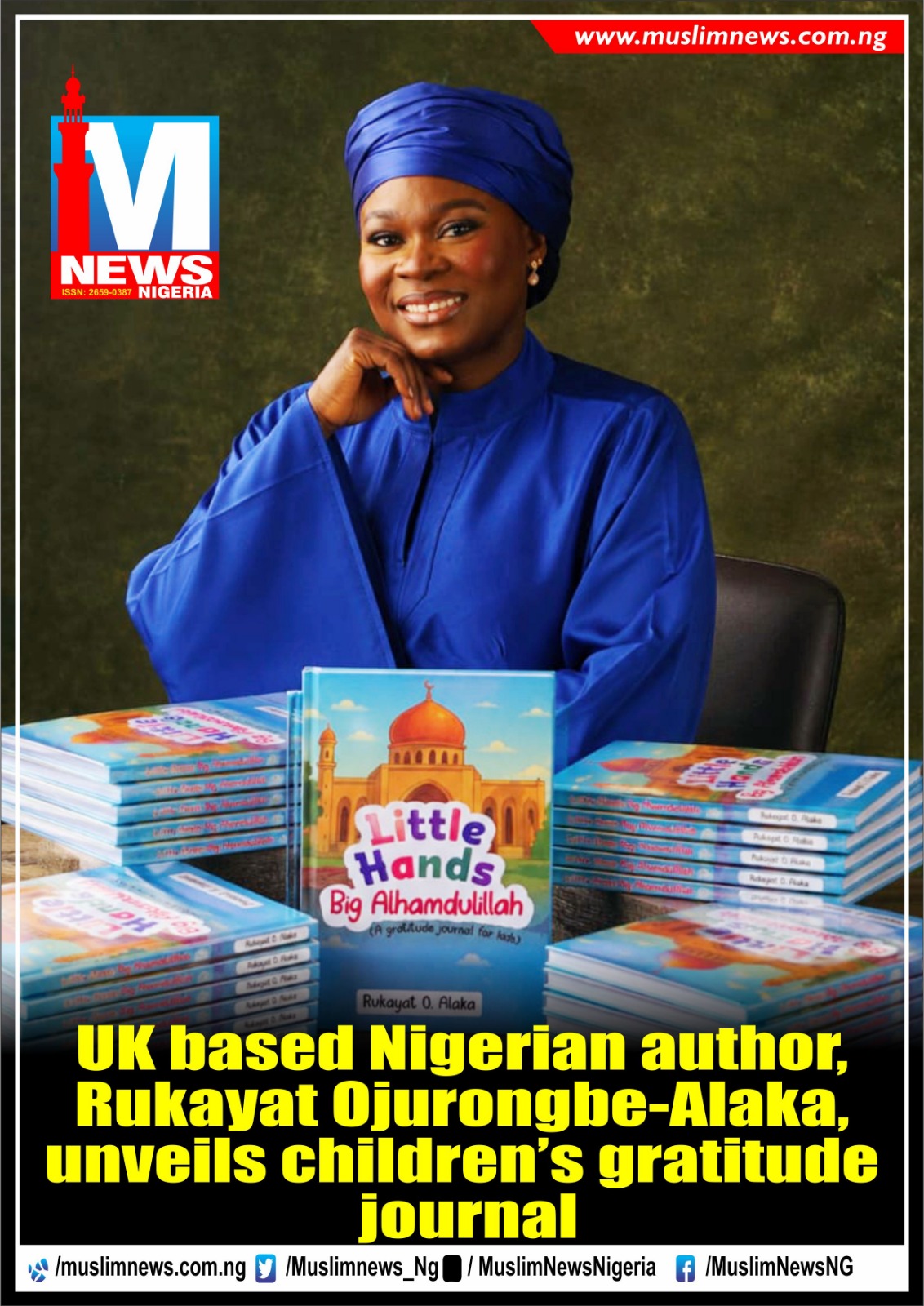
* Says book designed to instil appreciation, reflection and faith in young minds
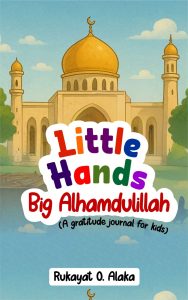
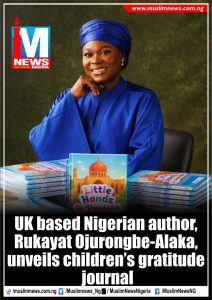
Nigerian author currently based in the UK, Mrs Rukayat Ojurongbe-Alaka, has unveiled a new children’s journal titled “Little Hands, Big Alhamdulillah,” a colourful gratitude themed book designed to help children develop appreciation, reflection, kindness, and stronger spiritual consciousness from an early age.
Mrs Ojurongbe-Alaka gave details of the book during an interview with Muslim News on Tuesday, May 12, where she explained that the journal was carefully designed to attract children visually and emotionally while encouraging them to build a daily habit of gratitude and reflection.
According to her, the book of about 55 pages is fully coloured with bright and engaging pages intentionally created to capture children’s attention and make reading enjoyable.
She explained that the publication also features a glossy finish with a textured feel to make it visually appealing and comfortable for children to hold and use repeatedly.
“The book was carefully designed to feel attractive, exciting, and comfortable for children to use,” she said.
“It is fully coloured with bright, engaging pages that instantly capture a child’s attention and make the experience more enjoyable. I intentionally chose a glossy finish with a textured feel so the book would not only look beautiful but also feel special in a child’s hands.”
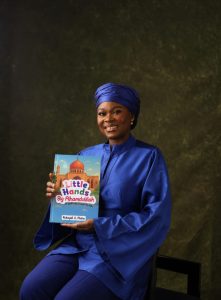
The Nigerian author and mother of two added that every aspect of the book, including the illustrations, colours, and overall presentation, was intentionally created to provide children with a warm and inviting reading experience that encourages them to continually return to the journal and enjoy learning gratitude.
Inspiration rooted in parenting and desire to build gratitude in children
Mrs. Ojurongbe-Alaka, who is also the author of “The Things Father Did Not Teach Us, explained that the inspiration behind her latest book came from her desire to help children, including her own children, develop gratitude from a young age in ways they can genuinely understand and enjoy.
She said modern children are increasingly surrounded by distractions, making it important for parents to intentionally teach them how to pause, reflect, and appreciate the blessings around them.
“What inspired me to write Little Hands, Big Alhamdulillah was the desire to help my kids and other children develop gratitude from a young age in a way they can genuinely understand and enjoy,” she stated.
“I noticed that in today’s world, children are surrounded by so many distractions, and sometimes we forget to intentionally teach them to pause, reflect, and say ‘Alhamdulillah’ for the simple blessings around them.”
According to her, the book was written to help children appreciate Allah’s blessings daily while also strengthening family moments of reflection, gratitude, joy, and faith.
Meaning behind the title and message of early gratitude
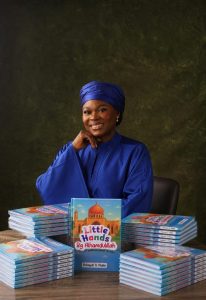
Mrs Ojurongbe-Alaka, who believes deeply in the power of stories to teach, inspire, heal, and shape lives, further explained that the title “Little Hands, Big Alhamdulillah” carries a deep message about children possessing small hands but hearts capable of holding great gratitude.
“The title Little Hands, Big Alhamdulillah means a lot to me because it captures the beauty of children having small hands but hearts capable of holding so much gratitude,” she explained.
“To me, it reflects the idea that children do not have to be older to start appreciating Allah’s blessings.”
She said the title reflects the belief that even simple moments such as waking up healthy, spending time with family, eating meals, or smiling are blessings children can appreciate and say “Alhamdulillah” for daily.
According to the author, the journal teaches children that gratitude is not determined by age or size, adding that children can still make meaningful duas, show kindness, and build strong spiritual connections through thankfulness.
She noted that although the journal is rooted in Islamic values and expressions such as “Alhamdulillah,” its lessons remain universal and beneficial to all children regardless of religious background.
“Any child can benefit from learning appreciation, kindness, reflection, and contentment,” she said.
“So while Muslim families may relate deeply to the faith aspect, the overall lessons are meaningful for all children.”
Mrs Ojurongbe-Alaka said she hopes children who use the journal will develop important values such as gratitude, kindness, mindfulness, empathy, and contentment while also learning that happiness is not always about having more but appreciating what they already have.
“Most importantly, I hope the journal helps them build a stronger connection with Allah and become more thoughtful in the way they see life and people around them,” she added.
Balancing simplicity and engagement a major challenge
Speaking on the challenges encountered while creating the journal, the author explained that balancing simplicity with meaningful engagement was one of the most difficult parts of the process.
“One of the biggest challenges was making the content simple enough for children to understand while still making it meaningful and engaging,” she said.
“Children lose interest quickly if something feels too complicated or too serious, so I had to find a balance between fun, creativity, and valuable lessons.”
She added that she intentionally wanted the journal to feel warm, relatable, and engaging rather than overly instructional.
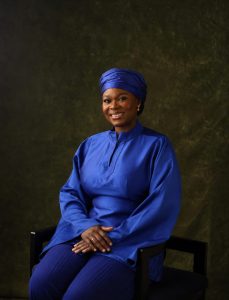
The author expressed hope that the book would positively influence children emotionally, morally, and spiritually by helping them become more appreciative, compassionate, respectful, and conscious of Allah’s blessings.
“Spiritually, I hope it strengthens their awareness of Allah’s blessings and helps them develop gratitude as part of their daily lifestyle, not just something they say occasionally,” she said.
Mrs Ojurongbe-Alaka also disclosed plans to expand the publication into a broader series and create more educational resources focused on helping children grow emotionally and spiritually in practical ways.
“There are so many important topics children need guidance on today, and I believe books can still play a powerful role in shaping young minds and hearts,” she stated.
…Laments declining reading culture among Nigerian childre
The author also spoke extensively on the declining reading culture among Nigerian children, attributing the trend largely to the rise of digital entertainment, smartphones, games, and social media.
“I think the reading culture is not as strong as it used to be, mainly because children are now surrounded by constant digital entertainment,” she observed.
The book can be purchased on Selar HERE or via 08159781050.
“Many children prefer fast content on screens over sitting down with books.”
According to her, the increasing exposure to visual stimulation and instant entertainment has shortened children’s attention spans and made books compete harder for attention.
She noted, however, that children can still enjoy reading when books are engaging, relatable, visually attractive, and supported intentionally by parents and schools.
Speaking on the challenges faced by authors of children’s books today, Mrs Ojurongbe Alaka said writers now have to think beyond storytelling by making books interactive, emotionally engaging, and visually appealing enough to compete with modern distractions.
She also emphasised the important role parents must play in balancing screen time and reading habits among children.
“Parents play a very important role because children often follow what they see at home,” she said, urging, “Parents need to create intentional reading routines, reduce unnecessary screen time, and make books part of everyday life.”
She added that simple family activities such as bedtime reading and discussing stories together can significantly help children develop natural reading habits.
The author equally stressed the importance of schools in rebuilding a stronger reading culture among Nigerian children through active libraries, reading programmes, engaging books, and enjoyable literary activities.
“Schools are extremely important because they shape children’s habits early in life,” she stated.
“When schools and parents work together, children are much more likely to develop lasting reading habits.”
Mrs Ojurongbe-Alaka, who previously worked in the media, said her passion for writing stems from her belief in the power of stories to teach, inspire, heal, and shape lives, especially among children and young people.
“As a mother, I understand how important it is to guide young minds intentionally, and that has greatly influenced the kind of books I write,” she added.
She expressed hope to continue writing books that not only educate children but also leave lasting lessons capable of shaping their values, understanding, gratitude, and direction in life as they grow.
Sponsored

Sponsored

Nigerian Muslim Personalities of the Year 2024/2025

Global Muslim Personalities of the Year 2024/2025




Discover more from Muslim News Nigeria
Subscribe to get the latest posts sent to your email.