

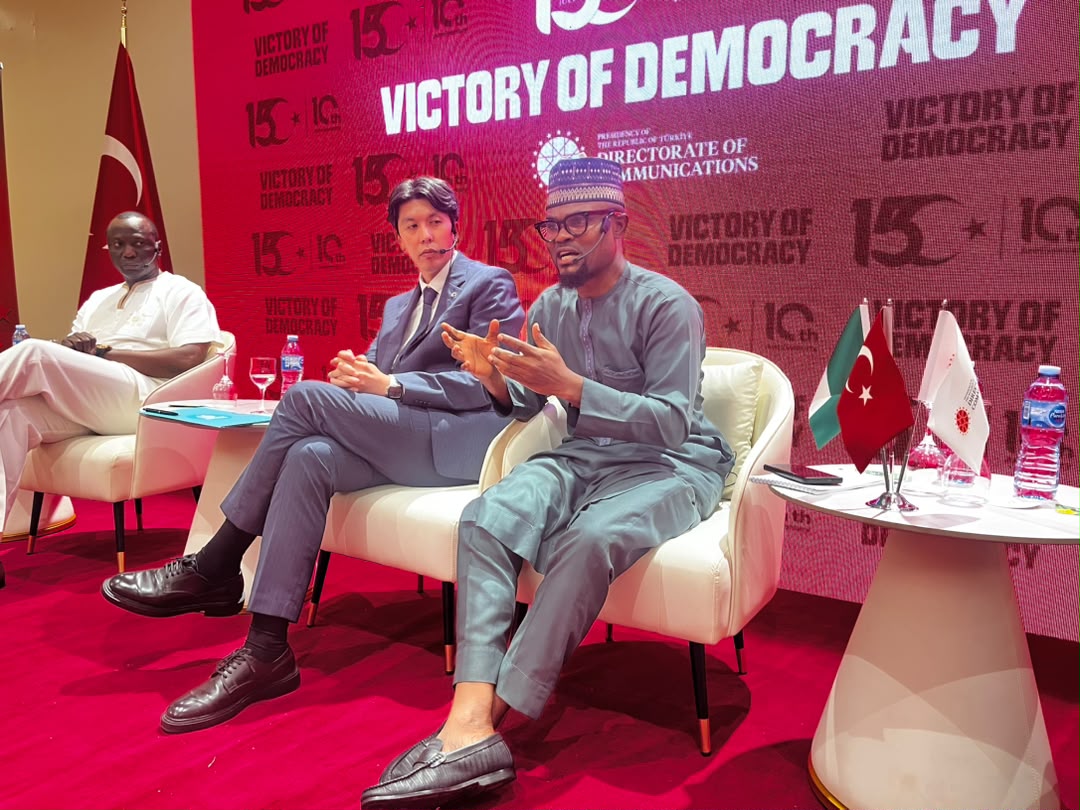
As Türkiye marks the tenth anniversary of the defeated coup attempt, its experience offers important lessons on constitutional governance, institutional reform and the defence of democracy for Africa and the wider world.
Every nation experiences defining moments that test the strength of its institutions, the resolve of its leadership and the resilience of its people. For Türkiye, July 15, 2016, was undoubtedly one of those moments. On that Friday night, tanks rolled onto the streets, fighter jets bombed key government institutions and a faction within the military attempted to overthrow a democratically elected government. What followed, however, was not the collapse of the Turkish state but one of the most remarkable demonstrations of democratic resistance in modern history.
Millions of ordinary citizens answered President Recep Tayyip Erdoğan’s call to defend their country. They confronted tanks, stood before armed soldiers and refused to surrender the future of their nation to military rule. By the following morning, the coup had failed, leaving behind a powerful lesson that governments should rise and fall through elections rather than through force.
As Türkiye marks the tenth anniversary of that historic night, July 15 has become more than the remembrance of a failed coup. It marks a turning point that reshaped the country’s political system, strengthened state institutions and influenced its role in regional and global affairs. It also offers valuable lessons for countries still struggling with political instability and military intervention.
The people’s will defeated military rule
The defeated coup attempt remains one of the defining chapters in Türkiye’s democratic history. It demonstrated that democratic institutions can withstand extraordinary challenges when citizens unite to defend them. Ten years later, Türkiye’s democracy remains intact, reflecting the resilience of its institutions and the determination of its people.
Perhaps the strongest symbol of that resilience is what happened afterwards. The man whom the Turkish government identified as the mastermind of the coup attempt, Fethullah Gülen, is now dead. He died on October 20, 2024. President Erdoğan, whom the plotters sought to remove, remains in office through the same democratic electoral process they attempted to destroy. The lesson is simple. Governments may change, but they should change through the ballot box, never through the barrel of a gun.
Institutional reforms after July 15
Rather than simply surviving the coup attempt, Türkiye embarked on one of the most comprehensive reform programmes in its modern history. The government concluded that defeating the coup was only the first step. The institutions that allowed such an attempt to emerge also required fundamental reforms.
One of the most significant changes came with the 2017 constitutional referendum, which replaced the parliamentary system with a presidential system. Supporters argue that the new system strengthened civilian leadership, improved executive decision making and enhanced the efficiency of government institutions during periods of national crisis.
The Turkish Armed Forces also underwent major restructuring. Military command structures were reorganised, civilian oversight was strengthened and the National Defence University was established to centralise military education under civilian authority. Security and intelligence institutions were similarly reformed, while thousands of individuals who had links to the Fethullah Terrorist Organisation (FETÖ) were removed from public institutions. According to the government, these measures were necessary to protect the state against future infiltration. According to the government, these measures were necessary to protect the state against future infiltration.
Support for families who paid the ultimate price
The reforms were not limited to institutions. The government also established long term welfare programmes for the families of the 253 people who lost their lives defending democracy on July 15. Their families continue to receive pensions, financial assistance, healthcare, educational support and other social benefits. Through annual commemorations, memorials and the designation of July 15 as Democracy and National Unity Day, Türkiye has sought to ensure that their sacrifice remains a permanent part of the nation’s collective memory.
The post coup period also accelerated investment in Türkiye’s defence industry. Indigenous production of military equipment, including drones, armoured vehicles and advanced defence technologies, expanded significantly. These developments strengthened national security while reducing dependence on foreign suppliers.
From domestic reforms to regional influence
July 15 also marked a turning point in Türkiye’s foreign policy. The country increasingly pursued a more independent diplomatic approach while expanding its partnerships across Africa, Asia and the Middle East. Turkish humanitarian organisations, educational institutions, cultural centres and businesses strengthened their presence across Africa, including Nigeria. The decision to include Nigeria among the countries hosting international events marking the tenth anniversary of July 15 reflects the growing strategic relationship between both nations.
Military takeovers rarely solve national problems
The Turkish experience also presents an important lesson for Africa. Between 2020 and 2023, Mali, Guinea, Sudan, Burkina Faso, Niger and Gabon all experienced military takeovers. Their leaders cited corruption, insecurity, poor governance and economic hardship as reasons for overthrowing elected governments.
Several years later, however, many of these countries continue to struggle with the same problems. Mali still battles terrorist violence. Burkina Faso faces persistent insecurity. Sudan has descended into civil war, while Niger continues to confront political and economic challenges. Military intervention has not produced the lasting solutions that were promised.
Nigeria’s own history tells a similar story. Successive military coups were justified by promises to end corruption, electoral malpractice and political violence. Instead, they produced counter coups, prolonged military rule and, in the case of the first coup in 1966, eventually contributed to the Nigerian Civil War.
Nigeria’s return to democratic governance in 1999 reflected the understanding that constitutional government offers a more sustainable path than military intervention.
Earlier this year, Nigerian authorities announced that they had foiled an alleged plot to overthrow the democratically elected government before it could be carried out. Those accused have since been arraigned before the Federal High Court in Abuja, and the matter remains before the court.
Democracy must be protected by institutions and citizens
Whether in Türkiye, Nigeria or elsewhere, the lesson remains universal. Political disagreements should be resolved through constitutional institutions, democratic dialogue and credible elections rather than through force. Democracy is never perfect, but history repeatedly shows that constitutional governance offers the most legitimate and sustainable framework for managing political differences and ensuring peaceful transitions.
The media also has an important responsibility during periods of national crisis. Journalists do more than report events. They shape public understanding, preserve historical memory and influence international opinion. Accurate, balanced and responsible reporting is essential for protecting democracy and ensuring that future generations understand the significance of historic events such as July 15.
A decade after the failed coup attempt, Türkiye’s experience demonstrates that the true measure of a nation’s strength is not whether it faces crises, but how it responds to them. By defending democratic legitimacy, reforming state institutions, honouring the sacrifices of its martyrs and reinforcing civilian governance, Türkiye turned one of its darkest nights into a defining chapter of national resilience. For countries across Africa and beyond, the enduring lesson is clear. Democracies become stronger not when they are free from challenges, but when their people choose ballots over bullets and constitutional order over military intervention.
* Rasheed Abubakar is the Publisher of Muslim News Nigeria. Email: muslimnewsng@gmail.com
Sponsored

Nigerian Muslim Personalities of the Year 2024/2025
Global Muslim Personalities of the Year 2024/2025




Discover more from Muslim News Nigeria
Subscribe to get the latest posts sent to your email.