

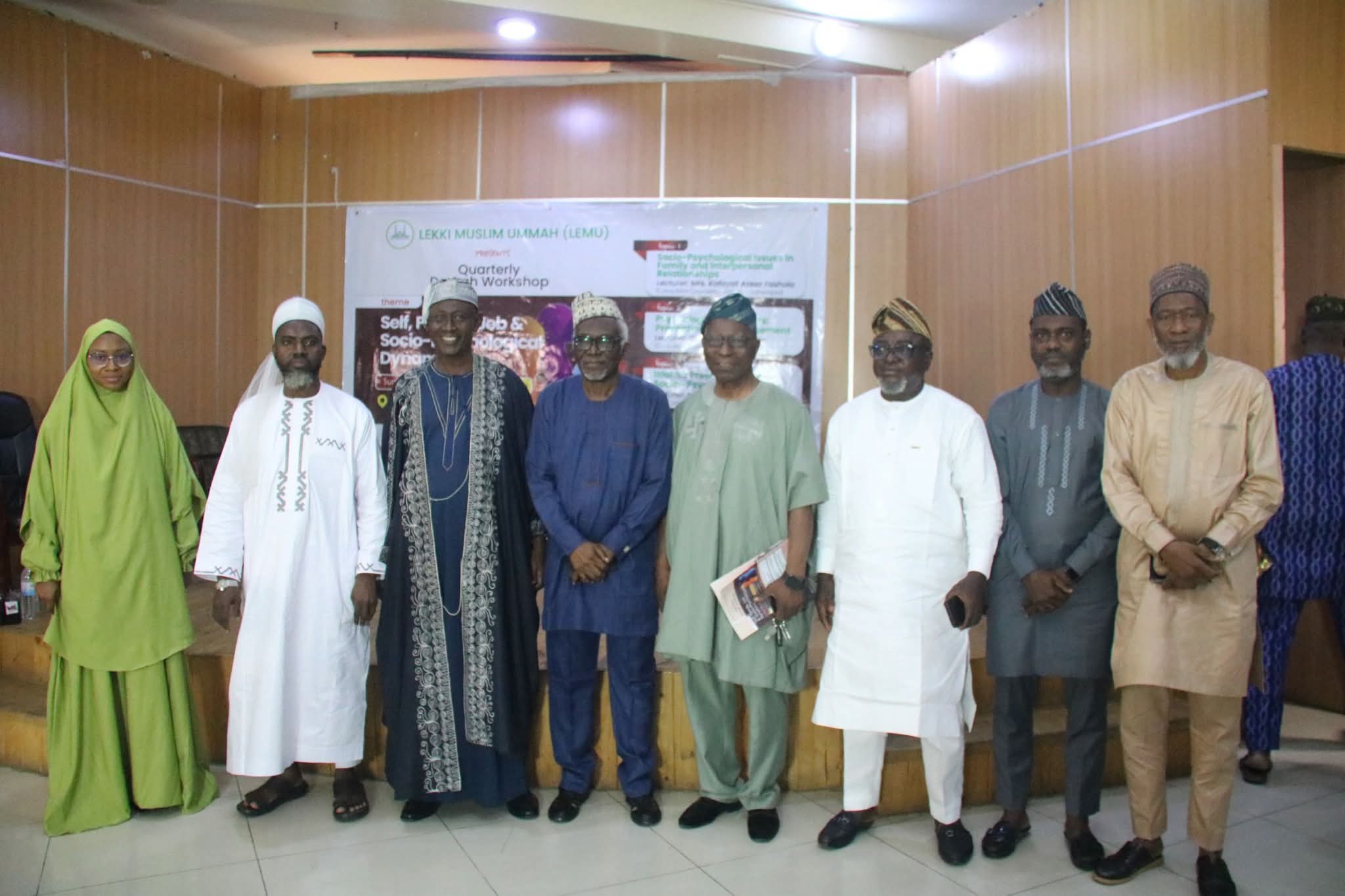
Mental health experts, Islamic scholars and community leaders have called on Muslims to pay greater attention to their emotional wellbeing, family relationships and spiritual lives, stressing that a healthy mind and strong faith are essential for building stable homes and productive societies.
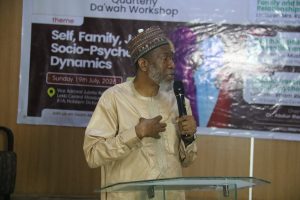
The call was made on Sunday, July 19, 2026, at the Quarterly Da’wah Workshop organised by the Lekki Muslim Ummah, LEMU, at the Vice Admiral Jubrila Ayinla Multipurpose Hall, Lekki Central Mosque, Lekki, Lagos.
Muslim News gathered that the workshop, themed “Self, Family, Job and Socio Psychological Dynamics,” featured lectures on family relationships, psychological disorders and Islamic solutions to emotional and social challenges.
LEMU President highlights need for timely conversation
Welcoming participants, President of the Lekki Muslim Ummah, Dr Abdulganiy Labinjo, described the workshop theme as timely, saying many Nigerian families are facing mounting economic pressure, workplace stress and emotional challenges that require both professional intervention and Islamic guidance.
Dr Labinjo said the choice of the theme reflected the realities confronting Muslims in their daily lives, noting that family responsibilities, career demands, financial difficulties and changing social conditions continue to affect people’s emotional wellbeing and interpersonal relationships.
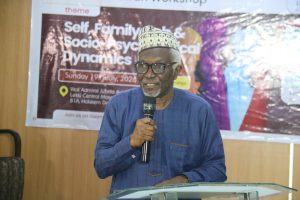
According to him, the family remains the first institution where every individual learns values, relationships and responsibility before interacting with the wider society through schools, workplaces and other social environments.
“The family is the first institution every one of us belongs to before we move into schools, our places of work and the larger society. Each stage of life presents its own challenges. That is why we must understand how to manage ourselves psychologically while remaining guided by Islamic teachings,” he said.
He noted that the country’s economic realities, particularly the rising cost of living, have increased emotional and psychological pressure on many households, making conversations on mental wellbeing more important than ever.
Dr Labinjo urged participants to pay close attention to the lectures, expressing confidence that the workshop would provide practical guidance for strengthening families, improving emotional resilience and promoting healthier communities.
Strong families begin with healthy communication, emotional intelligence, says Fashola
Speaking on “Socio Psychological Issues in Family and Interpersonal Relationships,” Consultant Counsellor and Psychotherapist, Mrs Kafayat Azeez Fashola, said many conflicts within families and relationships are not necessarily caused by major disagreements but by poor communication, unhealthy emotional patterns and unresolved personal experiences.
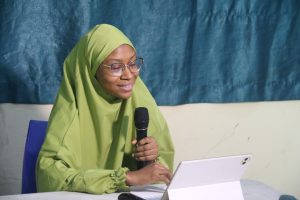
She explained that every individual enters relationships carrying personal histories, childhood experiences, beliefs, personalities and emotional wounds, all of which influence interactions with others.
According to her, healthy relationships are built through intentional efforts rather than perfection.
“There are no perfect families or perfect marriages. What makes relationships healthy is the willingness of the people involved to continue doing the work required to sustain love, trust and understanding,” she said.
Mrs Fashola stressed the importance of emotional connection within families, noting that spouses and children need to feel loved, accepted and emotionally secure.
She encouraged participants to spend quality time together, appreciate one another and intentionally express love instead of assuming that family members already know how they feel.
The counsellor identified emotional intelligence as one of the foundations of successful relationships, explaining that people must first understand and regulate their own emotions before expecting harmony with others.
She urged participants to cultivate self awareness and empathy while learning to listen with the intention of understanding rather than simply preparing a response.
“When we communicate, we should ask ourselves whether we are listening to understand or simply listening to reply. Communication is more than speaking. It includes body language, timing, silence and genuine attention,” she said.
Mrs Fashola advised couples to avoid blame and accusations during disagreements, recommending respectful expressions that communicate personal feelings without attacking one another.
She also discussed attachment patterns developed during childhood, explaining that early experiences often shape how adults relate with their spouses, children and friends.
According to her, although childhood experiences influence behaviour, people can consciously build healthier relationships through self awareness, emotional maturity and Islamic values.
Dr Sanbe calls for end to stigma around mental health
Delivering a lecture on “Psychological Disorders: Prevention and Management,” Consultant Clinical Psychologist, Dr Mustapha Sanbe, appealed to Muslims to stop attaching stigma to mental health conditions and instead seek professional help whenever necessary.
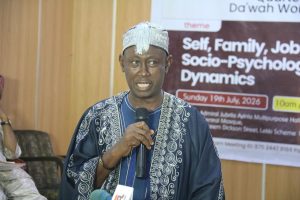
He explained that mental health disorders result from multiple factors, including genetics, environmental influences and life experiences rather than personal weakness or lack of faith.
“Mental illness does not have one single cause. Many factors work together. Sometimes it is hereditary. Sometimes it is environmental. Sometimes it is psychological. That is why people should stop making assumptions about those facing mental health challenges,” he said.
Dr Sanbe explained that many psychological disorders can be successfully managed when detected early, urging families to pay attention whenever significant behavioural changes are noticed in loved ones.
According to him, psychological disorders become a concern when behaviours begin to interfere with a person’s daily functioning and relationships.
Using depression as an example, he noted that symptoms vary among individuals.
“Some people lose appetite while others eat excessively. Some withdraw from activities they once enjoyed while others isolate themselves from family and friends. We must stop judging people by appearances because emotional pain is often hidden,” he said.
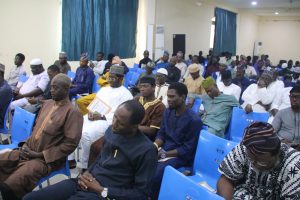
He also highlighted postpartum depression, urging families to provide emotional support for women after childbirth instead of dismissing their experiences.
Dr Sanbe encouraged participants to seek help from psychologists and other qualified mental health professionals whenever emotional distress persists, noting that referrals between specialists are part of standard professional practice aimed at ensuring proper treatment.
Faith and patience remain Islam’s answer to emotional struggles, says Imam Jamiu
Presenting the third lecture titled “Islamic Prescription for Social Psychological Issues,” the Chief Imam of Lekki Central Mosque, Dr. (Imam) Ridwan Jamiu, said Islam offers comprehensive guidance for overcoming emotional and psychological challenges through faith, patience, gratitude and positive thinking.
He reminded participants that life naturally alternates between ease and hardship, adding that believers should prepare themselves mentally and spiritually for changing circumstances.
“The only permanent thing about life is change. You can be happy today and face challenges tomorrow. You can be healthy today and become ill tomorrow. A believer understands this reality and prepares for it,” he said.
Quoting verses from Surah Al Baqarah, the Imam explained that Allah has already informed believers that they will be tested with fear, hunger, loss of wealth and other forms of hardship.
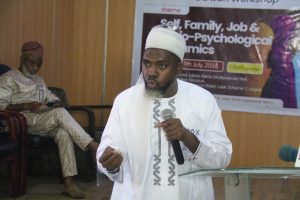
He said such trials should strengthen rather than weaken a believer’s faith.
Imam Jamiu stressed that the human heart and mind determine how people respond to life’s difficulties.
Referring to the Prophetic teaching that the wellbeing of the entire body depends on the soundness of the heart, he urged Muslims to pay close attention to their spiritual and emotional states.
“If the heart is sound, the whole body becomes sound. This is why Muslims must pay attention to what occupies their hearts and minds,” he said.
The Chief Imam encouraged participants to cultivate gratitude during times of prosperity and patience during periods of hardship, describing both attitudes as acts of worship that attract Allah’s mercy and reward.
He said every believer has a unique story filled with trials and blessings, adding that difficult experiences should be viewed as opportunities for spiritual growth rather than reasons for despair.
Quoting the saying of Prophet Muhammad, peace be upon him, Imam Jamiu explained that every situation ultimately benefits a sincere believer because gratitude follows blessings while patience accompanies hardship.

He further urged Muslims to appreciate their spouses, children and family members more often, saying sincere appreciation strengthens relationships and promotes emotional wellbeing within the home.
Mental health challenges demand both professional care and Islamic guidance: Awesu
Chairman of the occasion, Dr Abdur Rasheed Awesu, a Consultant Psychiatrist at the Federal Neuropsychiatric Hospital, Yaba, described the workshop as both timely and necessary in view of the increasing emotional, social and economic pressures affecting families.
He called for more conversations on mental health within Muslim communities, stressing that psychological challenges should neither be ignored nor regarded as spiritual failure.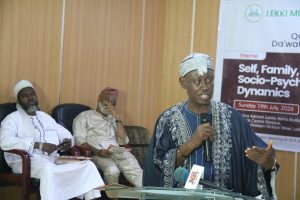
Dr Awesu advocated collaboration between mental health professionals and Islamic scholars to provide balanced and effective support for individuals experiencing psychological distress.
The workshop featured interactive question and answer sessions during which participants sought guidance on parenting, marriage, emotional resilience, depression, anxiety, communication and other family related issues.
Participants commended LEMU for organising the programme, describing it as a timely initiative that successfully combined professional mental health expertise with Islamic teachings to promote stronger families, healthier minds and more resilient communities.
Sponsored

Nigerian Muslim Personalities of the Year 2024/2025
Global Muslim Personalities of the Year 2024/2025




Discover more from Muslim News Nigeria
Subscribe to get the latest posts sent to your email.