

* At Muslim World League-JIBWIS International Conference
* Unity, tolerance key to Nigeria’s security, peace and progress, says Tinubu
In a country battling terrorism, banditry, kidnapping, communal violence and growing social distrust, Muslim and Christian leaders have adopted a new framework for tackling insecurity by placing religious dialogue, responsible citizenship, youth empowerment, education and social cohesion at the heart of the peace-building process.
The framework emerged from the International Conference on Religious and Cultural Diversity and Social Peace: A Partnership for a Promising Future, organised by the Muslim World League (MWL) in collaboration with Jama’atu Izalatil Bid’ah Wa Iqamatus Sunnah (JIBWIS), Nigeria, in Abuja.
Held on August 11 and 12, 2026, under the special patronage of President Bola Ahmed Tinubu, the conference culminated in the adoption of the Abuja Declaration, the endorsement of the Nigeria Youth for Peace initiative and the signing of a series of agreements between Muslim and Christian organisations to strengthen cooperation against religious intolerance, hate speech and violent extremism.
The declaration also provided for the establishment of a joint body of Muslim and Christian leaders in Nigeria, in cooperation with the MWL, as well as broader coordination involving government institutions, religious organisations, educational institutions, the media and civil society.
Muslim News gathered that the initiative, championed by the Secretary-General of the Muslim World League and Chairman of the Organisation of Muslim Scholars, Sheikh Dr Mohammed bin Abdulkarim Al-Issa, was designed to move the response to insecurity beyond military measures by addressing the social, religious and ideological factors that fuel conflict, while strengthening peace and cohesion across Nigeria and the wider West African region.
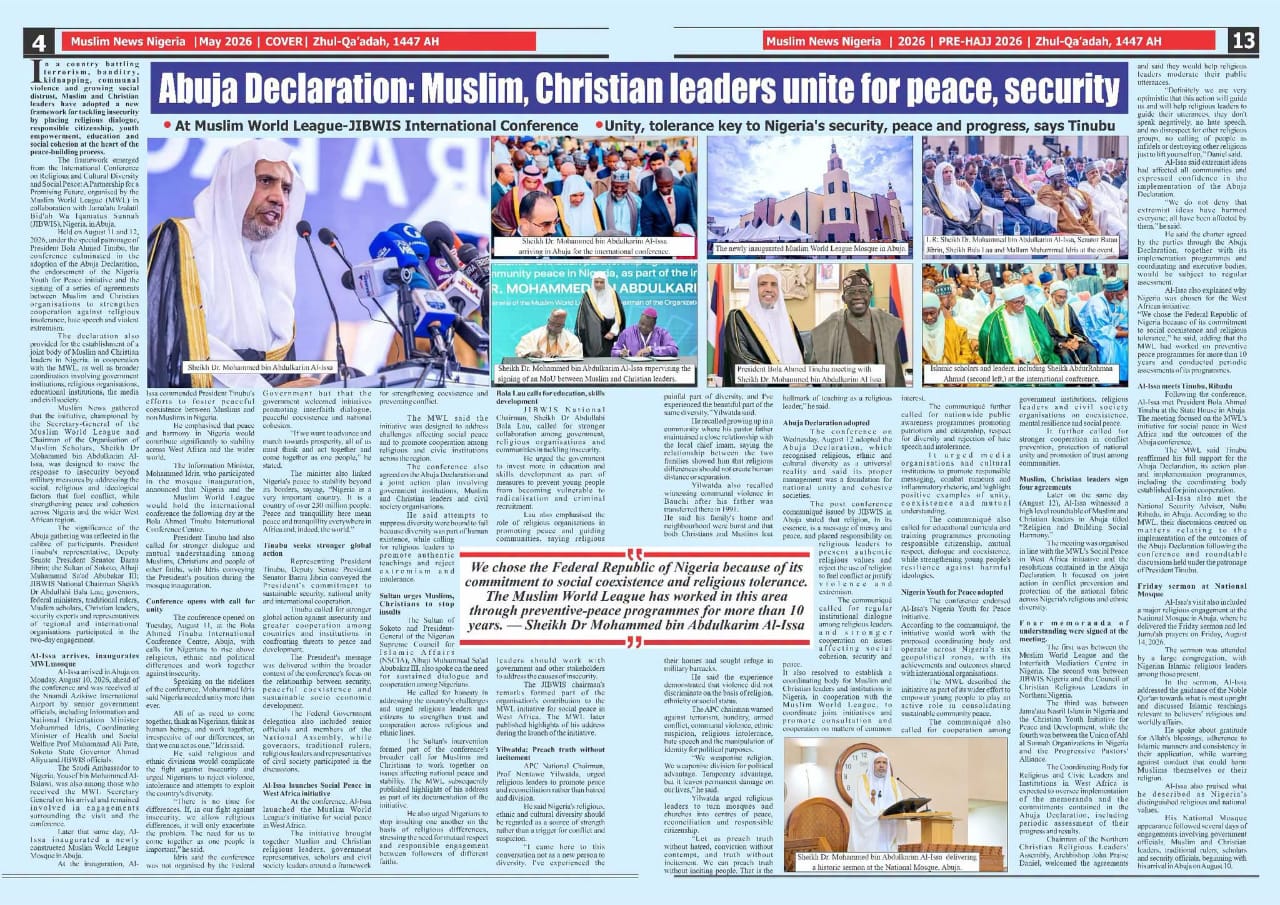
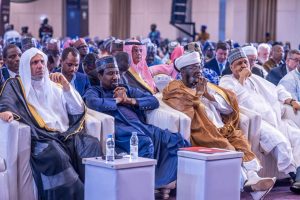
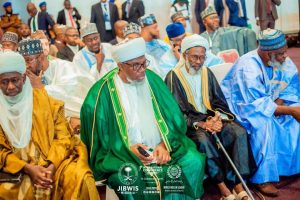
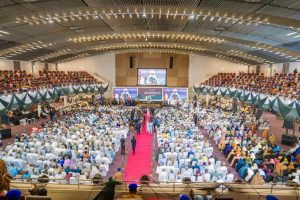
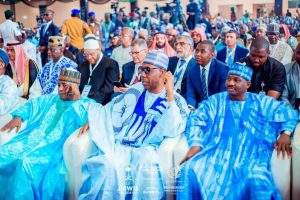
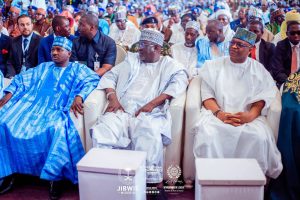
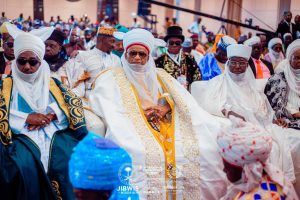
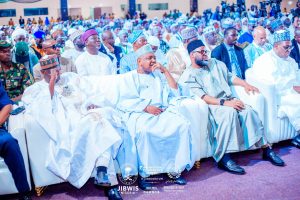
The significance of the Abuja gathering was reflected in the calibre of participants. President Tinubu’s representative, Deputy Senate President Senator Barau Jibrin; the Sultan of Sokoto, Alhaji Muhammad Sa’ad Abubakar III; JIBWIS National Chairman Sheikh Dr Abdullahi Bala Lau; governors, federal ministers, traditional rulers, Muslim scholars, Christian leaders, security experts and representatives of regional and international organisations participated in the two-day engagement.
Al-Issa arrives, inaugurates MWL mosque
Al-Issa arrived in Abuja on Monday, August 10, 2026, ahead of the conference and was received at the Nnamdi Azikiwe International Airport by senior government officials, including Information and National Orientation Minister Mohammed Idris, Coordinating Minister of Health and Social Welfare Prof Muhammad Ali Pate, Sokoto State Governor Ahmad Aliyu and JIBWIS officials.
The Saudi Ambassador to Nigeria, Yousef bin Mohammed Al-Balawi, was also among those who received the MWL Secretary General on his arrival and remained involved in engagements surrounding the visit and the conference.
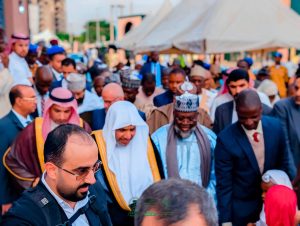
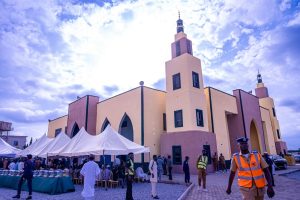
Later that same day, Al-Issa inaugurated a newly constructed Muslim World League Mosque in Abuja.
At the inauguration, Al-Issa commended President Tinubu’s efforts to foster peaceful coexistence between Muslims and non Muslims in Nigeria.
He emphasised that peace and harmony in Nigeria would contribute significantly to stability across West Africa and the wider world.
The Information Minister, Mohammed Idris, who participated in the mosque inauguration, announced that Nigeria and the Muslim World League would hold the international conference the following day at the Bola Ahmed Tinubu International Conference Centre.
President Tinubu had also called for stronger dialogue and mutual understanding among Muslims, Christians and people of other faiths, with Idris conveying the President’s position during the mosque inauguration.
Tinubu said peaceful coexistence was critical to Nigeria’s prosperity and stability.
Conference opens with call for unity
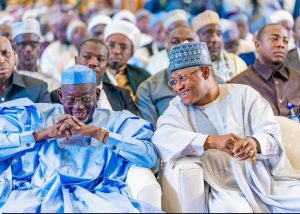
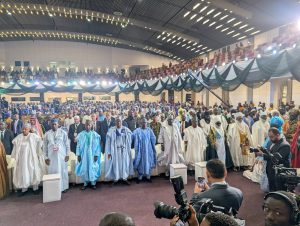
The conference opened on Tuesday, August 11, at the Bola Ahmed Tinubu International Conference Centre, Abuja, with calls for Nigerians to rise above religious, ethnic and political differences and work together against insecurity.
Speaking on the sidelines of the conference, Mohammed Idris said Nigeria needed unity more than ever.
“All of us need to come together, think as Nigerians, think as human beings, and work together, irrespective of our differences, so that we can act as one,” Idris said.
He said religious and ethnic divisions would complicate the fight against insecurity and urged Nigerians to reject violence, intolerance and attempts to exploit the country’s diversity.
“There is no time for differences. If, in our fight against insecurity, we allow religious differences, it will only exacerbate the problem. The need for us to come together as one people is important,” he said.
Idris said the conference was not organised by the Federal Government but that the government welcomed initiatives promoting interfaith dialogue, peaceful coexistence and national cohesion.
“If we want to advance and march towards prosperity, all of us must think and act together and come together as one people,” he stated.
The minister also linked Nigeria’s peace to stability beyond its borders, saying, “Nigeria is a very important country. It is a country of over 230 million people. Peace and tranquillity here mean peace and tranquillity everywhere in Africa and, indeed, the world.”
Tinubu seeks stronger global action
Representing President Tinubu, Deputy Senate President Senator Barau Jibrin conveyed the President’s commitment to sustainable security, national unity and international cooperation.
Tinubu called for stronger global action against insecurity and greater cooperation among countries and institutions in confronting threats to peace and development.
The President’s message was delivered within the broader context of the conference’s focus on the relationship between security, peaceful coexistence and sustainable socio economic development.
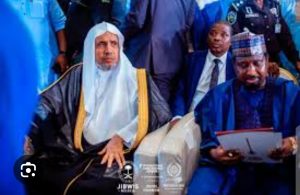
The Federal Government delegation also included senior officials and members of the National Assembly, while governors, traditional rulers, religious leaders and representatives of civil society participated in the discussions.
Al-Issa launches Social Peace in West Africa initiative
At the conference, Al-Issa launched the Muslim World League’s initiative for social peace in West Africa.
The initiative brought together Muslim and Christian religious leaders, government representatives, scholars and civil society leaders around a framework for strengthening coexistence and preventing conflict.
The MWL said the initiative was designed to address challenges affecting social peace and to promote cooperation among religious and civic institutions across the region.
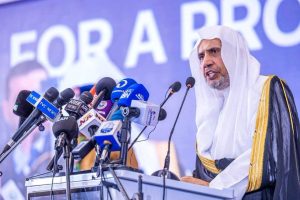
The conference also agreed on the Abuja Declaration and a joint action plan involving government institutions, Muslim and Christian leaders and civil society organisations.
Al-Issa said religious and cultural diversity should not be treated as a source of conflict.
He said attempts to suppress diversity were bound to fail because diversity was part of human existence, while calling for religious leaders to promote authentic teachings and reject extremism and intolerance.
Sultan urges Muslims, Christians to stop insults
The Sultan of Sokoto and President-General of the Nigerian Supreme Council for Islamic Affairs (NSCIA), Alhaji Muhammad Sa’ad Abubakar III, also spoke on the need for sustained dialogue and cooperation among Nigerians.
He called for honesty in addressing the country’s challenges and urged religious leaders and citizens to strengthen trust and cooperation across religious and ethnic lines.
The Sultan’s intervention formed part of the conference’s broader call for Muslims and Christians to work together on issues affecting national peace and stability. The MWL subsequently published highlights of his address as part of its documentation of the initiative.
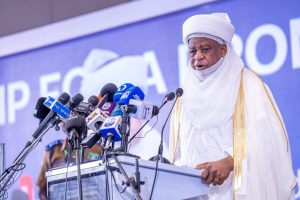
He also urged Nigerians to stop insulting one another on the basis of religious differences, stressing the need for mutual respect and responsible engagement between followers of different faiths.
Bala Lau calls for education, skills development
JIBWIS National Chairman, Sheikh Dr Abdullahi Bala Lau, called for stronger collaboration among government, religious organisations and communities in tackling insecurity.
He urged the government to invest more in education and skills development as part of measures to prevent young people from becoming vulnerable to radicalisation and criminal recruitment.
Lau also emphasised the role of religious organisations in promoting peace and guiding communities, saying religious leaders should work with government and other stakeholders to address the causes of insecurity.
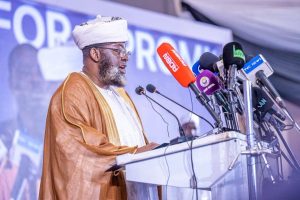
The JIBWIS chairman’s remarks formed part of the organisation’s contribution to the MWL initiative for social peace in West Africa. The MWL later published highlights of his address during the launch of the initiative.
Yilwatda: Preach truth without incitement
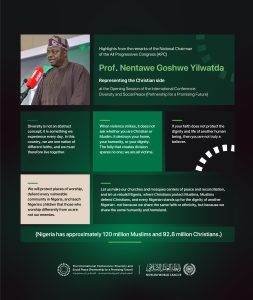
APC National Chairman, Prof Nentawe Yilwatda, urged religious leaders to promote peace and reconciliation rather than hatred and division.
He said Nigeria’s religious, ethnic and cultural diversity should be regarded as a source of strength rather than a trigger for conflict and suspicion.
“I came here to this conversation not as a new person to diversity. I’ve experienced the painful part of diversity, and I’ve experienced the beautiful part of the same diversity,” Yilwatda said.
He recalled growing up in a community where his pastor father maintained a close relationship with the local chief imam, saying the relationship between the two families showed him that religious differences should not create human distance or separation.
Yilwatda also recalled witnessing communal violence in Bauchi after his father was transferred there in 1991.
He said his family’s home and neighbourhood were burnt and that both Christians and Muslims lost their homes and sought refuge in military barracks.
He said the experience demonstrated that violence did not discriminate on the basis of religion, ethnicity or social status.
The APC chairman warned against terrorism, banditry, armed conflict, communal violence, ethnic suspicion, religious intolerance, hate speech and the manipulation of identity for political purposes.
“We weaponise religion. We weaponise division for political gain and temporary advantage, but it leaves permanent damage on our lives,” he said
Yilwatda urged religious leaders to turn mosques and churches into centres of peace, reconciliation and responsible citizenship.
“Let us preach truth without hatred, conviction without contempt, and truth without incitement. We can preach truth without inciting people. That is the hallmark of teaching as a religious leader,” he said.
Abuja Declaration adopted
The conference on Wednesday, August 12 adopted the Abuja Declaration, which recognised religious, ethnic and cultural diversity as a universal reality and said its proper management was a foundation for national unity and cohesive societies.
The post conference communiqué issued by JIBWIS in Abuja stated that religion, in its essence, is a message of mercy and peace, and placed responsibility on religious leaders to present authentic religious values and reject the use of religion to fuel conflict or justify violence and extremism.
The communiqué called for regular institutional dialogue among religious leaders and stronger cooperation on issues affecting social cohesion, security and peace.
It also resolved to establish a coordinating body for Muslim and Christian leaders and institutions in Nigeria, in cooperation with the Muslim World League, to coordinate joint initiatives and promote consultation and cooperation on matters of common interest.
The communiqué further called for nationwide public awareness programmes promoting patriotism and citizenship, respect for diversity and rejection of hate speech and intolerance.
It urged media organisations and cultural institutions to promote responsible messaging, combat rumours and inflammatory rhetoric, and highlight positive examples of unity, coexistence and mutual understanding.
The communiqué also called for educational curricula and training programmes promoting responsible citizenship, mutual respect, dialogue and coexistence, while strengthening young people’s resilience against harmful ideologies.
Nigeria Youth for Peace adopted
The conference endorsed Al-Issa’s Nigeria Youth for Peace initiative.
According to the communiqué, the initiative would work with the proposed coordinating body and operate across Nigeria’s six geopolitical zones, with its achievements and outcomes shared with international organisations.
The MWL described the initiative as part of its wider effort to empower young people to play an active role in consolidating sustainable community peace.
The communiqué also called for cooperation among government institutions, religious leaders and civil society organisations on coexistence, mental resilience and social peace.
It further called for stronger cooperation in conflict prevention, protection of national unity and promotion of trust among communities.
Muslim, Christian leaders sign four agreements
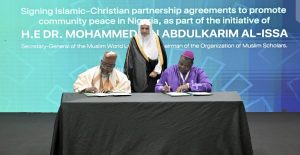
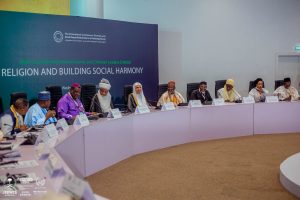
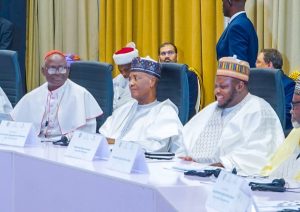
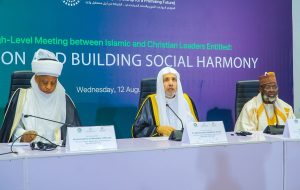
Later on the same day (August 12), Al-Issa witnessed a high level roundtable of Muslim and Christian leaders in Abuja titled “Religion and Building Social Harmony.”
The meeting was organised in line with the MWL’s Social Peace in West Africa initiative and the resolutions contained in the Abuja Declaration. It focused on joint action in conflict prevention and protection of the national fabric across Nigeria’s religious and ethnic diversity.
Four memoranda of understanding were signed at the meeting.
The first was between the Muslim World League and the Interfaith Mediation Centre in Nigeria. The second was between JIBWIS Nigeria and the Council of Christian Religious Leaders in Northern Nigeria.
The third was between Jama’atu Nasril Islam in Nigeria and the Christian Youth Initiative for Peace and Development, while the fourth was between the Union of Ahl al Sunnah Organizations in Nigeria and the Progressive Pastors’ Alliance.
The Coordinating Body for Religious and Civic Leaders and Institutions in West Africa is expected to oversee implementation of the memoranda and the commitments contained in the Abuja Declaration, including periodic assessment of their progress and results.
Chairman of the Northern Christian Religious Leaders’ Assembly, Archbishop John Praise Daniel, welcomed the agreements and said they would help religious leaders moderate their public utterances.
“Definitely we are very optimistic that this action will guide us and will help religious leaders to guide their utterances, they don’t speak negatively, no hate speech, and no disrespect for other religious groups, no calling of people as infidels or destroying other religions just to lift yourself up,” Daniel said.
Al-Issa said extremist ideas had affected all communities and expressed confidence in the implementation of the Abuja Declaration.
“We do not deny that extremist ideas have harmed everyone; all have been affected by them,” he said.
He said the charter agreed by the parties through the Abuja Declaration, together with its implementation programmes and coordinating and executive bodies, would be subject to regular assessment.
Al-Issa also explained why Nigeria was chosen for the West African initiative.
“We chose the Federal Republic of Nigeria because of its commitment to social coexistence and religious tolerance,” he said, adding that the MWL had worked on preventive peace programmes for more than 10 years and conducted periodic assessments of its programmes.
Al-Issa meets Tinubu, Ribadu
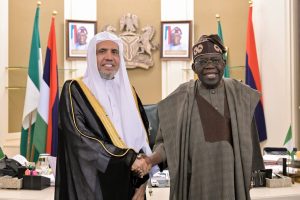
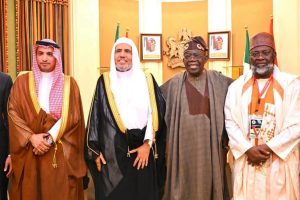
Following the conference, Al-Issa met President Bola Ahmed Tinubu at the State House in Abuja. The meeting focused on the MWL’s initiative for social peace in West Africa and the outcomes of the Abuja conference.
The MWL said Tinubu reaffirmed his full support for the Abuja Declaration, its action plan and implementation programmes, including the coordinating body established for joint cooperation.
Al-Issa also met the National Security Adviser, Nuhu Ribadu, in Abuja. According to the MWL, their discussions centred on matters relating to the implementation of the outcomes of the Abuja Declaration following the conference and roundtable discussions held under the patronage of President Tinubu.
Friday sermon at National Mosque
Al-Issa’s visit also included a major religious engagement at the National Mosque in Abuja, where he delivered the Friday sermon and led Jumu’ah prayers on Friday, August 14, 2026.
The sermon was attended by a large congregation, with Nigerian Islamic religious leaders among those present.
In the sermon, Al-Issa addressed the guidance of the Noble Qur’an towards what is most upright and discussed Islamic teachings relevant to believers’ religious and worldly affairs.
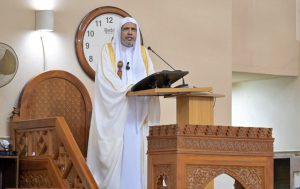
He spoke about gratitude for Allah’s blessings, adherence to Islamic manners and consistency in their application, while warning against conduct that could harm Muslims themselves or their religion.
Al-Issa also praised what he described as Nigeria’s distinguished religious and national values.
His National Mosque appearance followed several days of engagements involving government officials, Muslim and Christian leaders, traditional rulers, scholars and security officials, beginning with his arrival in Abuja on August 10.
Other faces at the event
Sponsored

Nigerian Muslim Personalities of the Year 2024/2025
Global Muslim Personalities of the Year 2024/2025




Discover more from Muslim News Nigeria
Subscribe to get the latest posts sent to your email.