

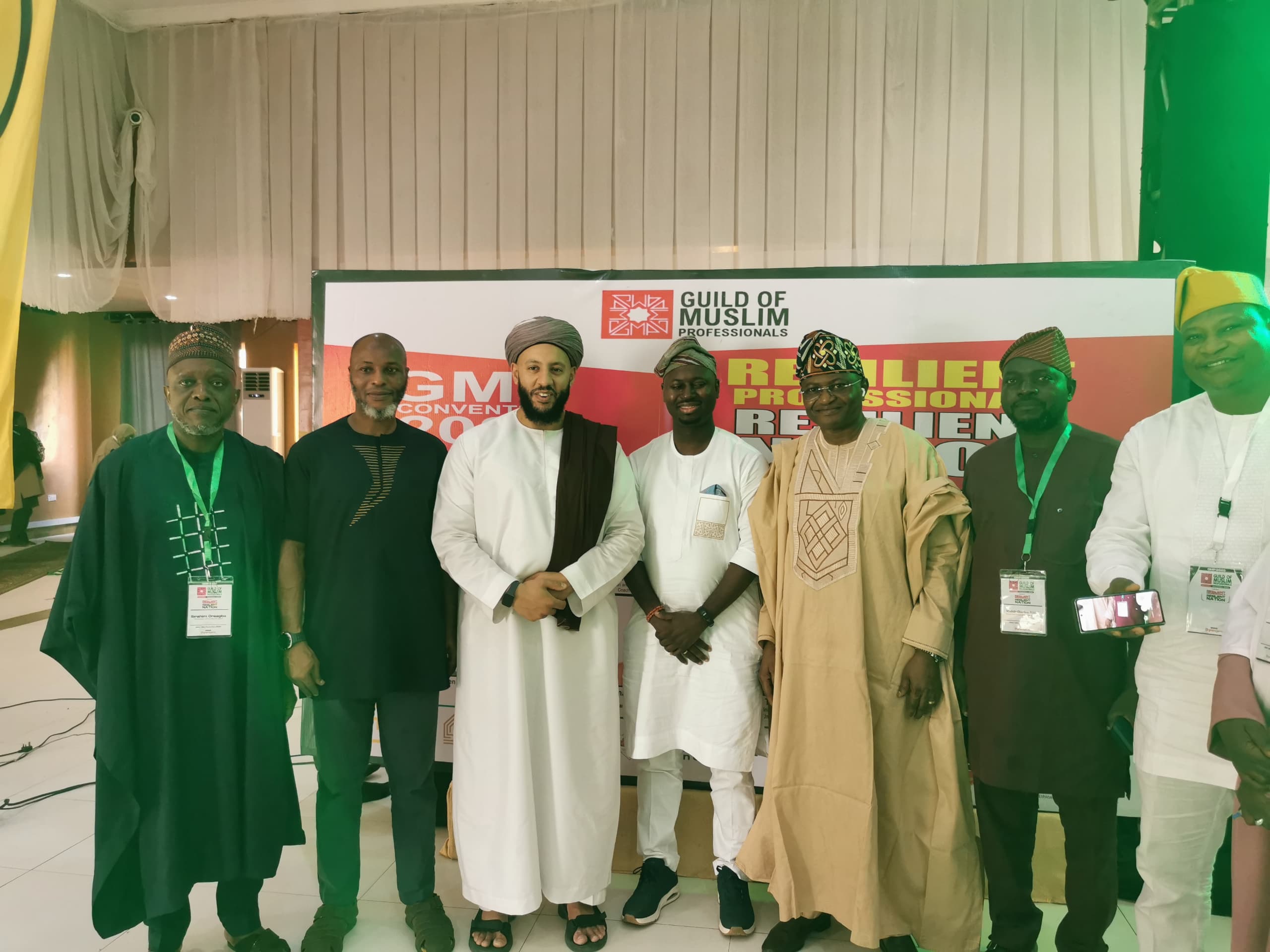
The convention continues today, Saturday, with a series of programmes, including a courtesy visit to the palace of the Awujale of Ijebuland and a tour of Farm Sure Fish Farm, as part of efforts to strengthen community engagement and promote entrepreneurship and agribusiness among Muslim professionals.
* GMP 2025 Convention focuses on resilient professionals, national renewal
* Ihsan is key to ethical and excellent professional conduct: British Scholar Mahmoud
Nigeria’s heavy reliance on oil and gas, which accounts for as much as 90 per cent of the country’s foreign exchange earnings, has continued to weaken its ability to withstand economic and social shocks, the President of the Muslim Ummah of South West Nigeria (MUSWEN), Alhaji Rasaki Oladejo, has said.
Alhaji Oladejo warned that the country’s overdependence on oil revenue, coupled with poor governance and weak institutions, has left Nigeria among the least resilient nations in Africa, making sustainable development increasingly difficult to achieve.
He stated this on Thursday at the Formal Opening of the Guild of Muslim Professionals (GMP) Convention held at AM2PM Hotel, Ijebu-Ode, Ogun State.
The MUSWEN president was represented at the event by the Deputy President II of the organisation, Alhaji Thabit Wale Sonaike.
Speaking on the theme of the convention, “Resilient Professionals, Resilient Nation,” Alhaji Oladejo said Nigeria’s mono-product economy has exposed the country to severe volatility whenever global oil prices fluctuate.
According to him, oil and gas contribute about half of government revenue, a situation that has made public finances unstable and limited the country’s capacity to respond effectively to crises.
He added that infrastructure deficits, widespread insecurity, high poverty levels and rising public debt have further eroded Nigeria’s national resilience.
Alhaji Oladejo disclosed that Nigeria’s per capita Gross Domestic Product (GDP) declined by an average of 0.7 per cent annually between 2014 and 2023, while inflation rose beyond 40 per cent in 2024, deepening hardship for millions of citizens.
“Although recent reforms, including foreign exchange liberalisation and fuel subsidy removal, have improved access to forex and strengthened external reserves, electricity shortages, food insecurity and widespread poverty remain major challenges,” he said.
The MUSWEN president identified poverty reduction, fiscal discipline and increased domestic revenue mobilisation as critical priorities for rebuilding national resilience, stressing that poverty cannot be solved through short-term or cosmetic measures.
He also emphasised the importance of building a resilient workforce, describing skilled, adaptable and ethically grounded professionals as central to national stability and long-term growth. 
Alhaji Oladejo called for targeted reskilling programmes in areas such as digital technology, artificial intelligence and cybersecurity, alongside flexible work models and strong mental health support systems.
According to him, such initiatives would enable Nigerian professionals to remain productive during economic shocks and contribute meaningfully to national development.
Earlier in his remarks, the Chairman, Board of Trustees (BoT) of the Guild of Muslim Professionals and Chief Executive Officer of Marble Limited, Dr Akeem Oyewale, urged Muslim professionals to view resilience as both a moral and spiritual responsibility.
Dr Oyewale said professionals must serve as pillars of integrity within weak systems, guided by Islamic values of accountability, justice and excellence.
He noted that resilience rooted in faith demands ethical restraint, diligence and responsible stewardship, even in the face of institutional failure, adding that national stability largely depends on individual conduct.
Delivering the keynote lecture titled “Ihsan in Islam,” renowned British scholar, Sheikh Muhammad Mahmoud stressed that constant awareness of Allah’s presence nurtures ethical behaviour, calmness and excellence in professional life.
He said when professionals internalise divine accountability, integrity becomes natural in both public and private engagements.
The scholar encouraged participants to embed spiritual mindfulness into their daily routines through simple reflective habits, supported by technology, while emphasising proper mentorship and adherence to authentic Islamic teachings.
Also speaking at the event, the Director of Executive Education and Consultancy, Nungu Business School, Dr Jubril Salaudeen, said Muslim professionals must take deliberate responsibility for Nigeria’s economic and social development. 
Dr Salaudeen warned that silence, weak coordination and poor data have significantly reduced the influence of Muslim professionals in national affairs.
He observed that despite their presence across key sectors, Muslim professionals face gaps in identity, representation and contribution, compounded by the absence of reliable data on their population, sectoral spread and leadership positions.
According to him, this data gap hinders effective planning, impact assessment and leadership succession.
Dr Salaudeen further noted that Muslim professionals are largely concentrated in middle management positions, with limited representation at the highest levels in sectors such as banking and law, a trend he described as a threat to long-term influence.
He called for intentional mentorship and advocacy to position qualified Muslim professionals for leadership roles, rather than leaving advancement to chance.
The scholar also decried discrimination against Muslim women in the workplace, citing cases where qualified candidates were excluded due to wearing the hijab. He said empowering Muslim women professionally would strengthen household incomes and improve national economic outcomes.
Dr Salaudeen urged the GMP to adopt sustained mentorship and leadership development strategies spanning five to 10 years, strengthen collaboration among Muslim professionals in both public and private sectors, and promote responsible public engagement to enhance community image and national relevance.
Sponsored

Nigerian Muslim Personalities of the Year 2024/2025
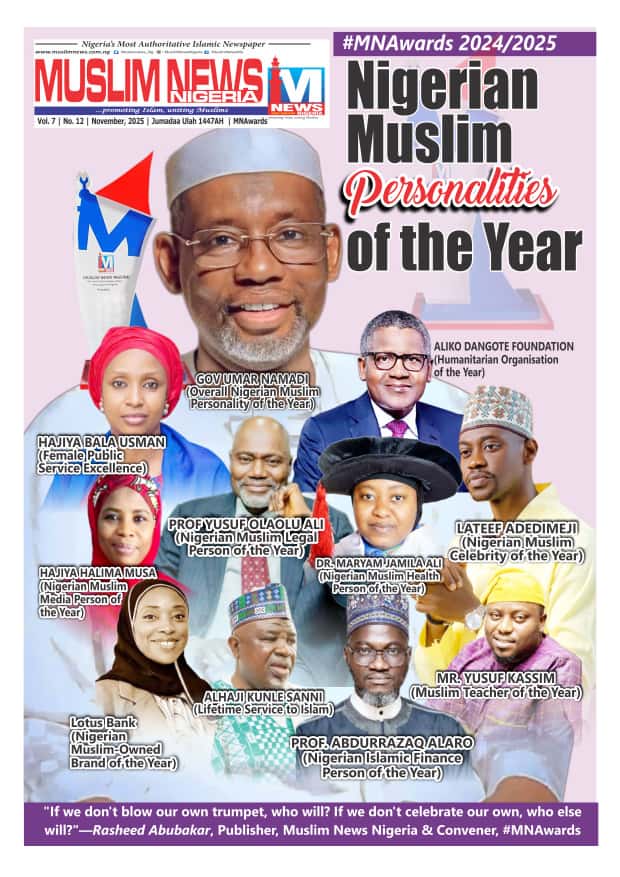
Global Muslim Personalities of the Year 2024/2025




Discover more from Muslim News Nigeria
Subscribe to get the latest posts sent to your email.