

* Joins panellists to seek cheaper capital, stronger guarantees for SMEs
About 140 million Nigerians, representing 63 per cent of the population, lived below the poverty line in 2025, according to figures presented by the President of the Non-Interest Financial Institutions Association of Nigeria, NIFIAN, Dr Basheer Oshodi.
Oshodi, who is also the Group CEO of Arthur Group, said the figure, compared with 17.7 million Nigerians recorded below the poverty line in 1980, underscored the urgent need to improve access to capital for small and medium enterprises and other productive businesses.
“Behind every figure is a trader, a mother, a family business that could grow if capital could reach it,” he said.
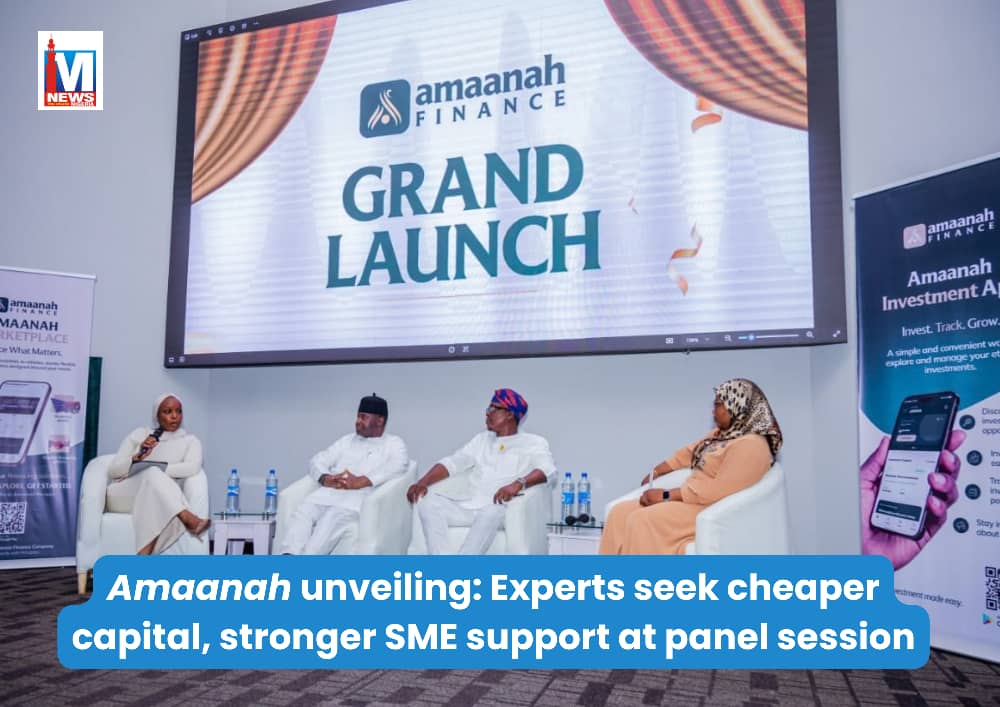
He spoke on Thursday, October 1, 2026, during a panel discussion titled “Mobilizing Local Capital for SME Growth: Challenges and Opportunities in Non Interest Finance” at the launch of Amaanah Non-Interest Finance Company in Lagos.
Muslim News gathered that the company was officially launched at the event as Nigeria’s first CBN-licensed non interest finance company.

Oshodi was joined on the panel by the Managing Director of Hilal Takaful, Mr Abdur Rasheed Babalola, and Head of Investment Banking at The Alternative Bank, Mrs Sherifat Animasahun.
The session was moderated by the Chief Operating Officer of Amaanah Centre for Entrepreneurship Opportunities, Mrs Aisha Olowo.
Oshodi seeks cheaper funds for SMEs
The NIFIAN President identified the cost of funds as one of the biggest obstacles to SME growth, saying expensive financing could make it difficult for small businesses to survive.
“The biggest challenge is the cost of funds, the cost of that money,” he said.
He said the high monetary policy rate and limited access of SMEs and finance houses to cheaper sources of funds had made financing increasingly expensive for smaller businesses.
“When the capital is high and the cost of funds is very high, it is impossible for small businesses to survive. It’s just not possible,” Oshodi said.
Oshodi called for greater use of local funding arrangements, including government backed funds and the non interest finance window of the Bank of Industry.
“We have to do local hybrids, mix some funds up so we can get a cheaper cost of funds,” he said.
Group CEO of Arthur Group also called for stronger guarantee mechanisms, including peer group guarantees and collective financing arrangements, to address the collateral challenges confronting SMEs.
‘Poverty is more than income’
Oshodi said the poverty figures were an indication of the wider consequences of limited access to economic opportunities.
He said poverty went beyond income and affected access to healthcare, education, nutrition, employment and sustainable livelihoods.
The non-interest finance expert illustrated the challenge with the case of a person suffering from malaria who could only afford Panadol.
“He doesn’t have money. He doesn’t have a source of cash flow, and that’s the problem,” Oshodi said.
He also linked the country’s out of school population to future economic and social challenges.“Future poverty, future conflict. That’s what it means,” he said.
Small businesses need small capital
Oshodi said many aspiring entrepreneurs did not require millions of naira to start businesses, but needed relatively small amounts of capital and access to markets.
“People need ₦50,000 or ₦250,000 to start a business, ₦500,000, as little as that,” he said.
However, he stressed that access to finance alone would not solve the problem if entrepreneurs lacked knowledge of their markets.
The NIFIAN President cited the example of someone who wanted to sell nails but did not know who to sell them to.
“He has an idea, but he doesn’t know how to get to the market,” Oshodi said.
According to him, SME financing should therefore be complemented by market access, financial education and business advisory services.
Oshodi urges non-interest firms to learn from fintech
Oshodi urged non-interest finance institutions to study the methods used by fintech companies to reach micro businesses through digital transactions, agents and merchants.
“There’s no non-interest financial institution today, if you like, put them all together, that does what they do. What do they do? Micro transactions, micro transactions, MSME,” he said.
He said non-interest finance providers could adapt successful elements of the fintech model to expand their reach.
“Copy first; we’ll copy, then we’ll start to improve,” Oshodi said.
The challenge is not scarcity
Oshodi said Nigeria’s financing challenge was not necessarily a shortage of domestic capital, but the difficulty of connecting available funds with productive businesses.
“The challenge is not scarcity, it is connectivity,” he said.
He identified pension funds, high net worth individuals and family offices, diaspora resources, cooperatives and everyday savers as potential sources of local capital.
His presentation also cited a $32.2bn SME financing gap and high commercial lending rates, while noting the heavy reliance of many MSMEs on personal savings and other informal sources.
Oshodi called on fund managers to create dedicated MSME investment funds.
“Fund managers need to start having MSME funds. We need to start having those funds; we need to float those funds,” he said.

Babalola seeks wider awareness
Babalola, during the panel session, identified poor awareness and lack of trust as major obstacles to the growth of non-interest finance.
He said many Nigerians who might be interested in ethical finance did not understand how it worked or where they could access it.
“We are not only going to stay in the urban areas and just speak English. How do we communicate how it works and where to get it in the local languages?” he asked.
The Managing Director of Hilal Takaful recalled that after joining Hilal Takaful, he tasked staff with explaining Takaful in three sentences in their local languages.
“That is one of the major challenges. There are a lot of people who want to access ethical finance, but they don’t know how it works,” he said.
He also linked the trust challenge to the experiences of Nigerians with failed investment schemes.
“You’ve heard of MMM, you’ve heard of Nospecto, you’ve heard of so many Ponzi schemes,” Babalola said.
Animasahun: Not all SMEs need debt
Animasahun said the debate around SME financing should not focus only on the availability of money, but also on whether businesses were receiving the appropriate type of capital.
“Not all businesses need debt. Some honestly need equity,” she said.
She explained that businesses passed through different stages of development and therefore required different forms of financing.
According to her, the risk associated with SME lending was one reason financing could become expensive.
“What actually amounts to high rates is the risk. We price the risk into it because giving SME loans is very risky,” she said.
The Non-interest finance expert advised entrepreneurs to match their financing requirements with revenue and cash flow while taking account of seasonal changes in their businesses.
She said non interest finance could offer a partnership based approach in which the financier maintained a closer relationship with the business.
“It’s more of a partnership. I’m with you and don’t have a choice,” she said.
Alternative Bank seeks SME financial independence
In a separate interview with Muslim News, Head of Investment Banking at The Alternative Bank said SMEs could improve their financial independence by strengthening their internal financial management.
She advised businesses to build equity, manage cash flow, reinvest retained earnings and separate business expenses from personal spending.
“Financial independence is all about, ‘I don’t have to depend on a bank every time I need to go and buy something in the market,’” she said.
Animashaun added, “So when you do that, you’re able to have some sort of financial independence.”
Olowo: Match capital with business needs
In her opening remarks, the panel session moderator said the conversation around SME growth should move beyond simply asking whether capital was available.
“We talk a lot about SMEs being the engines of enterprise, employment, and innovation, but behind almost every conversation we have about SME growth lies one persistent issue: access to capital,” she said.
Olowo said the more important question was how available capital could be connected with viable SMEs through structures that worked for both providers and recipients.
At the end of the session, Olowo said the financing gap could not be addressed simply by putting more money into the system.
“It has nothing to do with finding more capital,” she said, stressing the importance of providing “the right kind of financing for the right businesses in the right way.”
The Amaanah launch brought together finance professionals and stakeholders to examine how existing pools of local capital could be connected with small businesses seeking funding to expand production, create jobs and grow their operations.
READ MORE: Full report on the Amaanah unveiling
Sponsored
Sponsored

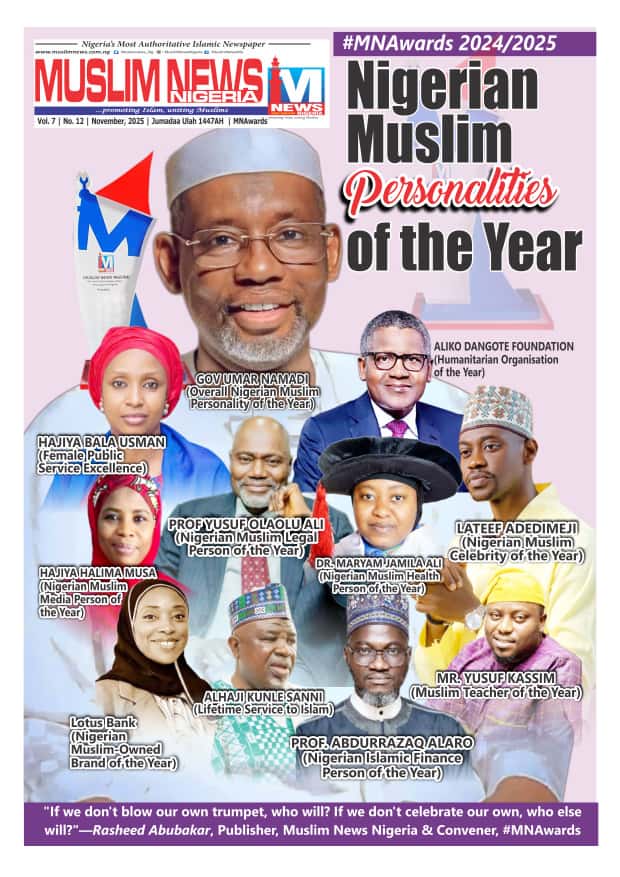
Nigerian Muslim Personalities of the Year 2024/2025
Global Muslim Personalities of the Year 2024/2025




Discover more from Muslim News Nigeria
Subscribe to get the latest posts sent to your email.