

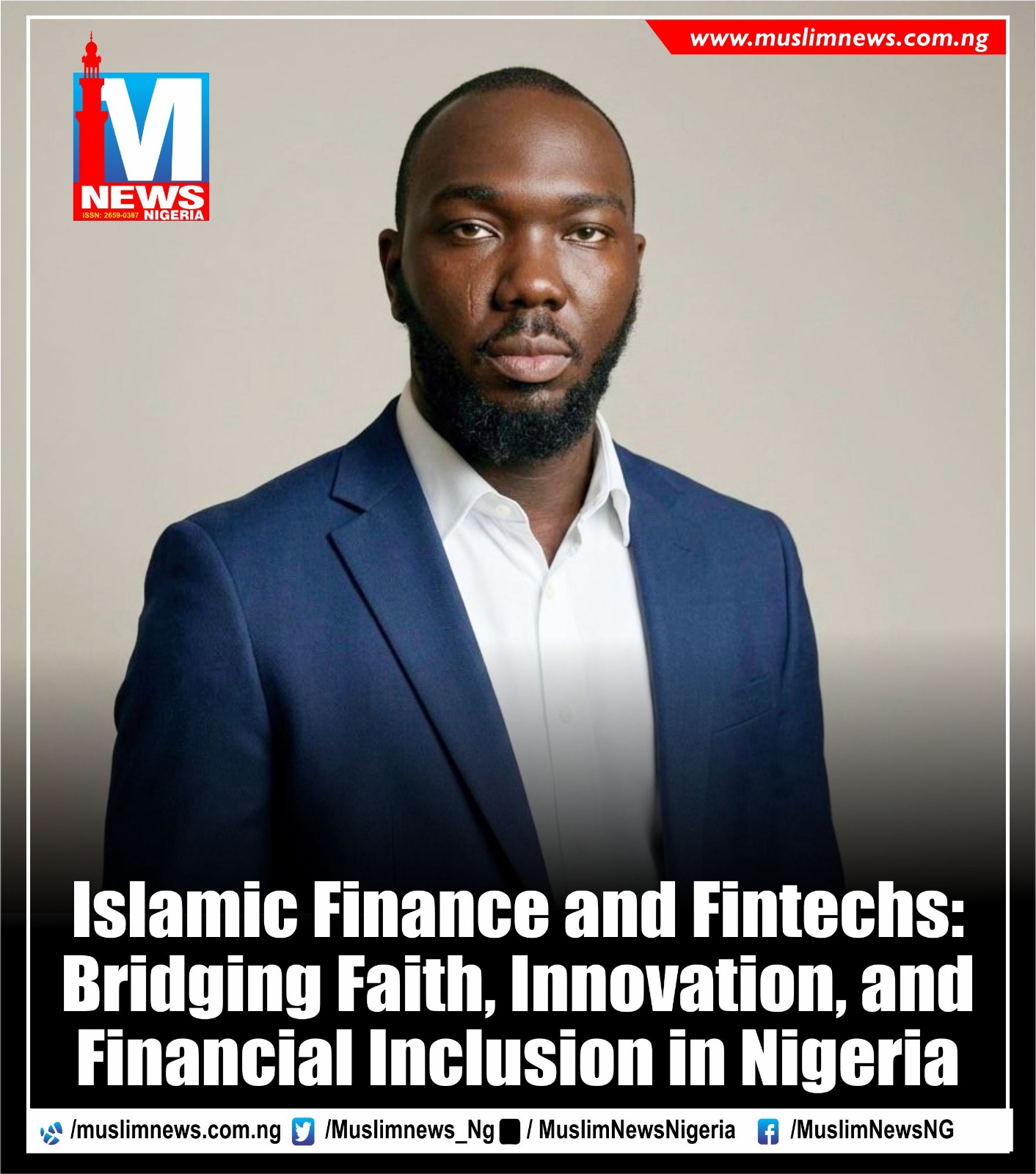
By Abdulrasheed Luqmon
Nigeria is experiencing an unprecedented fintech boom. From mobile payment platforms to digital lending apps and online investment schemes, technology is rapidly reshaping how Nigerians save, spend, borrow, and invest. According to industry reports, Nigeria hosts one of the largest fintech ecosystems in Africa, driven largely by a youthful population, widespread mobile phone adoption, and gaps left by traditional banking.
Yet, amid this rapid innovation, an important question remains largely unanswered:
Can financial technology grow in a way that aligns with ethical and faith-based principles, particularly Islamic finance?
For millions of Nigerian Muslims, this question is not theoretical. Many remain financially excluded or uncomfortable engaging with existing fintech products due to concerns around interest (riba), excessive uncertainty (gharar), and unethical use of funds. This reality makes the conversation around Islamic finance and fintechs not only relevant, but urgent.
Understanding Islamic Finance Beyond ‘Interest-Free Banking‘
Islamic finance is often misunderstood as merely banking without interest. In reality, it is a comprehensive financial system rooted in ethical principles derived from Islamic law. Its core foundations include the prohibition of riba (interest), avoidance of excessive uncertainty and speculation, and a strong emphasis on fairness, transparency, and real economic activity.
Rather than making money from money, Islamic finance links financial transactions to tangible assets, trade, or productive partnerships. Profit and loss are shared, risks are distributed more equitably, and financing is directed toward socially beneficial activities. At its heart, Islamic finance seeks to ensure that finance serves the real economy and human well-being.
These principles resonate far beyond religious boundaries. In a global environment increasingly concerned with inequality, predatory lending, and speculative bubbles, Islamic finance offers a values-driven alternative.
Fintechs and the Transformation of Nigerian Finance
Financial technology, or fintech, refers to the use of digital tools to deliver financial services more efficiently. In Nigeria, fintechs have revolutionized payments, expanded access to credit, simplified remittances, and provided innovative savings and investment options.
For young Nigerians in particular, fintech platforms are often the first point of contact with formal financial services. They are fast, accessible, and mobile-friendly—qualities that traditional banks have struggled to match. The Central Bank of Nigeria (CBN), through various regulatory frameworks and sandbox initiatives, has acknowledged fintechs as key drivers of financial inclusion.
However, speed and convenience alone do not guarantee ethical soundness. Many digital lending platforms, for instance, rely on high interest rates and opaque fee structures, raising concerns about consumer protection and long-term sustainability.
Where Islamic Finance and Fintech Naturally Converge
Contrary to popular belief, Islamic finance and fintech are not at odds. In fact, they are naturally complementary.
First, financial inclusion lies at the heart of both. Islamic finance prioritizes access to fair financial services, while fintechs excel at reaching underserved populations. Together, they can unlock financing for small traders, artisans, farmers, and youth entrepreneurs who are often excluded from conventional banking.
Second, Islamic finance emphasizes transparency and trust, values that technology can strengthen. Digital platforms enable clearer documentation, real-time tracking of transactions, and improved accountability—features that align strongly with Shariah requirements.
Third, Islamic finance’s focus on real economic activity fits well with fintech-enabled models such as crowdfunding, peer-to-peer partnerships, and digital trade finance. Technology can simplify profit-sharing arrangements, leasing structures, and cooperative investments that reflect Islamic principles.
Practical Islamic Fintech Opportunities in Nigeria
The potential applications of Islamic fintech in Nigeria are vast. Digital platforms can facilitate Shariah-compliant crowdfunding for small and medium enterprises, allowing investors to participate in profit-sharing rather than interest-based lending. Mobile-based Islamic microfinance can support petty traders and farmers using asset-backed or partnership models.
Technology can also transform zakat and waqf administration, improving collection, distribution, and transparency. Properly structured digital platforms can ensure that social finance tools reach the right beneficiaries efficiently, strengthening trust in Islamic institutions.
Even consumer finance can be redesigned. Halal “buy-now-pay-later” solutions, based on cost-plus or deferred sale structures, can provide alternatives to interest-based credit widely used today.
The Risks of Ignoring Shariah Principles
Despite these opportunities, caution is necessary. Simply labeling a digital product as “Islamic” does not make it compliant. Repackaging interest as fees, introducing excessive uncertainty into contracts, or prioritizing speed over ethics undermines both faith and consumer trust.
Technology is a tool, not a moral filter. Without proper Shariah governance, fintech innovations risk reproducing the same injustices Islamic finance seeks to avoid—only faster and at a larger scale.
The Way Forward for Nigeria
For Islamic fintech to thrive in Nigeria, collective effort is required.
Regulators, including the CBN, must continue to develop inclusive frameworks that recognize Islamic financial models while ensuring consumer protection. Fintech founders should engage Islamic finance professionals from the design stage, rather than treating compliance as an afterthought. Islamic institutions—banks, NGOs, zakat bodies, and waqf administrators—must embrace technology to scale their impact and remain relevant in a digital economy.
Nigeria’s youthful population and vibrant fintech ecosystem position the country to become a leader in ethical, faith-aligned financial innovation. When guided by sound principles, fintech can serve as a powerful engine for justice, inclusion, and sustainable development.
Conclusion
Islamic finance and fintechs are not competing visions of the future of finance. Together, they offer a pathway toward innovation that is both technologically advanced and morally grounded. In a world searching for more humane financial systems, faith-driven innovation may well be one of Nigeria’s most valuable contributions.
Byline Bio
Abdulrasheed Luqmon is an Islamic finance practitioner and educator with a background in Islamic studies, Arabic language, and Islamic banking and finance. He is actively involved in developing Shariah-compliant financial solutions for NGOs, zakat institutions, and emerging markets in Nigeria, and is passionate about promoting ethical, faith-driven approaches to finance and financial inclusion. Email: Luqmonrash@gmail.com
Sponsored

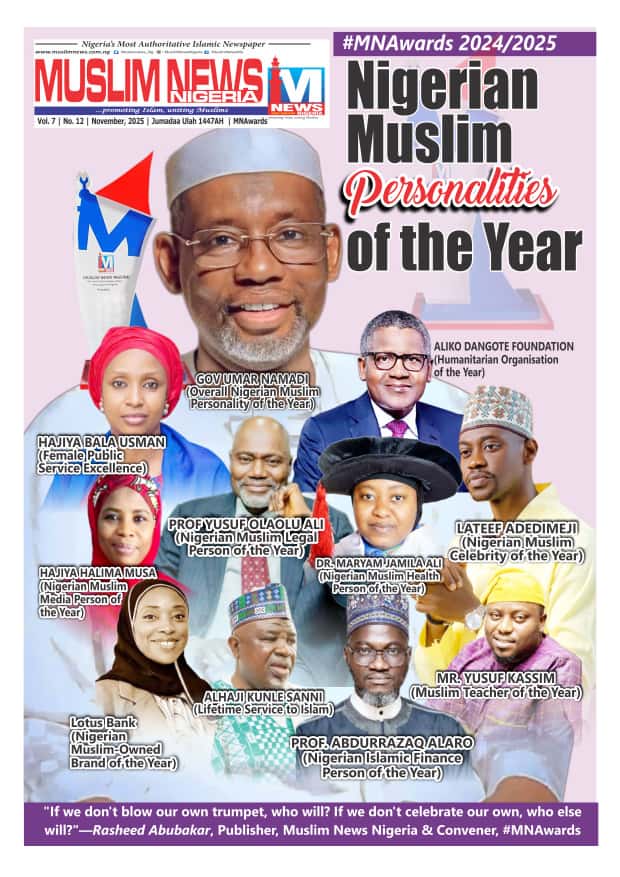
Nigerian Muslim Personalities of the Year 2024/2025
Global Muslim Personalities of the Year 2024/2025




Discover more from Muslim News Nigeria
Subscribe to get the latest posts sent to your email.