

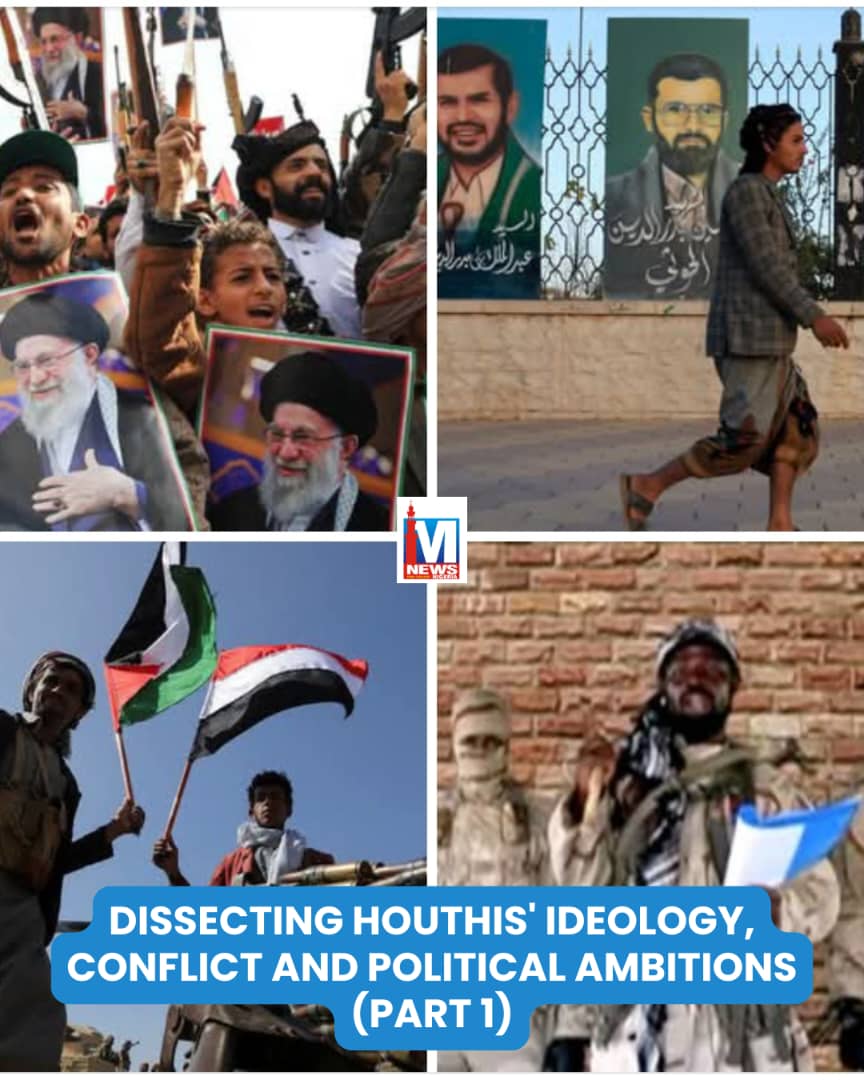
The Houthis, officially known as Ansar Allah, have emerged as a powerful armed group and a strong political movement in Yemen, with close ties to Iran and a prominent role in Middle Eastern politics. While their strong opposition to Israeli war in Gaza has earned them support among many Muslims who view their actions as an expression of solidarity with Palestinians, their attacks on Saudi Arabia, which have raised concerns about civilian safety and the security of pilgrims, have equally drawn condemnation from many. Their seizure of Sanaa and challenge to Yemen’s internationally recognised government have also fuelled international debate over their political ambitions, methods and role in Yemen’s prolonged conflict.
In Nigeria, comparisons with groups such as Boko Haram, ISWAP, IPOB and the Islamic Movement in Nigeria (IMN) raise questions about their ideological foundations, methods of operation, objectives and conflicts involving their respective governments. Who are the Houthis, how do they compare with these Nigerian groups, and what distinguishes their regional influence from the activities of groups operating in Nigeria? Muslim News Nigeria’s Rasheed Abubakar examines the issues…
1. Who are the Houthis?
The Houthis, officially known as Ansar Allah, meaning “Supporters of God” or “God Helpers”, are an armed political and religious movement that emerged in northern Yemen in the 1990s. They are rooted in Zaydi Islam, a branch of Shia Islam with a long history in Yemen.
The movement was initially associated with efforts to revive Zaydi religious identity amid political grievances and concerns about the spread of rival religious influences. However, it gradually developed into an armed insurgency and eventually became one of the most powerful military and political forces in Yemen.
The movement was founded by Hussein Badruddin al-Houthi, who was killed by Yemeni government forces in 2004. His brother, Abdul-Malik al-Houthi, subsequently emerged as its leader. _Sources: Al Jazeera’s guide to the Houthis; Council on Foreign Relations._
2. Are the Houthis Yemen’s legitimate government?
No. This is an important distinction in understanding the conflict.
The Houthis seized Yemen’s capital, Sanaa, in September 2014 amid political instability and subsequently established governing structures in areas under their control. However, territorial control does not automatically confer international recognition. Yemen’s internationally recognised government is represented by the Presidential Leadership Council (PLC), based in Aden and supported by Saudi Arabia.
Therefore, describing the conflict simply as “Saudi Arabia fighting Yemen” is misleading. Saudi Arabia has fought the Houthis, a Yemeni armed movement known as Ansar Allah, which continues to challenge the internationally recognised government.
The United States, Canada and Australia have formally designated the movement as a terrorist organisation or entity. Saudi Arabia and the United Arab Emirates have also taken such measures. In the same vein, Yemen’s internationally recognised authorities declared the Houthis a terrorist group in 2022.
The United Nations has similarly imposed sanctions. These include an arms embargo. The Houthis reject the terrorist label, arguing that such designations are politically motivated and intended to undermine their movement.
Saudi Arabia has supported Yemen’s internationally recognised government in its conflict with the Houthis. The movement fights both the government and its Saudi-led supporters while retaining control over substantial parts of Yemen. Its seizure of state institutions and use of armed force to challenge the established government remain central to assessing its political ambitions and conduct. Sources: Reuters: Who is fighting in Yemen?; Al Jazeera; US Department of State; Public Safety Canada; Australian National Security, among others.
3. What do the Houthis call themselves?
The Houthis reject the terrorist label and present themselves as a resistance movement opposing foreign interference. The term “Houthis”, widely used by the media and other observers, derives from the surname of Hussein Badreddin al-Houthi, an early leader whose family became central to the movement. Their official slogan includes the phrases “Death to America” and “Death to Israel”, echoing similar anti-American and anti-Israeli slogans used by Iran. Sources: Al Jazeera, Who are the Houthis?; US Department of State; Ansar Allah designation, the group website.
4. How did the Houthis become an armed movement?
The rise of Houthi movement cannot be understood without considering Yemen’s political history. During the 2000s, the Houthis fought six rounds of conflict against the government of then-President Ali Abdullah Saleh between 2004 and 2010. Their grievances included political marginalisation, religious identity and opposition to the government’s policies.
The 2011 Arab Spring uprising weakened Yemen’s political order and contributed to a prolonged transition. The Houthis exploited the resulting instability, expanding their influence beyond their traditional strongholds.
In 2014, they entered Sanaa and took control of key state institutions. Their advance, initially accompanied by an alliance with former President Saleh, fundamentally altered Yemen’s political landscape.
This history helps explain how the movement gained influence, but it does not justify its seizure of state institutions by force, its challenge to the internationally recognised government or abuses committed against opponents and civilians. Political grievances do not automatically confer a right to overthrow established institutions through armed action. Sources: Al Jazeera; Human Rights Watch.
5. What do the Houthis believe in?
The Houthis present themselves as an Islamic movement opposed to foreign domination, American influence and Israeli military actions. They frame their regional activities as part of a broader struggle against US and Israeli power. Their alignment with Iran and other groups in the regional network known as the “Axis of Resistance” has further reinforced this identity. They are often described as Yemen’s equivalent of Hezbollah.
Their opposition to foreign intervention and support for the Palestinian cause may resonate with some Muslims, especially among the Sunnis. However, others argue that support for Palestine and opposition to foreign interference do not, in themselves, justify attacks on civilians, threats against other countries or the use of force to impose political authority on fellow Yemenis. Sources: Al Jazeera; Council on Foreign Relations (CFR).
6. What is Iran’s relationship with the Houthis?
Iran is the Houthis’ principal external military supporter. According to the Council on Foreign Relations, Iranian assistance includes weapons, training, intelligence support and technical expertise that have strengthened the movement’s missile and drone capabilities.
However, it would be inaccurate to suggest that Iran created the Houthis. The movement emerged from Yemen’s own political and religious ecosystem before its relationship with Tehran developed into a significant strategic partnership.
The Houthis also have their own leadership, local interests and political calculations. They are not simply interchangeable with the Iranian government, even as their cooperation serves Iran’s broader regional interests.
Their religious traditions also differ: the Houthis are rooted in Zaydi Shiism, a branch of Shiite Islam with a long history in Yemen, while Iran’s dominant religious tradition is Twelver Shiism. Twelver Shiites recognise a succession of 12 Imams, with the 12th believed to be in the miraculous state of concealment but expected to reemerge at the end of time to fill the world with justice and peace.
Although both traditions belong to Shiite Islam, they differ in their religious orientation, beliefs about religious leadership and historical development. Despite these differences, the Houthis maintain close political and military ties with Iran. Sources: Council on Foreign Relations: Iran’s Support of the Houthis; Al Jazeera.
7. Houthis, Boko Haram, ISWAP or IPOB: Which Nigerian group offers the closest comparison?
Debate has emerged among Nigerian observers of Middle Eastern affairs over the activities of Yemen’s Houthis, officially known as Ansar Allah. Some Muslim scholars and commentators have compared the movement with Boko Haram and the Islamic State West Africa Province (ISWAP), while others have suggested that the Indigenous People of Biafra (IPOB) offers a more useful comparison. The Islamic Movement in Nigeria (IMN) has also entered the discussion because of its ideological links to Iran.
A closer examination suggests that no single Nigerian group provides a complete equivalence of the Houthis. Each offers a different point of comparison, but the differences are just as important as the similarities.
A. Are the Houthis comparable to Boko Haram and ISWAP?
The Houthis emerged from Yemen’s Zaydi Shiite religious and political context. Their movement developed amid tensions with the Yemeni government and evolved into an armed group that captured Sanaa, the capital, in 2014. They now exercise de facto governing authority over parts of Yemen.
Boko Haram and ISWAP, on the other hand, are pseudo-Sunni jihadist organisations responsible for prolonged insurgencies in northeastern Nigeria and the Lake Chad region. Boko Haram pledged allegiance to DAESH or what the West and the Zionists codenamed ISIS in 2015, but a leadership dispute led to a split in 2016, with ISWAP emerging as a distinct faction.
While there are similarities in the use of arms or force to pursue ideological and political objectives, the groups differ in their religious traditions, organisational histories, political ambitions and relationships with territorial governance. Human Rights Watch has documented Boko Haram’s attacks against civilians and abuses by Nigerian security forces in its report, Spiraling Violence: Boko Haram Attacks and Security Force Abuses in Nigeria.
The Houthis have also faced allegations and documentation of serious abuses, including arbitrary detention, unfair trials and deaths in custody. Human Rights Watch examined these issues in its report, Yemen: Deaths in Houthi Detention, Unfair Trials.
The comparison is therefore useful when discussing insurgency, ideological mobilisation and the consequences of armed conflict for civilians. It becomes misleading, however, if it suggests that the Houthis, Boko Haram and ISWAP are identical in ideology, structure or political role.
B. What about IPOB?
IPOB offers a different point of comparison, particularly regarding separatism, territorial claims and the use of coercion in pursuit of political objectives.
IPOB campaigns for an independent Biafran state in southeastern Nigeria. The Houthis, by contrast, have become a de facto governing authority in parts of Yemen following years of conflict with the internationally recognised government and other forces.
Their political trajectories are therefore different. Nevertheless, both cases raise questions about how movements seeking to challenge an existing political order use force and how their actions affect the populations they claim to represent.
The situation in southeastern Nigeria also requires careful treatment. Amnesty International has reported killings, especially Muslims of Northern origin, disappearances and violence associated with the region’s insecurity, including violence connected to the enforcement of sit-at-home orders.
Amnesty International’s reporting provides relevant context: “Nigeria: Thousands killed, hundreds forcibly disappeared.” Human Rights Watch has also examined the separatist agitation and violence surrounding the sit-at-home orders in its 2024 World Report on Nigeria. IPOB and the ESN have however denied responsibility for some attacks attributed to unidentified or unknown gunmen.
C. Is the Islamic Movement in Nigeria another point of comparison?
The Islamic Movement in Nigeria, led by Sheikh Ibrahim El-Zakzaky, offers a more limited comparison because of its ideological and historical links to Iran’s 1979 Islamic Revolution.
The movement’s political outlook and relationship with Iranian religious and political thought have made it relevant to discussions about Iran’s influence among some Nigerian Muslims. However, ideological affinity does not establish that two movements share the same military structure, operational methods or role in a conflict.
The Houthis have developed into an armed movement and de facto governing authority in Yemen. The IMN’s history, organisation and activities in Nigeria are different, and it should not automatically be categorised as a military equivalent of the Houthis. IMN has never pursued separation, voiced separatism or seek territorial independence.
An Al Jazeera profile of the IMN and its relationship with Iran provides background to the movement’s ideological connections.
This comparison illustrates why analysts must distinguish between religious influence, political sympathy and direct organisational or military involvement. Shared ideological influences do not necessarily mean that two movements behave alike.
D. Why some Muslims support the Houthis alignment with Palestinian struggle
One factor shaping perceptions of the Houthis is their support for the Palestinian cause and opposition to Israel/United States brutal suppression and inhuman treatment of the Palestinians.
For many Muslims across the world, the Houthis’ stance with Palestine, irrespective of their issues in the home front, has earned them sympathy, particularly amid the devastating consequences of Israel’s genocidal war on Gaza. Their opposition to Israeli actions is viewed by these sympathisers as part of a wider struggle against foreign domination and what they consider the failure of powerful states to protect Palestinians.
However, support for Palestinian rights does not necessarily require endorsement of every action undertaken by a group claiming to defend them.
The Houthis’ conduct in Yemen, their treatment of detainees and political opponents, and their use of military force must be assessed independently of their actions and support for Palestine.
The same principle applies to other actors. Opposition to the Houthis does not automatically justify abuses committed by their adversaries. The suppression of the Saudi- and UAE-led coalition and other parties to Yemen and its conflict deserves scrutiny as well. This will be the focus of our next discussion: Houthis vs Saudi Arabia and the coalition forces.
Rasheed Abubakar is the Publisher of Muslim News Nigeria. Email: muslimnewsng@gmail.com
Sponsored

Nigerian Muslim Personalities of the Year 2024/2025
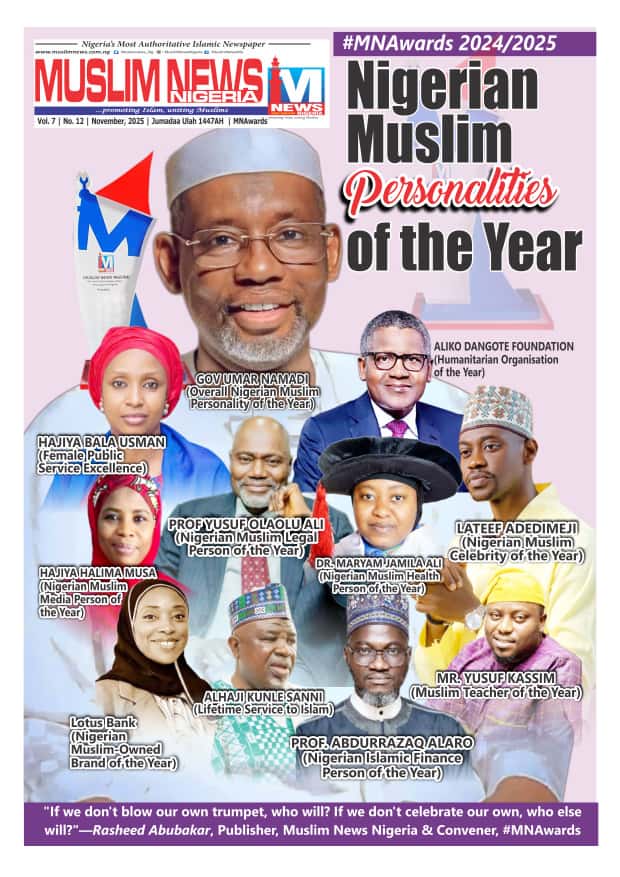
Global Muslim Personalities of the Year 2024/2025




Discover more from Muslim News Nigeria
Subscribe to get the latest posts sent to your email.