


* Youth council hails historic victory, urges Gov Fubara to ensure full compliance
The Supreme Court of Nigeria has dismissed an appeal by the authorities of Rivers State University (RSU), effectively ending a dispute that began in 2012 over the right of Muslim students to observe prayers and establish a place of worship on the university’s Nkpolu Oroworukwo campus.
The apex court’s unanimous ruling on Tuesday, February 10, 2026, affirmed earlier judgments granting Muslim students the right to worship freely and to be allocated a designated space on campus.
A group of students comprising Umaru Wazuru and 98 others, filed Suit No. FHC/PH/CS/150/2012 at the Federal High Court, Port Harcourt, challenging the actions of the then Vice Chancellor and the Attorney General of Rivers State.
Represented by the law firm Oloriegbe & Co., the students argued that the restrictions were unconstitutional and discriminatory. They requested that the university allocate land for Muslim worship, similar to facilities available to Christian groups.
On February 19, 2013, the Federal High Court ruled in favour of the students, stating that prohibiting Muslim worship while churches existed on campus violated constitutional guarantees of freedom of thought, conscience, and religion.
Appeals and affirmations
The university proceeded to the Court of Appeal, Port Harcourt Division (Appeal No. CA/PH/614/2015). On March 31, 2017, the appellate court unanimously dismissed the appeal, upholding the Federal High Court’s decision.
Unsatisfied, RSU filed a further appeal at the Supreme Court (SC/055/2018). On February 10, 2026, the apex court unanimously dismissed the appeal, marking the end of litigation and affirming the students’ constitutional rights.
Community and organisational reactions
The Muslim Youth Council of Nigeria (MYCN), Rivers State Chapter, hailed the Supreme Court decision as a historic victory, urging Governor Siminalayi Fubara to ensure full compliance by promptly providing a designated place of worship within Rivers State University.
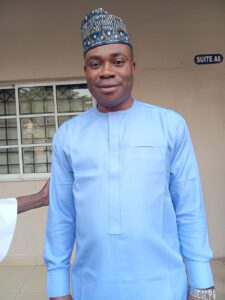
In a statement signed by the Rivers State Chairman, Comrade Shehu Arise Kagbara, the council expressed gratitude to Allah and described the ruling as a reaffirmation of the constitutional freedom of religion for all Nigerians.
The council also acknowledged the pivotal support of Al-Usrah Incorporated, led by Imam Prof. Abdul Razaq Kilani, for providing platforms, empowerment, and legal guidance throughout the protracted legal battle.
Appreciation was similarly extended to the Oloriegbe & Co. legal team, led by Mr. Ganiyu Biodun Sanusi Esq., which took up the case pro bono in 2012 and steered it through all judicial tiers to the Supreme Court.
Beyond the immediate victory, the group called on Governor Fubara to promote the inclusion of indigenous Muslims in governance through appointments to commissions, boards, and parastatals, and to ensure the meaningful engagement of Muslim youths in state affairs.
Background and historical context
The legal challenge emerged after repeated attempts at dialogue with university authorities and state officials, including appeals through respected religious leaders and the Sultan of Sokoto, ultimately proving unsuccessful.
The 2013 Federal High Court judgment was a decisive statement on the constitutional protection of religious freedom, declaring that the absence of a mosque in the university’s original master plan could not justify restricting Muslim students’ rights.
This landmark decision closes a decade-long struggle that has seen multiple court appearances, appeals, and persistent advocacy by the Muslim community in Rivers State.
Legal significance
Under Nigerian law, Supreme Court judgments are final and binding on all authorities and persons. Failure to comply may expose officials or institutions to contempt proceedings, including fines or imprisonment.
Legal analysts emphasize that adherence to this ruling is critical for maintaining constitutional order and upholding citizens’ rights.
Conclusion
The Supreme Court ruling represents a triumph of justice, patience, and faith. Beyond being a victory for Muslim students, it reaffirms the constitutional guarantees of freedom of thought, conscience, and religion in Nigeria.
As the community celebrates this milestone, it remains committed to unity, peace, and the collective development of Rivers State, hoping this judgment fosters greater respect, inclusion, and harmonious coexistence among all religious groups.
Sponsored

Nigerian Muslim Personalities of the Year 2024/2025
Global Muslim Personalities of the Year 2024/2025




Discover more from Muslim News Nigeria
Subscribe to get the latest posts sent to your email.