

By Rasheed Abubakar and Abdul-Mumin Abdul-Quadir
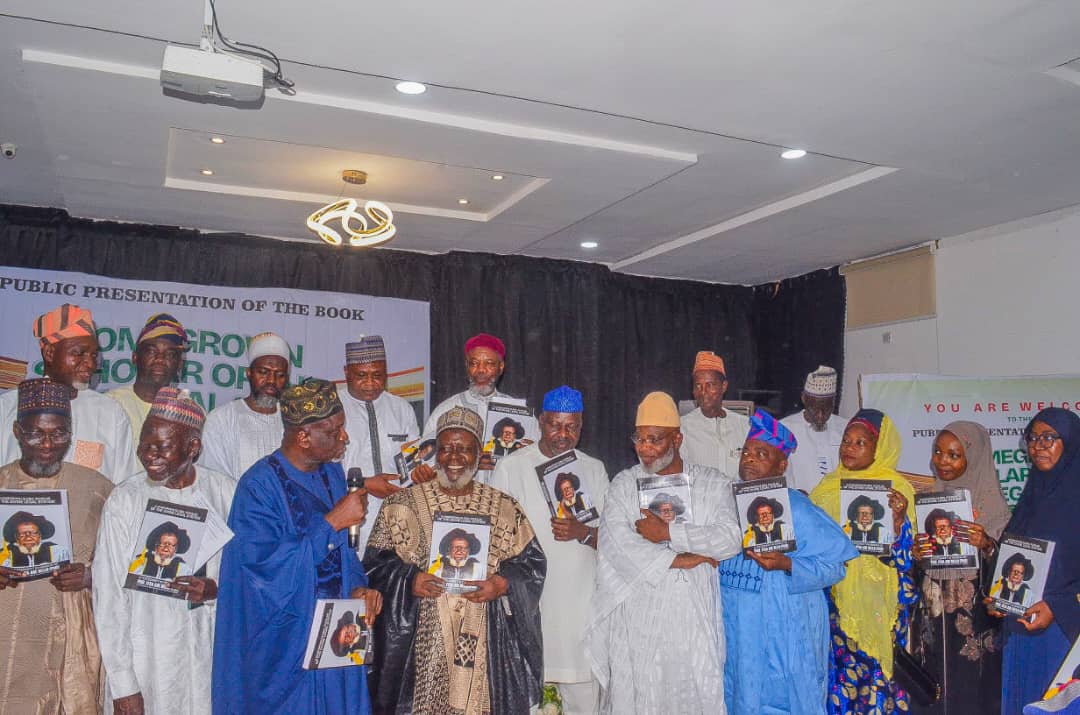
The question of Shari’ah implementation in South West Nigeria took centre stage on Sunday, February 15, 2026, as scholars, jurists and Islamic leaders gathered at Osun Hall of Ikeja Airport Hotel, Lagos for the public presentation of the book, ‘Homegrown Scholar of the Divine Legal System’, a festschrift in honour of Professor Iysa Ade Bello.
The book, which honours Prof. Bello’s decades of teaching, mentorship and research, was authored by 42 scholars from different academic backgrounds, with contributors exploring diverse themes within Islamic jurisprudence, legal pluralism and contemporary societal issues.
Muslim News gathered that the compendium of knowledge was edited by a team of four distinguished academics, including Prof. Tunde Akanni of the Faculty of Communication and Media Studies at Lagos State University LASU; Prof. Kareem Olatoye, Dean of the Faculty of Law at Lagos State University LASU; Prof. Nasir Adeniyi, Dean of the Faculty of Law at Osun State University; and Prof. Owolabi of the Federal University of Wukari in Taraba State.
What began as a celebration of a distinguished career in Islamic legal scholarship quickly transcended into a broader intellectual conversation on legal pluralism, constitutional rights and the place of Islamic personal law within Nigeria’s multicultural framework.
Prof Alaro questions absence of Shariah Court of Appeal in South West
Reviewing the book, Professor of Islamic Law of Banking and Finance from University of Ilorin, Ilorin, Kwara State, Prof. AbdulRasaq AbdulMajeed Alaro described the festschrift as a rich intellectual offering that traverses diverse legal and socio cultural subjects.
He explained that the chapters span Islamic law and legal pluralism, constitutional law and human rights, medico legal debates, environmental sustainability, financial regulation and governance challenges.
According to him, the work demonstrates the dynamic relevance of Islamic jurisprudence in addressing modern realities.
Prof. Alaro, who recently emerged Nigerian Muslim Finance Person of the Year, noted that several chapters explore the delicate balance of applying Islamic law within Nigeria’s multi religious and multicultural framework.

A central question raised by contributors in the book, he said, concerns why customary law often applies to Muslims in parts of southern Nigeria despite the constitutional recognition of Islamic personal law and the significant Muslim population in the region.
The review linked this concern to the persistent absence of Sharia’h Court of Appeal structures across much of the South West, a contrast to northern states where Islamic law institutions remain firmly established.
… Urges integration of Islamic principles in law, environment, and governance
He highlighted other innovative themes in the book, including the integration of Lagos State environmental regulations with Islamic legal principles for effective noise pollution control.
The festschrift also critiques the 1999 Constitution and calls for a more participatory amendment process that reflects the interests of all segments of society, including Muslims.

In addition, chapters examine human rights protection in Nigeria, identifying systemic gaps in safeguarding fundamental liberties.
On environmental law, Professor Alaro said the contributors address pressing challenges such as degradation, access to potable water and resource management at sub national levels including Osun State.
The book further explores contemporary medico legal and ethical issues such as surrogate parenting and in vitro fertilisation through both family law and Islamic ethical perspectives.
Other chapters analyse Awqaf endowments, corporate taxation and Islamic finance while a section on anti money laundering and combating financing of terrorism rejects claims linking Islamic banking to terror funding, stressing that criminal intent is driven by opportunity rather than the nature of financial institutions.
Prof Ishaq Oloyede urges due process in Shari’ah courts push
The discussion on Islamic law drew further reactions from the Registrar of the Joint Admissions and Matriculation Board (JAMB) Professor Is-haq Oloyede, who said the slow progress is due to a lack of initiative among local Muslims.

According to him, “No one will do for you what you are expected to do for yourself. Muslims here are concerned about their judicial infrastructure. The Constitution allows for Shari’ah courts, so there is no reason they cannot exist.”
He contrasted the situation with Northern Nigeria, where Shari’ah courts operate alongside conventional courts without objection from non-Muslims.
“The North understands that Muslims need Shari’ah, which is why they have both Shari’ah and conventional courts of coordinate jurisdiction,” he noted.
Professor Oloyede who is also the Secretary General of Nigerian Supreme Council for Islamic Affairs, NSCIA, urged southern Muslims to follow due process in advocating for Shari’ah courts, saying it would address long-standing inequities.
He also praised the honouree’s lifelong dedication to scholarship and personal growth, urging wider circulation of the book across tertiary institutions at affordable rates.
Tributes from former students and colleagues
Tributes flowed from former students and colleagues who described Professor Bello as a mentor and pioneer in Islamic legal education.
Former National Hajj Commission of Nigeria (NAHCON) Chairman, Ustaz Zikrullah Kunle Hassan, recalled studying Islamic law under the honouree at Lagos State University and praised his mentorship and integrity.
According to him, “He was my teacher. He taught me Islamic law at LASU. He supervised my project and also served as my Director when I was African Secretary at the World Assembly of Muslim Youth (WAMY). He was my mentor and a gentleman to the core, and I am excited about the life he has lived. He is worthy of emulation, and I wish him greater accomplishments in life.”

Chief Imam of Lekki Central Mosque Sheikh Ridwan Jamiu described the honouree as an exemplary scholar whose supervision during his doctoral studies left a lasting impact on his academic journey.
Sheikh Thaoban Adam Abdullah Al Ilori reflected on longstanding interactions with Professor Ade Bello from his days with the World Assembly of Muslim Youth to his academic engagements in Lagos and Abuja, noting his enduring influence on Islamic scholarship.
Professor Mojeed Alabi of Osun State University recounted how the honouree pioneered the inclusion of common and Islamic law degree programmes during his sabbatical at the institution, describing him as a scholar worthy of celebration.
Also speaking, Hajia Mutiat Orolu-Balogun of the Hijab Rights Advocacy Initiative (HRAI) said she encountered Prof. Bello more than two decades ago as a student and still benefits from his teachings on Islamic inheritance law.

She described him as approachable and intellectually generous, adding that his legacy spans several universities across Nigeria.
One of the editors, Prof. Musibau Tunde Akanni, thanked Allah for the honouree’s impactful life of scholarship, mentorship and philanthropy.
He highlighted Prof. Bello’s role in nurturing doctoral graduates and supporting students materially and morally, noting that his leadership continues to inspire younger generations.
The event concluded with tributes from current and recently graduated students who not only presented an award of excellence to their teacher but also offered prayers and reflections on Prof. Bello’s legacy, celebrating his contributions to Islamic jurisprudence and national development.
Guests were encouraged to prioritise acquiring the book and ensuring its circulation across institutions of learning throughout the country, noting that wider distribution at an affordable rate would have a greater impact than concentrating on just a few copies. 


Sponsored

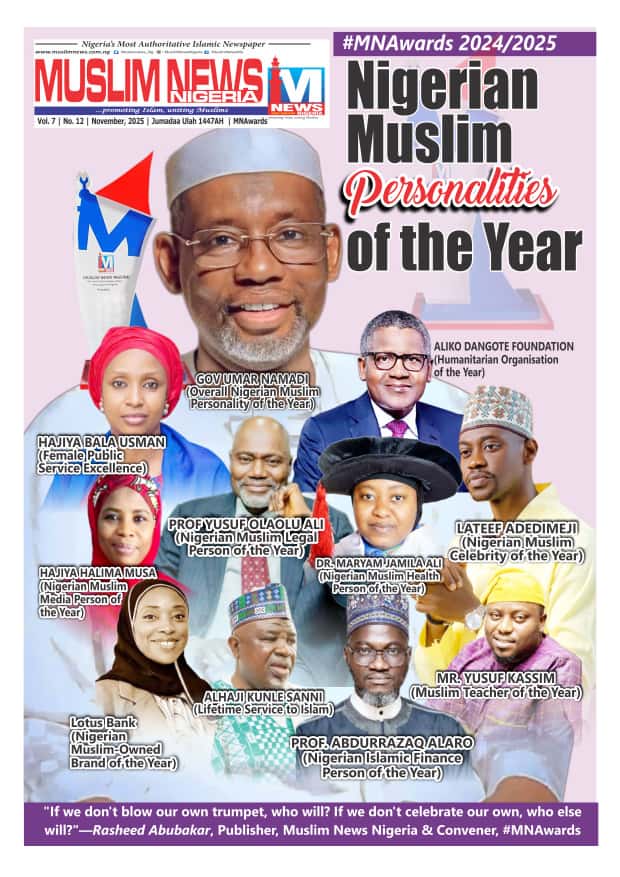
Nigerian Muslim Personalities of the Year 2024/2025
Global Muslim Personalities of the Year 2024/2025




Discover more from Muslim News Nigeria
Subscribe to get the latest posts sent to your email.