

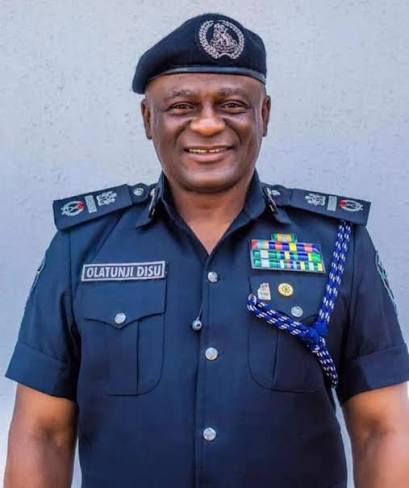
Affirms readiness to manage protests professionally amid global tensions
The Nigeria Police Council has confirmed the appointment of Rilwan Olatunji Disu as the substantive Inspector-General of Police (IGP).
The council met at the State House under the chairmanship of President Bola Ahmed Tinubu and unanimously approved his appointment.
The meeting was attended by Vice President Kashim Shettima, state governors, Chairman of the Police Service Commission, retired DIG Hashimu Argungu; Secretary to the Government of the Federation George Akume; National Security Adviser Nuhu Ribadu; Chief of Staff, Femi Gbajabiamila; Minister of Police Affairs Ibrahim Gaidam; FCT Minister, Nyesom Wike; and Head of the Civil Service of the Federation, Mrs Esther Didi Walson-Jack.
Lagos State Governor Babajide Sanwo-Olu praised Disu’s record, particularly his tenure as Commander of the Rapid Response Squad (RRS) in Lagos between 2015 and 2021.
Nasarawa State Governor Abdullahi Sule described the appointment as merit-based, while Wike commended his professionalism during his service in Rivers State and later as FCT Commissioner of Police.
Born April 13, 1966, Disu joined the Nigeria Police Force on May 18, 1992, as a Cadet Assistant Superintendent of Police. He has held several strategic positions nationwide and most recently served as Assistant Inspector-General of Police in charge of the Special Protection Unit and the Force CID Annex, Lagos.
He was appointed Acting IGP on February 24 following the resignation of Kayode Egbetokun.
Disu Takes Oath as 23rd IGP
Newly confirmed Inspector-General of Police, Olatunji Disu, was sworn in as Nigeria’s 23rd substantive IGP by Bola Ahmed Tinubu at the State House, Abuja.
The oath-taking ceremony took place during the Federal Executive Council (FEC) meeting, after which the President simply charged him to get to work.
Following his swearing-in, Disu pledged neutrality, professionalism and zero tolerance for partisanship, misconduct and abuse of authority, especially ahead of the 2027 general elections.
He assured Nigerians that the police would remain firm, impartial and committed to protecting democratic institutions, electoral officials and voters.
Speaks on State Policing
Addressing journalists, Disu declared that state police “has come to stay,” describing it as a complementary structure within a coordinated national security framework.
He inaugurated a seven-member steering committee to develop a framework for its implementation, stressing that decentralised policing would enhance intelligence gathering, community participation and rapid response to emerging threats.
According to him, state policing would not replace the Nigeria Police Force but strengthen national security through partnership and synergy.
He emphasised that improved welfare for officers — including housing, healthcare and remuneration — would remain a priority under his leadership.
Speaks on Pro-Iranian Protests
On potential protests linked to Middle East tensions, the IGP said the police were on alert.
He noted that Nigeria has different Islamic groups, some of which may react to developments in the region.
“Our ears are to the ground,” he said, adding that intelligence-led policing would guide the force’s response.
He assured that public protests would be handled professionally and lawfully, warning officers against taking laws into their hands while reiterating that the use of force must be lawful, measured and accountable.
Disu pledged that under his watch, the Nigeria Police Force would adopt intelligence-driven, technology-based strategies to address evolving security challenges while maintaining professionalism and public trust.
Sponsored
Sponsored

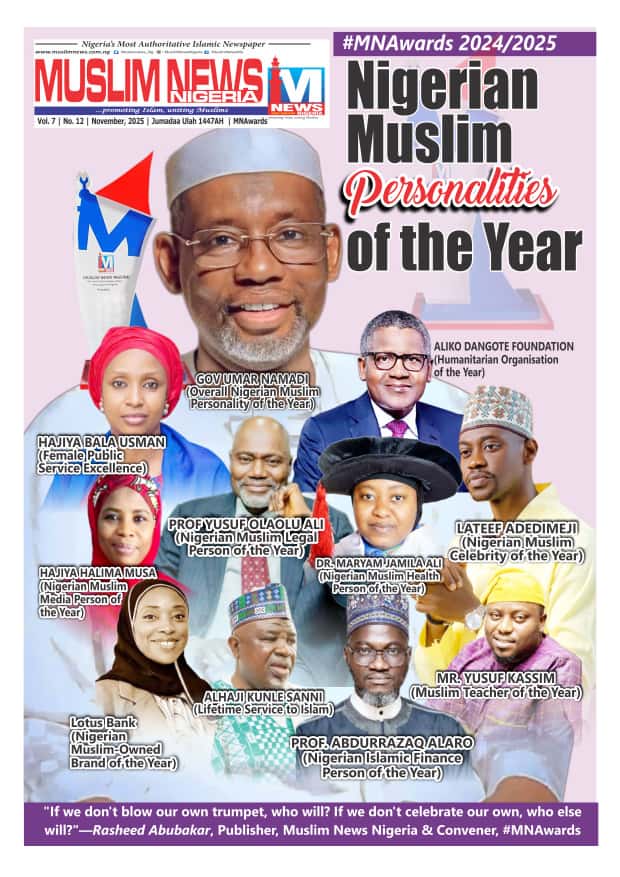
Nigerian Muslim Personalities of the Year 2024/2025
Global Muslim Personalities of the Year 2024/2025




Discover more from Muslim News Nigeria
Subscribe to get the latest posts sent to your email.