
By Rasheed Abubakar
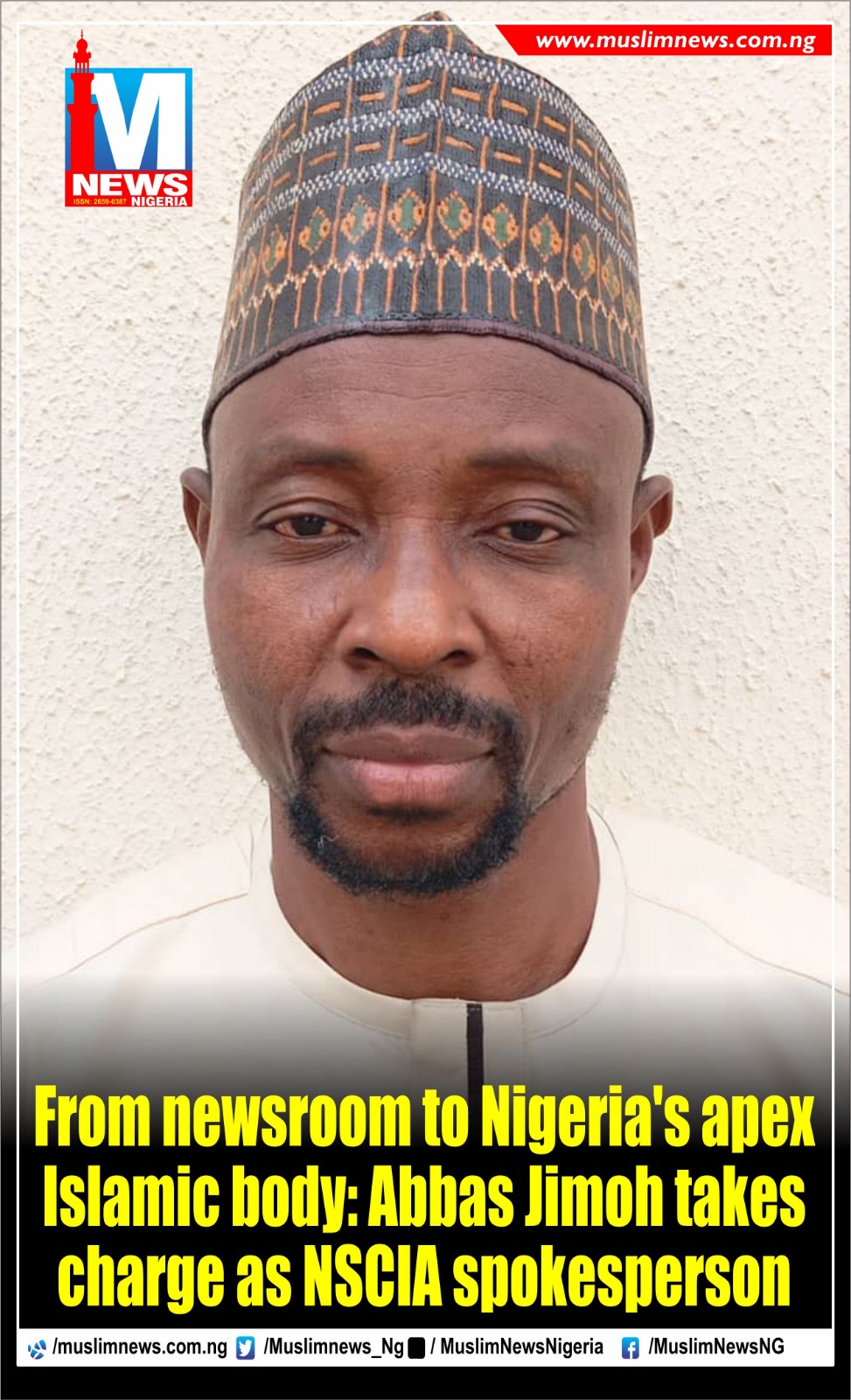
When the Nigerian Supreme Council for Islamic Affairs (NSCIA) announced the appointment of veteran journalist Alhaji Abbas Jimoh as its new Public Affairs Officer and spokesperson on Thursday June 11, 2026, many within Nigeria’s media industry and Muslim community viewed the decision as both strategic and timely.
Coming at a period when Islam and Muslims have become subjects of intense public debate, religious tensions and media scrutiny, Alhaji Jimoh’s appointment is widely seen as strategic, describing the selection of a seasoned communications professional capable of articulating the positions of Nigeria’s foremost Islamic body with clarity, credibility and professionalism.
The NSCIA, headed by the Sultan of Sokoto, Alhaji Muhammad Sa’ad Abubakar serves as the highest umbrella organisation for Muslims in Nigeria and has, since its establishment in 1973, coordinated Islamic affairs and promoting unity among Muslims across the country.
Journalist’s transition to institutional communication
Before joining the NSCIA, Alhaji Jimoh spent about two decades at Media Trust Limited, publishers of Daily Trust newspapers as well as owners of Trust TV and Trust Radio.
In his journalism career, Alhaji Jimoh rose to become an Assistant Editor, covering several strategic beats including the Independent National Electoral Commission (INEC), the Office of the Secretary to the Government of the Federation (OSGF), political parties and governance. His assignments took him beyond Nigeria as he reported major events across Africa, Europe and Asia.
His professional competence earned him prestigious fellowships, including the Bloomberg Media Initiative Africa Fellowship of the Bloomberg Institute in partnership with the Lagos Business School, as well as the second cohort of the MTN Nigeria Media Innovation Programme organised by Pan Atlantic University and the Lagos Business School.
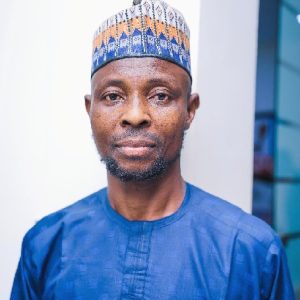
Upon his appointment, Alhaji Jimoh described the role as an opportunity to serve both Nigeria and the Muslim community.
“This is a huge responsibility and I am not taking it for granted. The NSCIA has been an organisation I have reported and this appointment serves as a way to gain more insight into how it advocates in strengthening Islam and cohesion among Muslims in the country, all in the collective quest for national development.”
A demanding beginning
Barely weeks after assuming office, Alhaji Jimoh found himself handling some of the most sensitive issues confronting Nigerian Muslims.
His first major assignment came amid heightened public debates surrounding attacks on Islam, marginalisation of Muslims under this current administration and growing tensions following violent incidents and killings of Muslims in parts of Nigeria.
On June 28, 2026, he signed his first major statement on behalf of the NSCIA titled “Attacks on Islam and Muslims in Nigeria Must Stop.”
The strongly worded statement reaffirmed the Council’s commitment to peace while expressing concern over persistent attacks, profiling and marginalisation of Muslims.
Speaking on behalf of the Sultan-led Council, Jimoh emphasised that Muslims had exercised restraint despite repeated provocations but warned that justice must prevail and that government agencies should address acts capable of undermining national peace.
The statement also demanded justice over the killing of the Benue State Chairman of the Miyetti Allah Cattle Breeders Association of Nigeria, Alhaji Ardo Risku Muhammad, the killing of an Islamic teacher in Kaduna State and other incidents affecting Muslims.
For Muslim News, the statement demonstrated that the NSCIA intended to respond more proactively to issues affecting Nigerian Muslims while maintaining its emphasis on peace, dialogue and national unity.
Response to national security concerns
Days later, the notable columnist signed another major statement following the terrorist attack on Government Day Secondary School in Lassa Town, Askira Uba Local Government Area of Borno State.
The NSCIA condemned the killing of a teacher and the abduction of students and teachers, describing the attack as a crime against humanity and an assault on Nigeria’s future.
The Council called for stronger intelligence gathering, improved surveillance, enhanced inter agency cooperation and better community based early warning mechanisms.
It also praised troops of Operation HADIN KAI for rescuing some victims while insisting that rescue efforts must continue until every abducted child regained freedom.
The statement reiterated that terrorism has no place in Islam, stressing that groups such as Boko Haram and ISWAP neither represent Islam nor its teachings.
Within just a few weeks of his appointment, Alhaji Jimoh has established himself as the principal communicator of the Nigeria Supreme Council for Islamic Affairs on some of the country s most pressing issues, including religious freedom, national security and public policy.
Why the appointment matters
Muslim News gathered that Alhaji Jimoh’s appointment comes at a period when the NSCIA’s public communication responsibilities have expanded significantly.
Unlike in previous decades when organisational statements were largely confined to newspapers, today’s communication environment requires immediate responses across television, online platforms and social media.
The spokesperson of the NSCIA is therefore no longer merely responsible for distributing press releases. The office now plays a strategic role in explaining the Council’s positions on national issues, correcting misinformation about Islam, promoting peaceful coexistence and engaging both the media and the wider public.
Alhaji Jimoh’s extensive newsroom experience places him in a unique position to understand how newsrooms operate, how public narratives evolve and how institutional messages can be communicated clearly and effectively.
His background as an editor and political correspondent is also expected to strengthen the Council’s engagement with journalists, policymakers, civil society organisations and the broader public.
Commendations from Muslim organisations
Alhaji Jimoh appointment has continued to receive commendations from Islamic organisations across the country.
Among the earliest was the Muslim Rights Concern (MURIC), which described the appointment as a commendable decision by the NSCIA leadership.
In a statement issued by its Executive Director, Professor Ishaq Akintola, MURIC said Alhaji Jimoh possessed the experience and professional competence required to manage the communication challenges associated with representing Nigeria’s apex Islamic body.
The organisation described him as “a square peg in a square hole,” adding that his two decades of journalism had equipped him with a deep understanding of media practice and public communication.
MURIC also praised the NSCIA leadership for adopting what it called an inclusive, transparent and objective process in selecting its spokesperson, even as it urged the spokesperson to discharge his responsibilities with diligence, courage and professionalism.
Similar goodwill messages have also come from colleagues in the media industry and various Muslim organisations, many of who considered his appointment as a recognition of professionalism, integrity and years of distinguished service in journalism.
Brief profile
Alhaji Jimoh is a veteran Nigerian journalist, editor and communications professional. Before his appointment as Public Affairs Officer and spokesperson of the Nigerian Supreme Council for Islamic Affairs (NSCIA) in June 2026, he built a distinguished career spanning more than two decades in journalism.
He previously served with Media Trust Limited, where he held the position of Assistant Editor after reporting on business, politics, governance, elections and public policy. Earlier in his career, he worked as Assistant Editor (Business) at Sketch Press Limited in Ibadan, Oyo State.
A graduate of Mass Communication from The Polytechnic, Ibadan and Ahmadu Bello University, Zaria, Jimoh has reported major events across Africa, Europe and Asia. He is a Fellow of the Bloomberg Media Initiative Africa in partnership with the Lagos Business School and a Fellow of the MTN Nigeria Media Innovation Programme organised by Pan Atlantic University and the Lagos Business School.
He currently serves as the Public Affairs Officer and spokesperson of the NSCIA, Nigeria’s apex Islamic body led by the Sultan of Sokoto, His Eminence Alhaji Muhammad Sa’ad Abubakar, CFR, mni.
Sponsored

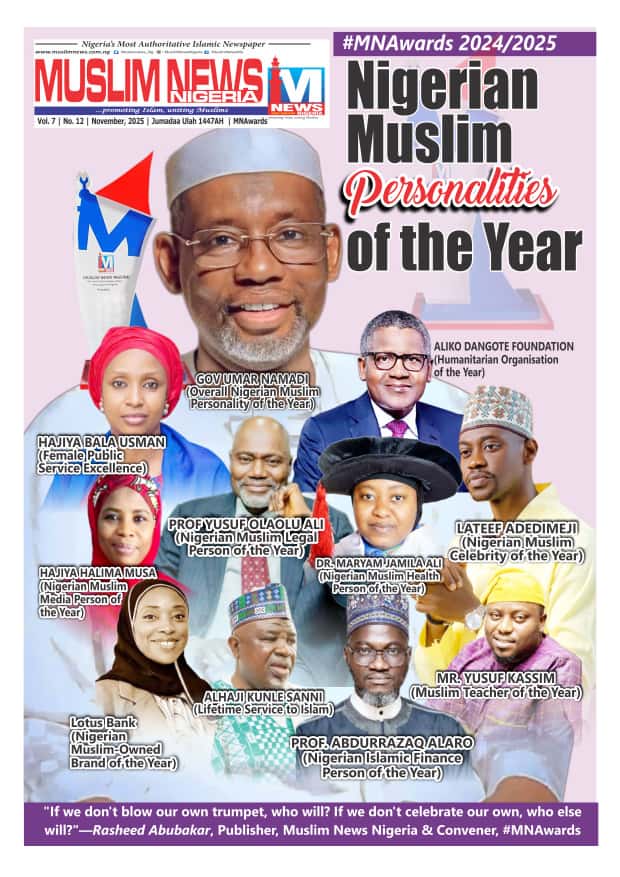
Nigerian Muslim Personalities of the Year 2024/2025
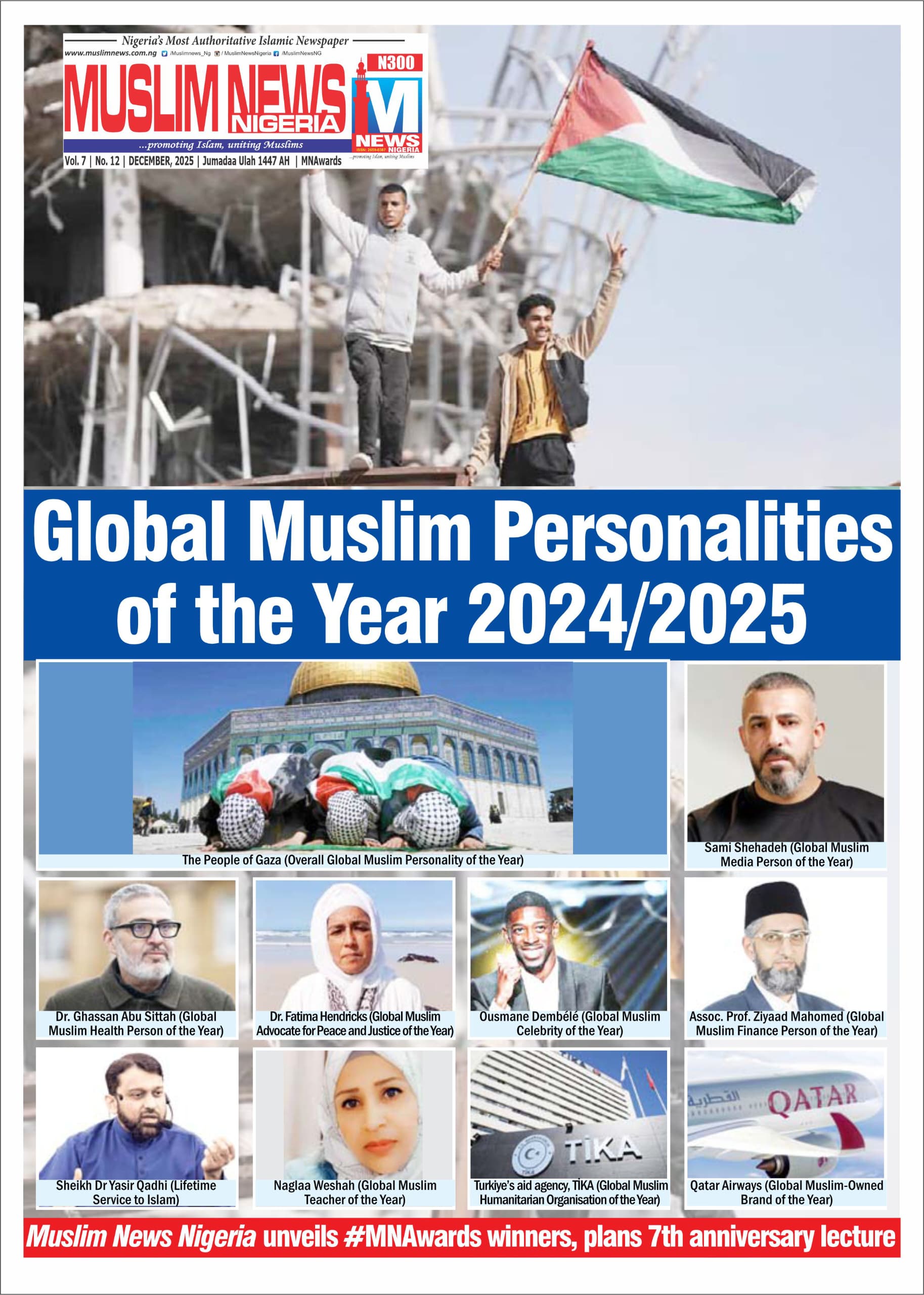
Global Muslim Personalities of the Year 2024/2025



Discover more from Muslim News Nigeria
Subscribe to get the latest posts sent to your email.