

* Muslim-majority state faces renewed insecurity as families flee homes and seek safety
At least 43 people have been killed and 19 others abducted in three separate suspected bandit attacks on communities in Sokoto State within a week, highlighting the devastating toll of insecurity on predominantly Muslim communities in the state.
The attacks, which occurred in Ungushi in Kebbe Local Government Area, three communities in Wurno Local Government Area and Tozo in Silame Local Government Area, left families bereaved and displaced, while several communities were deserted as residents fled in search of safety.
The unfolding violence is also an indication that Muslims are among the worst affected by banditry in Nigeria, as Sokoto, one of the country’s predominantly Muslim states and the seat of the Sultan of Sokoto, Alhaji Muhammad Sa’ad Abubakar III, continues to witness repeated attacks despite the religious and traditional significance of the area.
Imam, women and children among victims
The first and deadliest of the three latest attacks occurred in Ungushi between Friday and Saturday, where suspected bandits reportedly operated for several hours, killing at least 34 people.
Two additional bodies were recovered from a bush on Monday evening, bringing the number recovered to 34. Residents said 32 bodies had earlier been recovered and buried between Sunday and Monday.
Among those killed was Imam Aliyu Musa, Chief Imam of the Izala Mosque in Ungushi.
His daughter, a woman who had recently given birth, recounted how she fled the community with her newborn baby after gunmen opened fire.
She said she, her daughter and other residents escaped through the back of their homes, climbed a nearby hill and headed towards Kebbe.
The journey became more difficult when rain began to fall, she said, adding that her baby almost died during the ordeal. She also said her father, Imam Aliyu Musa, and her uncle, Uban Dankurma, were killed.
The woman said she saw the bodies of several victims, including a child less than one year old.
Another resident alleged that the attackers went from house to house targeting men suspected of belonging to local vigilante groups. He said the attackers operated for several hours with little effective resistance and even cooked food and bathed before leaving the community.
Residents also claimed that 13 of the attackers were killed during the confrontation. However, some victims were believed to remain unrecovered, particularly on the hill where residents had fled, raising fears that the death toll could increase.
Pregnant women reportedly killed
A resident made a disturbing allegation concerning three pregnant women who were reportedly killed during the Ungushi attack.
The resident alleged that the attackers cut open their stomachs, apparently attempting to see their unborn babies.
The victims were identified as Kura, Lalishi and Abba and were said to have been between seven and eight months pregnant.
The allegation could not be independently verified and should therefore be treated with caution.
The attack forced residents to flee towards Kebbe, with some later moving to Sokoto after reportedly receiving little or no assistance. One displaced woman said she remained afraid to return to Ungushi and appealed for help for affected families.
Seven killed, 17 abducted in Wurno
Barely days later, suspected bandits attacked Dinawa, Munƙi and Gidan Dare in Wurno Local Government Area, killing seven people and abducting 17 others, including 15 women.
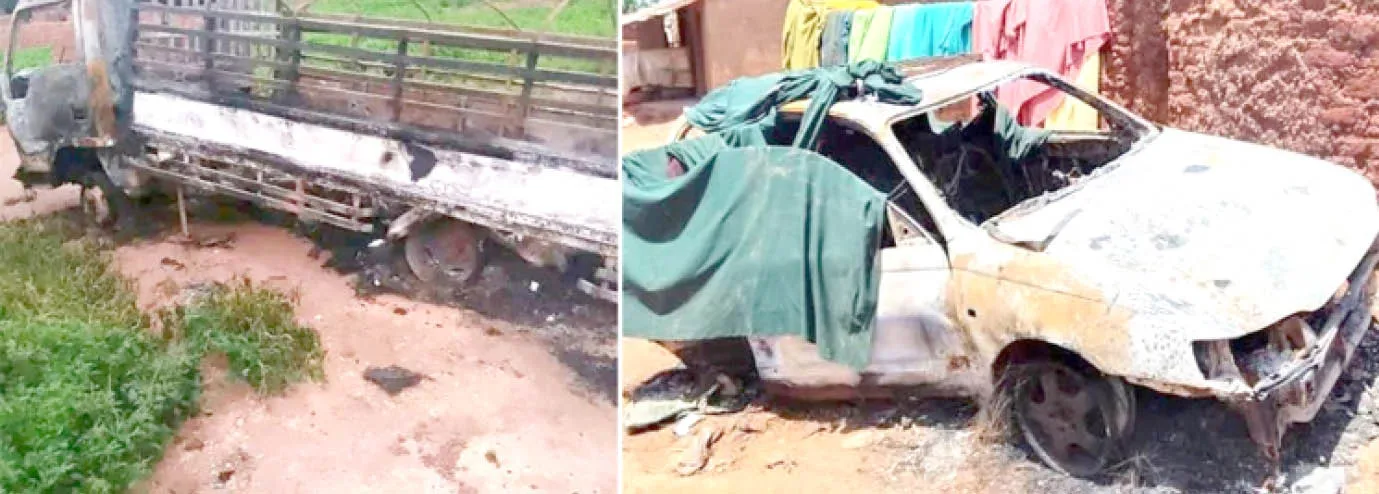
Chairman of the Dinawa Vigilante Group, Aliyu Falke, said the attackers allegedly arrived in a Canter truck at about 10:30 p.m. before opening fire.
Two people, including vigilante member Sani Wukari, were killed during the initial exchange of gunfire, while five others were subsequently killed, including two women. Four people were injured, including Falke, who sustained a gunshot wound to his leg.
The attackers reportedly operated for about four hours before police personnel arrived in two armoured vehicles and engaged them, forcing them to withdraw.
One person was abducted from Munƙi, while nine women were kidnapped from Gidan Dare. The attackers also reportedly rustled cattle and looted valuables.
The lawmaker representing Wurno Constituency in the Sokoto State House of Assembly, Shamsu Aliyu, confirmed the attack and visited Dinawa to condole with affected residents.
Two killed, two abducted in third attack
On Tuesday night, suspected bandits attacked Tozo village in Silame Local Government Area, killing two residents and abducting two others.
The attack reportedly occurred around 8 p.m., after residents rejected a N10 million levy allegedly imposed on the community by the bandits.
A resident told Daily Trust that the community had refused to pay the levy and instead decided to raise money to protect itself against possible attacks.
The attackers reportedly stormed the village while residents were observing Isha prayer at a mosque.
“They took us by surprise. We were in the mosque observing the Isha prayer when they attacked us. They started shooting sporadically,” the resident said.
A senior police officer confirmed the attack, saying security personnel had received intelligence earlier in the day about the presence of bandits around the community and had conducted a search before returning.
The officer said the attackers struck shortly after the security personnel left, killing two residents and abducting two others. Security personnel were still combing nearby forests in search of the attackers and the abducted residents.
More than 100 killed in Sokoto attacks
The three latest incidents are part of a wider wave of bandit attacks that has continued to devastate Sokoto State in recent weeks.
Based on documented media reports, Muslim News’ tally puts the number of people killed in separate bandit attacks across the state at more than 100 since July, with scores of others abducted.
The attacks have affected several local government areas, including Sabon Birni, Bodinga, Wurno, Kebbe, Goronyo, Tureta, Tambuwal and Silame.
On July 2, one person was killed and 43 others abducted in Takatsaba and Tarah communities in Sabon Birni. Two days later, six people, including a village head and his son, were killed in Bodinga.
On July 17, 13 people were killed in three communities in Sabon Birni, while two others were killed and five abducted at Kwaren Gamba on July 19.
Two people were killed and nine abducted in Wurno on July 21, while more than 50 residents were abducted at Garin Idi in Sabon Birni the following day.
Further attacks were reported in Unguwan Lalle, Tsamaye, Lajinge, Gandi, Maikujera, Kebbe, Goronyo, Tureta and Tambuwal, with several communities subsequently deserted as residents fled.
The pattern is particularly painful for Muslim communities because the victims are not distant or abstract casualties.
They include imams leading congregational prayers, women, children, elderly residents, vigilantes and entire Muslim families forced to abandon their homes.
Insecurity not a religious war
The recurring attacks also call for caution against portraying Nigeria’s insecurity simply through the lens of Muslims attacking Christians or Christians being targeted by Muslims.
In Sokoto, a predominantly Muslim state, ordinary Muslims are themselves being killed, abducted and displaced by armed criminal groups.
The victims include a mosque imam, women and children, while one of the latest attacks took place as residents were gathered for Isha prayer.
Whatever the religious identity or ideology of the perpetrators, the suffering of these communities deserves recognition and urgent attention.
Banditry has become a grave security and humanitarian crisis for Muslims and Christians alike, and the experiences of Muslim communities in northern Nigeria should not be overlooked when discussing the country’s wider insecurity.
Security expert faults response
Security analyst Dr Kabiru Jabo described the Ungushi attack as a failure of security response, questioning how the attackers were able to operate for several hours without being effectively stopped.
He called for a review of strategies for combating terrorism and banditry, stronger cooperation between security agencies and communities, better equipment and improved operational strategies.
Jabo said residents were often better positioned to detect suspicious movements and should be encouraged to provide timely intelligence, while warning that civilians should not be left to confront heavily armed groups.
Army steps up deployment
The General Officer Commanding, 8 Division, Nigerian Army, Major General Bemgha Paul Koughna, visited Kebbe following the attacks to assess the security situation and strengthen measures against further infiltration.
According to the Army, Koughna visited the Forward Operating Base and surrounding communities, met community leaders and residents, and reviewed the security architecture around vulnerable communities along the Sokoto-Kebbi border.
He assured residents that troops remained deployed and urged them to provide credible intelligence on suspicious movements.
A resident said the GOC arrived with more than 200 soldiers and armed Hilux vehicles, describing the deployment as encouraging.
The Army’s visit came amid concerns over renewed attacks allegedly linked to the Lakurawa terrorist group operating around communities close to the Sokoto-Kebbi border.
Communities left grieving
Meanwhile, a resident claimed that a military aircraft dropped bombs on attackers around 6 p.m. on Sunday in Indiri, forcing them to flee towards Zugu. The claim could not be independently verified.
For the families of those killed, including the family of Imam Aliyu Musa, and those still searching for abducted relatives, the attacks have left deep scars.
The repeated violence has also raised difficult questions about the protection of Muslim-majority communities that continue to suffer back-to-back attacks despite the presence of security agencies and traditional institutions.
For residents of Sokoto, the immediate demand is not political or sectarian. It is simple: security, protection of lives and property, and the ability to return home without fear.
* Additional information from Daily Trust
Sponsored
Sponsored

Nigerian Muslim Personalities of the Year 2024/2025

Global Muslim Personalities of the Year 2024/2025




Discover more from Muslim News Nigeria
Subscribe to get the latest posts sent to your email.
May Allah forgive the dead, comfort the bereaved and bring succour to Muslims everywhere.