

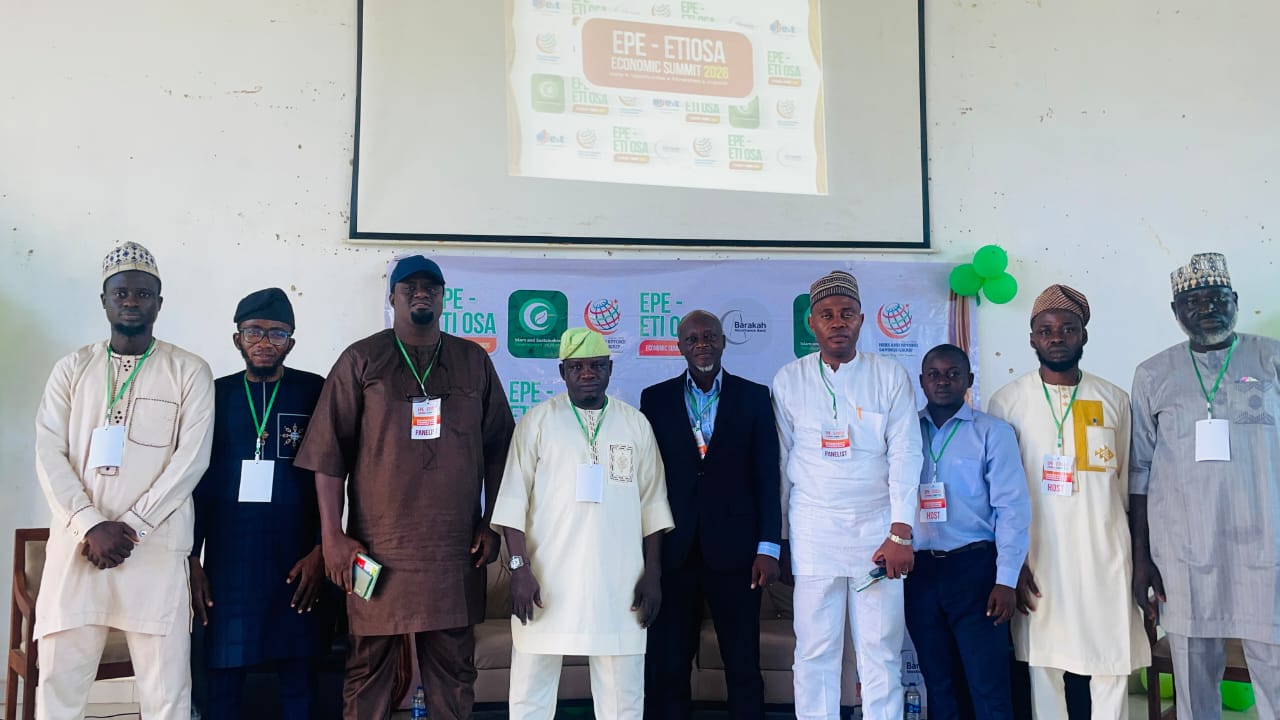
* Epe needs disciplined system to unlock its economic potential – Don
Stakeholders at the inaugural Epe-Eti-Osa Economic Summit have called for the establishment of an economic development council to drive business initiatives, partnerships, student internships and practical economic projects in the area.
They also called for stronger collaboration among cooperative societies, financial institutions, businesses and academic institutions, while urging the organisers to make the summit an annual event to sustain dialogue and drive continuous economic development in the area.
The recommendations formed part of the resolutions reached at the summit, held on Saturday, August 29, 2026, at the Faculty of Engineering, Lagos State University, Epe Campus, Lagos.
The programme, themed “Unlocking Economic Potential and Driving Sustainable Growth,” was jointly organised by the Ethical and Transparency Multipurpose Cooperative Society, Here and Beyond Multipurpose Cooperative Society and Islam and Sustainable Development Initiative.
The proposed Epe-Eti-Osa Economic Development Council is expected to be structured, inclusive and publicly accountable, with responsibility for driving economic initiatives, facilitating business partnerships, promoting industry internships for students and implementing practical economic projects.
The summit was held amid major infrastructure and economic developments in the Epe-Eti-Osa axis.
Muslim News gathered that the Lagos-Calabar Coastal Road, Free Trade Zone, Dangote Refinery and Federal University of Science and Technology, Epe, are among the developments expected to create new economic opportunities in the area.
Prof Yusuf urges Epe to turn potential into shared prosperity
In his keynote address, Professor of Insurance and Risk Management at the University of Lagos and President of the Institute of Islamic Finance Professionals, Prof. Tajudeen Olalekan Yusuf, called for deliberate efforts to transform Epe’s agricultural, fisheries, human and strategic assets into productive opportunities that would benefit residents sustainably.
Prof. Yusuf’s address was delivered on his behalf by Head of ICT, OAK Pensions Limited, Engr. Ahmad Iklil, who also participated as a panellist.
He said economic potential alone could not guarantee prosperity, stressing that communities must build the institutions, infrastructure, knowledge, financing systems and ethical leadership needed to convert available resources into shared wealth.
“Potential is not yet prosperity,” he said, explaining that fertile land must translate into food security, while a lagoon must support a thriving and sustainable fisheries value chain.
Yusuf urged stakeholders to ensure that economic growth does not leave vulnerable residents behind or undermine the environment and future generations. He said development should be guided by responsible stewardship, with wealth, public office, knowledge and natural resources treated as amānah, or trust.
Agriculture, MSMEs, youth development
Prof. Yusuf identified agriculture and fisheries value chains, MSME development, youth empowerment, ethical finance, responsible tourism, infrastructure and environmental sustainability as key areas requiring attention.
He called for investment in aggregation centres, cold storage, processing, packaging, logistics and digital platforms to enable farmers and fishers to move beyond supplying raw materials and capture more value from their products.
He also advocated an enterprise and innovation hub in Epe to support small businesses with digital skills, bookkeeping, product development, regulatory guidance, shared equipment, export readiness and access to finance.
On youth development, Prof. Yusuf said training programmes should be linked to market demand, certification, equipment, apprenticeship opportunities and access to finance.
He identified agro-processing, aquaculture, refrigeration, solar installation, construction, logistics, software, digital marketing, hospitality and creative industries as areas with potential.
“Our young people should not watch development from the roadside; they should design it, build it, service it and own part of it,” he said.
He further advocated greater access to ethical and inclusive financing, noting that instruments such as murābahah, ijārah, mushārakah, muḍārabah, salam and istiṣnā‘, alongside zakāh and waqf, could support productive activities when properly governed.
Tourism, infrastructure, environment
Prof. Yusuf said tourism and the blue economy could create opportunities through Epe’s waterfronts, markets, cuisine, cultural heritage and natural attractions.
He stressed that local residents should participate as owners, suppliers, guides and storytellers, while environmental and cultural safeguards were maintained.
He also called for infrastructure development that would directly support economic activity, including roads, electricity, broadband, water, sanitation and organised markets.
The professor warned against flooding, erosion, pollution, destructive fishing and wetland degradation, urging climate-resilient planning and stronger environmental management.
Council to drive implementation
On implementation, Prof.Yusuf recommended an Epe Sustainable Economic Development Council or similar multi-stakeholder platform to coordinate economic initiatives and ensure public accountability.
He proposed that the council begin with a 90-day Epe Economic Opportunity and Needs Map covering productive assets, infrastructure gaps, businesses, skills, financing needs, environmental risks and investible projects. This, he said, should be followed by a three-year action plan with clearly defined responsibilities, funding sources, timelines and measurable targets.
He also proposed five immediate commitments: an economic opportunity map, a flagship agricultural or fisheries value-chain project, an enterprise and skills platform, an ethical-finance coalition, and a public scorecard for measuring progress.
Prof. Yusuf said the success of Epe’s development should ultimately be measured by its impact on ordinary residents rather than the number of buildings or projects completed.
“The true test of Epe’s development will not be the number of new buildings alone. It will be whether ordinary people can say: ‘My work is more productive. My income is more secure. My children have better opportunities. My community is cleaner and safer. I have a fair chance to participate.’”
He urged government, businesses, financial institutions, educational institutions, cooperatives and community organisations to take responsibility for specific areas of the development agenda.
Prof. Yusuf concluded that Epe did not lack economic potential but needed a disciplined system for converting that potential into shared and sustainable prosperity.
“That system must combine vision with data, enterprise with infrastructure, finance with ethics, investment with inclusion, and growth with environmental stewardship,” he said.
Panel focuses on economic prosperity
Another highlight of the summit was a panel session on “Unlocking Economic Potentials and Driving Sustainable Growth: A Pathway to Economic Prosperity.”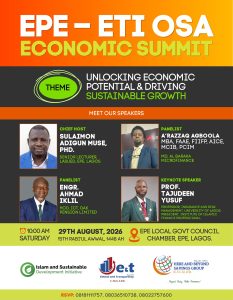
The session was co-moderated by Academic Technologist, Faculty of Engineering, Lagos State University, Mr Abdul Kareem Yusuf, and Chairman, Acute Limited, Mr Abdur Rasheed Murtadho, ACA.
The panel comprised Head of ICT, OAK Pensions Limited, Engr. Ahmad Iklil; Senior Lecturer, Lagos State University of Education, Epe, Dr Sulaimon Muse; Finance Director, AVIAM Offshore Engineering Limited, Mr Abdur Razaq Kolawole, ACA; and Managing Director, Al Baraka Microfinance Bank, Mr Abdur Razaq Agboola, ACA.
The panellists examined challenges confronting businesses and entrepreneurs, particularly those affecting their ability to access funding and achieve sustainable growth.
They identified improper documentation of business finances and sales progression, inadequate financial discipline among business owners and insufficient funding for small and medium-scale businesses as major challenges.
The experts stressed the importance of proper business documentation and financial discipline, particularly for entrepreneurs seeking funding from financial institutions.
They also called for stronger links among businesses, financial institutions, cooperative societies, academic institutions and other stakeholders to improve access to knowledge, resources and funding opportunities.
Dr Muse seeks stronger economic conversations
Earlier in his welcome address, Senior Lecturer, Lagos State University of Education, Epe, Dr Sulaimon Adigun Muse, stressed the importance of creating a platform for meaningful conversations around the economy and businesses.
Dr. Muse described the summit as a critical enabler of the vision of making Epe-Eti-Osa a reference point for unlocking business potential, saying the gathering of stakeholders from different sectors would help generate ideas, encourage collaboration and develop practical responses to economic challenges in the area.
Adejokun reaffirms commitment to Epe-Eti-Osa economic development
The summit recorded 129 participants, comprising 72 brothers, 53 sisters and four guest speakers and panellists.
In his vote of thanks, President of Islam and Sustainable Development Initiative and Chairman of the Summit Organising Committee, Mallam Abdul Hakeem Adejokun, thanked the summit committee, speakers, panellists, sponsors and participants for their contributions to the success of the programme.
Mall. Adejokun reiterated the organisers’ commitment to implementing the recommendations arising from the summit and strengthening their role in promoting economic development through engineering innovation and business partnerships.
The summit was subsequently declared closed with a closing prayer and photo session led by the Master of Ceremonies.
Sponsored

Nigerian Muslim Personalities of the Year 2024/2025

Global Muslim Personalities of the Year 2024/2025




Discover more from Muslim News Nigeria
Subscribe to get the latest posts sent to your email.