

By Kabirat Oluwakemi Abduljelil
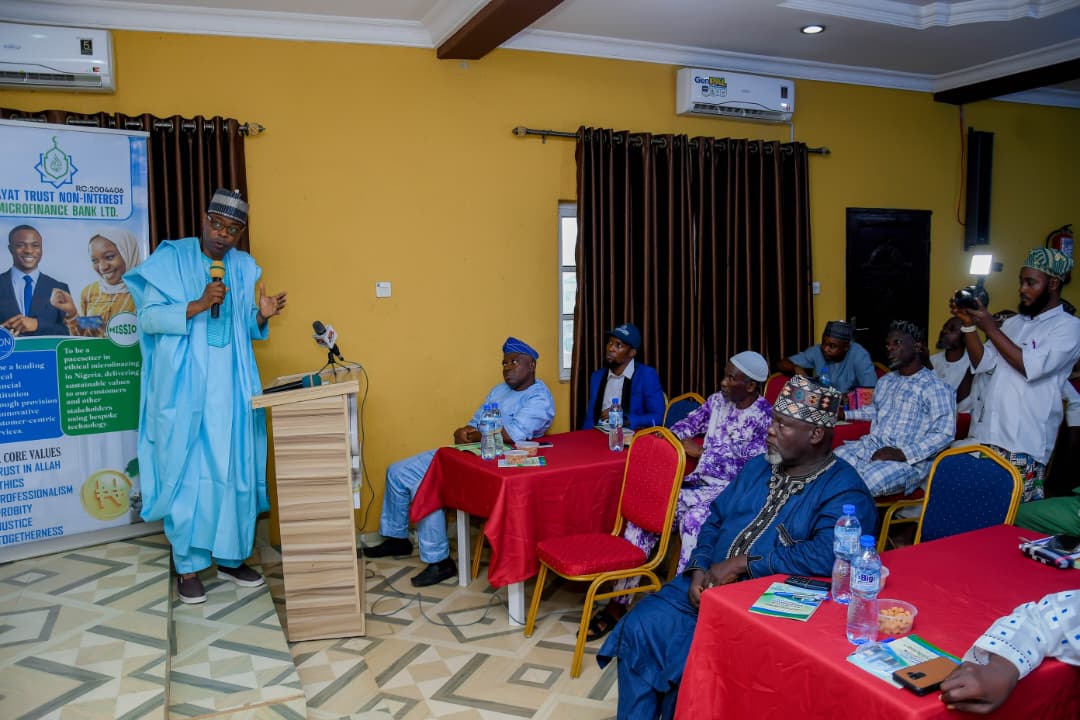
* At Hayat Trust Non-Interest Microfinance Bank Ltd. stakeholders forum in Ijebu-Ode
* We target underserved Nigerians with non-interest finance — MD
The Director of Executive Education and Consultant at Nungu Business School, Dr Jubril Salaudeen, has urged Islamic scholars to deepen their knowledge of Islamic finance before advising Muslims on financial matters.
Dr Salaudeen made the call on Saturday at a Stakeholders’ Sensitisation on Islamic Finance organised by Hayat Trust Non-Interest Microfinance Bank Ltd. at Al-Hayat House, Obalende, Ijebu-Ode, Ogun State.
Muslim News gathered that the programme, themed “Islamic Finance: Its Principles, Benefits and Opportunities,” examined the principles of non-interest finance, its products and its potential to promote entrepreneurship, financial inclusion and community development.
Scholars need proper knowledge
The Islamic finance expert said scholars needed a proper understanding of Islamic finance because Muslims often relied on them for guidance on financial matters.
“For Islamic scholars, I think it is, first of all, imperative that we understand what Islamic finance is all about. Understanding Islamic finance gives us the opportunity to advise people appropriately and knowledgeably on the tenets of Islamic financing,” he said.
Dr Salaudeen described Islamic finance as a specialised field requiring adequate knowledge, adding that such understanding would enable scholars to provide appropriate guidance to members of the public.
Islamic finance built on ethical principles
Dr Salaudeen, while speaking on the theme, explained that Islamic finance was built around ethical, Shariah-compliant transactions.
He said the system prohibited riba (interest), gharar (excessive uncertainty) and maysir (gambling), which are considered inconsistent with the principles of Islamic finance.
According to him, Islamic finance differs fundamentally from conventional finance because money is not treated as a commodity to be rented out for interest. Rather, it serves as a medium for facilitating genuine economic activity, with financing linked to productive assets and transactions.
He said Islamic investment also required ethical screening, excluding activities such as alcohol, gambling, weapons and tobacco.
Products serve different financial needs
Dr. Salaudeen explained that Islamic finance provides different products for depositors and investors according to their financial objectives.
He highlighted Wadiah (safekeeping), Mudarabah (profit-sharing), and Wakalah (agency) as examples of structures available to depositors, while Musharakah (partnership), Mudarabah (profit-sharing) and Sukuk (Islamic investment certificates) provide avenues for investment and wealth creation.
The Director of Executive Education and Consultant at Nungu Business School also described Sukuk as an investment certificate linked to real assets or projects, distinguishing it from conventional bonds, which represent debt obligations.
He said the system offered opportunities for both capital preservation and wealth creation while maintaining ethical and Shariah-compliant principles.
Sector records steady growth
The expert said Nigeria’s Islamic finance sector had expanded significantly over the past two decades. According to him, the country has moved from one Islamic bank to five banks and one Islamic banking window in a conventional commercial bank.
He added that Islamic microfinance institutions had increased from one to nine, while Takaful operators grew from one to six and Islamic asset management firms from one to 11.
Dr. Salaudeen said the growth showed that Islamic finance was becoming an increasingly important component of Nigeria’s financial system.
He urged practitioners to create greater public awareness and explain the principles and benefits of the system to Nigerians.
“People should see Islamic finance as an opportunity to build wealth, do something ethical and contribute to nation building. As such, we shall embrace it,” he said.
New opportunities in Islamic finance
Dr. Salaudeen said the sector also offered emerging opportunities in wealth management, technology-driven investment, crowdfunding, peer-to-peer financing and asset-backed digital financial solutions.
He noted that Islamic finance also aligned naturally with environmental, social and governance principles, citing green Sukuk for renewable energy projects as an example of how the industry could support sustainable development.
He, however, stressed the need for proper risk management, independent audits, effective Shariah supervision and strong governance to protect investors and maintain confidence in the sector.
Islamic finance can drive economic empowerment
The Chairman, Board of Directors of the bank, Prof. Taofiki Ajani Salako, said Islamic finance could contribute significantly to economic empowerment and social development.
Prof. Salako said the system could help reduce unemployment by providing financing opportunities for businesses and enabling people to become economically productive.
He added that Islamic finance could also support social infrastructure and improve quality of life through investments in areas such as schools, hospitals and healthcare.
Prof. Salako urged Nigerians to embrace and patronise Islamic finance, stressing that money itself was neither halal nor haram, but that the manner in which it was acquired and used determined its permissibility.
Hayat Trust targets underserved Nigerians with non-interest finance
The Managing Director/Chief Executive Director of the bank, Mr Raheem Abiodun Musa, said the bank was established to serve underserved and unbanked Nigerians, particularly those who might be reluctant to use conventional interest-based banking.
Mr Musa said the institution was focused on making Islamic finance accessible to people at the grassroots and supporting businesses that might not have adequate access to commercial banking facilities.
He explained that the bank’s model involved directly financing productive economic activities, with transactions structured around Islamic principles.
According to him, asset-backed financing, transparency, fairness and justice were central to the bank’s operations.
He said the institution was established to demonstrate that Islamic finance could provide practical solutions for entrepreneurs while promoting financial inclusion.
Mr Musa added that Islamic finance had come to stay and that Hayat Trust would continue to expand access to non-interest financial services.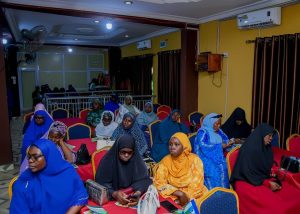
Hayat Trust prioritises small businesses, grassroots entrepreneurs
The Chairman, Advisory Committee of Experts of the bank, Dr Azeez Olatubosun Asif, said the institution was particularly focused on small businesses and entrepreneurs at the grassroots.
Dr Asif said Hayat Trust’s non-interest microfinance model was designed to support customers who might struggle to obtain financing from conventional commercial banks.
He explained that the bank’s products were based on established Islamic finance principles while being adapted to the needs of micro and small-scale businesses.
He said the objective was to enable businesses to obtain financing and grow while ensuring that transactions remained consistent with Islamic principles.
Sponsored

Nigerian Muslim Personalities of the Year 2024/2025
Global Muslim Personalities of the Year 2024/2025




Discover more from Muslim News Nigeria
Subscribe to get the latest posts sent to your email.