

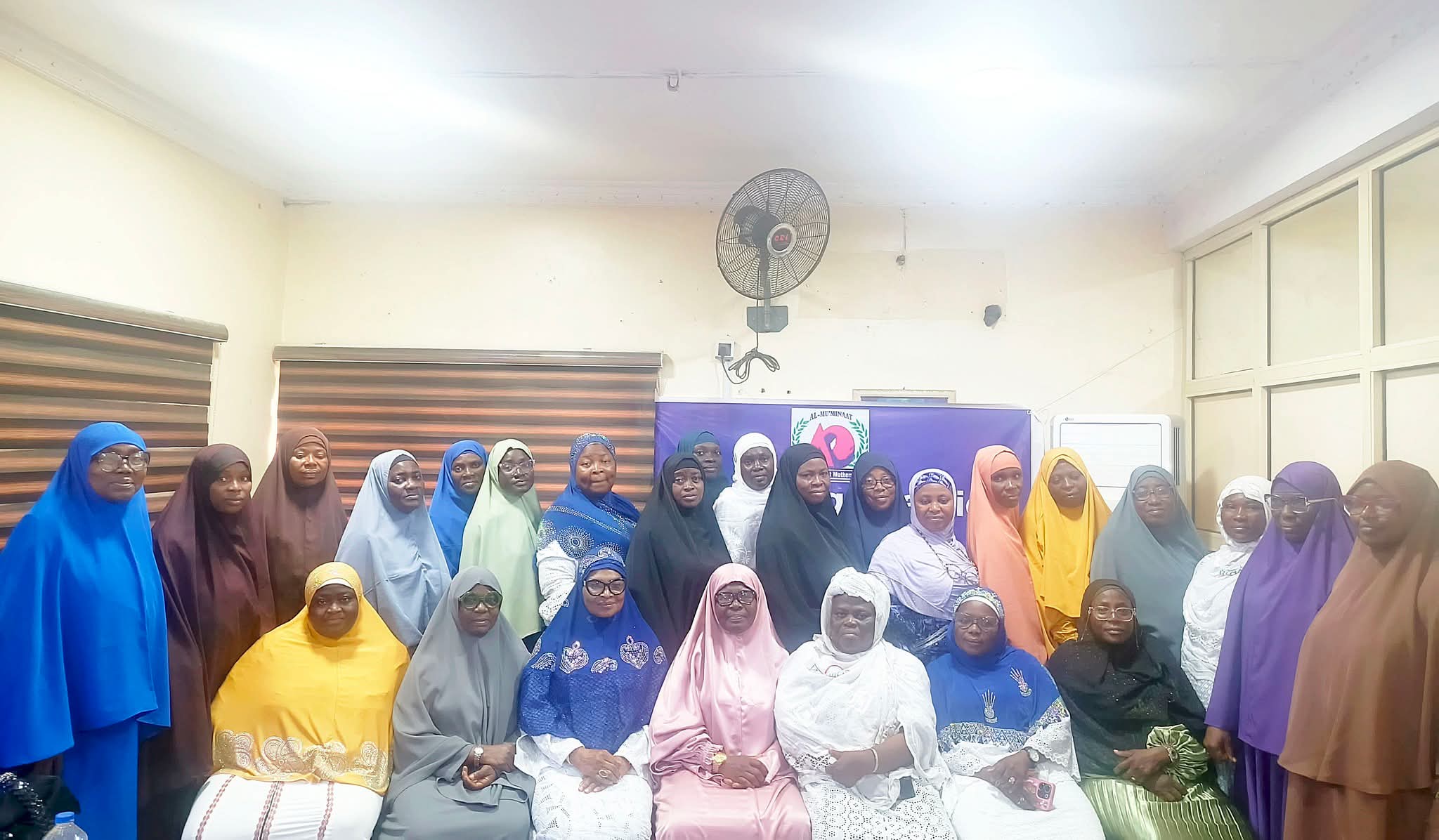
* At strategic meeting on Islamic dates, representatives of leading Muslim women organisations seek stronger awareness, everyday use of Hijri calendar
The Al-Mu’minaat (The Believing Women) Organisation has called on Muslims to revive the active use of the Hijri calendar in their homes, institutions and everyday communication, describing it as an important part of Muslim identity, worship and historical heritage.
The call was made on Sunday, September 27, 2026, at a strategic meeting on awareness and active use of Islamic dates, organised by the national headquarters of the organisation at Hajj Mabrur Place, Anthony, Lagos.
The programme was held under the theme, “Reviving Islamic Culture: Reconnecting the Ummah with Its Identity, Heritage and Values.”
The event brought together representatives of the National Association of the Faithful (NASFAT), The Criterion, the Muslim Students’ Society of Nigeria (MSSN), Ansar-Ud-Deen Society of Nigeria, as well as national and Lagos State executives and members of Al-Mu’minaat.
Al-Mu’minaat links calendar to Muslim identity
In her welcome address, the National Amirah of Al-Mu’minaat, Hajia Jelillah AbdulHamid, said the programme was aimed at reconnecting Muslims with an important aspect of their Islamic heritage and encouraging them to make Hijri dates part of their everyday lives.

She observed that many Muslims were more familiar with the Gregorian calendar than the Islamic calendar, despite the latter being connected to important acts of worship and significant events in Islamic history.
“Our identity is reflected in how we worship Allah, how we raise our children, how we relate with one another, how we conduct our affairs and even how we understand and mark the passage of time,” AbdulHamid said.
She urged Muslim women to become conscious custodians of Islamic heritage, particularly because of their influence as mothers, teachers, mentors and community leaders.
According to her, parents and educators should help children understand the significance of Muharram, Ramadan, Dhul-Hijjah and other Islamic months, rather than limiting their knowledge of the Hijri calendar to Ramadan and other major religious occasions.
Amirah seeks stronger collaboration
AbdulHamid also called for greater collaboration among Muslim women organisations, saying issues such as Islamic education, family development, youth development, women’s empowerment and preservation of Islamic values went beyond individual organisational boundaries.

She proposed the establishment of a strategic collaborative committee comprising representatives of Muslim women organisations to identify areas of common interest and develop practical initiatives for the Ummah.
The National Amirah said such collaboration should be based on mutual respect, consultation, transparency, sisterhood and a shared commitment to serving the Muslim community.
Hijri calendar tied to worship, history
Speaking on “The Islamic Calendar: More Than Dates: Understanding the Hijri Calendar and Its Role in Muslim Identity and Worship,” Deputy Director, Shari’ah Compliance, Halal and Haram Distinction Development Initiative (HDI), Imam Sherifdeen Ibrahim, described the Hijri calendar as more than a system for counting days and years.

Ibrahim explained that the Islamic calendar is based on the lunar months established in Islamic teachings and is closely connected to acts of worship and other Shariah rulings.
He cited Qur’an 9:36, which establishes 12 months in the Islamic year and identifies four as sacred, namely Muharram, Dhul-Qa’dah, Dhul-Hijjah and Rajab.

The scholar also cited Qur’an 2:189, which states that the new moons are “measurements of time for the people and for Hajj,” saying this demonstrates the importance of the lunar cycle in Islamic timekeeping.
Hijrah became starting point
Ibrahim explained that while the Arabs knew the lunar months before Islam, Muslims initially did not have a formal numbered calendar. Years were instead identified by major events, including the Year of the Elephant.
He said the expansion of the Muslim community during the caliphate of Umar ibn Al-Khattab created the need for a formal dating system, particularly for administrative correspondence and official records.
According to him, the Companions consulted on the appropriate event from which to begin the Islamic era and eventually chose the Prophet Muhammad’s Hijrah from Makkah to Madinah.
Ibrahim said the choice reflected the historical significance of the Hijrah as a transition from persecution to the establishment of a Muslim community and a new phase of social, religious and civilisational development.

Calendar shapes acts of worship
The scholar said the importance of the Hijri calendar is evident in its connection to several major acts of worship, including Ramadan, Hajj, fasting on the Day of Arafah and Ashura.
He explained that the lunar calendar is also relevant to certain Zakat calculations, waiting periods and other time-bound matters in Islamic jurisprudence.
“The Hijri calendar is not something separate from the devotional life of a Muslim,” Ibrahim said, stressing that understanding it helps Muslims organise their worship and appreciate the rhythm established by Islamic teachings.
He added that Ramadan and Hajj provide some of the clearest examples of the calendar’s importance because Muslims depend on lunar dates to determine their religious observances.
Yusuf-Ajibade urges active use of Islamic dates
The second presentation, “Rekindling the Awareness and Active Use of Islamic Calendar in Our Homes and Institutions,” was delivered by Hajia Sherifah Yusuf-Ajibade.
She said the challenge was not merely knowing the names of the Islamic months but ensuring that the Hijri calendar was actively used in Muslim homes, organisations and institutions.
Yusuf-Ajibade identified religious obligations, preservation of Islamic history and identity, and unity among Muslims as key reasons for maintaining awareness and use of the calendar.
“The Hijri calendar is essential in Islam because it dictates the timing of core religious obligations, preserves Islamic history, and unites the global Muslim community,” she said.
From awareness to daily practice
Yusuf-Ajibade urged Muslims to incorporate Hijri dates into their everyday activities, including family records, organisational programmes, educational materials, invitations and official communication.
She said families could begin by teaching children the names and significance of the 12 Islamic months and using Hijri dates alongside Gregorian dates when documenting important events.
The speaker also explained that because the Hijri calendar is lunar, Ramadan and Hajj move through different seasons over time, allowing Muslims in different parts of the world to experience the fasting month across varying climatic conditions.

She acknowledged that differences in geographical location and moon sighting can sometimes result in different dates, noting that Muslim institutions and organisations continue to work within their respective contexts to address such variations.
Participant pledges practical action
The Ameerah of The Criterion, Lagos State, Hajia Khadijah Adebisi Abdulsalam, said the seminar had reinforced the importance of using the Islamic calendar to document Muslim history and identity.
Abdulsalam said members of The Criterion planned to begin from their homes by recording family events and births with both Hijri and Gregorian dates.

She expressed appreciation to Al-Mu’minaat for organising the programme, noting that Muslims belong to one Ummah and share the responsibility of promoting Islamic ideals and seeking the pleasure of Allah.
Calendar as living heritage
The Amirah of Criterion also emphasised the responsibility of Muslim women organisations to work together in preserving Islamic culture and transmitting knowledge of Islamic history and values to younger generations.
The event ended with a call for participants to translate the discussions into practical steps by increasing the use of Hijri dates in homes, schools, mosques, organisations, media platforms and other appropriate settings.
Sponsored

Nigerian Muslim Personalities of the Year 2024/2025
Global Muslim Personalities of the Year 2024/2025




Discover more from Muslim News Nigeria
Subscribe to get the latest posts sent to your email.