

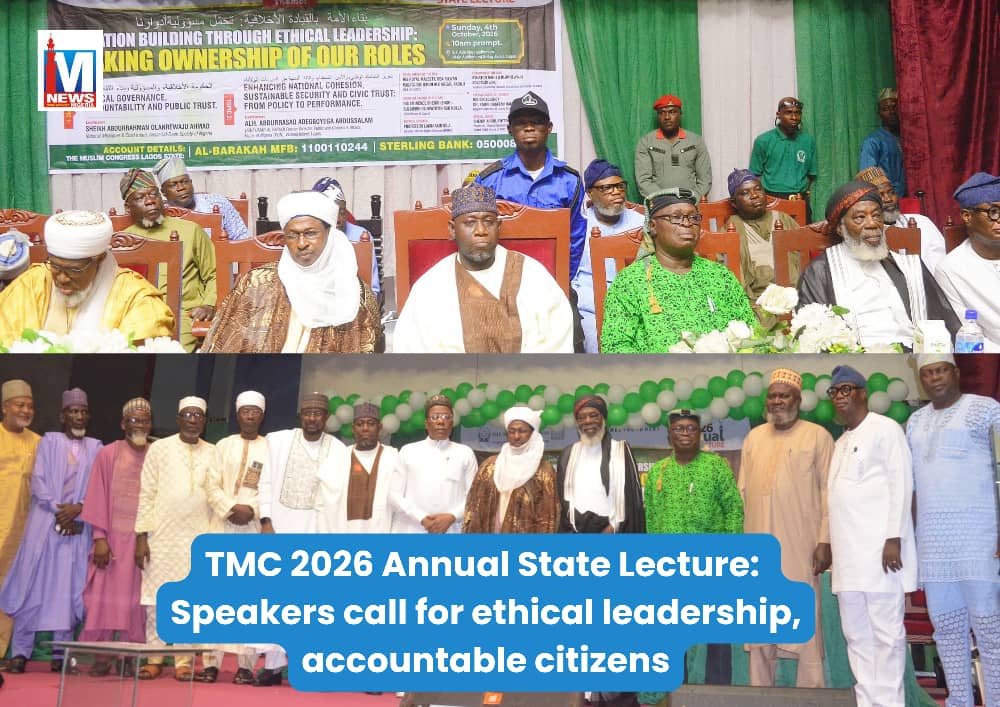
* Scholars, public affairs experts charge citizens to hold leaders accountable ahead of 2027 elections
Muslim scholars and public affairs experts have called for ethical leadership, accountable governance and responsible citizenship as essential conditions for rebuilding public trust and advancing Nigeria’s development.
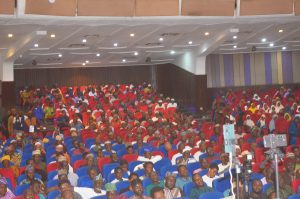
The speakers made the call on Sunday, October 4, at the 2026 Annual State Lecture of The Muslim Congress, TMC, Lagos State, held at the J. F. Ade Ajayi Main Auditorium, University of Lagos.
Muslim News gathered that the annual lecture is held simultaneously across the states where The Muslim Congress is active, as part of its efforts to provide a platform for public engagement on critical national issues.
Speaking on the unified theme, “Nation Building Through Ethical Leadership: Taking Ownership of Our Roles,” the speakers maintained that Nigeria’s leadership challenges could not be addressed by government alone, stressing that citizens must also take responsibility for their roles in strengthening the country.
‘Public trust requires ethical governance, accountability’
Former Director of Public and Corporate Affairs, Voice of Nigeria, Alhaji Abdurrasaq Adegbooyega Abdussalam, said public trust could not be established without ethical governance and accountability.
Speaking on “Enhancing National Cohesion, Sustainable Security and Civic Trust: From Policy to Performance,” Abdussalam said trust was indispensable to peace, development and social harmony.
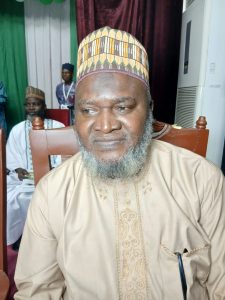
“Public trust can only be built with a combination of ethical government, governance and accountability,” he said.
The former VON director explained that when citizens lose confidence in government, they could resort to self-help, while insecurity, corruption, poverty and social dislocation would continue to thrive.
Abdussalam also examined why some people seek political power, identifying access to public funds, the desire for power and control, and the pursuit of personal recognition among the motivations.
He warned that political office could become dangerous when those occupying positions of authority began to see themselves as all powerful and beyond scrutiny.
Abdussalam, the first Amir of The Muslim Congress, therefore stressed that public office must be understood as a trust and an opportunity to serve rather than a means of personal enrichment.
Sheikh Ahmad: Citizens must hold leaders accountable
National Missioner and Chief Imam of Ansor Ud Deen Society of Nigeria, Sheikh Abdurrahman Olanrewaju Ahmad, challenged Nigerians to become more active in demanding accountability from elected leaders, saying citizens should not merely complain about poor governance but must question officials about their promises, policies and management of public resources.
“We have put you there, what are you doing? How far have you gone with the agenda you promised us?” he said, urging Nigerians to hold leaders accountable for the responsibilities entrusted to them.
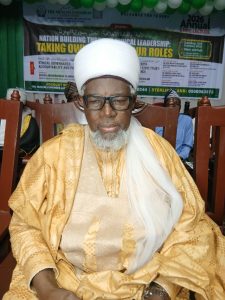
Sheikh Ahmad said accountability operated in different directions, with citizens, the media, government institutions and elected officials all having roles to play.
He urged Nigerians to use legal mechanisms, particularly the Freedom of Information Act, to demand information from ministries, departments and agencies.
“The Freedom of Information Act empowers you to demand answers. And the ministries, the departments, the agencies are obliged by law to disclose the information,” he said.
The eloquent Muslim scholar also urged citizens to question state governors about funds allocated to their states and how public resources were being used, while calling on government to ensure that deliberate wrongdoing and abuse of public office attracted serious consequences.
He linked the responsibility of public leadership to Islamic teachings, citing the hadith warning against betraying the trust of people placed under one’s authority.
According to him, good governance requires both leaders and citizens to fulfil their respective responsibilities, with leaders accountable for their stewardship and citizens actively participating in holding them to account.
MURIC director urges politicians to keep promises
Keynote speaker and Director of the Muslim Rights Concern, MURIC, Professor Lakin Akintola, said Nigeria needed transformative leadership anchored on integrity, transparency, accountability and responsiveness.
Akintola said the theme was particularly relevant as political activities ahead of the 2027 elections intensify, with politicians seeking various elective positions and making promises to voters.
“How far will you go with your promise? It is easy to say, ‘I will do, I will, I will.’ But are you not going to turn back on your words at the end of the day, particularly when you win this election?” he asked.
The MURIC director urged political office seekers to learn from the leadership examples of Abu Bakr Siddiq, Umar ibn al-Khattab, Uthman ibn Affan and Ali ibn Abi Talib, whom he described as leaders whose honesty and exemplary character were central to their leadership.
He also called on Muslim leaders to draw lessons from Prophet Muhammad’s leadership, particularly his emphasis on trust and accountability.
Akintola expressed concern over the frustration of Nigerian youths, warning that the country could not build a secure future when its younger generation continued to lose hope.
“Our children are our future. What do we expect Nigeria to be if our children are looking at us without hope today?” he asked.
He called for a departure from ostentatious lifestyles among public officials and urged politicians to focus on improving the lives of citizens.
Abu-Nolla urges Nigerians to vote for trustworthy leaders
The Spiritual Father of the Day and Chief Imam of Lagos, Sheikh (Engr.) Sulaimon Oluwatoyin Abu-Nolla, urged Nigerians to participate actively in the electoral process.
He called on citizens to obtain their Permanent Voter Cards and use them to select leaders capable of providing responsible governance.
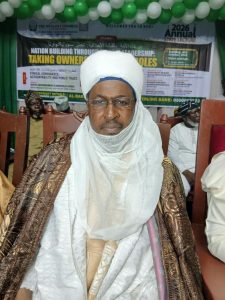
“As Muslims, we have that civic responsibility and civic duty to our nation. Let us collect our voters’ cards and go and participate,” Abu-Nolla said.
He, however, warned that voter participation must be accompanied by careful evaluation of candidates.
Abu-Nolla urged Nigerians to vote for people they could trust and those who demonstrated honesty, transparency and accountability.
The Chief Imam also highlighted education, experience and exposure as important qualities citizens should consider when assessing candidates for public office.
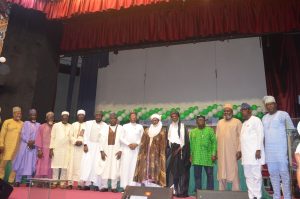
He appealed to Nigerians not to lose hope despite the country’s challenges, urging Muslims to engage constructively with the political system.
Solomon: Leaders and citizens must work together
Chairman of the occasion, Senator Ganiyu Olanrewaju Solomon, said the lectures demonstrated that successful nation building required the joint efforts of leaders and citizens.
“For the country to be run well, it requires not only the leaders, but also the led,” Solomon said.
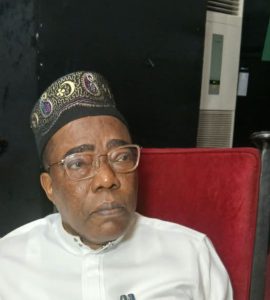
He urged Nigerians to recognise that everyone had a role to play in ensuring national progress.
The former Lagos lawmaker said Muslims were expected to uphold what was good and reject what was wrong, both as followers of Islam and as Nigerian citizens.
He maintained that the message remained relevant regardless of political circumstances because responsible citizenship and good conduct were permanent obligations.
Bangbala calls for responsible citizenship
The Amir of The Muslim Congress, Alhaji Abdulwasiu Bangbala, similarly emphasised the responsibility of citizens in nation building.
Bangbala said the lessons from the lecture should not be restricted to political leaders, stressing that ordinary citizens must also contribute positively to society.
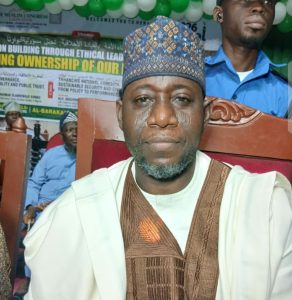
He urged Muslims to perform their responsibilities both as Muslims and Nigerians, maintaining that national development would require collective commitment.
TMC: Leadership must deliver good governance
The Lagos State Wali and Coordinator of The Muslim Congress, Tajudeen Yusuf Olusesi, explained that the choice of leadership as the focus of the annual lecture was deliberate, particularly as Nigeria moves towards another election cycle.
He said TMC considered it important to contribute to the national conversation because of its role in promoting societal reformation.
“Leadership, as the centre of the conversation at this period, is very, very important,” Olusesi said.
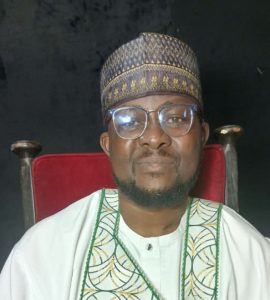
According to him, the organisation wanted the discussion to examine leadership from both sides: the responsibilities of those occupying public positions and the duties of followers who must ensure that leaders fulfil their obligations.
He said Nigeria already had structures and institutions capable of delivering good governance, but the expected benefits of those structures were often not reaching citizens.
“We now observe it’s not because we don’t have leaders, it’s because the leaders are not leading in an ethical way and, of course, they are also not leading with the intention that they need to be accountable to the society and, of course, they need to earn the trust of the followers,” he said.
Olusesi stressed that leadership was not about gaining access to public office for personal or family benefit but about delivering good governance to the people who entrusted the leader with authority.
“Leadership is a service. It is for you to be able to deliver the fruit of good governance to the entire society who have entrusted you with the role of leadership,” he added.
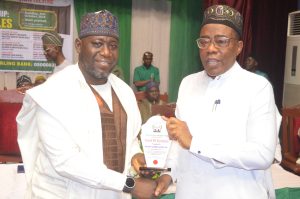
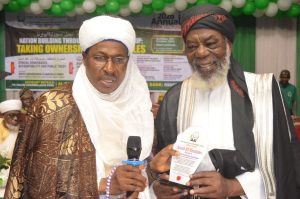
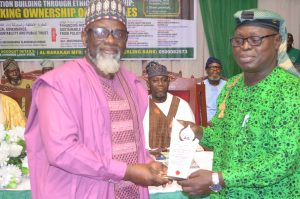
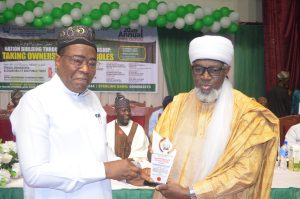
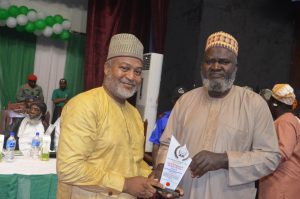
PRESENTATION OF EXCELLENCE AWARDS
Sponsored

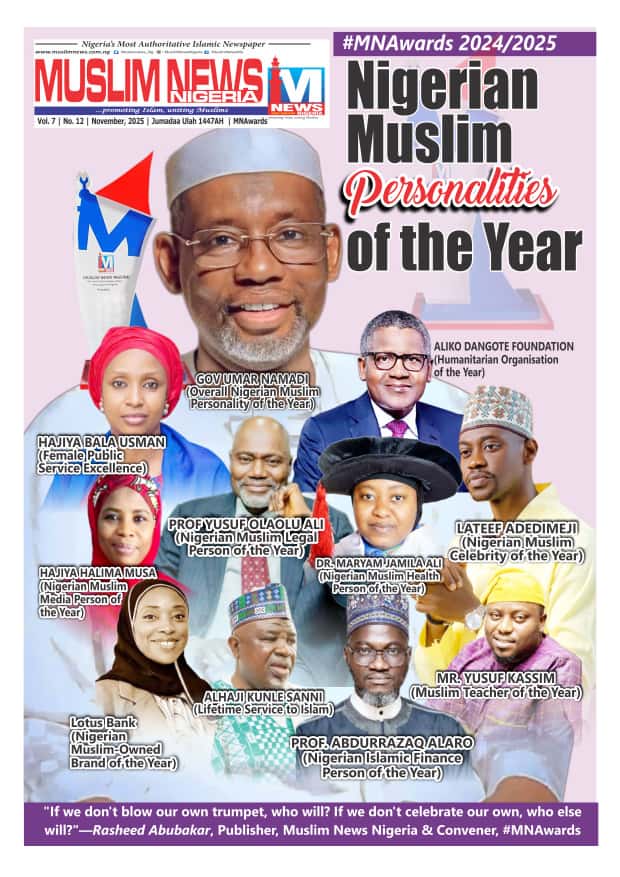
Nigerian Muslim Personalities of the Year 2024/2025
Global Muslim Personalities of the Year 2024/2025




Discover more from Muslim News Nigeria
Subscribe to get the latest posts sent to your email.