

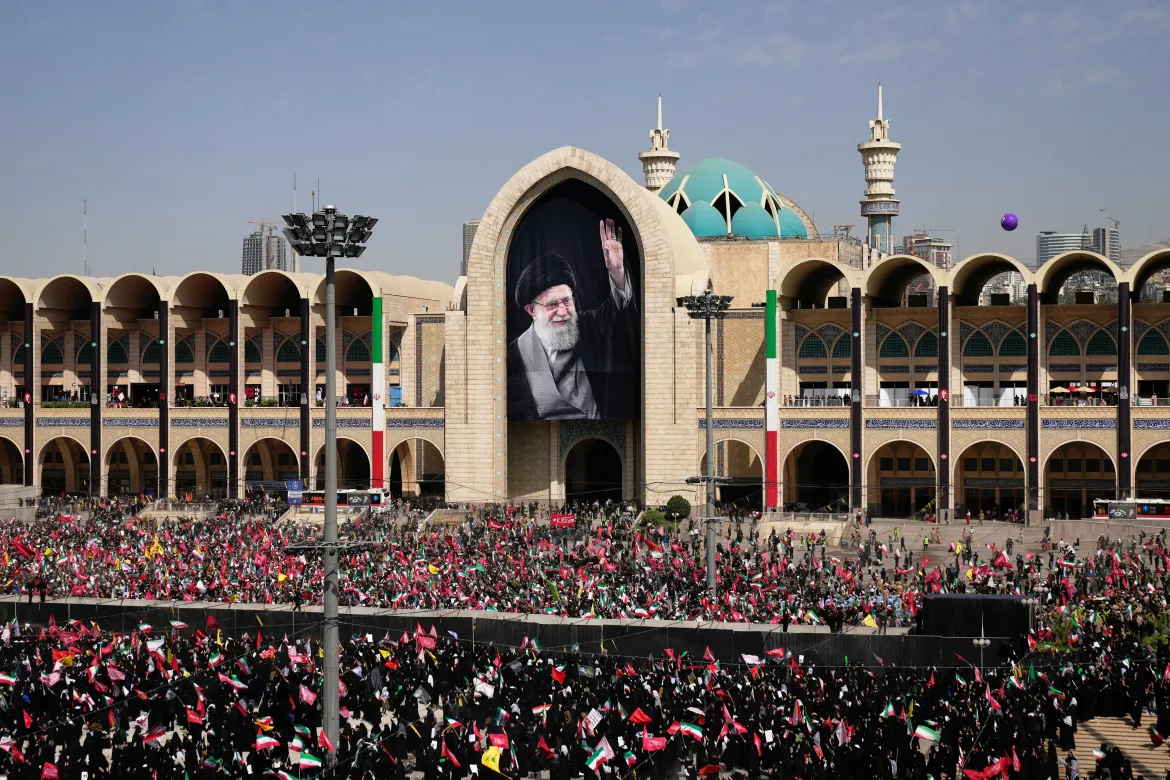
Hundreds of thousands of mourners have flooded the streets of Tehran as Iran commenced a historic six day funeral programme for its late Supreme Leader, Ayatollah Ali Khamenei, with authorities expecting more than 10 million people to participate in memorial events across the country despite strong diplomatic pressure from the United States.
The funeral ceremonies, regarded as one of the largest in Iran’s modern history, have transformed the Iranian capital into the centre of national mourning following Khamenei’s death at the age of 86.
Iranian authorities said the late leader was killed alongside several members of his family in a joint United States and Israeli air strike at the outset of the war on Iran in February.
Among those killed in the attack were members of his family, including his three year old granddaughter, whose remains are being honoured alongside his during the funeral ceremonies.
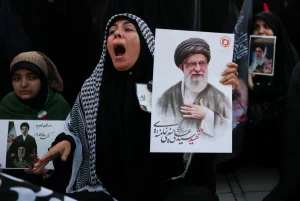
Thousands of mourners dressed in black, carrying Iranian flags and portraits of Khamenei, packed major roads leading to the Imam Khomeini Mosalla Grand Mosque, where his coffin was placed for public viewing. Emotional scenes unfolded as people queued for hours to pay their final respects, chanting religious slogans and expressing solidarity with the Islamic Republic.

The funeral programme spans six days, beginning in Tehran before continuing to the holy city of Qom, then to the Iraqi holy cities of Najaf and Karbala, and finally ending in the northeastern city of Mashhad, where Khamenei will be laid to rest at the shrine of Imam Reza.
The ceremonies have also attracted widespread international participation despite efforts by Washington to discourage attendance. Delegations from more than 100 countries have already attended official ceremonies reserved for foreign dignitaries in Tehran, while additional foreign representatives are expected to participate in the remaining stages of the funeral programme in Iran and Iraq.

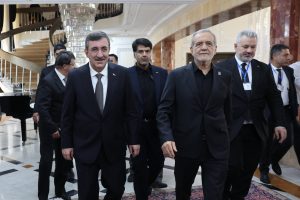
According to Al Jazeera, leaders and senior officials who have attended or are already on the ground for the ceremonies include Pakistan’s Prime Minister Shehbaz Sharif, Tajikistan’s President Emomali Rahmon, Armenia’s Prime Minister Nikol Pashinyan, Georgia’s President Mikheil Kavelashvili, Turkish Vice President Cevdet Yilmaz, Russian Security Council Deputy Chairman Dmitry Medvedev, senior Chinese official He Wei, and an Indian delegation led by Minister of State for External Affairs Pabitra Margherita. Iraq has also been represented by senior government officials.
The international turnout comes despite Washington categorising attendance at the funeral as “an unfriendly act.”
According to Iranian media reports, United States Secretary of State Marco Rubio directed American embassies around the world to notify host governments that sending official delegations to the funeral ceremonies could negatively affect bilateral relations with the United States. The reported directive warned governments against participating in events honouring the late Iranian leader.
As of the time of filing this report on Sunday, July 5, the US had not publicly confirmed or denied the reported directive.
Despite the warning, foreign delegations continued to arrive in Tehran, underscoring the significance many countries attach to maintaining diplomatic engagement with Iran during its political transition.
Analysts say the timing of the funeral carries profound religious and political symbolism. The ceremonies coincide with the first ten days of Muharram, the period during which Shia Muslims commemorate the martyrdom of Imam Husayn, while also overlapping with the United States Independence Day celebrations.
Observers say the symbolism reinforces Iran’s portrayal of Khamenei’s death within the Shia tradition of martyrdom and sacrifice, while signalling continuity in the country’s domestic and regional policies under his successor, Ayatollah Mojtaba Khamenei.
Timeline of Ayatollah Ali Khamenei’s funeral and burial
Saturday, July 4:
* Public farewell begins at the Imam Khomeini Mosalla Grand Mosque in Tehran.
* Mourners file past Khamenei’s coffin during the first day of national mourning.
* Official ceremonies for foreign dignitaries commence.
Sunday, July 5
* Second day of public viewing and mourning in Tehran.
* Continued reception of international delegations and religious leaders.
* Millions of mourners expected to pay their last respects.
Monday, July 6
* Main state funeral procession through the streets of Tehran.
* The coffins of Khamenei and four family members killed in the February attack, including Dr Mesbah ol Hoda Bagheri, Sayyida Boshra Hosseini Khamenei, Zahra Haddad Adel and Zahra Mohammadi Golpaygani, will be carried together.

* Funeral prayers and mourning ceremonies in the holy city of Qom, one of the most important centres of Shia scholarship.
Wednesday, July 8
* The funeral procession moves to Iraq.
* Commemorative ceremonies are scheduled in the holy Shia cities of Najaf and Karbala at the request of Iraqi religious and political leaders. Iraqi authorities are coordinating the arrangements.
Thursday, July 9
* Final funeral rites in Mashhad.
* Ayatollah Ali Khamenei will be buried at the shrine of Imam Reza, the eighth Shia Imam, in his hometown of Mashhad.
* The burial coincides with the eve of the commemoration of the martyrdom of Imam Sajjad, according to the organisers.
Sponsored

Nigerian Muslim Personalities of the Year 2024/2025

Global Muslim Personalities of the Year 2024/2025