

By Rasheed Abubakar
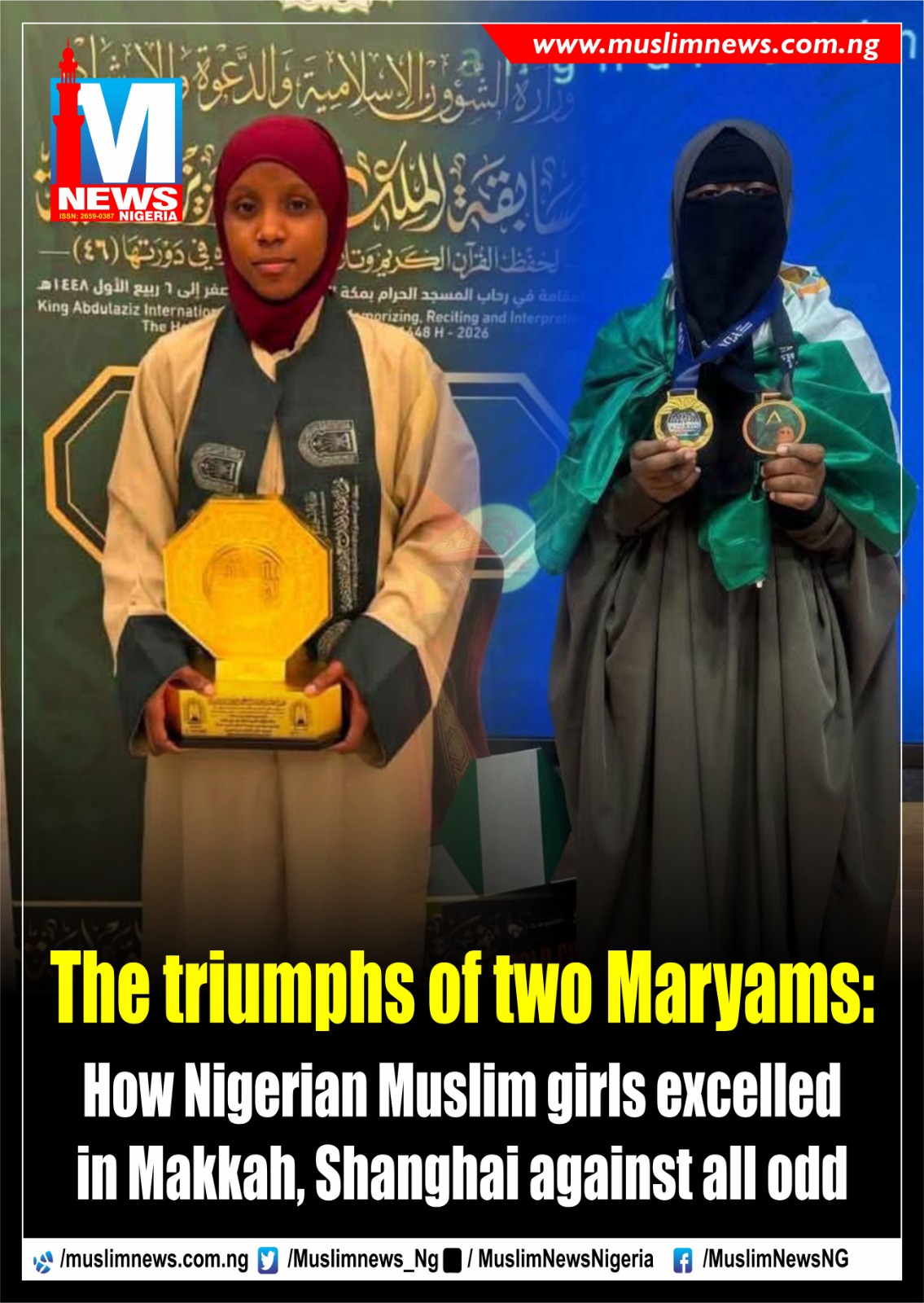
Two young Nigerian Muslim girls, Maryam Dan’Azumi Ibrahim and Maryam Yusuf, have given Nigeria and the Muslim Ummah remarkable reasons to celebrate after recording outstanding performances at two major international competitions in Saudi Arabia and China.
While Maryam Ibrahim, an outstanding young Muslimah in hijab from Gombe State, emerged first in her category at the prestigious 2026 King AbdulAziz International Qur’an Competition in Makkah, Maryam Yusuf, an exceptional niqabi Muslimah from Kwara State, was part of the Nigerian team that won the Gold Award at the 2026 Spelling Bee World Cup in Shanghai.
The achievements came in completely different fields. Ibrahim excelled in Qur’anic memorisation, recitation and interpretation, while Yusuf distinguished herself in spelling and academic competition.
Yet, their stories share a striking similarity. Both are young Nigerian Muslims who achieved international success while openly observing their faith, with Ibrahim wearing the hijab and Yusuf wearing the niqab.
For both girls, the victories represented years of preparation, discipline and participation in competitions before reaching the international stage.
Maryam shines in Makkah
Ms. Ibrahim, a student of Abubakar Siddiq Community School for Qur’an Memorisation in Gombe, emerged first in the women’s second category of the 46th King AbdulAziz International Competition for Memorisation, Recitation and Interpretation of the Holy Qur’an in Makkah.
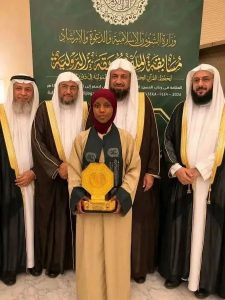
She scored 97.70 marks in the category requiring contestants to memorise the entire Qur’an and demonstrate their understanding of its vocabulary and interpretation. Her victory earned her a prize of 300,000 Saudi Riyals, equivalent to about ₦120 million.
The 2026 competition attracted 334 contestants, comprising 202 males and 132 females, from 133 countries. The participants competed across five categories, with 50 contestants eventually emerging as winners.
The competition was held in Makkah between August 6 and 19, 2026, with its final rounds conducted around the Grand Mosque.
Ms. Ibrahim’s victory was particularly historic because the 46th edition marked the first time female contestants officially participated in the competition since its establishment in 1979.
Her triumph therefore came at a landmark edition of one of the world’s most prominent international Qur’anic competitions.
A journey built on Qur’anic excellence
Ms. Ibrahim’s success in Makkah was not an overnight achievement. Before representing Nigeria internationally, she had already established herself as one of the country’s outstanding young female Qur’an reciters.
In February 2024, she emerged overall winner of the National Qur’an Recitation Competition of Nana Asma’u. She later won the female category at the 40th National Qur’an Recitation Competition in Maiduguri, Borno State, where she scored 97.70 marks in the memorisation of the entire Qur’an with Tafsir.
Her performances at national Qur’an competitions earned her prestigious rewards, including a brand-new Toyota Corolla and an Umrah package, further highlighting that her progression from national to international glory in Makkah was a result of relentless hard work.
Qur’an memorisation and university education
Beyond her Qur’an achievements, Ms. Ibrahim is also pursuing conventional higher education. She is a final-year student of Physics Education at Gombe State University, demonstrating that Qur’an scholarship and university education can coexist in the life of a young Nigerian Muslim.
Her story therefore extends beyond the competition hall. It presents the picture of a young woman combining Qur’an memorisation and scholarship with university education, while competing successfully at the highest international level.
Together with her sister, Hajara’s international achievement in Jordan, the sisters’ accomplishments have placed their family among those producing outstanding female Qur’anic scholars capable of competing successfully beyond Nigeria.
Maryam Yusuf takes Nigeria to Shanghai
While Ms Ibrahim was making history in Makkah, another young Nigerian Muslim girl had earlier in July made her own mark on the international academic stage in Shanghai, China.
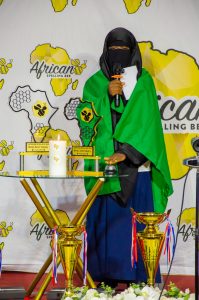
Maryam Yusuf, a 14-year-old student of Ar-Raheem International College, Ilorin, Kwara State, was part of the four-member Nigerian team that represented the country at the 2026 Spelling Bee World Cup in Shanghai.
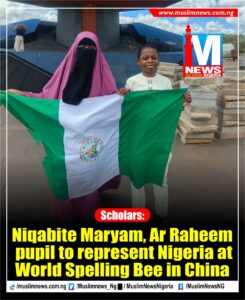
Nigeria participated in the global competition for the first time at the event held in July 2026. The historic debut ended with Team Nigeria winning the Gold Award in the Middle School Group category, with all four Nigerian contestants returning home with medals.
From Kwara to Zimbabwe and China
Yusuf’s journey to Shanghai began much earlier in Nigeria. She progressed through the Nigeria Spelling Bee before representing the country at the African Spelling Bee Championship in Harare, Zimbabwe, in March 2026.
At the continental competition, she delivered a particularly impressive performance in the speed round, correctly spelling 17 out of 20 words within one minute, the highest score among the Nigerian contestants.
Her performance contributed to Nigeria’s strong showing in Zimbabwe and the country’s qualification for its maiden appearance at the Spelling Bee World Cup.
The Nigerian team had finished as the second-best performing country overall at the African championship, paving the way for the students to travel to China.
When achievement gave way to discrimination
Despite the significance of the two victories, both Maryams subsequently became subjects of online commentary, with some Nigerians focusing more on their religious identity than on their achievements.
For Yusuf, the criticism centred largely on her niqab. Muslim News reported that when photographs of Maryam and her teammates were shared on social media before the Shanghai competition, some users mocked her appearance instead of celebrating the young students selected to represent Nigeria.
Some commenters went as far as describing the niqab-wearing student as a “masquerade”, while others questioned her appearance and participation despite her selection as one of Nigeria’s representatives at the international academic competition following her performances at national and continental levels.
Yusuf nevertheless proceeded to Shanghai and returned as a member of Nigeria’s gold-medal-winning team.
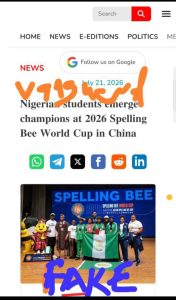
The controversy resurfaced after her victory when Vanguard Newspaper published an incorrect AI-edited photograph in a report celebrating Team Nigeria’s achievement.
The image appeared to show Yusuf without the niqab visible in the original photograph released by the competition organisers.
The incident prompted condemnation and calls for accountability, including from MPAC, which raised concerns about religious identity, journalistic ethics and the authenticity of digitally altered images.
Vanguard later removed the incorrect image, replaced it with the correct photograph and, on July 30, issued an unreserved apology to Maryam Yusuf and her family, describing the publication as an editorial error involving an AI-edited image.
Maryam Ibrahim also faces Islamophobic backlash
Miss Ibrahim faced a different form of criticism after her historic victory in Makkah. Rather than limiting the discussion to her performance, some social media users questioned what her achievement could contribute to the Nigerian economy.
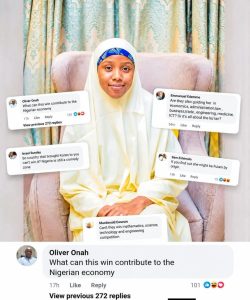
“What can this win contribute to the Nigerian economy?” one commenter asked. Another questioned whether she was also being guided in economics, administration, law, business, trade, engineering, medicine and ICT.
Other comments questioned whether she could win competitions in mathematics, science, technology and engineering, effectively measuring her Qur’anic achievement against fields unrelated to the competition she had won.
There were also comments speculating about Ibrahim’s ethnic background, including whether she might be Fulani, shifting attention from her historic international achievement to her perceived ethnicity and identity.
MPAC defends both Maryams
The reaction prompted the Muslim Public Affairs Centre, MPAC Nigeria, to describe the backlash as Islamophobic. In a statement issued on August 23 and signed by its Executive Chairman, Disu Kamor, the organisation condemned comments that dismissed the economic value of Ibrahim’s achievement, questioned the worth of Qur’anic scholarship or sought to introduce ethnicity into the discussion.
MPAC argued that the reactions reflected a wider double standard in which Muslim achievements, particularly in Islamic scholarship, are sometimes subjected to demands for economic justification that are not routinely applied to achievements in other fields.
The organisation said a Nigerian child who memorises the Qur’an should be celebrated for that accomplishment in the same way that a Nigerian child who wins an international spelling, robotics, mathematics or science competition is celebrated for excellence.
Similarly, in its July 21 statement, the organisation expressed grave concern over the apparent digital alteration of Maryam Yusuf’s image, noting that the original photograph showed Yusuf wearing her niqab while the version published by Vanguard appeared to have removed the face covering.
The organisation also called on media organisations to reflect on how their editorial decisions affect the representation of Nigerian Muslims. It argued that media bias could manifest not only through false reporting but also through decisions about whose achievements are celebrated and whose identities are ignored or altered.
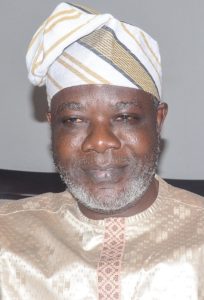
For MPAC, the two Maryams offer a broader lesson about Nigerian Muslim girls and women. Yusuf’s success in spelling and Ibrahim’s achievement in Qur’anic scholarship demonstrate that religious identity, including the hijab or niqab, does not stand in the way of intellectual excellence, academic achievement or international recognition.
Sponsored
Sponsored

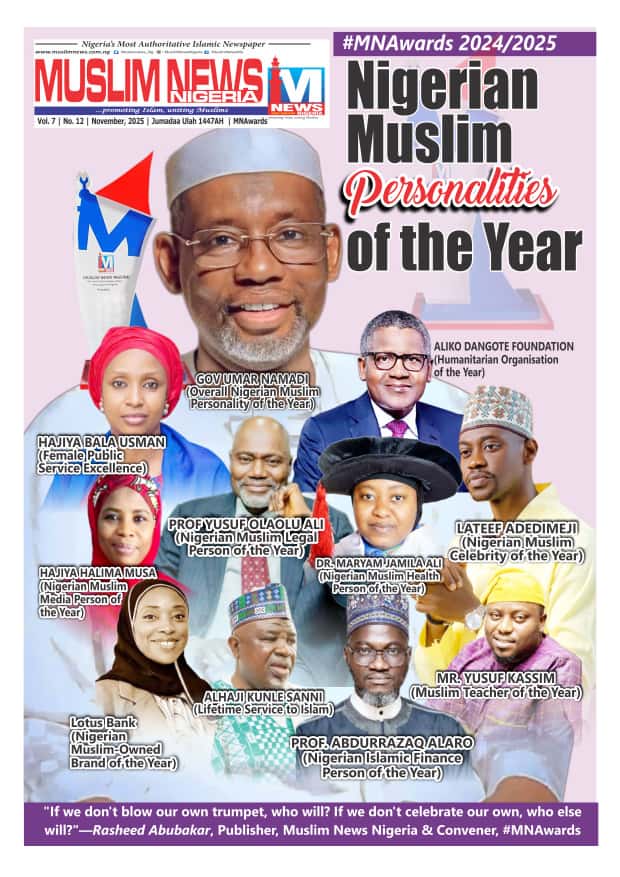
Nigerian Muslim Personalities of the Year 2024/2025
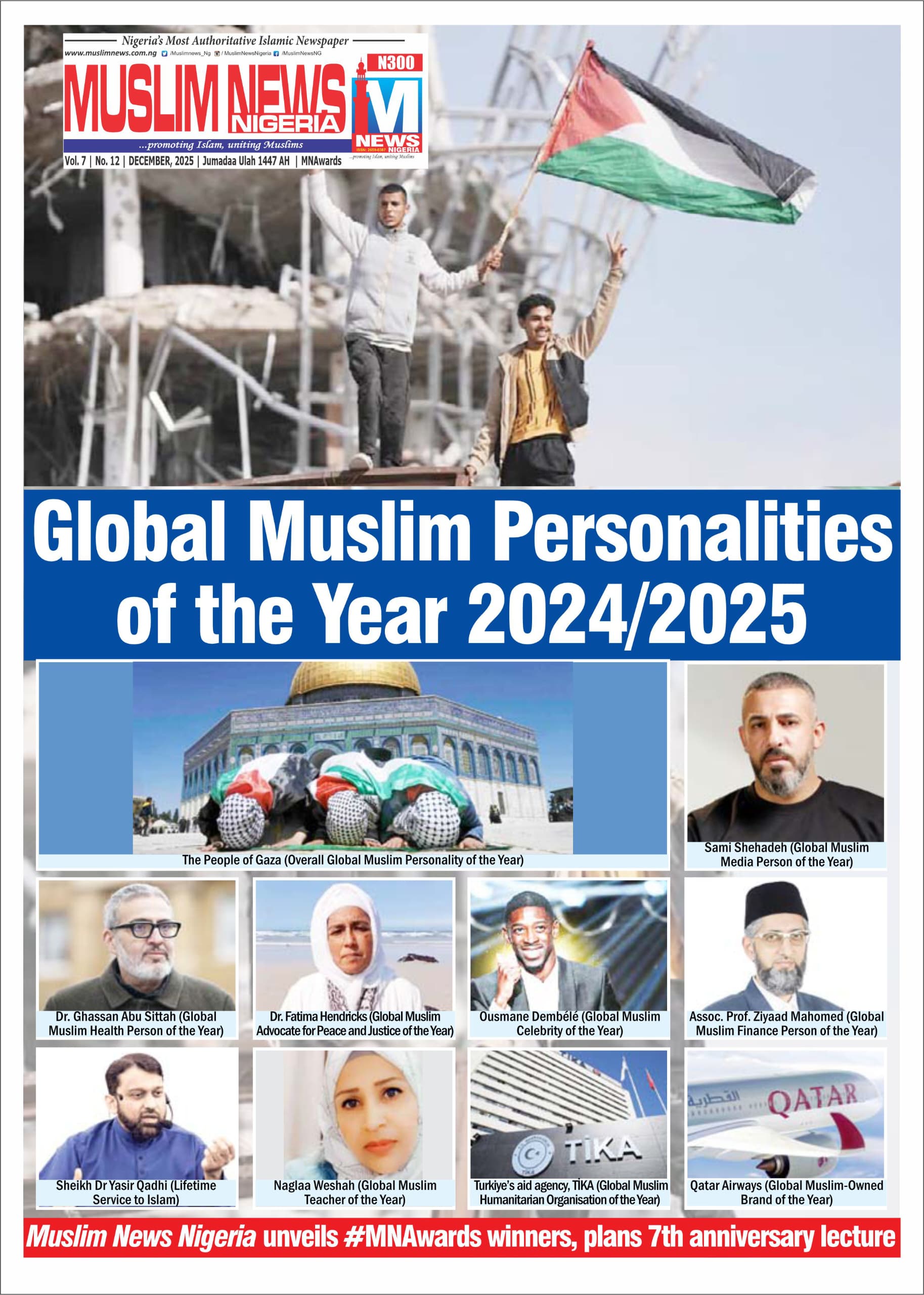
Global Muslim Personalities of the Year 2024/2025



Discover more from Muslim News Nigeria
Subscribe to get the latest posts sent to your email.