

* Amid ongoing diplomatic tensions, military strikes escalate
The United States has presented a far reaching 15 point proposal aimed at ending the ongoing war with Iran, warning that failure to comply could lead to more devastating military action, even as Tehran firmly rejects the offer and sets out its own conditions.
According to Al Jazeera, the American proposal has been described as “maximalist,” reflecting Washington’s push for deep concessions from Iran across military, nuclear, and regional fronts before any meaningful relief is granted.
Reports from Reuters and Associated Press indicate that the plan seeks a full rollback of Iran’s nuclear programme under strict international monitoring, alongside sweeping restrictions on its ballistic missile capabilities.
Key demands and incentives in US plan
The proposal also demands an immediate halt to Iran’s missile and drone operations, as well as a reduction in its regional military influence, including ties to allied armed groups.
It further calls for guarantees on freedom of navigation in the Strait of Hormuz and a commitment not to threaten United States or Israeli interests.
In return, Washington has offered phased sanctions relief, access to frozen assets, and the possibility of reintegration into the global economy, all tied to strict compliance.
US 15-Point Proposal (Key Highlights)
According to Al Jazeera and Western media summaries, the US plan is broad and security-focused, aimed at reshaping Iran’s military and regional posture:
Nuclear & Weapons Restrictions
* Full rollback and strict limits on Iran’s nuclear programme
*’Permanent monitoring by international inspectors
* Ban or heavy restriction on ballistic missile development
Military De-escalation
* Immediate halt to Iranian missile and drone attacks
*’Withdrawal or reduction of Iranian-backed forces across the region
* End to support for allied armed groups
Strategic & Maritime Conditions
* Guarantee free navigation in the Strait of Hormuz
* Non-interference with global oil and shipping routes
Political & Security Conditions
* Commitment not to threaten Israel or US interests
* Broader regional de-escalation framework
Incentives (Conditional)
* Gradual lifting of economic sanctions
* Possible reintegration into global economic systems
* Access to frozen assets under compliance
Iran rejects proposal, offers counter demands
Iran, however, has categorically rejected the proposal. Iranian officials, speaking through state media including Press TV, said the terms amount to coercion rather than diplomacy.
Tehran has instead advanced a five point counter proposal rooted in sovereignty and accountability.
Iran’s five point position
The Iranian position calls for an immediate and unconditional ceasefire, alongside compensation for damages caused by United States and Israeli strikes.
It also demands firm guarantees against future attacks and an end to the assassination of Iranian officials and scientists.
In addition, Iran insists on full respect for its territorial integrity and strategic autonomy, including control over key waterways such as the Strait of Hormuz, while calling for the complete removal of all sanctions without preconditions.
Iran’s 5-Point Counter-Proposal (Key Highlights)
As reported by Press TV and cited by Al Jazeera and Reuters, Iran’s response is sovereignty-focused and framed around accountability:
End of Hostilities
* Immediate and unconditional ceasefire
Reparations & Accountability
* Compensation for damages caused by US/Israeli strikes
* Recognition of responsibility for civilian and infrastructure losses
Security Guarantees
* Binding assurances against future attacks on Iran
* End to targeted assassinations of Iranian officials and scientists
Sovereignty & Regional Control
* Full respect for Iran’s territorial integrity
* Control over strategic waterways, including the Strait of Hormuz
Sanctions Removal
* Complete lifting of all US sanctions without preconditions
Iranian officials told Press TV that Tehran “will decide when the war ends”, rejecting what they see as coercive diplomacy.
Deep divide stalls diplomacy
Officials quoted by Press TV stressed that Iran would determine the course and conclusion of the conflict, signaling a refusal to negotiate under pressure.
Al Jazeera notes that the gap between the two sides remains wide, with both proposals reflecting fundamentally opposing priorities, one centered on security restrictions and the other on sovereignty and reparations.
Escalating strikes on both sides
As diplomatic tensions persist, the war continues to escalate on the ground. Israeli forces, backed by the United States, have carried out repeated airstrikes on Iranian territory, targeting military installations, infrastructure, and strategic sites in cities such as Isfahan.
Western media reports indicate that these operations have struck numerous targets in an effort to degrade Iran’s military capacity.
Iranian retaliation intensifies
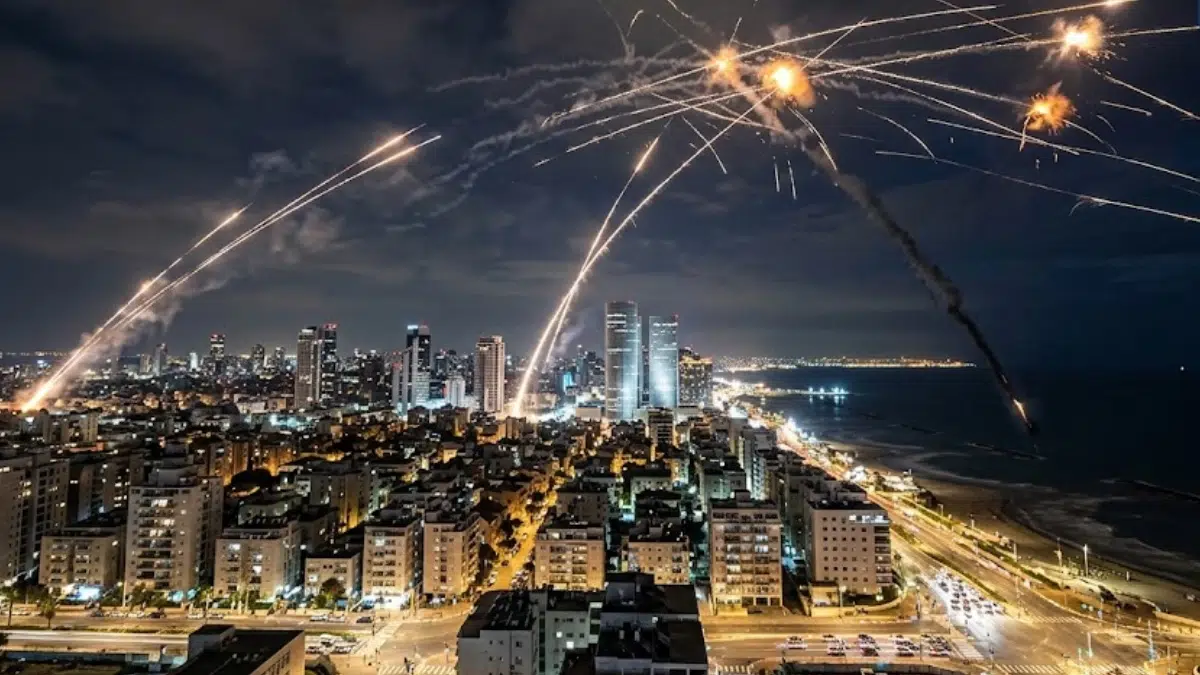
In response, Iran has intensified its missile and drone attacks, targeting Israeli positions and expanding strikes to regional locations.
Barrages launched into Israeli territory have caused casualties and damage, while other attacks have targeted strategic facilities across the Gulf region.
Rising casualties across the conflict
Casualty figures continue to rise on all sides, although exact numbers remain fluid due to the intensity of the conflict.
Reports compiled from international and regional media suggest that hundreds of people have been killed in Iran following sustained airstrikes, including military personnel and civilians.
In Israel, at least dozens have been killed and thousands injured as a result of Iranian missile attacks. The United States has also recorded casualties among its personnel deployed in the region.
Uncertain path to resolution
With both sides entrenched in their positions and military operations ongoing, prospects for an immediate resolution remain uncertain.
Analysts warn that unless significant compromises are made, the conflict risks entering a more dangerous phase, with consequences that could extend far beyond the immediate region.
Sponsored

Nigerian Muslim Personalities of the Year 2024/2025

Global Muslim Personalities of the Year 2024/2025




Discover more from Muslim News Nigeria
Subscribe to get the latest posts sent to your email.