

* New cohort of 20 boys, seven girls impress dignitaries with Qur’anic recitation, Arabic and Tajweed proficiency
* Senators Salis, Adebule, KWASU VC charge graduands to excel in faith, learning and profession
For two years, 27 young Nigerian Muslims have undergone intensive Qur’an memorisation, Islamic studies, Arabic and character development at The Fajr Centre Qur’an Memorisation Boarding School, Ikorodu, Lagos.
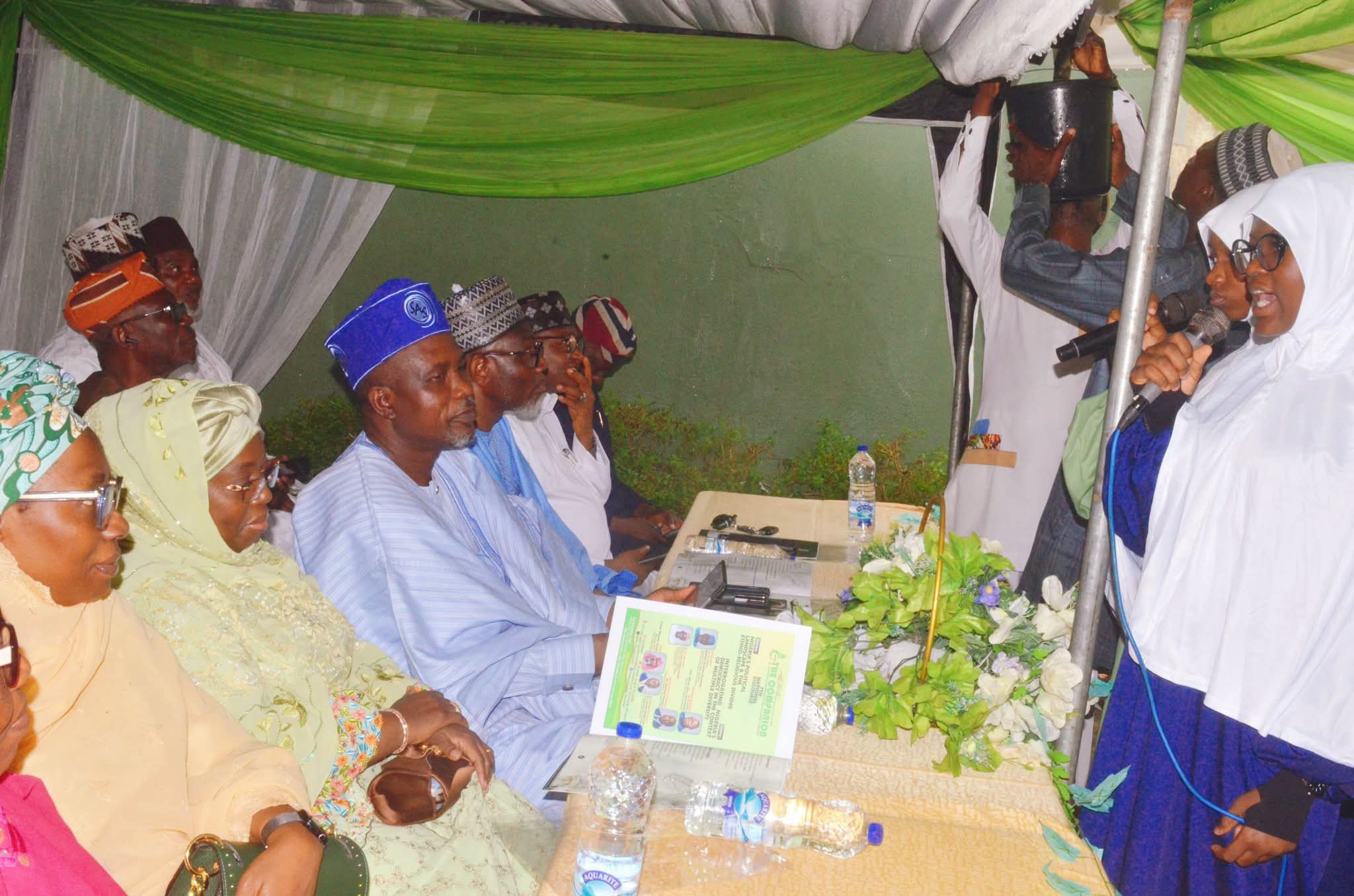
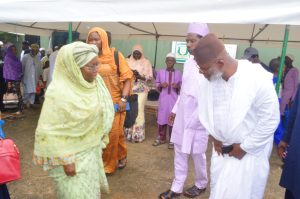
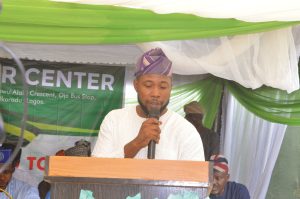
On Sunday, August 9, they took another major step towards graduation as they appeared before parents, scholars and distinguished guests to demonstrate the knowledge and skills acquired during the programme.
Among those present were the Senator representing Lagos West Senatorial District, Dr Oluranti Idiat Adebule, and the Senator representing Ogun Central Senatorial District, Shuaib Afolabi Salis.
Tagged “A Day with The Fajr,” the event was organised by The Fajr Centre as part of activities ahead of its Second Haflatul Qur’an and graduation ceremony scheduled for August 30, 2026.
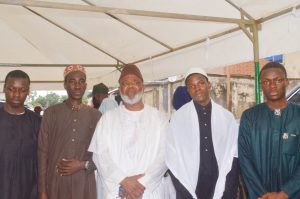
The occasion provided an opportunity for the Centre to showcase the progress of its second cohort, comprising 20 boys and seven girls, while giving parents, stakeholders and guests an insight into its approach to Qur’anic education.
The students impressed the dignitaries with their Qur’anic recitation, Arabic proficiency, translation skills and mastery of Tajweed.
27 graduands drawn from seven states
The 27 graduands are drawn from seven states across Nigeria, reflecting the growing reach of The Fajr Centre’s residential Qur’an memorisation programme.
They are Abdulazeez Alli Temitope (Oyo), Alimi Muadh Opemipo (Ogun), Abdulmuqeet Lukman Oluwaferanmi (Ogun), Hudhayfah Bunyamin Aremu (Kwara), Abdussalam Lukman Adisa (Kwara), Abdullah Adetimilehin Ololade (Ondo), Anas Alamutu Iyanda (Ogun), Hussain Abduladheem Ayomi (Lagos), Yussuf Al Ameen Omolade (Kwara), Abdullah Muhammad Solih (Kwara), Abdulhafeez Akorede Akanni (Oyo), Abdur Rahman Ashafa (Osun), Ismail Abubakr Sawaneh (Kano) and Abdullah Uthman Ishaq Olanrewaju (Kwara).
Others are Junaid Abdulqodir Abefe (Osun), Abdul Salam Murithador Ayomide (Oyo), Abdul Salam Abdullah Akanji (Kwara), Hamzah Abdulqodir Akanni (Osun), Abubakr Lawal Ajetola (Oyo), Abdulghaniyy Abdullah Ajagbe (Oyo), Maryam Yunus Jannah (Osun), Sakeenah Muhyideen Adedayo (Kwara), Nusaybah Abdulqodir Oluwatosin (Osun), Faatimah Abdulrafee’u Ashabi (Kwara), Zaynab Ipoade Aderonke (Oyo), Hamdalah Abdulkareem Titilope (Kwara) and Maryam Abdussalaam Najah (Ogun).
KWASU VC applauds students, urges regular Qur’an revision
The Vice-Chancellor of Kwara State University, Malete, Professor Shaykh Luqman Jimoh, who served as the Chairman of the occasion, expressed delight at the students’ performances.
Professor Jimoh, a Qur’an teacher, said the students demonstrated competence not only in memorisation but also in Arabic and translation.
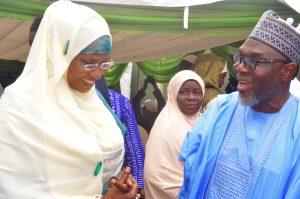
“I am so impressed today by the performances of all our students. We had them speaking Arabic, translating the Arabic into English, and those who read Qur’an did excellently well,” he said.
He paid particular attention to the students’ application of Tajweed, noting that one of the reciters demonstrated that local intonation did not prevent the proper application of the rules of Qur’anic recitation.
According to him, the quality of the students’ performances was comparable to what is seen at national and international Qur’an competitions.
“The standard that we have at Fajr Center is national and also international because when you hear these students read, you will recall what you used to hear during the national competition and also international competition,” he said.
Professor Jimoh also urged the students not to regard memorisation as the end of their Qur’anic journey.
He stressed the importance of regular revision, explaining that retaining the Qur’an after memorisation requires even greater discipline.
“It is much easier to memorise Qur’an but to retain it is more difficult,” he said, urging the students to maintain a consistent muraja’ah schedule and incorporate Qur’anic recitation into their daily worship.
He commended the Centre’s founder and proprietor, Sheikh Zikrullah Kunle Hassan; his wife, Alhaja Mutiat Hassan; and members of the management board for their dedication to nurturing the students.
Sen. Adebule applauds students, parents
Dr Adebule, in her remarks, described The Fajr Centre as a commendable initiative deserving of public support and recognition.
She acknowledged the vision and commitment of Sheikh Zikrullah Kunle Hassan in establishing the Centre and praised his wife for her role in sustaining and advancing the vision.
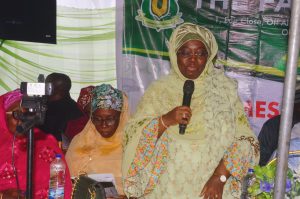
“I would like to appreciate the proprietor for the initiative. This is what he has always been known for, and I would like to thank his wife, Alhaja Hassan, for steering this dream to what it is today,” she said.
Dr. Adebule, a former Deputy Governor of Lagos State, said the students’ assessment had demonstrated their readiness for the forthcoming Haflatul Qur’an.
“The assessment has been done and we have listened to the recitation of the children, especially the graduands, and they have been able to prove beyond reasonable doubt that they are qualified for this walimah,” she added.
She congratulated the students and prayed that Allah would preserve their commitment to the Qur’an.
The senator also praised their parents for choosing to send their children to acquire Qur’anic knowledge.
Sen. Shuaib urges graduands to maximise privileges
Senator Shuaib Afolabi Salis challenged the students to recognise the opportunities before them while preparing for the responsibilities that come with their privileged education.
He said the students had access to three major advantages: supportive parents, stronger Islamic knowledge and a conducive environment for learning and personal development.

But he warned that these advantages would only become meaningful if the students translated them into excellence and service.
Senator Shuaib, who chairs the Senate Committee on Information, Communication Technology and Cybersecurity, urged the students to make the most of their youth and pursue their aspirations without unnecessary delay.
“Take care of your youth before your old age. Whatever you want to do about Islam, do it now. A time will come that you will not have the time,” he said.
He also urged the students to develop social skills and other forms of intelligence alongside their Islamic education, particularly in the era of artificial intelligence.
“As we are emerging in Islam in the era of artificial intelligence, please also have the native intelligence and build the social skills,” he said.
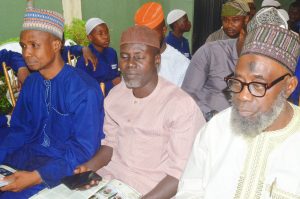
The senator stressed the need for the students to pursue excellence in whatever professions they eventually choose.
He said being Muslim should not become an excuse for mediocrity and advised them to become people whose competence and character would make their contributions indispensable.
Fajr Centre seeks Huffaz rooted in knowledge, character
The founder and proprietor of The Fajr Centre, Ustadh Zikrullah Kunle Hassan, said the significance of the occasion went beyond producing another set of Qur’an memorisers.
He said the Centre was established to nurture young Muslims whose hearts were illuminated by the Qur’an and whose lives demonstrated the values it teaches.
The Fajr model, he explained, combines intensive Qur’an memorisation with Basic Islamic Sciences, Arabic, Tajweed, discipline, moral development and character formation.
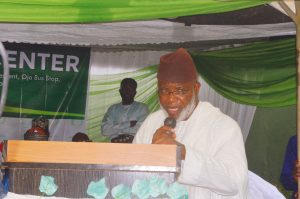
Ustadh Hassan said the Centre wanted its graduates to become beneficial members of society, regardless of the professional paths they eventually pursued.
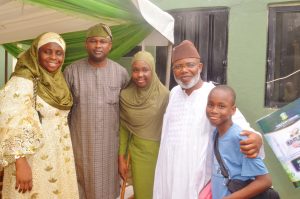
He expressed appreciation to the parents, teachers, sponsors and other supporters whose contributions had helped the Centre develop.
According to him, the current class represents a significant expansion from the pioneer set of 10 students who graduated in 2024.
The growth, he said, demonstrated the increasing confidence that parents and the wider Muslim community had placed in The Fajr model.
Growing demand prompts annual admissions – Alhaja Mutiat
Speaking on the Centre’s development, Alhaja Mutiat Hassan, a member of the Management Board and wife of the founder, said The Fajr Centre began in 2019 with the aim of providing young Muslims with structured Qur’anic education alongside sound Islamic upbringing.
She said the Centre introduced its Qur’an Scholarship programme in 2022, initially offering full scholarships covering tuition, accommodation, feeding, learning materials, uniforms and healthcare.
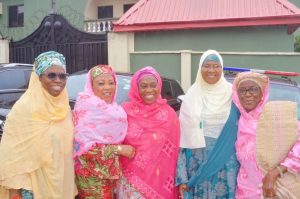
The pioneer programme produced the Centre’s first graduating class of 10 students in 2024.
According to Alhaja Mutiat, the success of the programme generated greater demand than the Centre could accommodate under the fully funded arrangement.
Management subsequently introduced a partial scholarship model to widen access.
She said applications had since been received from different parts of Nigeria, with the 2025 and 2026 editions each attracting more than 100 applicants.
The growing demand, she added, informed the Centre’s decision to adopt an annual admission and graduation cycle.
“Each cohort will graduate after completing its two-year programme,” she explained, adding that the 2025 cohort was expected to participate in the Third Haflatul Qur’an in August 2027.
Management member explains Fajr model
Alhaji Akolade Tajudeen Mukaila (ATM), a member of the Centre’s Management Board, said the pioneer students completed the intensive two-year programme before graduating in 2024.
The current cohort has grown to 27 students, comprising 20 boys and seven girls.
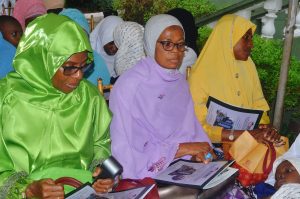
Mukaila said the Centre had experimented with weekend programmes, holiday memorisation camps and a model combining Qur’an memorisation with Western education before settling on the current residential structure.
The decision, he explained, was taken after management found that the earlier approaches were not sufficiently delivering the desired results.
“Our objective is not merely to produce students who can memorise the Qur’an,” Mukaila said. “We want Huffaz who can confidently recite, understand and apply what they have learnt.”
He added that students had also distinguished themselves in Qur’an competitions organised by Islamic organisations, providing evidence of the quality of their training.
Alhaji Sonaike urges stronger mentorship as Fajr Centre expands
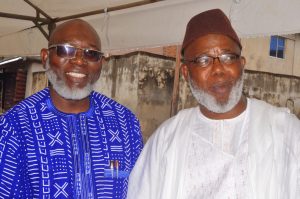
In his closing remarks, the Vice-President II of the Muslim Ummah of South-West Nigeria (MUSWEN), Alhaji Thabit Sonaike, commended the Centre’s progress and urged its management to strengthen mentorship as it prepares for further expansion.
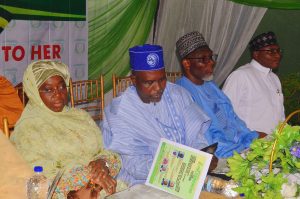
Sonaike noted that the Centre had grown from 10 graduates two years ago to 27 in the current cohort, saying the development pointed to increasing demand in the years ahead.
“My advice is that the Centre should not rest on its oars. When we were here two years ago, 10 students graduated; now they are 27. That tells us that in the next two years, it is going to be yearly, and we expect many more people to come,” he said.
He expressed concern about whether the existing facilities would be sufficient to accommodate the expected growth, noting that the donation received by the Centre would support its expansion.
Sonaike also stressed the importance of mentorship and welcomed the establishment of an alumni platform to keep former students connected to the Centre.
He urged management to deliberately identify role models for the students and guide them towards excellence in their chosen careers.
“It is not enough to say, ‘I want to be a medical doctor’ or ‘I want to be an engineer.’ Even when you become a medical doctor, which area is your focus? If you become an engineer, which area is your focus? How do you rise to the top?” he asked.
He urged the students to aim higher and combine their Islamic education with professional excellence and meaningful service to society.
Fajr Centre inaugurates alumni association
The Fajr Centre has also inaugurated its Alumni Association with the participation of members of its pioneer 2024 graduating class.
The alumni platform is expected to sustain relationships among graduates through mentorship, networking, spiritual development and mutual support.
The initiative is also designed to keep former students connected to the Centre and provide opportunities for them to contribute to the development of subsequent cohorts.
Second Haflatul Qur’an holds August 30
The development of the Centre’s second cohort will culminate in the Second Haflatul Qur’an and graduation ceremony on Sunday, August 30, 2026, at The Companion Islamic Centre, Asolo Bus Stop, Agric Owutu, Ikorodu, Lagos.
The ceremony will mark the completion of the two-year intensive training of the 27 graduands.
Sponsored

Nigerian Muslim Personalities of the Year 2024/2025

Global Muslim Personalities of the Year 2024/2025




Discover more from Muslim News Nigeria
Subscribe to get the latest posts sent to your email.
Fajr Centre’s recognition of 27 young Huffaz highlights the importance of nurturing dedication, knowledge, and character development among the youth. Supporting education and personal growth helps build a stronger future generation, aligned with the values of learning at Telkom University Jakarta.