

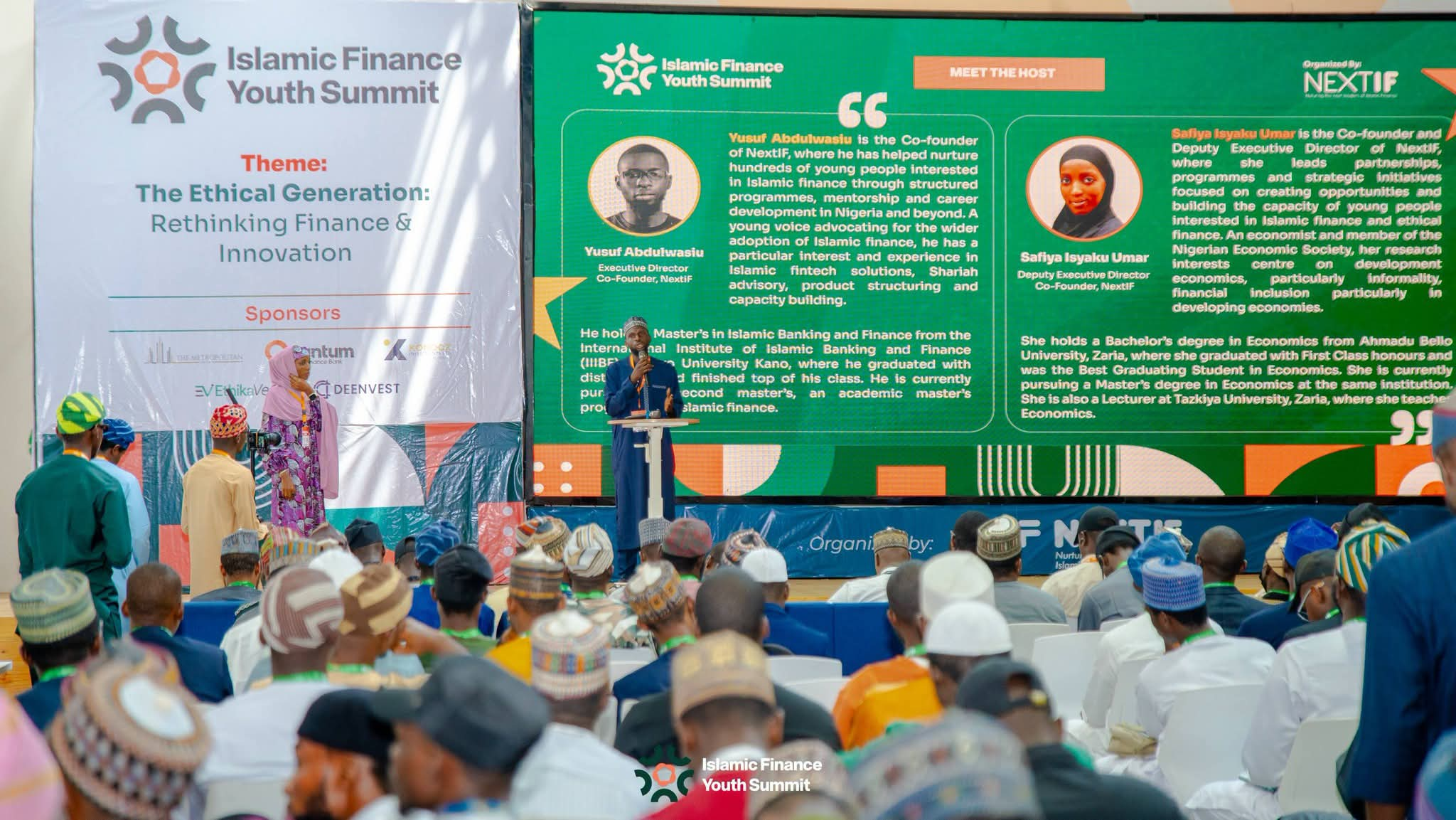
* As NEXTIF hosts maiden Islamic Finance Youth Summit in Ilorin
Panellists at the maiden Islamic Finance Youth Summit in Ilorin have urged young Nigerians to embrace technology, ethical investment and innovation, while calling for stronger public education, improved digital infrastructure and industry collaboration to expand Islamic finance in Nigeria.
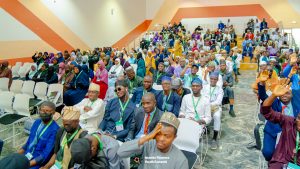
The summit, held at the Ilorin Innovation Hub, Kwara State, attracted more than 300 participants, including students, entrepreneurs, technology enthusiasts and professionals in the financial sector.
Held under the theme, “The Ethical Generation: Rethinking Finance and Innovation,” the event was organised by NEXTIF (Next Islamic Finance) to expose young people to opportunities in Islamic finance and the wider halal economy.
Muslim News gathered that the programme featured a keynote address by the Professor of Islamic Law at the University of Ilorin, Professor Abdulrazaq AbdulMajeed Alaro, alongside two panel sessions, a founders’ discussion and networking activities.
Read his keynote speech HERE.

Experts identify gaps in Islamic finance innovation
The first panel session, titled “The Ethical Innovation Gap: Are We Building Enough?”, featured a presentation and discussion moderated by Director of IEFA, Dr Mustapha Amin Ishaq, who joined from Dubai.
Other panellists included Managing Director and Chief Executive Officer of Quantum Microfinance Bank, Aliyu Buhari Ali; Co-founder and Chief Executive Officer of Stecs, Habeeb Gbenle; Founder of Injaz Advisory, Nurudeen Anthony; and Founder and Chief Executive Officer of Ethikavest, Ridwan Kadiri.
The discussion examined regulatory bottlenecks, technology infrastructure, public awareness, Shariah compliance and collaboration among Islamic financial institutions and technology companies.
In his presentation, Dr Ishaq assessed the Islamic finance ecosystem across nine pillars, including regulatory and policy frameworks, financial institutions and market infrastructure.
He acknowledged progress in Nigeria’s regulatory arrangements but warned that the growing industry required stronger institutional support.
Recalling a discussion with non-interest banking leaders in 2021, he said some had questioned the need to establish critical infrastructure when only two non-interest banks were operating.
“What we didn’t do in 2021, as of now, is a critical bottleneck. One that is existential to the existence of non-interest banking as far as Nigeria is concerned,” he said.
Low penetration presents major opportunities
Buhari Ali highlighted the significant gap between Nigeria’s overall banking market and the reach of Islamic financial institutions.
Citing figures attributed to the Nigeria Inter-Bank Settlement System (NIBSS), he referred to approximately 67.8 million Bank Verification Numbers and more than 400 million bank accounts, noting that individuals often maintain multiple accounts.
He estimated that Nigeria had about six Islamic banking operations, comprising five full-fledged non-interest banks and one Islamic banking window, alongside 12 full-fledged non-interest microfinance banks.
However, he warned that after removing duplicate, inactive and dormant accounts, the number of active Islamic finance accounts could be considerably lower.

“When we remove duplication, inactive and dormant accounts, I’m afraid we may not be able to go with five million,” he said, describing the figures as evidence of a huge gap and untapped opportunity.
Ali attributed much of the recent growth in financial inclusion to technology-driven companies, particularly since the COVID-19 pandemic.
“The traditional systems have been investing in technology because they see technology as a cost, and FinTechs are seeing technology as the business,” he said.
Education and trust remain major challenges
Habeeb Gbenle identified inadequate awareness, education and trust as major obstacles to the growth of Islamic finance.
Drawing from his experience selling Takaful products, he said he had sometimes encountered more resistance from Muslims than non-Muslims because of misconceptions about Islamic insurance.
He recalled being asked questions such as, “Where’s insurance in the Quran?” and claims that Takaful was no different from conventional insurance.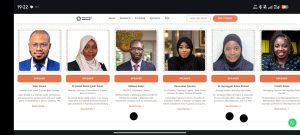
Gbenle also highlighted the limited understanding among some Muslims of how Islamic banks generate income, recalling that someone had once asked him how Jaiz Bank made profit.
He called for sustained public education, stressing that occasional campaigns would not be enough to change perceptions.
“I don’t see this as a short-term solution. It’s a long-term thing. It’s something we need to continue doing for 10, 20, 30 years for us to even come to par with conventional,” he said.
Shariah compliance must begin at product design
Nurudeen Anthony stressed that Shariah compliance must be incorporated from the design stage of financial products rather than treated as an approval exercise after development.
He discussed taqyif al-uqud, the proper legal characterisation of financial contracts, urging entrepreneurs to examine how platforms raise funds, generate returns, manage risks and structure transactions.
Using Murabaha (Using cost-plus financing) as an example, he explained that it involves a cost-plus-profit arrangement in which an institution purchases an asset and sells it to a customer at an agreed profit, often through instalment payments.
Anthony urged founders to involve qualified Islamic scholars from the beginning of product development and encouraged consumers to scrutinise the credentials of those providing Shariah oversight.
“We don’t want to just put on Shariah tags on innovations. We want to build innovations that deserve these Shariah labels,” he said.
FinTech founders seek shared infrastructure
Ridwan Kadiri identified inadequate technology infrastructure and limited collaboration among Islamic entrepreneurs as major constraints to innovation.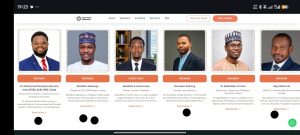
A trained artificial intelligence engineer, he argued that developing a good financial product was insufficient without the infrastructure required to operate and scale it.
“You can have a very good product, but if you don’t have infrastructure to scale that product, that’s a big gap,” he said.
Kadiri called for shared technology infrastructure that would enable Islamic finance entrepreneurs to build on existing resources rather than independently recreate systems already developed by others.
He explained that Ethikavest had engaged an Islamic scholar and addressed regulatory requirements before developing its platform for Shariah-screened investment opportunities.
The panellists agreed that collaboration among Islamic banks, FinTech companies, payment providers and Shariah scholars was essential to reducing costs and accelerating innovation.

Open banking seen as a game changer
The discussion also examined the potential of open banking to improve access to financial services, strengthen credit assessment and reduce barriers to obtaining financing.
Ali explained that open banking would enable authorised financial service providers to exchange customer financial information, subject to consent and applicable regulations, making it easier for customers to access services without repeatedly undergoing lengthy registration processes.
Gbenle described the development as important to the future of ethical finance but stressed that its success would depend on effective regulation, functioning credit bureaus and stronger accountability among borrowers.
He said improved access to credit information would help financial institutions assess customers’ repayment histories and discourage defaults.
Young innovators urged to explore new opportunities
The panellists identified digital banking, blockchain technology, credit services, financial inclusion and personal financial management as areas where young Nigerians could develop Shariah-compliant solutions.

Gbenle encouraged participants to explore technology-driven services that address the financial needs of Muslims, particularly personal finance and access to credit.
Anthony reiterated that founders must understand regulatory requirements and involve qualified Shariah scholars from the beginning of product development.
Ali urged young innovators to explore Islamic social finance, particularly Zakat, Waqf and Sadaqah, describing the sector as an area with significant opportunities for technology-driven solutions.
Kadiri also encouraged people across different professions to adopt emerging technologies, particularly artificial intelligence and cloud computing, to improve their businesses and productivity.
Young people encouraged to invest early and ethically
The second session, titled “Money in Your 20s and 30s: Building Wealth the Halal Way,” focused on how young people could build wealth through ethical investment and financial discipline.
Moderated by Partner at Stratum Chambers, Abdullahi Haroon, the session featured Dr Sumayyah Adam Ahmad of Meristem Securities Limited; Managing Director of Konooz Investments Limited, Dr Nabil Bello, who joined virtually; and Mr. Mudathir Adesanya of IFING Media.

Dr Adam Ahmad challenged the perception that halal investment was financially unattractive, explaining that Shariah-compliant opportunities could provide meaningful returns when approached with proper research and discipline.
Using Jaiz Bank shares as an example, she referred to their movement from approximately ₦8 in November 2025 to about ₦15 in February 2026 to illustrate the potential of investing in businesses that meet Islamic ethical requirements.
She cautioned young people against Ponzi schemes and unrealistic promises of guaranteed profits, stressing the importance of budgeting, regular savings and understanding the businesses behind investment products.
Dr Nabil Bello highlighted opportunities in real estate, Sukuk and Shariah-compliant equities, encouraging young people to begin investing with whatever they could afford.
Using a hypothetical example, he illustrated how investing ₦50,000 monthly at an assumed annual return of 12 per cent over 30 years could accumulate to approximately ₦175 million, depending on the investment structure and compounding.
He drew on the example of Prophet Yusuf’s planning during the years of abundance and famine to emphasise the importance of preparing for future financial needs.
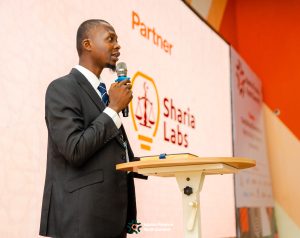
Dr. Bello advised prospective investors to verify the licences of financial service providers, check the Shariah status of investment products and understand the risks involved.
Mr. Adesanya encouraged young people to move beyond discussions about Islamic finance to practical participation in the industry.
He explained that IFING Media emerged from a gap he identified while studying at Bayero University, Kano, and has since developed media and educational platforms to promote Islamic finance awareness.
He also highlighted community-based financing and micro-Sukuk, drawing lessons from Indonesia, while emphasising the importance of partnerships, trust and sustainable business models.
Interactive session explores Islamic finance opportunities
The third panel, titled “Inside Islamic Finance: Ask Us Anything,” provided participants with an opportunity to seek clarification on Islamic financial products, career opportunities and Shariah compliance.
Moderated by Dr Sumayyah Adam Ahmad, the session featured Ustaz Kabir Nasir Asfar of Ethikavest, Co-founder and CEO of Stecs, Habeeb Gbenle, Dr Aishat Abdul-Qadir Zubair of Kwara State University (KWASU), and Dr Fham Abdulgafar of the University of Ilorin.

The interactive discussion gave participants direct access to practitioners and addressed questions about opportunities and challenges within the industry.
NEXTIF seeks to connect young Nigerians with Islamic finance opportunities
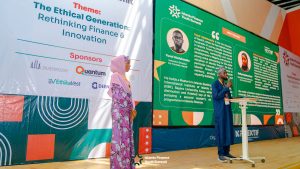
The maiden summit was convened by NEXTIF co-founders, Yusuf Abdulwasiu and Safiya Isyaku Umar, to bridge the gap between theoretical knowledge and practical participation in Islamic finance.
The co-founders said the initiative was designed to introduce young Nigerians to opportunities across the Islamic finance industry and the wider halal economy, while providing a platform for students, entrepreneurs and professionals to engage with industry practitioners and explore emerging opportunities in the sector.
ABU student wins NEXTIF Ambassador of the Year, gets ₦100,000
A student of Ahmadu Bello University (ABU), Zaria, Zainab AbdulRazak Adegbola, emerged as the NEXTIF Ambassador of the Year, receiving a cash prize of ₦100,000 and the prospect of a placement opportunity with Quantum Microfinance Bank.
Her recognition highlights the growing opportunities for young Nigerians to participate in Islamic finance and the wider halal economy.
The event ended with closing remarks by Ayuba Lawal, followed by prayers, certificate presentations and a group photograph.
Sponsored
Sponsored

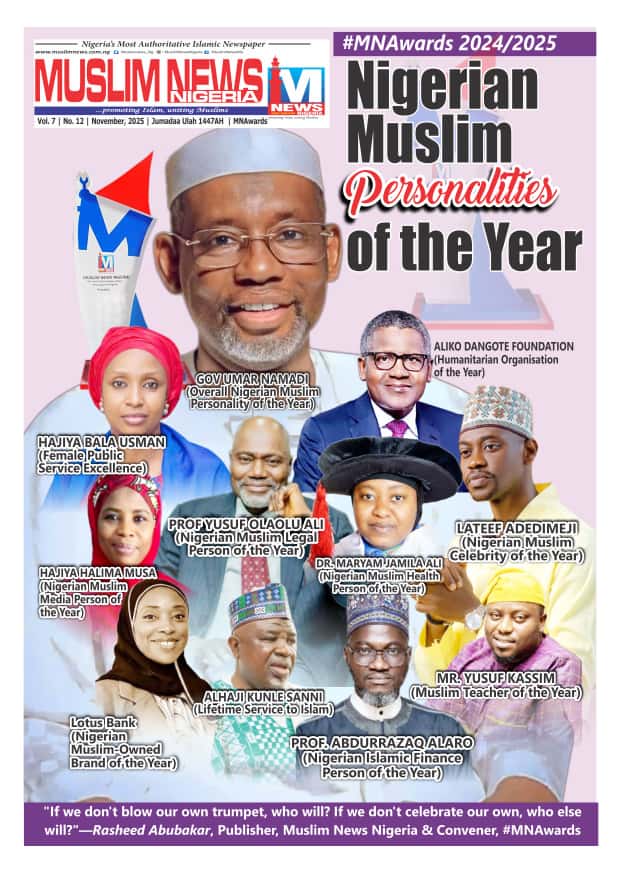
Nigerian Muslim Personalities of the Year 2024/2025
Global Muslim Personalities of the Year 2024/2025




Discover more from Muslim News Nigeria
Subscribe to get the latest posts sent to your email.