

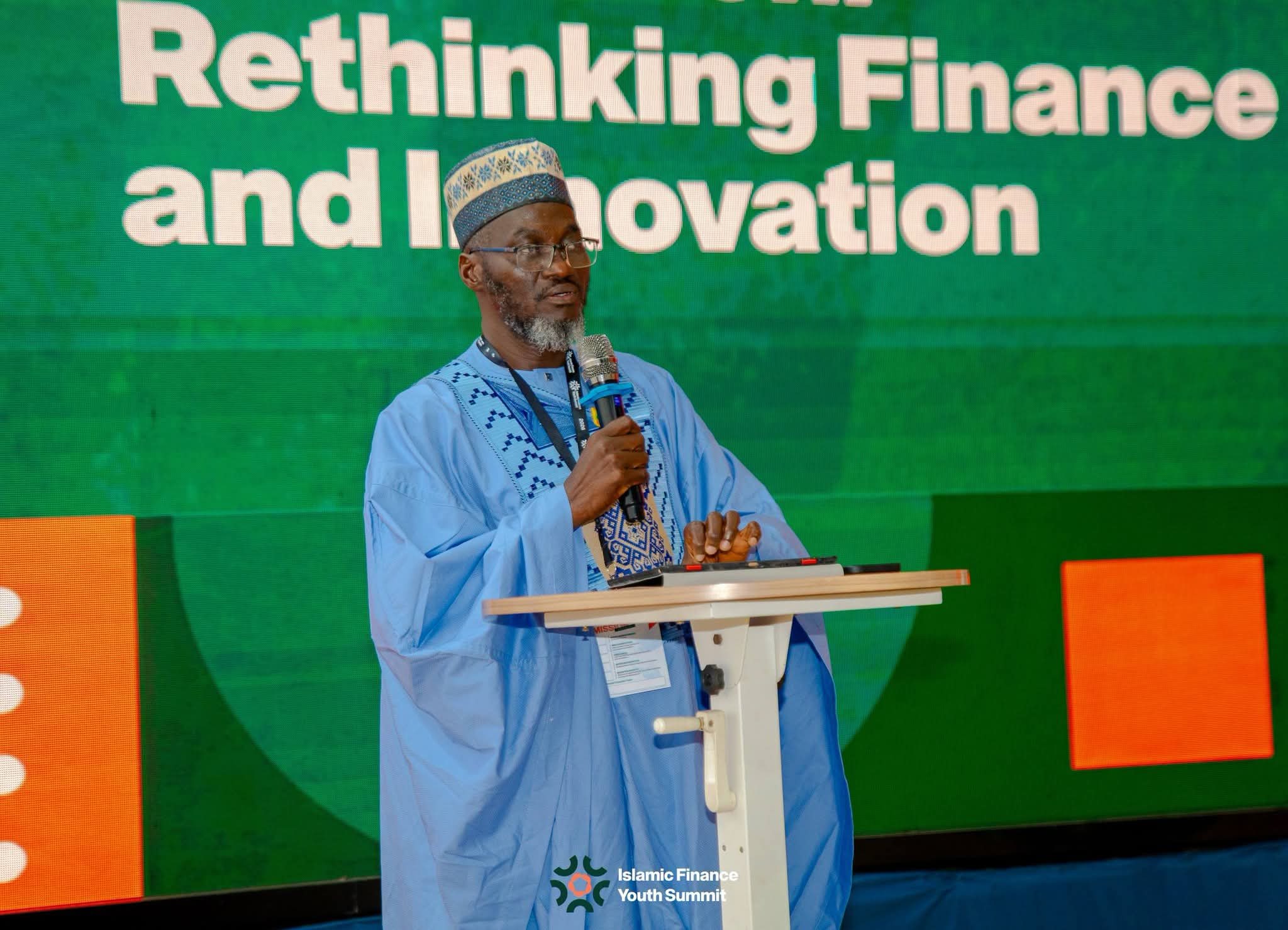
At maiden Islamic Finance Youth Summit, Islamic finance expert calls for wealth redistribution, job creation, support for the poor
Professor of Islamic Law at the University of Ilorin, Prof Abdur-Razaq Alaro, has called on young Muslims and practitioners in the Islamic finance industry to promote wealth redistribution, create jobs and support the poor through ethical financial products and services.
He made the call while delivering the keynote address at the maiden Islamic Finance Youth Summit, organised by NEXTIF, at the Ilorin Innovation Hub, Kwara State, on Thursday, November 5, 2026.
Speaking on the theme, “Ethical Generation: Rethinking Finance and Innovation,” the Islamic finance scholar said an ethical generation must not only understand the rules governing Islamic finance but also demonstrate the values and objectives behind them.
He explained that financial products should not be considered successful simply because they have received Sharia approval, stressing that their impact on society, particularly on the poor and vulnerable, must also be examined.
“Compliance is important, but we must go beyond compliance. We must ask whether what we are doing is fair, whether it benefits society and whether it addresses the economic challenges confronting our people,” he said.
Muslim News gathered that the programme featured three panel sessions, a founders’ discussion, networking activities and other engagements aimed at exploring the intersection of Islamic finance, technology and youth entrepreneurship.
Details of the programme are contained in a separate report.
Wealth inequality and social justice
The respected Islamic law scholar drew attention to the growing concentration of wealth, citing reports which, according to him, show that less than 10 per cent of the global population controls more than 80 per cent of the world’s wealth.
He also cited figures relating to Nigeria, saying that less than 10 per cent of the population owns more than 90 per cent of the country’s wealth and resources.
The Shariah expert argued that Islamic finance must confront such inequalities rather than merely replicate conventional financial structures under Sharia-compliant labels.
To illustrate the consequences of an unjust financial system, the legal practitioner referred to the bailout of Nigerian banks between 2009 and 2010, which he said involved about N5.5 trillion, compared with the country’s 2010 budget of approximately N4.6 trillion.
According to the University of Ilorin don, the intervention raised questions about fairness, particularly when the actions of a relatively small group could impose enormous financial burdens on the wider population.
He said Islamic finance should provide an alternative by promoting equitable wealth distribution, responsible investment and opportunities for people who are often excluded from formal financial systems.
Returning to the objectives of Sharia
The Islamic financial transactions expert urged practitioners to place the higher objectives of Sharia, known as Maqasid al-Sharia, at the centre of financial decision-making.
He explained that these objectives include the protection of religion, life, intellect, family and property, adding that Islamic finance should be assessed by how effectively it advances these fundamental interests.
Citing Qur’an 16:90, which commands justice, excellence and generosity while prohibiting indecency, wrongdoing and transgression, the professor said fairness must remain a central consideration in economic dealings.
The Shariah consultant cautioned against reducing Islamic finance to a technical exercise in contract approval, urging scholars and practitioners to examine the broader implications of investment decisions.
Giving an example, he questioned whether a fund manager could justify an investment in a company involved in activities that contradict the ethical principles of Islamic finance, even where the financial arrangement itself appeared technically compliant.
He maintained that practitioners must consider not only the structure of a transaction but also the nature and consequences of the business being financed.
Islamic finance must support productive sectors
The Islamic banking and finance specialist said Islamic finance should contribute directly to economic development by supporting small and medium-sized enterprises, affordable housing, education, healthcare, agriculture and other productive sectors.
He called for greater access to financing for farmers, women, young graduates and entrepreneurs who have viable ideas but lack the capital to develop them.
According to the professor, Islamic financial institutions should move beyond concentrating on the interests of shareholders and embrace a wider responsibility to society.
He urged institutions to see their customers and the communities they serve as stakeholders in development, rather than simply sources of profit.
Technology and youth entrepreneurship
The scholar encouraged young Muslims to use technology to develop ethical financial solutions that address real economic challenges.
He identified opportunities in fintech, digital bookkeeping, blockchain, smart contracts, crowdfunding and platforms that can connect small businesses with Sharia-compliant financing.
The versatile Nigerian scholar also highlighted the potential of Islamic social finance instruments, including Zakat, Waqf, Sadaqah and Qard al-Hasan, to support vulnerable communities and finance productive activities.
Prof Alaro commended the summit conveners, Yusuf Abdulwasiu and Safiya Isyaku Umar, for creating a platform to engage young people on the future of Islamic finance.
He urged young people to develop solutions that are not only technologically innovative but also ethically sound and socially beneficial.
Scholars and practitioners must work together
The Islamic law professor stressed the need for closer collaboration between Sharia scholars and Islamic finance operators, noting that both sides must understand the demands and realities of the industry.
He said scholars should develop a practical understanding of business and financial operations, while practitioners should deepen their knowledge of Islamic jurisprudence.
Using an example from the life of Prophet Muhammad (peace be upon him), the Shariah expert highlighted the importance of understanding the commercial realities behind transactions while maintaining ethical and legal standards.
The internationally certified arbitrator urged both groups to work together to develop practical solutions to contemporary financial challenges without compromising the principles of Sharia.
Rebalancing Islamic finance products
The keynote speaker also examined the industry’s reliance on Murabaha, a cost-plus sale arrangement in which a financial institution purchases an asset and resells it to a customer at an agreed profit.
He explained that the early vision of Islamic banking placed considerable emphasis on profit-and-loss sharing arrangements such as Mudarabah and Musharakah, which encourage partnership and shared business risks.
The University of Ilorin professor attributed the development of the modern financing structure known as Bay’ al-Murabaha lil-Amiri bi al-Shira‘ to the late Dr Sami Hamoud, noting its role in the growth of contemporary Islamic banking.
However, he expressed concern about the dominance of Murabaha in the portfolios of some Islamic financial institutions, citing his research which, he said, found that the product accounted for between 60 and 100 per cent of financing in some banks.
He clarified that his criticism was not a rejection of Murabaha, but a call for the industry to rebalance its financing model by giving greater attention to participatory arrangements that support entrepreneurship and productive investment.
Financial inclusion must lead to shared prosperity
The Islamic finance expert maintained that financial inclusion should not be treated as an end in itself, but as a means of improving livelihoods and ensuring that more people participate in economic development.
He called on regulators, policymakers, financial institutions and young innovators to create an enabling environment for ethical financial solutions that respond to Nigeria’s needs.
Quoting Qur’an 13:11, which states that Allah does not change the condition of a people until they change what is within themselves, Prof Alaro encouraged young Muslims to take responsibility for shaping the future of the industry.
He said the future of Islamic finance would depend on a generation willing to combine knowledge, innovation and ethical responsibility to build a financial system that serves humanity.
Sponsored
Sponsored

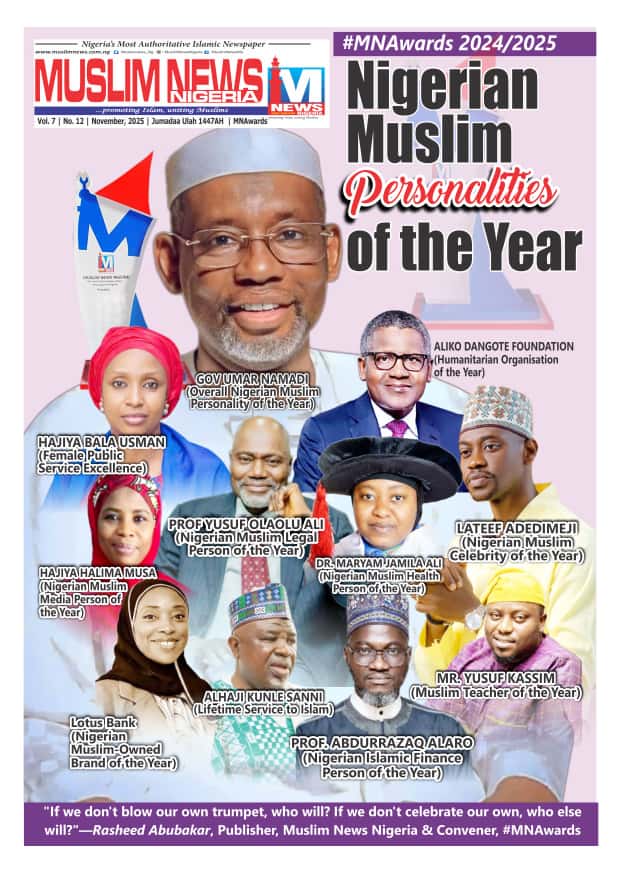
Nigerian Muslim Personalities of the Year 2024/2025
Global Muslim Personalities of the Year 2024/2025




Discover more from Muslim News Nigeria
Subscribe to get the latest posts sent to your email.