

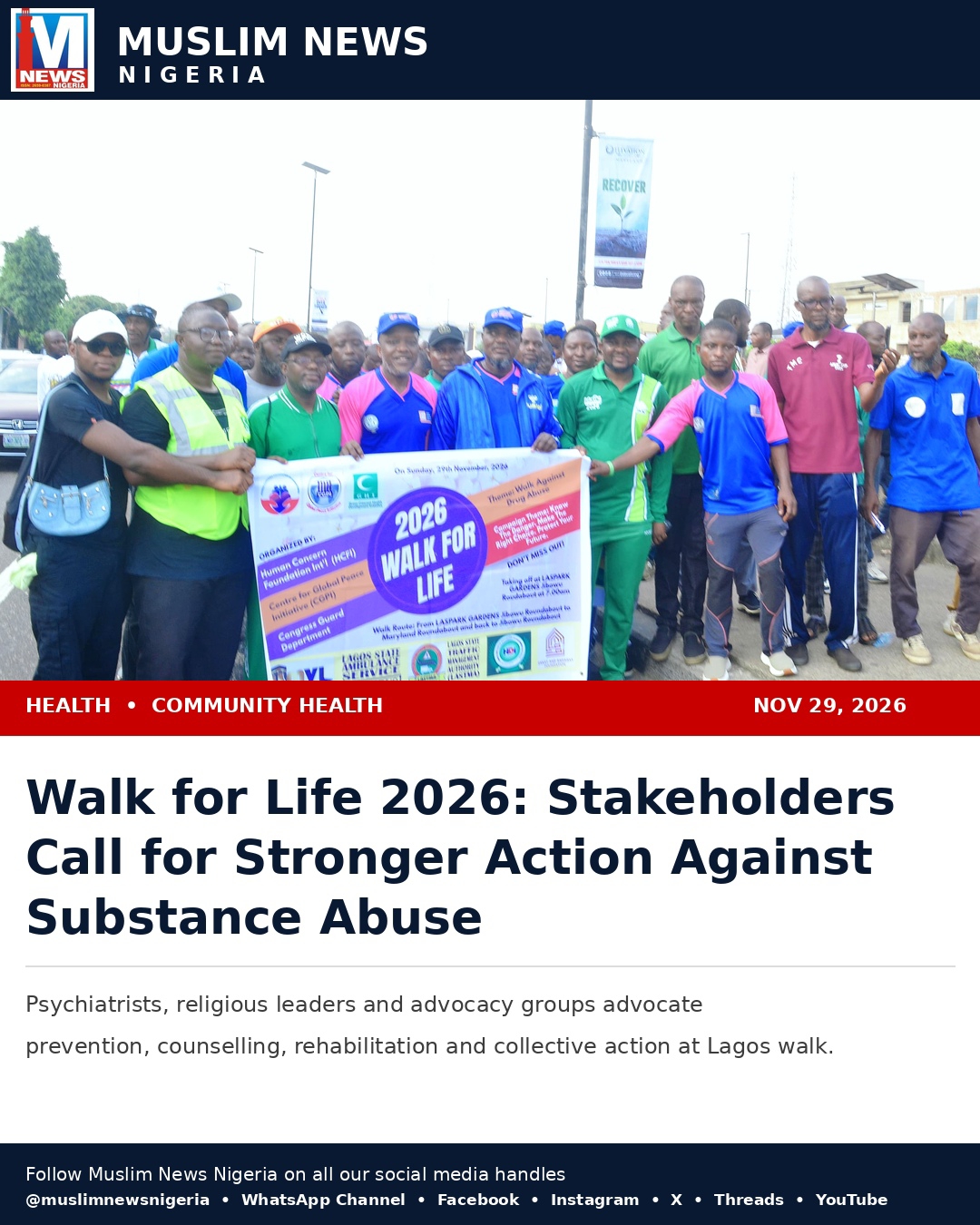
* Psychiatrists, religious leaders and advocacy groups advocate prevention, counselling, rehabilitation and collective action at Lagos walk
Stakeholders in the fight against substance abuse have called for stronger enforcement of drug laws, improved rehabilitation services, family support and sustained community-based sensitisation to tackle the growing menace among young people.
The call was made at the 2026 Walk for Life organised by the Human Concern Foundation International and its partners in Lagos on Sunday, November 29, with over 300 participants walking from Jibowu to Maryland and back to promote physical fitness and raise awareness about substance abuse.
The event, themed “Walk Against Substance Abuse,” was organised in collaboration with the Centre for Global Peace Initiative, Congress Guard of The Muslim Congress (TMC), Green Crescent Health Development Initiative, the Federation of Muslim Women Associations in Nigeria (FOMWAN) and the Nasrul-Lahi-l-Fatih Society (NASFAT), among other partners.
Oreagba calls for enforcement of drug laws, stronger anti-substance abuse campaign
Speaking at the event, Executive Director of the Human Concern Foundation International (HCFI), Professor Ibrahim Adekunle Oreagba, said the theme was deliberately chosen to address the growing dangers of substance abuse, particularly among young people.
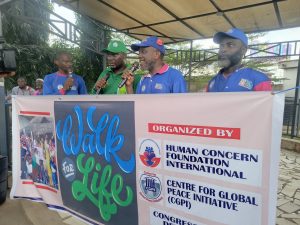
Oreagba, who is also a Professor of Pharmacology, Therapeutics and Toxicology at the College of Medicine, University of Lagos, explained that the annual walk was designed to raise awareness about substance abuse while promoting the health benefits of regular physical activity.
According to him, regular walking could help prevent chronic illnesses, including hypertension, diabetes, obesity and stroke.
The foundation has also extended its campaign beyond public sensitisation to advocacy with policymakers and government officials, calling for the effective enforcement of existing laws against substance abuse.
“These laws are there, but the problem is enforcement,” Oreagba said, stressing the need for stronger collaboration among government agencies, civil society organisations and other stakeholders to tackle the menace.
Addiction threatens the gift of life, psychiatrist warns
Dr Tajudeen Abiola, a consultant psychiatrist and medical psychotherapist in the Drug Abuse and Addiction Unit of the Department of Behavioural Sciences, University of Ilorin Teaching Hospital, described addiction as a threat to the meaningful use of human life, noting that substance abuse could damage the brain and undermine people’s ability to make sound decisions.
He said preventing addiction required individuals, families and communities to develop practical skills to resist the pressure to experiment with drugs and other harmful substances.
Abiola identified the ability to pause, refuse drugs and walk away from situations where they were being offered as important preventive measures, calling on young people to seek positive peer support and build healthy relationships.

He also advised parents and guardians to pay attention to changes in their children’s sleeping patterns and moods, which could serve as warning signs of possible substance use.
The psychiatrist cautioned against using intimidation to address suspected drug use among children, advocating calm communication, understanding and supportive family relationships.
“Just scaring people doesn’t work very well. We need to engage and talk with them in a calm way, make them feel that they are part of a loving family, and encourage them to take responsibility for their health,” he said.
Explaining the consequences of addiction, Abiola identified destruction, darkness, misery and devastation, alongside what he described as the de-spiritualisation of the individual, as some of its effects.
He said addiction could damage relationships, injure the brain, undermine spiritual well-being and drain the financial resources of affected individuals and families.
Iyepe calls for collective responsibility, enforcement of drug laws
Former Lagos State Commissioner for Home Affairs, Dr AbdulHakeem Abdullateef, popularly known as Hon.Iyepe, called on Nigerians to take collective responsibility for tackling substance abuse.
The Chief Imam of the Lagos State House of Assembly said the annual walk provided an opportunity to strengthen public commitment to healthy living and the prevention of avoidable diseases.

Drawing parallels between physical exercise and Islamic acts of worship, he said movement was also reflected in religious practices such as Salah, Tawaf and Sa’i.
“Your Salat is like a movement. When you do Tawaf, you are moving. When you do Sa’i, you are moving. All the days of your life, our Lord has encouraged us to keep moving. When you keep moving, you keep living,” he said.
On substance abuse, Hon. Iyepe called on religious leaders, parents, community members and government agencies to speak out and intensify efforts to address the problem rather than leave the responsibility to a few organisations.
“If you have anybody who is engaging in drug abuse, you must speak out; do not be silent,” he said.
He also expressed concern about the enforcement of existing laws, calling on relevant authorities to discharge their responsibilities effectively and ensure that those affected by substance abuse have access to rehabilitation.
Furthermore, Hon. Iyepe urged parents to educate their children about the dangers of intoxicants and reminded public officials that their positions were a trust that must be discharged without fear or favour.
Quoting a verse from Surah Al-Ma’idah, the eloquent Muslim scholar said, “Whoever saves a life, it is as if they have saved all of humanity.”
FOMWAN intensifies counselling, school-based sensitisation
Alhaja Ganiyah Ayomaya-Oyeniyi, representing FOMWAN, a platform of chairpersons of counselling committees on drug abuse, said mothers and women had a critical role to play in preventing substance abuse among children and young people.

She expressed concern about the connection between substance abuse and various social vices, stressing the need for preventive interventions, counselling and early sensitisation.
Alhaja Ayomaya-Oyeniyi said the organisation had established counselling centres across Nigeria, particularly in Lagos State, including Makoko and various local government areas, while partnering with neuropsychiatric hospitals to support efforts against drug abuse.
She said FOMWAN also organised awareness programmes for mothers, women, youths and schoolchildren to educate them about the dangers of substance abuse and discourage experimentation driven by peer pressure, curiosity or personal challenges.
“We want to catch them young because we believe that when they know the effects of drug abuse, they will run from it,” she said.
She warned that substance abuse could affect the brain, alter thinking faculties and sleeping patterns, and jeopardise young people’s educational and career aspirations.
Alhaja Ayomaya-Oyeniyi, however, expressed concern about what she described as inadequate government support for grassroots organisations involved in drug abuse prevention, calling for greater assistance to strengthen counselling services and community interventions.
NASFAT pledges continued support for anti-drug campaign
Alhaji Adelero Wasiu, Zonal Vice Chairman of NASFAT Lagos Zone 1, reaffirmed the organisation’s commitment to initiatives promoting healthy living and addressing social challenges.
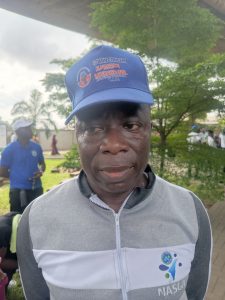
He said NASFAT’s participation in the annual walk reflected its willingness to collaborate with organisations irrespective of their religious affiliations, adding that the society had incorporated walking into its health programmes since 2017.
Wasiu said NASFAT had also been involved in sensitisation efforts against substance abuse and supported initiatives aimed at reducing its prevalence among young people.
He acknowledged that completely eliminating substance abuse might be difficult but maintained that concerted efforts by government, religious organisations and other stakeholders could significantly reduce the menace.
“We know that it cannot finish, but at least if we can bring it down from 100 per cent to 20 or 30 per cent, our society will become more meaningful,” he said.
Alhaji Adelero called for sustained efforts by government and stakeholders to address the social and security challenges associated with substance abuse and promote safer communities.
The Walk for Life formed part of the organisers’ broader efforts to promote preventive healthcare, encourage physical activity and mobilise public support for the fight against substance abuse through advocacy, education and collaboration.
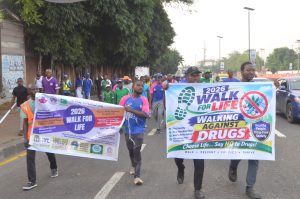
Faces at the Walk for Life




Sponsored

Sponsored

Nigerian Muslim Personalities of the Year 2024/2025

Global Muslim Personalities of the Year 2024/2025




Discover more from Muslim News Nigeria
Subscribe to get the latest posts sent to your email.