

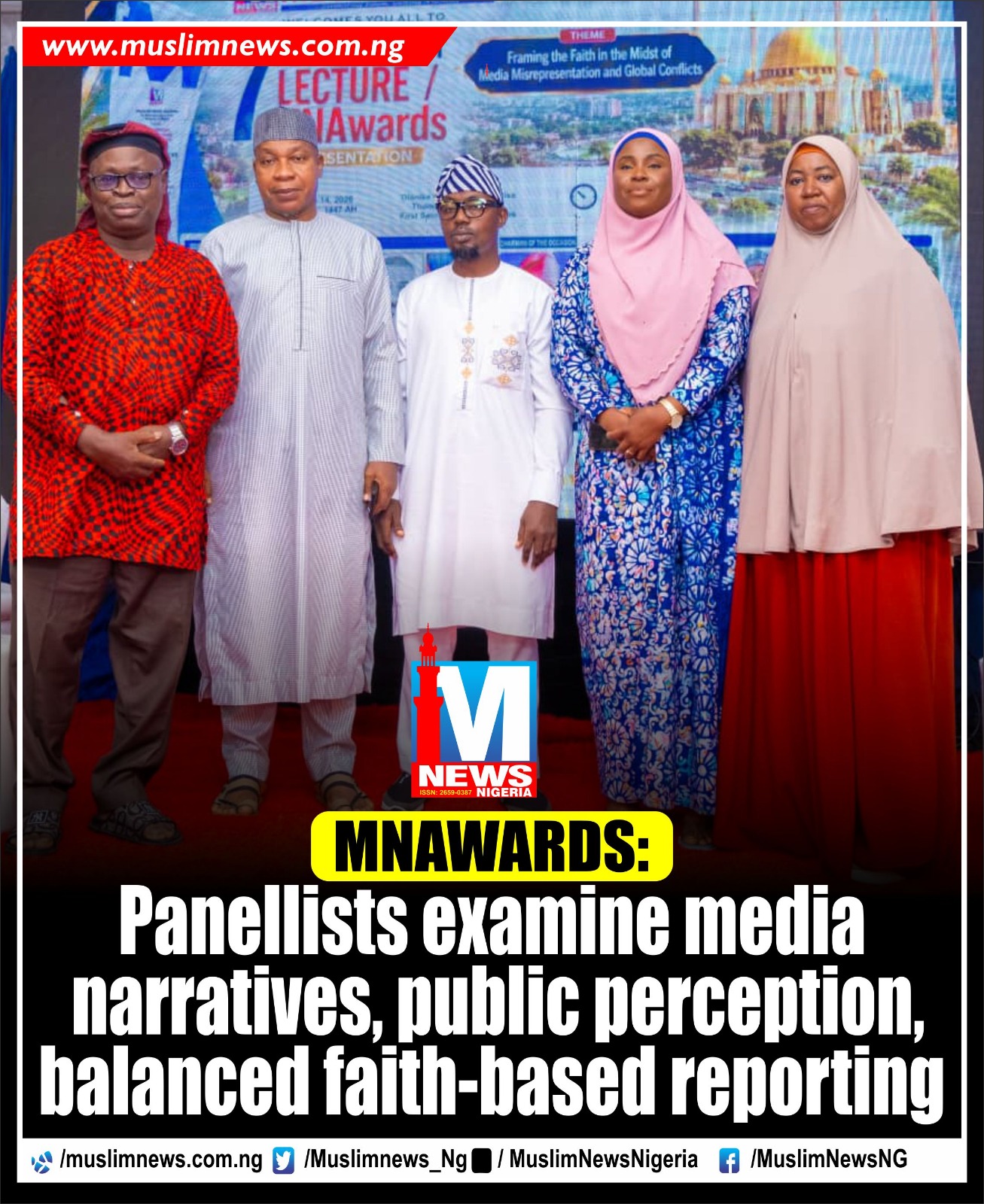
Legal advocacy, increased Muslim participation in journalism, greater investment in media ownership and stronger adherence to ethical reporting have emerged as key strategies for countering negative narratives about Islam and promoting balanced faith-based reporting.
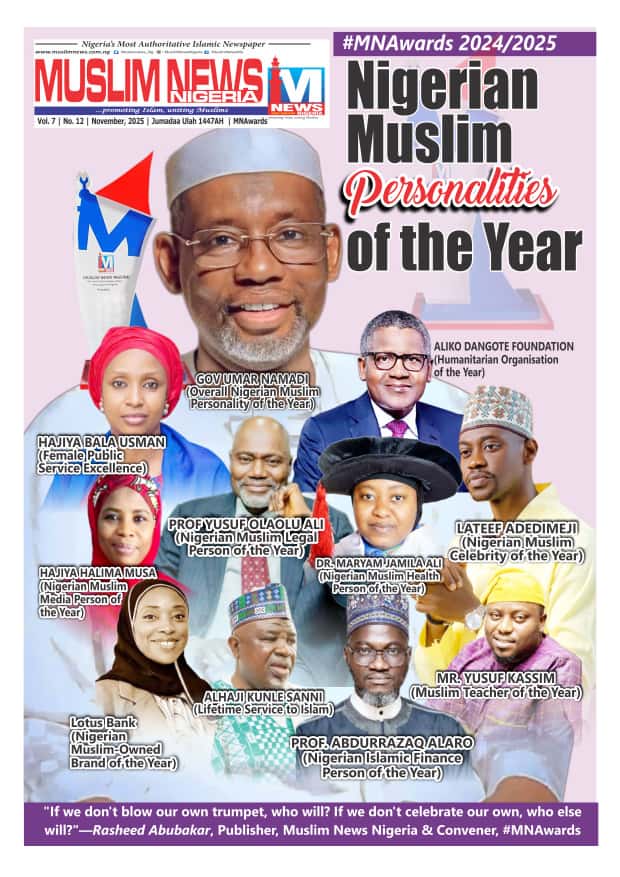
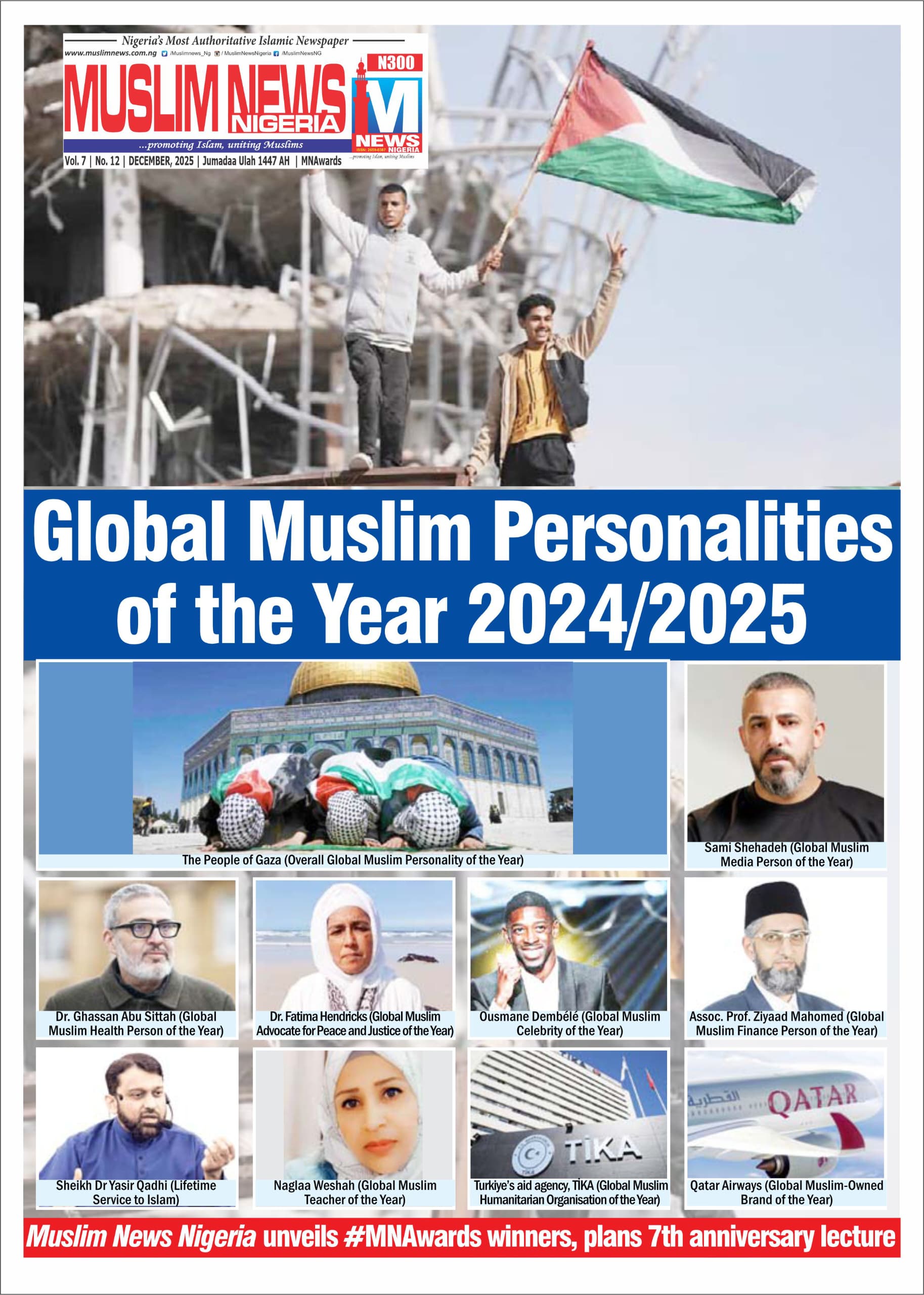
The recommendations formed the outcome of a robust panel discussion held during the 7th Anniversary Lecture of Muslim News Nigeria and the presentation of the Muslim News Awards (MNAwards), which recognised outstanding Nigerian and global Muslims making positive contributions to humanity and the development of the Muslim community.
Held on Sunday, June 14, 2026, at Olanike Hall, Shamsi Adisa Thomas Mosque, First Secretariat, Ikeja, Lagos, the event was themed “Framing the Faith in the Midst of Media Misrepresentation and Global Conflicts.”
The panel session served as one of the major highlights of the anniversary lecture, complementing the keynote address by examining how media narratives influence public perception of Islam and identifying practical steps Muslims can take to reclaim their own story.
Moderated by veteran broadcaster and co-host of TVC’s Your View, Hajia Nymat Akashat-Zibiri, the discussion featured Executive Director of the Muslim Rights Concern (MURIC), Prof. Ishaq Lakin Akintola; Director of the Hijab Rights Advocacy Initiative (HRAI), Barrister Mutiat Orolu-Balogun; Senior Broadcast Journalist with the Voice of Nigeria (VON), Mallam Hussain Bin Hyacinth; and Principal Reporter with the Nigerian Television Authority (NTA), Mallam Talha Musa.
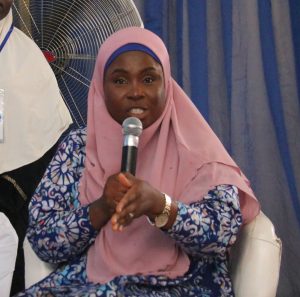
Opening the conversation, Akashat-Zibiri reminded participants that media remains one of the most powerful institutions in shaping public understanding, noting that narratives are often influenced not merely by facts but by the way stories are framed.
Referring to earlier remarks by the National Missioner of Ansar-Ud-Deen Society of Nigeria, Imam AbdurRahman Ahmad, she observed that audiences could easily become “miseducated” if they consumed news without critically examining how information was packaged.
She said the panel was designed to move beyond complaints about media bias by exploring practical ways Muslims could engage journalism, communication and public discourse more strategically.
Hyacinth advocates ethical journalism over emotional reactions
During his presentation, Senior Broadcast Journalist with the Voice of Nigeria, Mallam Hussain Bin Hyacinth, urged Muslims, particularly journalists, media practitioners and Islamic organisations, to resist responding emotionally to bias against Islam, insisting that the most effective response is ethical, evidence-based and professional journalism rather than counter-propaganda.
His detailed PowerPoint presentation, which provides an extensive framework on strategic communication, media engagement and professional responses to anti-Muslim narratives, is reproduced in a separate report in this edition. Read it HERE
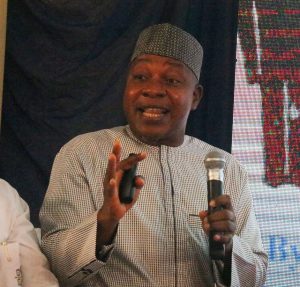
Muslim organisations must move beyond press statements to strategic action
Speaking on the broader impact of media narratives, Prof. Akintola argued that Muslims continue to suffer from persistent stereotyping despite Islam’s contributions to peacebuilding, education, charity and national development.
According to him, stories involving Muslims are frequently viewed through prejudicial lenses, while criminal acts committed by individuals are often projected as representing an entire faith.
He cited recent examples of misleading narratives that linked insecurity and criminality to Islam, saying such reports reinforce Islamophobia and deepen public misconceptions.
“If every Muslim documented what they encounter because of these stereotypes, we would have volumes of evidence,” he said.
Responding to a question on how Muslim organisations should move beyond issuing press statements, the MURIC Executive Director acknowledged that while statements remain necessary, they alone cannot change public perception.
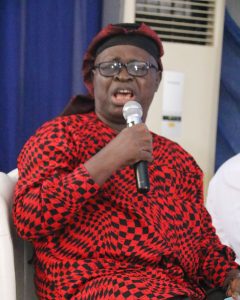
He noted that only a fraction of Muslim organisations currently engage in sustained advocacy and urged them to embrace broader civic engagement through strategic litigation, public campaigns, advocacy programmes, community service initiatives, peaceful walks, branding exercises and continuous engagement with policymakers and the media.
“We should not hesitate to seek legal redress whenever Islam or Muslims are deliberately defamed or their constitutional rights are violated,” he said.
Muslims must also improve how they represent Islam
Barrister Orolu-Balogun said the conversation should not focus solely on what mainstream media is doing wrong, arguing that Muslims must also examine how they portray Islam and the hijab.
She observed that many news organisations deliberately illustrate hijab-related stories with images that bear little resemblance to what Muslim women in Nigeria are actually advocating.
Recalling media coverage of campaigns for students’ hijab rights and accommodation for Muslim nurses, she said photographs depicting unfamiliar or exaggerated styles of dressing were often used to create false impressions and generate unnecessary public anxiety.
Beyond mainstream media, she criticised some Islamic financial institutions, Muslim-owned businesses and Islamic corporate organisations for failing to reflect the values they publicly promote.
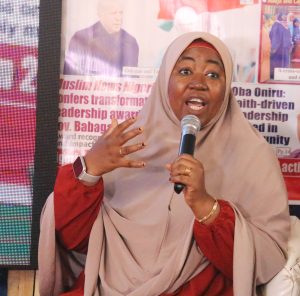
According to her, some organisations branding themselves as Islamic discourage female employees from wearing properly compliant hijab, thereby sending conflicting messages about Islamic identity.
“If we describe ourselves as Islamic organisations, our internal policies should reflect the values we promote,” she said.
She also challenged Muslim entrepreneurs, fashion brands, social media influencers and content creators to become more intentional in projecting positive images of Muslim women.
Rather than commercialising the hijab in ways that undermine its essence, she urged Muslim-owned brands to demonstrate creativity by designing corporate uniforms, branded clothing and promotional materials that combine professionalism with Islamic modesty.
Drawing inspiration from the United Arab Emirates, she noted that the abaya has become a recognised form of professional attire, arguing that Nigerian Muslim institutions could similarly redefine corporate dressing through innovation instead of simply copying conventional Western dress codes.
Responsible journalism requires facts, not assumptions
Representing the Director of News, NTA, Hajiya Halima Musa, Mall. Talha Musa said irresponsible journalism continues to undermine public confidence because many media organisations approach stories involving Muslims with preconceived assumptions.
He stressed that journalists must go beyond merely reporting events by ensuring that facts are properly verified and that language is carefully chosen to avoid reinforcing stereotypes.
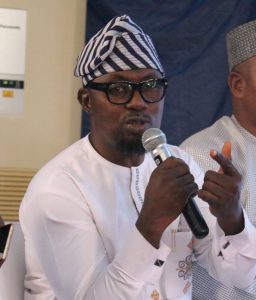
He cited a recent case in which a television station reportedly aired a skit as authentic footage relating to criminal activities before colleagues established that the video was fictitious, leading to its withdrawal.
According to him, such incidents illustrate the consequences of declining standards of research and editorial verification.
“Responsible journalism begins with research and verification. Opinions may be free, but facts are sacred,” he said.
Talha Musa also encouraged Muslims to make greater use of the courts whenever their constitutional rights are violated.
He cited the successful legal challenge by a Muslim woman against Disneyland after she was penalised for wearing the hijab, noting that the court ruled that competence, not religious appearance, was the basis of her employment.
He said the judgment demonstrated that strategic litigation remains one of the most effective tools for protecting religious freedom.
The broadcaster also praised the legal victories secured by Nigerian Muslim advocates over students’ hijab rights, describing them as evidence that persistence and lawful engagement produce lasting change.
He urged Muslim parents to encourage their children to study journalism, mass communication, broadcasting and other communication disciplines rather than discouraging them from entering the profession.
According to him, Muslims cannot continue to complain about media narratives while remaining underrepresented in newsrooms and editorial leadership.
“Nobody will tell our story except us. If we are absent from the media, others will continue telling our stories from perspectives that do not reflect who we are,” he said.
Throughout the session, the panelists agreed that the challenge of media misrepresentation requires more than criticism of existing narratives.
They called for increased investment in Muslim-owned media platforms, greater participation of Muslims in journalism and digital communication, stronger legal advocacy, improved media literacy, responsible use of social media and sustained collaboration between scholars, journalists, legal practitioners and Islamic organisations.
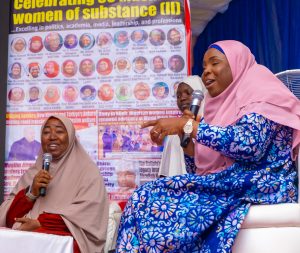
Several interventions attracted applause from participants, particularly the calls for greater Muslim participation in journalism, stronger legal responses to defamatory narratives, and increased investment in Muslim-owned media institutions capable of producing credible, factual and balanced reporting.
The discussion ultimately reinforced the central message of the anniversary lecture: that in today’s information age, shaping narratives has become as important as influencing policy, and that Muslims must move beyond reacting to negative portrayals to becoming proactive storytellers, ethical communicators and builders of institutions that project Islam with accuracy, professionalism and integrity.
Sponsored
Sponsored

Nigerian Muslim Personalities of the Year 2024/2025
Global Muslim Personalities of the Year 2024/2025



Discover more from Muslim News Nigeria
Subscribe to get the latest posts sent to your email.