

* World Leaders pay tribute to architect of modern Qatar
Qatar has begun a period of mourning following the death of its former ruler, Sheikh Hamad bin Khalifa Al Thani, popularly known as the Father Emir, who died on Sunday, July 12, 2026, at the age of 74.
Sheikh Hamad, who ruled Qatar from 1995 to 2013, was laid to rest in a simple Islamic burial ceremony at Lusail Cemetery in Doha after funeral prayers were held at the Imam Muhammad ibn Abd al-Wahhab Mosque following the Maghrib evening prayer.
The Amiri Diwan announced his death on Sunday morning, describing it as a “great loss to the nation” and expressing condolences to the Qatari people.
The country declared a period of official mourning, with flags lowered to half-mast and government institutions observing the mourning period.
The title “Father Emir” is an honorary designation given to Sheikh Hamad because of his historic role in shaping modern Qatar.
He voluntarily handed over power in 2013 to his son and successor, Emir Sheikh Tamim bin Hamad Al Thani, in a rare abdication by a hereditary Gulf ruler.
Mourners dressed in traditional Qatari attire gathered at the mosque for the funeral prayers, standing in rows with hands clasped as they prayed over the shrouded body of the former leader.
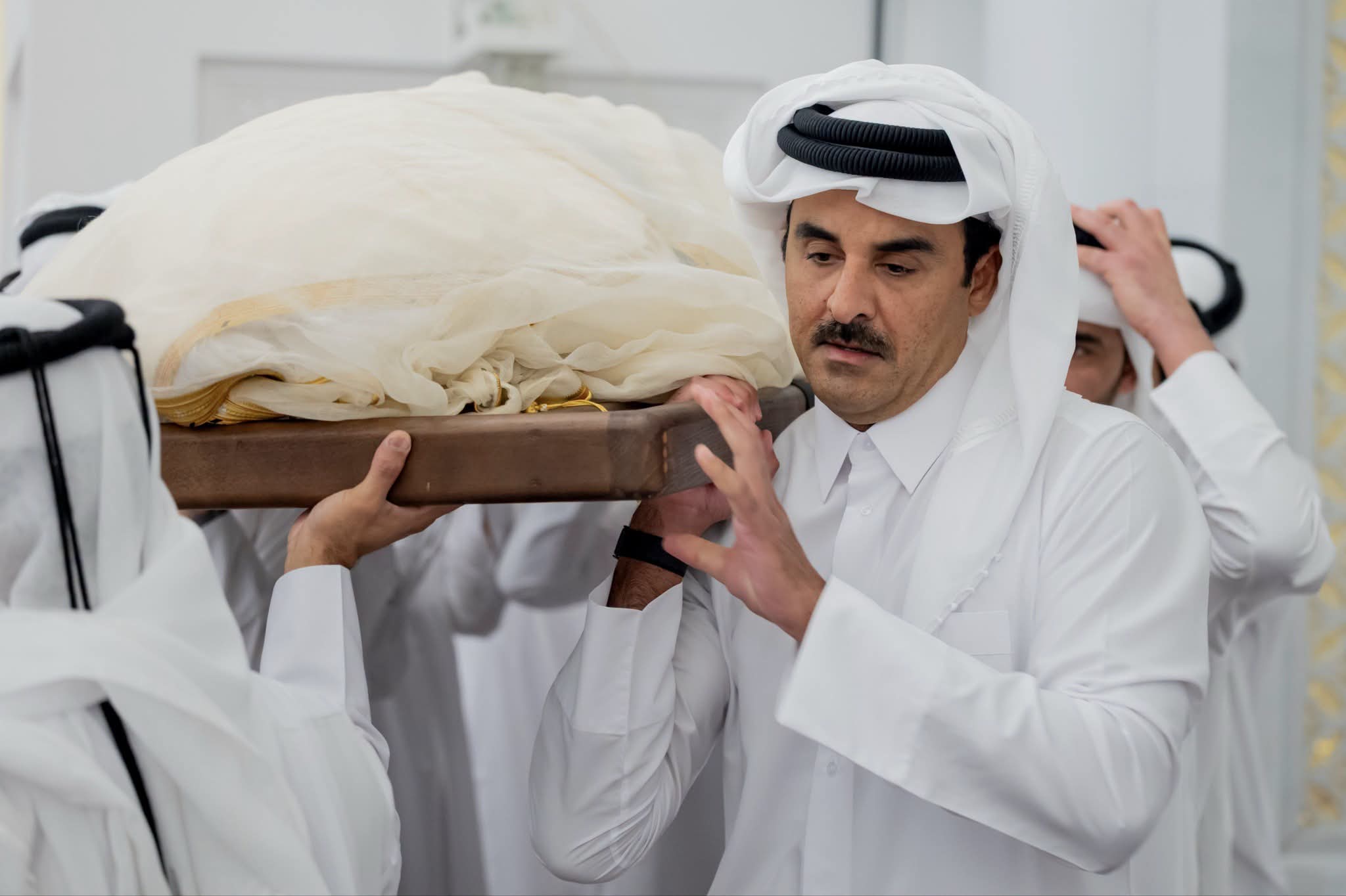
After the prayers, close family members, including Emir Sheikh Tamim, carried Sheikh Hamad’s body from the mosque before he was taken to Lusail Cemetery for burial.
The funeral was described as a humble ceremony, reflecting Islamic traditions and Sheikh Hamad’s personal style.
During his 18-year rule, Sheikh Hamad oversaw Qatar’s transformation from a small Gulf state into one of the world’s wealthiest and most influential countries, driven largely by the development of its vast natural gas resources.
Under his leadership, Qatar became the world’s largest exporter of liquefied natural gas (LNG), while the country’s economy expanded significantly.
His administration also strengthened Qatar’s international partnerships and expanded its diplomatic influence across the Middle East and beyond.
Sheikh Hamad’s era also witnessed the launch of Al Jazeera in 1996, which grew into one of the world’s most influential media networks.
The Director General of Al Jazeera Media Network, Sheikh Nasser bin Faisal Al Thani, described him as the visionary behind the establishment of the organisation, saying he laid the foundation for an institution that became a major voice in global media.
His reign also saw the introduction of Qatar’s first permanent constitution in 2004 and municipal elections that allowed women to vote and stand as candidates.
Beyond economic reforms, Sheikh Hamad played a major role in expanding Qatar’s global profile. The country later hosted the 2022 FIFA World Cup, an event seen as a major milestone in Qatar’s international engagement.
Abdulla Banndar el Etaibi, Assistant Professor in International Affairs at Qatar University, described Sheikh Hamad as a leader who turned Qatar into “an extraordinary country,” noting his investments in LNG and his vision for the nation’s future.
“He left a legacy all over the world, not only on Qatar,” he said.
Following his death, condolences poured in from leaders around the world, including Egyptian President Abdel Fattah el-Sisi, Pakistani President Asif Ali Zardari and United Arab Emirates President Mohamed bin Zayed Al Nahyan.
They praised Sheikh Hamad’s leadership, describing him as a visionary figure whose policies contributed to Qatar’s development, regional influence and international standing.
Qatar will continue its official mourning period as the nation remembers a leader widely regarded as the architect of modern Qatar.
Sponsored
Sponsored

Nigerian Muslim Personalities of the Year 2024/2025

Global Muslim Personalities of the Year 2024/2025




Discover more from Muslim News Nigeria
Subscribe to get the latest posts sent to your email.